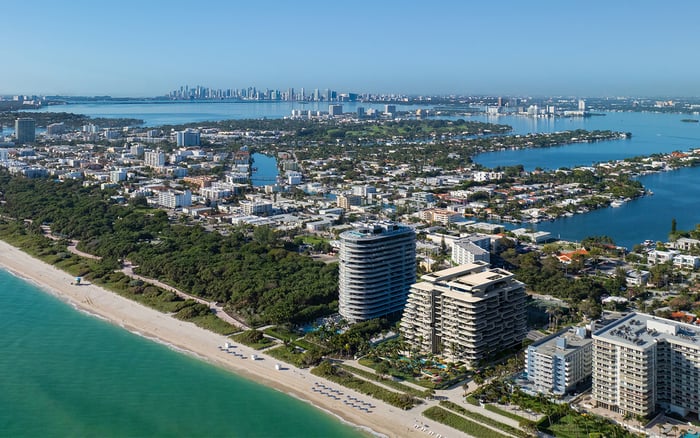
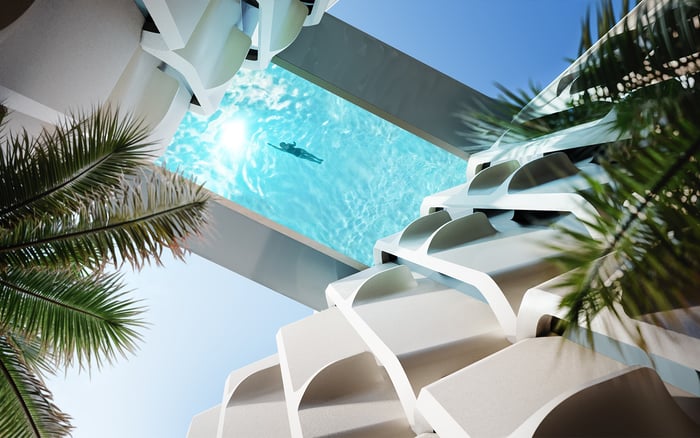
A design-led comparison of The Delmore Surfside and 57 Ocean Miami Beach, examining how boutique-scale planning, terrace strategy, amenity programming, and neighborhood character shape two distinct luxury lifestyles on the ocean.
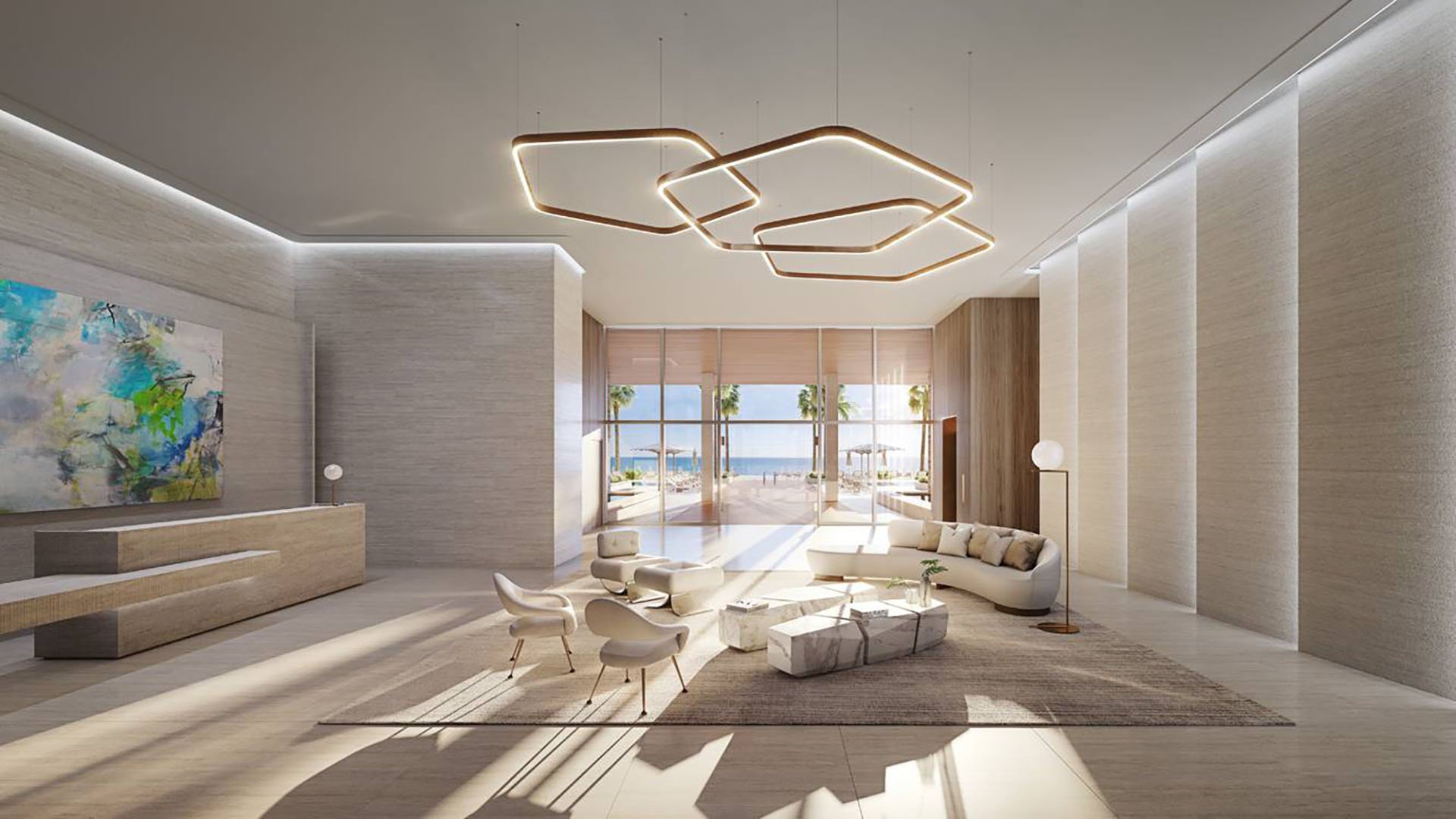
In South Florida luxury real estate, square footage alone rarely tells the full story. The more meaningful distinction often lies in how a residence is planned, how it receives light, and how it shapes the rituals of oceanfront living. That is precisely the lens through which MILLION Luxury views The Delmore Surfside and 57 Ocean Miami Beach.
Both are ocean-oriented addresses in Miami-Dade, yet each advances a distinct idea of residential luxury. The Delmore Surfside leans into intimacy, restraint, and curated sequencing. By contrast, 57 Ocean Miami Beach is organized around openness, fluidity, and a more pronounced visual and physical connection between interior rooms and exterior space. For a buyer choosing between Surfside and Miami Beach, the essential question is not simply which home is larger. It is which spatial philosophy better aligns with the way one wants to live.
The Delmore Surfside is conceived as a low-density, ultra-luxury property in Surfside, with 60 residences that reinforce a more private, boutique atmosphere. Designed by Arquitectonica, it is framed less around maximizing sheer area and more around balance, proportion, and controlled movement from one room to the next.
That distinction matters. Residences range from roughly 1,400 to more than 4,000 square feet across one- to four-bedroom layouts, but the experience is not defined by size alone. The planning language feels deliberate rather than theatrical. Rooms are intended to unfold in sequence, rather than reveal themselves all at once in a single dramatic gesture. For buyers who value boutique character, privacy, and architectural discipline, that approach can be more compelling than raw scale.
Outdoor space at The Delmore Surfside plays a supporting role rather than serving as the home's principal organizing feature. Terraces and balconies extend the living areas, but they do not dominate the plan. The result is a more inwardly composed residence, one in which interior refinement remains primary and the ocean's presence is integrated with discretion.
The shared spaces follow a similar logic. Amenity planning is more club-like than sprawling, centered on wellness, fitness, spa, and lounge settings rather than an expansive menu of entertainment zones. In Surfside, that feels contextually appropriate. The neighborhood carries a quieter beachside identity and an established residential cadence that tends to appeal to those who want oceanfront access without the more social tempo found elsewhere along the coast.
If The Delmore Surfside is about edited elegance, 57 Ocean Miami Beach is about flow. Designed by Herzog & de Meuron, the building treats the threshold between indoors and outdoors as one of its defining ideas. Residences range from about 1,900 to more than 5,000 square feet, with one- to five-bedroom layouts that support a broader range of entertaining and family configurations.
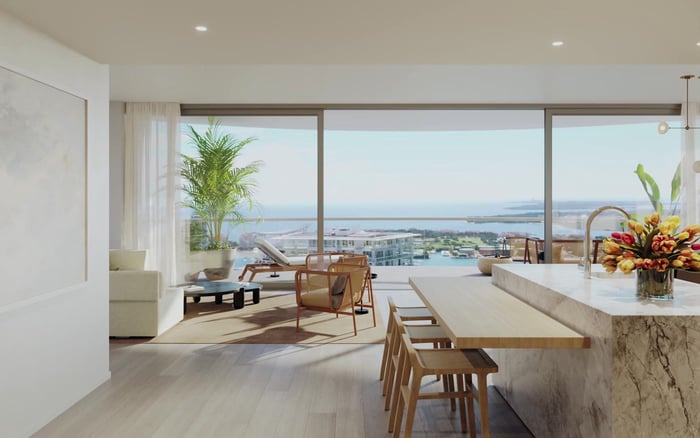
The signature move is the large-scale terrace. Here, outdoor space is not merely an accessory to the main residence. It is a principal room in its own right. Oversized wraparound terraces are intended for dining, lounging, and gathering, creating an outdoor-room concept. Floor-to-ceiling glass strengthens that sense of continuity, while high ceilings of 10 feet or more heighten the feeling of air, daylight, and visual breadth.
For a buyer who imagines breakfast outside in January, sunset cocktails with a generous seating arrangement, or seamless movement between a great room and an open-air dining zone, 57 Ocean Miami Beach offers a notably different proposition. Some residences and penthouses are also described with multiple outdoor zones and 360-degree views, underscoring the project's emphasis on openness rather than enclosure.
The common spaces extend the same worldview. Amenity programming is larger in footprint and more resort-like, with multiple pools, spa spaces, fitness offerings, and entertainment-oriented areas that create a fuller-service experience. In practical terms, this can suit a buyer who wants a home that functions as both a primary residence and a social setting.
The clearest way to understand the contrast is through how each project organizes everyday life. At The Delmore Surfside, the floor plan reads as a composition of carefully calibrated rooms. Privacy is embedded in the layout philosophy. The home is likely to appeal to buyers who prefer spaces that feel composed, collected, and less exposed, even when generously sized.
At 57 Ocean Miami Beach, the home reads more like a continuous environment, where the living room, dining area, kitchen, and exterior lounge participate in the same spatial field. The emphasis is on elasticity. Rooms can absorb entertaining, family living, wellness, or remote work with minimal friction because the plan prioritizes openness from the outset.
This distinction places the two properties in different corners of the same luxury conversation. Buyers drawn to Ocean House Surfside or Fendi Château Residences Surfside often respond to the appeal of Surfside's more discreet residential mood. Those comparing larger-format Miami Beach experiences may also look at The Perigon Miami Beach when considering architecture that frames water, light, and openness as part of the daily plan.
Amenity strategy often reveals more about a building's intended resident than a brochure ever could. The Delmore Surfside appears calibrated for owners who want shared spaces that feel polished and available, but not overprogrammed. In that sense, its amenity character complements the project's boutique scale and Surfside setting.
57 Ocean Miami Beach, by comparison, makes a stronger case for residential hospitality. The larger amenity footprint supports a more active communal rhythm, with spaces that can accommodate wellness routines, entertaining, and a broader flow of daily activity. That does not make one approach superior to the other. It simply points to different definitions of ease.
For some households, ease means fewer residences, quieter shared areas, and a stronger sense of retreat. For others, ease means a building that feels ready for guests, gatherings, and an ever-present relationship with the outdoors. The distinction also affects perceived privacy. In a smaller Surfside environment, exclusivity is often felt in the relative calm. In a larger Miami Beach property, luxury may be experienced through service, variety, and scale.
The Delmore Surfside is best understood as a residence for the buyer who prefers a highly edited home. This buyer may not need the largest possible terrace or the most expansive common-area program. Instead, they are looking for design precision, low density, and a quieter residential setting with strong architectural pedigree. The words Surfside, boutique, and oceanfront are not just location tags here. They describe the character of ownership.
57 Ocean Miami Beach is better suited to the buyer who wants flexibility and spatial drama. This resident is likely to value broad entertaining zones, open sightlines, substantial outdoor living, and a fuller suite of resort-style amenities. The project's appeal lies in how completely it dissolves the distinction between inside and outside.
That is why current pricing snapshots are less useful than design intent when comparing the two. Availability changes. Market timing changes. What remains stable is the lived proposition. The Delmore Surfside offers a more intimate and composed answer to waterfront luxury. 57 Ocean Miami Beach offers a more expansive and socially legible one.
What is the main difference between The Delmore Surfside and 57 Ocean Miami Beach? The Delmore Surfside emphasizes intimate, curated floor plans, while 57 Ocean Miami Beach focuses on expansive indoor-outdoor living and larger terraces.
Is The Delmore Surfside a boutique project? Yes. It is described as a low-density Surfside development with 60 residences and a more private, boutique atmosphere.
Who designed The Delmore Surfside? The Delmore Surfside is designed by Arquitectonica.
Who designed 57 Ocean Miami Beach? 57 Ocean Miami Beach is designed by Herzog & de Meuron.
Which project offers larger outdoor living areas? 57 Ocean Miami Beach places greater emphasis on outdoor living, with oversized terraces designed as primary lifestyle spaces.
Are the residences at 57 Ocean generally larger? Publicly described layouts at 57 Ocean run from about 1,900 to more than 5,000 square feet, broader than the reported range at The Delmore Surfside.
Does The Delmore Surfside still include outdoor space? Yes. Its terraces and balconies extend the residence, but they are more discreet and less dominant in the overall planning concept.
Which building has a more resort-style amenity program? 57 Ocean Miami Beach, with multiple pools, spa facilities, fitness spaces, and entertainment-oriented common areas.
What kind of buyer is best suited to Surfside? Buyers seeking privacy, a quieter beach setting, and a more established residential feel often find Surfside especially appealing.
What kind of buyer is best suited to 57 Ocean Miami Beach? Buyers who prioritize openness, entertaining space, and a stronger day-to-day connection to terrace living may prefer 57 Ocean Miami Beach.
For a discreet conversation and a curated building-by-building shortlist, connect with MILLION Luxury.
If branded residences are on your mind — as a home or as an allocation — we would be glad to share what we are seeing, privately.
Begin a quiet conversation