A discreet buyer’s guide to evaluating utility-room depth at Fendi Château Residences Surfside, with a focus on clear usable depth, systems, appliances, storage, door swings, and the practical luxury of back-of-house planning.
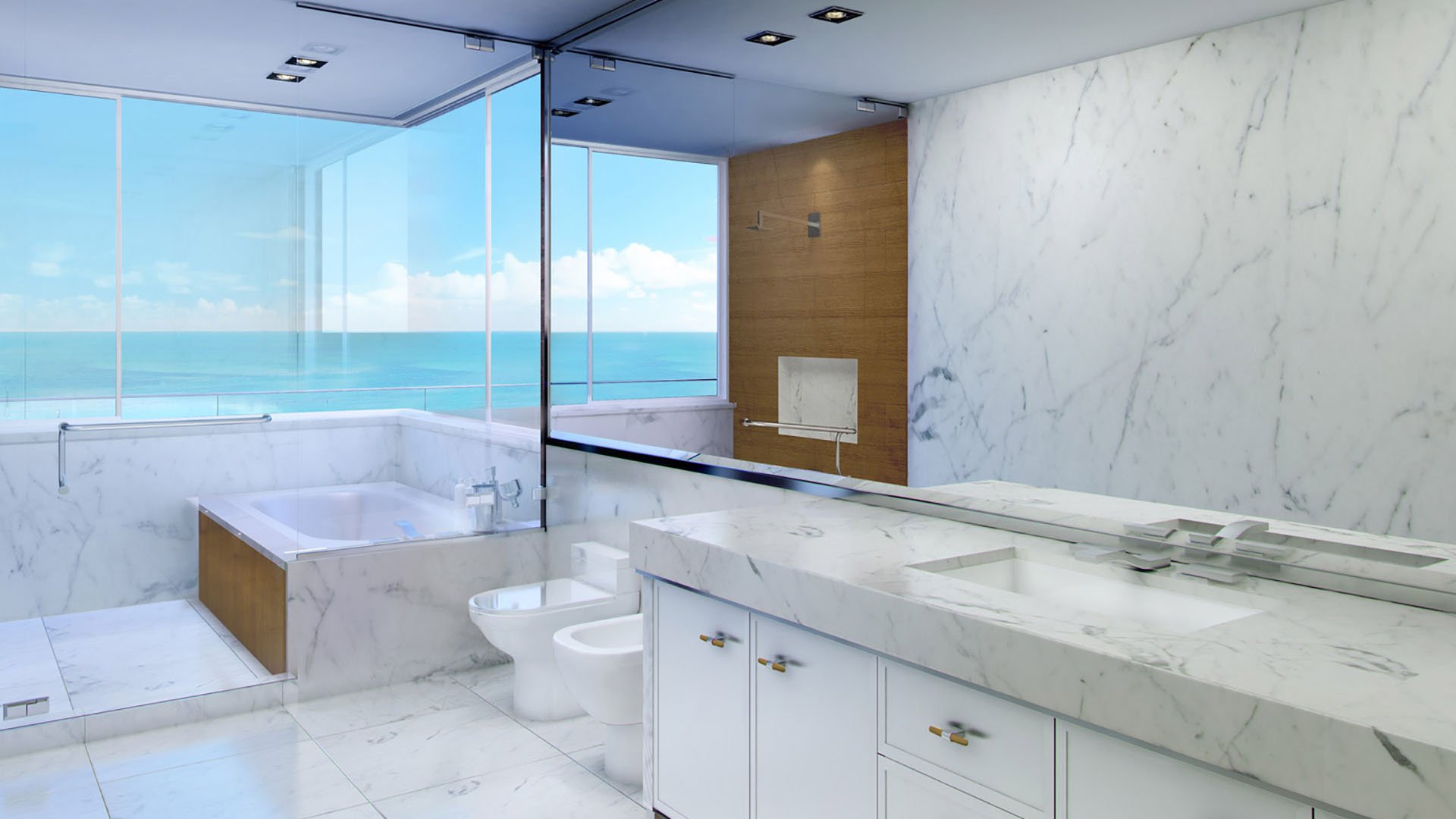
At Fendi Château Residences Surfside, the public presentation is appropriately polished: oceanfront elegance, branded design language, and a residential atmosphere shaped for a very particular Surfside buyer. That is the role of a rendering. It creates desire, frames lifestyle, and suggests how a residence may feel when every element is composed.
The utility room asks a different question. Not whether the residence photographs beautifully, but whether the back-of-house space performs once appliances, finishes, systems, doors, and storage take their actual positions. The tape measure, not the mood board, confirms whether daily household operations will feel effortless.
For a buyer at this level, utility-room depth is not a minor technicality. It influences laundry workflow, housekeeping rhythm, staff circulation, acoustic separation, beach-related storage, wardrobe support, and the feasibility of custom millwork. A small shortfall in clear depth can turn a beautifully specified residence into one where the most practical room in the home feels compromised.
The most important measurement is not the nominal room dimension printed on a plan. It is clear usable depth after systems and finishes: the wall-to-wall distance as built, plus the clearance from appliance faces to the nearest door, cabinet, closet, opposing wall, or service zone.
In a luxury condominium utility room, that distinction matters. A washer and dryer may fit within a drawn rectangle, but their doors still need to open. Someone still needs to stand, sort, fold, reach, and turn. Cabinetry may appear straightforward until a panel, vent, riser, access hatch, or equipment clearance interrupts the wall assumed to be usable.
The question is not simply, “Can laundry machines go here?” The better question is, “What is the clear operating depth once everything required by the building and the household is in place?”
This same discipline applies across Surfside and nearby luxury inventory, from The Delmore Surfside to Ocean House Surfside, where buyers often focus first on views, terraces, and primary suites. The more discreet test is whether the service spaces support the lifestyle promised by the visible rooms.
Full-size or oversized laundry appliances can materially reduce usable clearance when a room is planned around nominal dimensions rather than actual installed depth. Appliance handles, hoses, venting, door projection, and required access all matter. A machine that technically fits may still create an awkward standing zone.
Door swings deserve equal attention. Washer doors, dryer doors, cabinetry, closets, and the room entry should be checked against one another. A beautiful cabinet elevation becomes less useful if an appliance door blocks access. A room entry can feel tight if the appliance face sits too close to the path of travel. Even a closet intended for supplies may lose function if its door conflicts with the active laundry zone.
For buyers who travel frequently or maintain seasonal wardrobes, the utility room may need to handle more than ordinary laundry. It may support linens, garment care, housekeeping supplies, beach towels, luggage overflow, and the operational details of a South Florida residence used intensely when occupied. That kind of use requires depth, not just finishes.
Mechanical chases, risers, ductwork, plumbing stacks, electrical panels, and fire-life-safety components can all reduce the depth that appears usable on simplified plan graphics. These elements are not flaws; they are part of how a high-rise residence functions. The issue is whether the buyer understands their impact before approving appliance selections or millwork drawings.
A wall that looks clean in a brochure may not be fully buildable. It may require access, ventilation, clearance, or a panel that cannot be covered by cabinetry. A recess may look promising until the design team confirms what sits behind it. The prudent move is to identify which walls are straight, clear, and available for storage before treating the utility room as a blank box.
This is especially important in new-construction and pre-construction conversations, where buyers may be making design decisions before every surface can be experienced in person. In that setting, the due-diligence focus should remain narrow and practical: clear depth after systems and finishes.
Luxury is often discussed through materials, architecture, services, and views. Yet in daily life, luxury also means not having to negotiate around a poorly planned service room. The best residences allow visible spaces to remain serene because the invisible spaces perform well.
In an oceanfront home, the utility room can become a quiet command center for beach living. Towels, swimwear, sports gear, uniforms, linens, and household supplies all cycle through it. If the room lacks usable depth, those tasks migrate into closets, corridors, kitchens, or staff areas. The residence still looks luxurious, but it operates with friction.
That is why utility-room depth should be evaluated alongside the more glamorous features. Buyers comparing Arte Surfside, The Surf Club Four Seasons Surfside, and Fendi Château Residences Surfside may naturally focus on architecture, amenity culture, and the character of each address. The quieter distinction is whether the residence has enough back-of-house intelligence to support refined living without visible clutter.
A buyer’s design team should request measured as-built dimensions before finalizing appliances, storage systems, or custom millwork. If the residence is not yet in a condition where final field measurements are available, decisions should remain flexible enough to adjust once the real clearances are confirmed.
The most useful review is practical. Confirm the built wall-to-wall depth. Confirm the depth from appliance face to the opposing surface. Confirm how each door opens. Confirm whether the selected machines require extra clearance. Confirm which walls can receive cabinetry. Confirm whether service panels, vents, or required access zones interrupt storage. Confirm whether a person can stand and work comfortably when appliance doors are open.
The exercise is not about distrusting the presentation. It is about reading it correctly. Marketing imagery communicates atmosphere. Construction-level verification confirms use. For a residence positioned in the ultra-luxury tier, both matter, but only one tells you how the utility room will perform on a Monday morning.
The most successful utility rooms disappear into the household rhythm. They hold what they need to hold, open the way they need to open, and support the people who keep the residence running. They do not announce themselves, and they do not require daily compromise.
For Fendi Château Residences Surfside, the right question is not whether the rendering looks refined. It does. The question is whether the final room depth, after the building’s systems and the buyer’s selected appliances are accounted for, supports the standard of living the residence is meant to deliver.
That is the distinction sophisticated buyers should protect: the rendering shows the lifestyle, while the measured room confirms whether the back-of-house space can sustain it.
Why does utility-room depth matter at Fendi Château Residences Surfside? It affects laundry workflow, storage, appliance use, door swings, and the quiet efficiency expected in an ultra-luxury residence.
Should buyers rely on renderings to judge the utility room? No. Renderings communicate atmosphere; utility-room usability depends on measured clearances and built conditions.
What is the key measurement to verify? The priority is clear usable depth after finishes, systems, appliances, doors, cabinetry, and opposing surfaces are accounted for.
Can full-size appliances change the feel of the room? Yes. Appliance depth, handles, doors, hoses, and service space can reduce the standing area even when the machines technically fit.
What should be checked before ordering custom millwork? Confirm that walls are straight, clear, buildable, and not interrupted by access panels, vents, equipment zones, or required service clearances.
Do mechanical systems affect utility-room planning? They can. Chases, risers, ductwork, plumbing stacks, electrical panels, and life-safety components may reduce usable depth.
Why is door swing review important? Washer, dryer, cabinet, closet, and entry doors can conflict with one another if actual appliance depth and standing clearance are not tested.
When should as-built measurements be requested? They should be requested before finalizing appliance selections, millwork drawings, storage layouts, or any room-specific customization.
Is this only a concern for large households? No. Even occasional residents benefit from a utility room that supports linens, beach items, wardrobe care, and housekeeping supplies efficiently.
What is the simplest buyer takeaway? Judge the utility room by clear depth after systems and finishes, not by the apparent dimension suggested in presentation materials.
For a discreet conversation and a curated building-by-building shortlist, connect with MILLION.
If branded residences are on your mind — as a home or as an allocation — we would be glad to share what we are seeing, privately.
Begin a quiet conversation