In South Florida’s most design-forward residences, lighting is not a finishing touch. It is the curatorial tool that determines whether art reads as luminous and dimensional or flat and fatigued. Specialized lighting design aligns the architecture, the collection, and the lived rhythms of the home, balancing precision with restraint. This MILLION Luxury guide breaks down the lighting choices that protect artworks, elevate color and texture, and keep a residence feeling calm by day and cinematic at night. From Miami Beach galleries-in-residence to Brickell sky homes, the same principle holds: when light is designed for art, the entire interior looks more expensive.
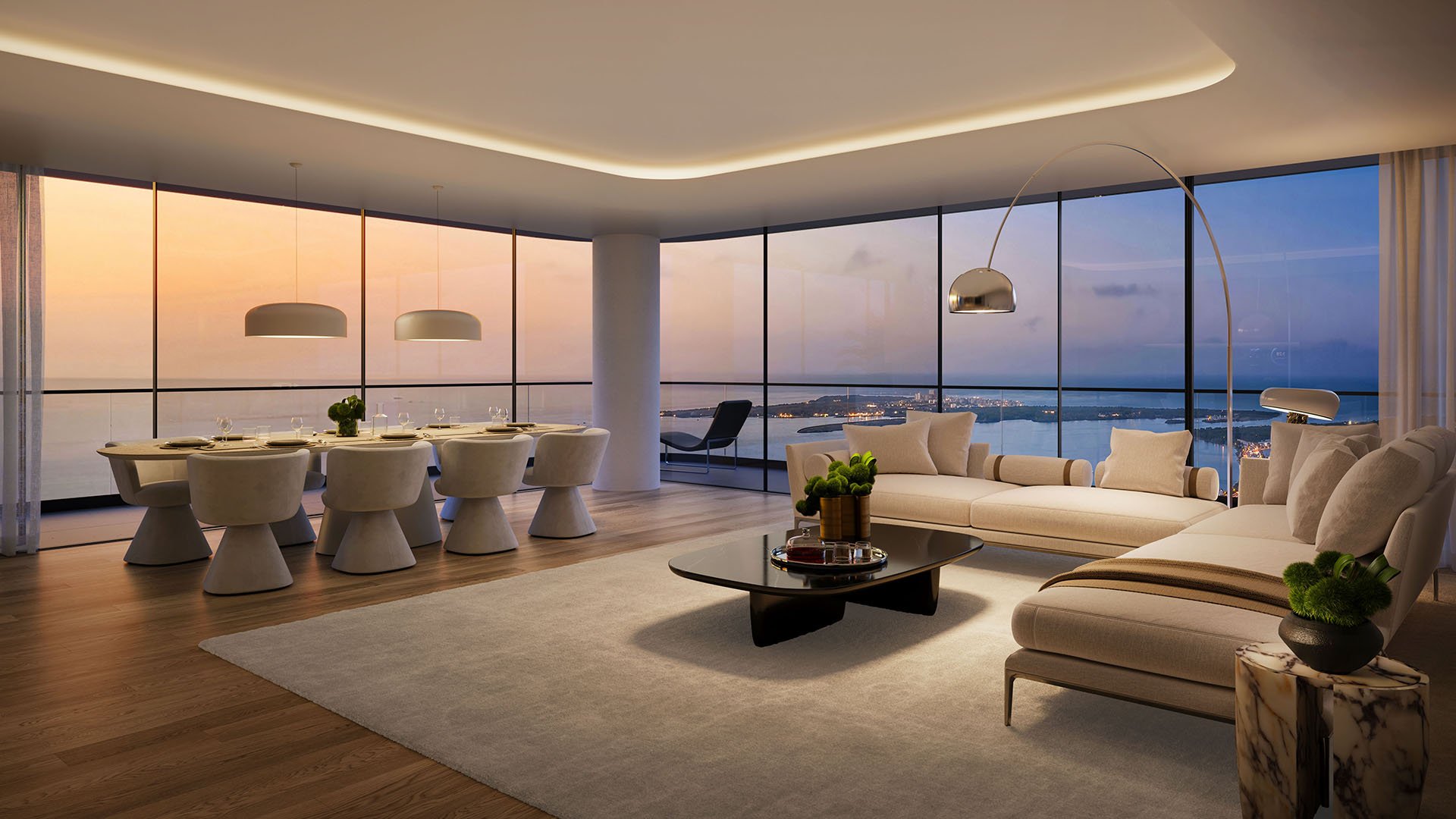
In a luxury interior, artwork is rarely “decor.” It is a visual anchor, a personal archive, and, at the top tier, an asset class. Yet even the most compelling piece can fall flat when it’s lit like a hallway-too bright, too cold, too diffuse, or riddled with glare. Specialized lighting design approaches art the way a curator would: with beam control, precise positioning, and layered ambience that draws out texture, color depth, and material nuance without calling attention to the hardware.
For South Florida homes in Miami-beach, Brickell, and Bal-harbour, this focus is more than aesthetic. Large panes of glass, high ceilings, and reflective surfaces create both opportunity and risk: daylight can make a canvas sing at noon, then flatten it at dusk; a mirror-polished floor can bounce a hot spot straight into your sightline. A lighting plan built around the collection anticipates these conditions and keeps artwork reading consistently throughout the day.
The best outcomes are discreet. The home should feel composed, not theatrically lit. When done well, art reads as intentional from every approach path, and the room stays comfortable for conversation.
Specialized lighting starts with a single question: how will the piece be seen? That means mapping primary sightlines from seating, circulation routes, and entry moments. A dramatic work above a console is experienced in motion; a piece across from a sofa is experienced in stillness. Beam spread and aiming strategy should reflect that reality.
A few buyer-oriented principles tend to separate “pretty lighting” from truly art-led lighting:
A common failure in luxury condos is aiming lights so the viewer catches the reflection of the light source in glass, varnish, or resin. Proper placement reduces specular glare and keeps the surface readable.
Wide floods can wash walls pleasantly, but they often erase brushwork and edge definition. Tight beams can be exquisite, yet they demand careful aiming and spacing to avoid scalloping.
Art benefits from accents, but people want comfort. Pairing accent light with soft ambient and low-level pathway light prevents a gallery effect from feeling sterile.
In residences with architectural restraint, like the refined lines often associated with 2200 Brickell, that discipline is especially important. A calm interior is the ideal backdrop-provided the lighting adds dimension without visual noise.
Brightness is easy to buy. Color truth is the luxury.
Specialized lighting is built to render pigments and materials faithfully. Collectors notice when whites skew gray-green, when warm neutrals turn muddy, or when a black painting loses separation in the shadows. Color quality is shaped by the light source and its spectrum, not just whether it’s labeled “warm” or “cool.” The practical takeaway is straightforward: insist on lighting that keeps skin tones flattering, wood tones rich, and artwork consistent from room to room.
Consistency matters just as much. A collection moves, expands, and rotates. If one gallery wall is lit with crisp whites and another with overly warm lamps, the home reads as disjointed. Specialized design establishes a coherent baseline so a new acquisition doesn’t trigger a full retrofit.
In Miami Beach, where interiors often balance ocean light with evening intimacy, this becomes an everyday quality-of-life detail. In a building context like Five Park Miami Beach, owners typically want a living environment that shifts from sunlit afternoons to gallery-like evenings without ever feeling harsh.
A high-end art lighting plan is rarely a single system. It is a hierarchy.
Soft, even illumination that lets the room function. This can be downlights, concealed coves, or luminous ceilings, depending on the architecture.
Adjustable light that brings the art forward with controlled beams and minimal spill.
Light on walls-not just on the floor plane-to keep spaces from feeling cave-like at night.
Statement fixtures used sparingly, kept subordinate to the art rather than competing with it.
Layering matters because art is read against its surroundings. A painting can look overlit if the rest of the room is dim, or underpowered if the room is bright. The goal is balance: the art should be the focal point, while the room still feels like a home.
In waterfront living, reflective materials complicate that balance. In places like Sunny-isles, glass and polished stone can amplify hotspots and glare, making careful aiming and shielding essential. A design-minded tower environment, such as Bentley Residences Sunny Isles, benefits from art-focused layers that control reflections while keeping the residence relaxed after dark.
Luxury buyers increasingly expect their home to respect the collection, not endanger it. Specialized lighting supports that in two practical ways: reducing unnecessary exposure and delivering precise control.
The most useful controls aren’t complicated; they’re intentional:
“Entertain,” “Evening,” and “Art focus” should be one-touch, so art is never blasted at full output by default.
A premium dimming experience is as much about mood as preservation. Flicker, stepping, or color shift at low levels quickly signals value engineering.
Art lives on vertical planes. When lighting zones map to walls and display areas, you can tailor light to each piece rather than compromise across an entire great room.
Beyond electric lighting, daylight management is part of the same strategy. South Florida’s natural light is a gift, but it’s also intense and directional. Window treatments, UV filtering, and strategic placement of sensitive works keep the collection comfortable without turning the home into a blackout box.
For an ultra-premium audience, “specialized” doesn’t mean industrial. It means invisible-until you need it.
Three integration approaches dominate high-end residential art lighting:
Minimal and clean, effective for singular works when carefully aimed.
These visually dissolve into the ceiling plane and pair well with refined interiors.
Tracks are the most flexible option for collectors who rotate art, but they require thoughtful layout to avoid a retail feel.
The right choice depends on ceiling conditions, the likelihood of rehangs, and the architecture’s level of minimalism. A collector who changes walls seasonally may prefer a track strategy that delivers adjustability without re-cutting the ceiling. A homeowner with a stable, museum-like layout might favor trimless fixtures aligned with millwork joints.
In Bal-harbour, where interiors often lean toward crisp, edited luxury, integration matters as much as performance. A residence anchored by a project like Rivage Bal Harbour calls for lighting that stays deliberately quiet, letting the collection and the view carry the narrative.
Specialized lighting design is easiest when planned early-ideally alongside ceiling design, electrical layout, and millwork. Retrofitting is possible, but it tends to introduce compromises: fewer circuits, less ideal aiming locations, and more visible hardware.
When evaluating a plan, focus on what you can feel and verify during a mock-up:
The final result lives or dies in aiming and shielding, not the spec sheet.
A sample wall with “similar” work is rarely similar enough, especially with textured surfaces, glazing, or metallic pigments.
Stand where you’ll sit, not where the installer stands.
If your collection evolves, ensure the system can evolve with it-without major construction.
This approach is valuable whether you’re outfitting a newly delivered condo or upgrading a long-held residence. In Coral-gables or Coconut-grove, for instance, a renovation often includes new millwork and rebalanced daylight. Planning for art lighting at that moment is far more elegant than patching after the walls are painted.
Specialized lighting design pays dividends beyond the walls where the art hangs.
First, it elevates the perceived quality of finishes. Stone reads deeper, plaster looks smoother, and fabrics feel more dimensional when light is controlled rather than scattered. Second, it creates a sense of curation-the feeling that every object has a reason for being there. Third, it can help a property show better. Prospective buyers may not name what’s different, but they’ll register a home that feels more composed.
In ultra-modern interiors, lighting is often the element that keeps minimalism from feeling cold. In more classic spaces, it prevents richness from turning heavy. Either way, the outcome is consistent: the collection reads as intentional, and the home looks expensive in a way that feels calm-not performative.
What is specialized art lighting in a residence? It is lighting planned specifically for artwork, using controlled beams, placement, and dimming to reveal detail while limiting glare.
Is track lighting appropriate for luxury interiors? Yes, when low-profile tracks are integrated thoughtfully and used for flexibility, especially for rotating collections.
How do I reduce glare on framed art behind glass? Use proper aiming angles, shielding, and fixture placement so reflections do not sit in the primary viewing line.
Should art be lit brighter than the rest of the room? Slightly, but not dramatically. Balanced layering keeps the art prominent without making the room feel theatrical.
Do warm or cool color temperatures work best for art? It depends on the piece and the room, but consistency and color quality matter more than a single “correct” number.
Can I retrofit art lighting without opening ceilings? Often yes, using surface systems or existing junction points, but the cleanest results usually come from early planning.
What controls are most useful for collector homes? Scene presets, smooth dimming, and zoning by display wall give the most practical day-to-night flexibility.
How do I light sculpture and three-dimensional work? Use multiple, softer angles to model form and avoid harsh shadows, especially on reflective materials.
Does art lighting help resale value? It can improve presentation and perceived finish quality, which supports stronger buyer impressions during showings.
When should lighting be coordinated with an interior designer? At the start of layout and ceiling planning, so fixtures, coves, and sightlines align with furniture and art placement.
For a tailored shortlist and next-step guidance, connect with MILLION Luxury.
If branded residences are on your mind — as a home or as an allocation — we would be glad to share what we are seeing, privately.
Begin a quiet conversation