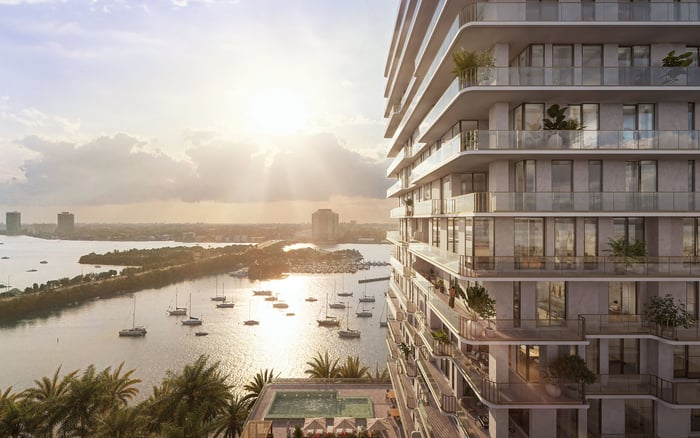
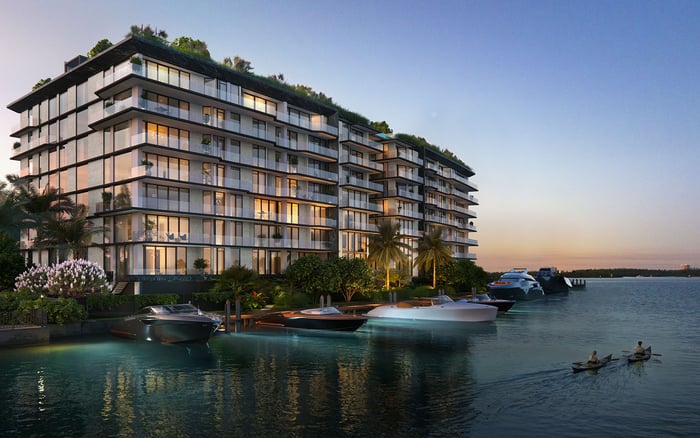
A discreet buyer’s guide to comparing The Cove Residences Edgewater and Onda Bay Harbor through the operational details that shape daily luxury: pets, service circulation, private dining, and rule flexibility.
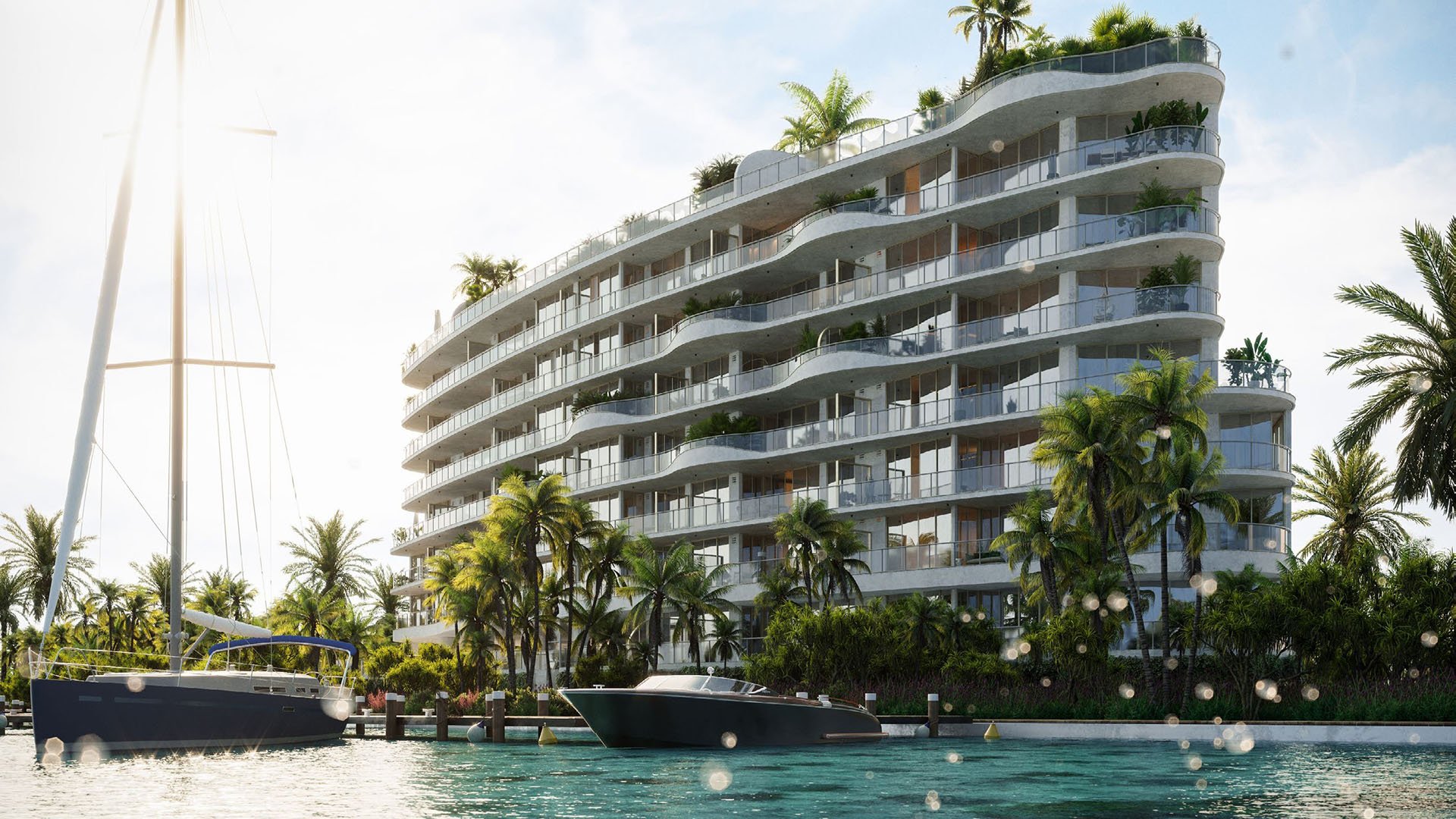
For a certain South Florida buyer, the question is not whether a new residence looks polished. It is whether the building operates with the discretion, predictability, and ease that a serious household requires. The Cove Residences Edgewater vs Onda Bay Harbor is therefore less about a simple neighborhood preference and more about how each address might handle the rituals that matter after closing: walking the dog before a board meeting, bringing in a private chef for dinner, moving staff through the building without turning the lobby into a stage, and living luxuriously without the tempo of a members club.
Onda Bay Harbor sits within Miami’s luxury waterfront condominium market and is associated with Bay Harbor Islands, a quieter and more residential setting than denser high-rise submarkets. It is also positioned as low-density and design-forward, which gives the comparison a particular tone. Buyers considering The Cove Residences Edgewater should apply the same level of scrutiny, but any Cove-specific operating conclusions should be confirmed directly through current documents, management protocols, and sales materials before being treated as settled.
Pets are often discussed as if the answer were binary: allowed or not allowed. In a luxury condominium, that is too simple. The better question is whether the building makes pet ownership feel graceful. A residence may be described as pet accommodating and still create daily friction if the dog-walk path crosses a formal arrival sequence, elevator routing is ambiguous, or the nearest outdoor access requires a parade through social spaces.
For Onda Bay Harbor, buyers should examine dog-walk routes, elevator routing, lobby exposure, and nearby outdoor access. This is especially relevant for owners who travel frequently, employ household staff, or have larger dogs whose routines cannot be improvised. The ideal arrangement minimizes visibility without feeling punitive. It should allow an early walk, a late-night return, or a handler-led routine to feel normal rather than exceptional.
In Edgewater, the same questions apply with added emphasis on vertical circulation and urban density. A buyer looking at The Cove Residences Edgewater should ask where pets enter and exit, whether there are designated elevator expectations, and how management handles peak-hour movement. A polished lobby is appealing, but for a pet-owning household, true elegance is a predictable route that does not require negotiation each day.
Private dining is not just a dining-room photograph. It is a building-operations issue. The arrival of flowers, wine, rental equipment, groceries, servers, chefs, and cleanup crews must be absorbed by the property without noise, confusion, or undue visibility. For buyers who host with restraint rather than spectacle, this choreography is central to the value proposition.
At Onda Bay Harbor, the relevant diligence includes service-elevator access, loading procedures, staff entry routes, and catering delivery rules. The question is not simply whether a chef can come upstairs. It is whether the chef can arrive with coolers, assistants, and timing needs without colliding with resident arrivals or requiring repeated approvals. Buyers should also clarify whether elevators can be reserved, what delivery windows apply, and how the building handles vendor insurance or approval requirements.
For The Cove Residences Edgewater, the same operational checklist should be treated as essential. Edgewater buyers often value the convenience of an urban waterfront setting, but that convenience can be diluted if service access is underdefined. Before committing, the buyer should understand how a catered dinner for twelve would function from curb to kitchen, and from dessert service to load-out.
The most desirable private residences usually balance two instincts: protection and ease. Rules protect quiet enjoyment, but rules that are too rigid can make sophisticated living feel managed rather than supported. The difference is subtle. A building can permit private dining and still make the process feel bureaucratic. It can also be quiet and residential without feeling cold.
Onda Bay Harbor may appeal to buyers seeking waterfront luxury in a boutique-feeling neighborhood rather than a heavily activated social-lifestyle tower. That does not eliminate the need for diligence. Private-dining buyers should review guest limits, vendor approvals, noise rules, delivery windows, and elevator reservation policies. They should also ask how consistently rules are enforced. Flexibility is valuable only when it is predictable.
The phrase “without a members-club atmosphere” matters. Some buyers want hospitality-level service, but not a constant social calendar. They want the building to function beautifully in the background. In this context, Bay Harbor Islands offers a quieter residential frame, while an Edgewater choice such as The Cove Residences Edgewater should be evaluated for how it separates private life from shared amenity energy.
Onda Bay Harbor’s Bay Harbor Islands setting is central to its appeal for buyers who want waterfront luxury with a calmer residential mood. For a Bay Harbor search, the attraction is often the sense of neighborhood scale, a more discreet cadence, and a lifestyle that does not depend on constant activation. Waterview priorities may still matter, but the more important question is how the building’s quietness translates into ordinary days.
Edgewater offers a different premise. It is inherently more urban in the way buyers experience arrivals, traffic, services, and neighborhood movement. That can be exactly right for a household that wants immediacy and city connection. It can also make building protocols more consequential, particularly for pets, vendors, and evening entertaining. In a vertical urban building, any weakness in service circulation is felt repeatedly.
Neither setting is automatically superior. The right answer depends on whether the household values a quieter waterfront rhythm or a more connected urban one, and whether the condominium’s rules support that preference in practice.
Before choosing between these two propositions, ask for the actual operating documents that govern daily life. Confirm pet size and number rules, designated pet paths, any restricted areas, and the consequences for repeated violations. Walk the route from residence to outdoor space at the times you will actually use it.
For private dining, request clarity on loading access, service elevators, vendor approvals, delivery timing, insurance certificates, trash removal, noise expectations, and elevator reservations. Ask management how often private events occur and how conflicts are resolved when two households need the same service infrastructure.
Finally, test the cultural fit. A building can be luxurious yet socially intense, quiet yet inflexible, or service-rich yet overly procedural. The best fit for this buyer profile is a condominium that allows life to feel private, generous, and unforced.
Onda Bay Harbor has the clearer supported profile here: a Bay Harbor Islands condominium within Miami’s luxury waterfront market, positioned as low-density and design-forward, with a neighborhood context that may suit buyers avoiding a club-like atmosphere. The Cove Residences Edgewater belongs in the same conversation only after its operating details are verified with the same discipline.
For buyers who expect private dining, household staff, and seamless pet routines, the winner will not be decided by renderings alone. It will be decided in the loading area, the elevator policy, the dog-walk route, the vendor approval form, and the tone of rule enforcement.
Is Onda Bay Harbor a Bay Harbor Islands condominium? Yes. It is associated with Bay Harbor Islands and positioned within Miami’s luxury waterfront condominium market.
Why does pet logistics matter more than a pet-friendly label? Because daily comfort depends on routes, elevator expectations, lobby exposure, and access to outdoor areas.
What should private-dining buyers ask about first? They should ask about service-elevator access, loading procedures, staff entry routes, and delivery windows.
Does Onda Bay Harbor have a quieter residential setting? Bay Harbor Islands is framed as quieter and more residential than denser Miami high-rise submarkets.
Can buyers assume The Cove Residences Edgewater has the same rules? No. Its specific pet, vendor, and private-dining rules should be verified directly before purchase.
What house rules affect private dinners most? Guest limits, vendor approvals, noise rules, elevator reservations, and catering delivery rules matter most.
Is a members-club atmosphere always negative? Not always. Some buyers enjoy social programming, while others prefer service without constant activation.
Why are service elevators important in luxury condos? They help keep chefs, staff, deliveries, and cleanup separate from primary resident circulation.
What is the strongest reason to consider Onda Bay Harbor? Its low-density, design-forward positioning and quieter waterfront context may suit discreet households.
What is the smartest next step before choosing? Review current condo documents, confirm management procedures, and test the building’s daily routes in person.
When you're ready to tour or underwrite the options, connect with MILLION.
If branded residences are on your mind — as a home or as an allocation — we would be glad to share what we are seeing, privately.
Begin a quiet conversation