A buyer-oriented underwriting lens on how The Bristol Palm Beach and Apogee South Beach frame chef-ready kitchens, catering circulation, and private dining value in South Florida luxury real estate.
In South Florida’s highest tier of condominium living, the kitchen is no longer a back room, and private dining is no longer a ceremonial amenity. The underwriting question is sharper: which residents will use chef-ready kitchens, catering flow, and private dining rooms often enough to justify the design, staff coordination, and association cost behind them?
That is why the comparison between The Bristol Palm Beach and Apogee South Beach is useful. The Bristol reads as the more relevant benchmark for quiet formality, privacy-oriented service, and club-like resident spaces. Apogee South Beach is the clearer reference for resort energy, large residences, outdoor living, and design-forward entertaining.
In shorthand, this is a Palm Beach and West Palm Beach privacy problem set versus a Miami Beach and South of Fifth entertaining problem set. Both can command serious luxury attention. They simply monetize different social rituals.
The Bristol model is strongest where residents expect entertaining to feel controlled, discreet, and almost private-club in its smoothness. In that world, the kitchen must do more than photograph beautifully. It must support private chefs, family gatherings, catered evenings, and multigenerational entertaining without turning the residence or the building into visible theater.
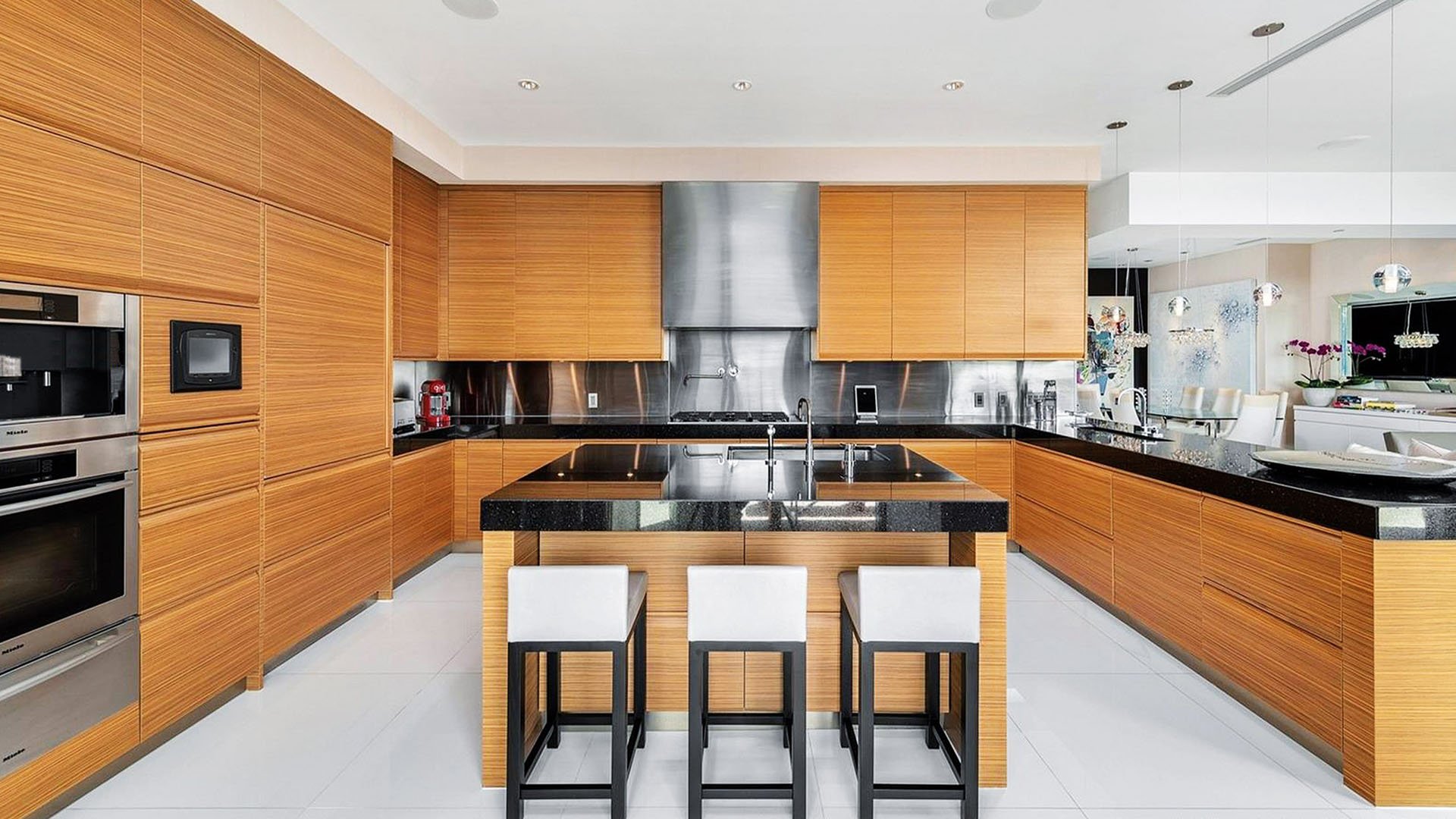
For underwriting, chef-ready is not a decorative adjective. It implies adequate work zones, logical prep space, separation between guest-facing and service-facing moments, and a plan that lets staff move without interrupting the social center of the home. The buyer is not simply asking whether the kitchen has presence. The buyer is asking whether it can support a seated dinner, a holiday meal, or a catered reception without obvious friction.
This is where private dining and social rooms become lifestyle infrastructure. In a Bristol-style building, these spaces should be evaluated as part of the daily promise of the property, not as ornamental square footage. If residents treat the building like an extension of a private residence, the dining room, lounge, and service support areas can help preserve privacy while expanding hosting capacity.
The same logic applies to newer West Palm Beach comparisons such as Alba West Palm Beach, where buyers should ask how a building’s culinary and social programming supports the actual cadence of ownership rather than relying on amenity renderings alone.
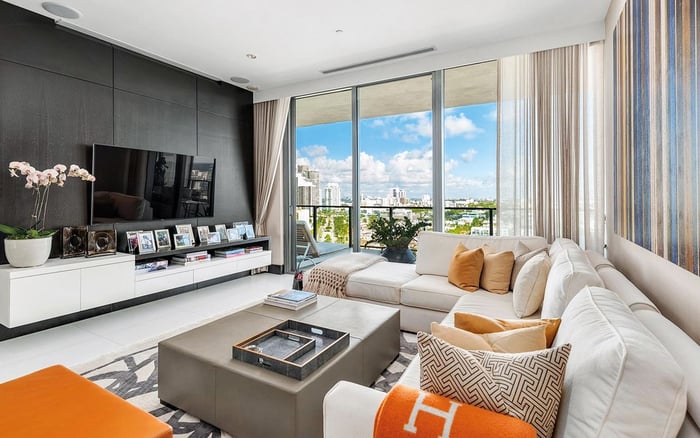
Apogee South Beach points to a different form of luxury. Its relevance is strongest where entertaining moves between residence interiors and large outdoor spaces, with open kitchens supporting informal hosting rather than highly formal private dining. The emotional center is not a closed dining room. It is the relationship between the living area, kitchen, terrace, and view.
That does not make the kitchen less important. It changes the underwriting priority. For an Apogee-style model, the residence layout should support a party-ready sequence: arrival, bar or kitchen gathering, living room circulation, and outdoor spillover. A serviceable open kitchen matters because guests are likely to congregate around it. The kitchen becomes a social anchor as much as a production zone.
This luxury benchmark also reinforces the value of oversized residences, resort-style leisure, and concierge service for the Miami Beach buyer who wants atmosphere. In that context, a formal building dining room may be less central than the ability to entertain comfortably within the residence itself. A private dinner may begin at the kitchen island and end outdoors.
For buyers comparing South Beach alternatives, The Ritz-Carlton Residences® South Beach belongs in the same broader conversation about how service, beachside living, and hosting expectations intersect, without assuming that every buyer wants the same private dining infrastructure.
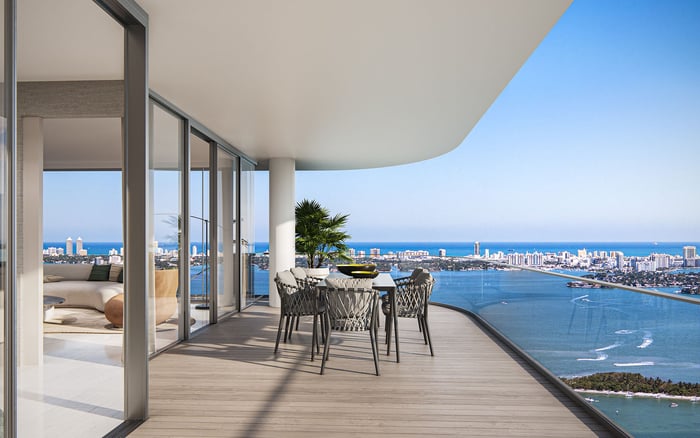
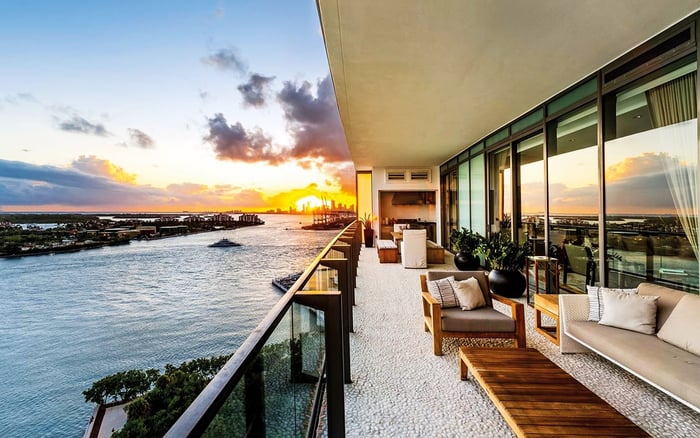
Terrace adjacency deserves its own line in the underwriting model. In Miami Beach, outdoor entertaining can be the feature that turns a beautiful kitchen into a truly usable social machine. If the kitchen is too far from the terrace, or if circulation forces guests through narrow or awkward paths, the plan can feel less luxurious in use than it does on paper.
The Apogee lesson is that outdoor living should not be treated as an afterthought to the kitchen. The two should work together. Sight lines, door placement, seating zones, and service access all matter because the hosting pattern is fluid. Guests do not remain seated for the entire evening. They move, gather, step outside, return to the kitchen, and reassemble around the view.
For underwriting, the question is simple: does the plan make that movement graceful? If not, expensive finishes may conceal a functional shortfall.
Catering flow is the least glamorous part of the discussion and often the most revealing. A building can have exceptional interiors, but if staff must move through guest-heavy lobbies, compete with residents in elevators, or stage service in improvised areas, the luxury experience becomes fragile.
The Bristol-style answer is discreet circulation. Back-of-house routes, staff movement, catering support, and service staging should allow residents to host without disrupting the front-of-house environment. This matters in a Palm Beach and West Palm Beach context where privacy and composure are part of the brand promise.
The Apogee-style answer is different but not lesser. Service still matters, but the focus shifts toward supporting in-residence entertaining, terrace activity, and flexible hosting. The best version of this model avoids over-formalizing the amenity program while still giving residents enough operational support for dinners, parties, and seasonal gatherings.
Private dining rooms can be value drivers when the resident profile supports them. They can extend a home, allow larger gatherings, and create a club-like layer of hospitality within the building. But they also create cost, scheduling, maintenance, and staffing considerations.
This is the two-sided risk for any new entrant. Underbuild culinary infrastructure and the property may feel strained when residents actually host. Overbuild private dining and catering areas, and the association may carry beautiful spaces that are underused. The correct answer is not always more. It is calibration.
A Palm Beach-area buyer who hosts family dinners, charity-adjacent evenings, or formal seasonal gatherings may underwrite private dining very differently from a South Beach buyer whose primary entertaining happens inside the residence and across the terrace. The room count may matter less than the social pattern.
A new luxury building should not copy either Bristol or Apogee wholesale. It should decide, with discipline, whom it is serving. If the buyer cohort values quiet sophistication, multigenerational entertaining, and service that feels closer to a private club, the Bristol framework is more compelling. If the buyer cohort values resort atmosphere, outdoor entertaining, and design-forward social energy, the Apogee framework is more relevant.
For buyers, the practical inspection is straightforward. Walk the kitchen as if a chef were working. Trace the catering path as if guests were already arriving. Stand in the private dining room and ask whether residents will book it frequently or admire it rarely. Then walk from the kitchen to the terrace and decide whether the plan supports the way South Florida evenings actually unfold.
Projects across the region, from Palm Beach Residences to South Beach and beyond, will continue to frame culinary lifestyle as a luxury signal. The lasting value will belong to buildings where that signal becomes daily functionality.
Which building is the better benchmark for formal private dining? The Bristol Palm Beach is the stronger benchmark for formal entertaining, private-club atmosphere, and discreet service expectations.
Which building better represents indoor-outdoor entertaining? Apogee South Beach is the clearer benchmark for terrace-led, resort-style hosting in a Miami Beach context.
Should every luxury condominium include a private dining room? No. Private dining should be underwritten to actual resident use, not added simply because it looks impressive.
What makes a kitchen truly chef-ready? A chef-ready kitchen should support real preparation, service, circulation, and guest-facing presentation without operational friction.
Why does catering flow matter to buyers? Poor catering flow can disrupt privacy, elevators, lobbies, and the overall sense of calm during events.
Is an open kitchen better than a separated kitchen? It depends on the buyer profile. Open kitchens suit informal hosting, while separated service zones better support formal entertaining.
How should buyers evaluate terrace entertaining? They should study the path from kitchen to outdoor seating, including sight lines, door placement, and room for guests to circulate.
Can overbuilding amenities hurt long-term value? Yes. Underused dining and catering spaces can add maintenance and association burden without improving daily resident experience.
What is the main difference between Palm Beach and South Beach underwriting? Palm Beach-area underwriting tends to reward privacy and formality, while South Beach emphasizes outdoor energy and social flexibility.
What should a new luxury project learn from both buildings? It should calibrate kitchen scale, service circulation, and dining amenities to its intended residents rather than imitate either model.
To compare the best-fit options with clarity, connect with MILLION.
If branded residences are on your mind — as a home or as an allocation — we would be glad to share what we are seeing, privately.
Begin a quiet conversation