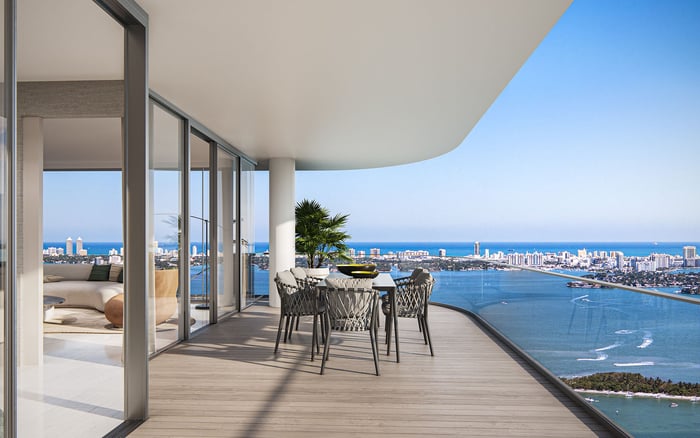
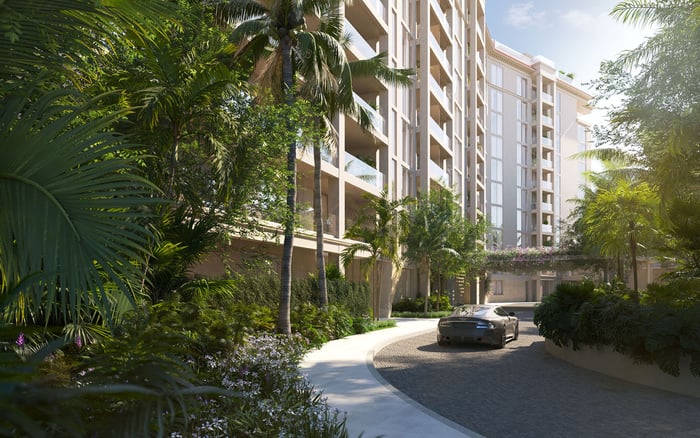
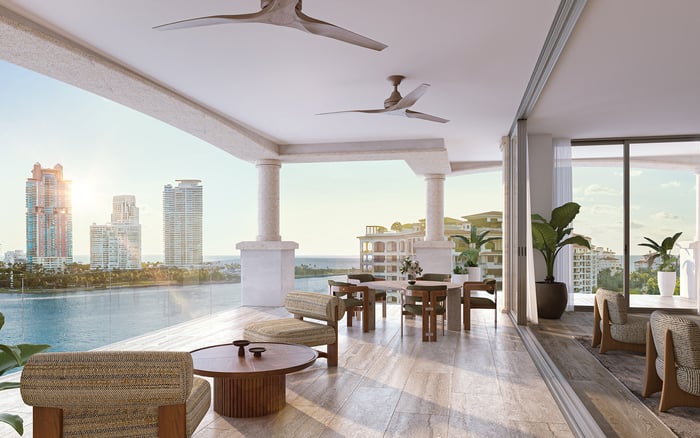
At Apogee South Beach, privacy is not distributed evenly across the stack. Ground-floor lanai residences offer immediate access to the building’s resort-style amenity base, but that convenience comes with greater exposure to foot traffic, pool activity, and direct sightlines. Penthouses, by contrast, benefit from elevation, setback, and separation from social zones, making them the stronger option for buyers whose primary brief is discretion.
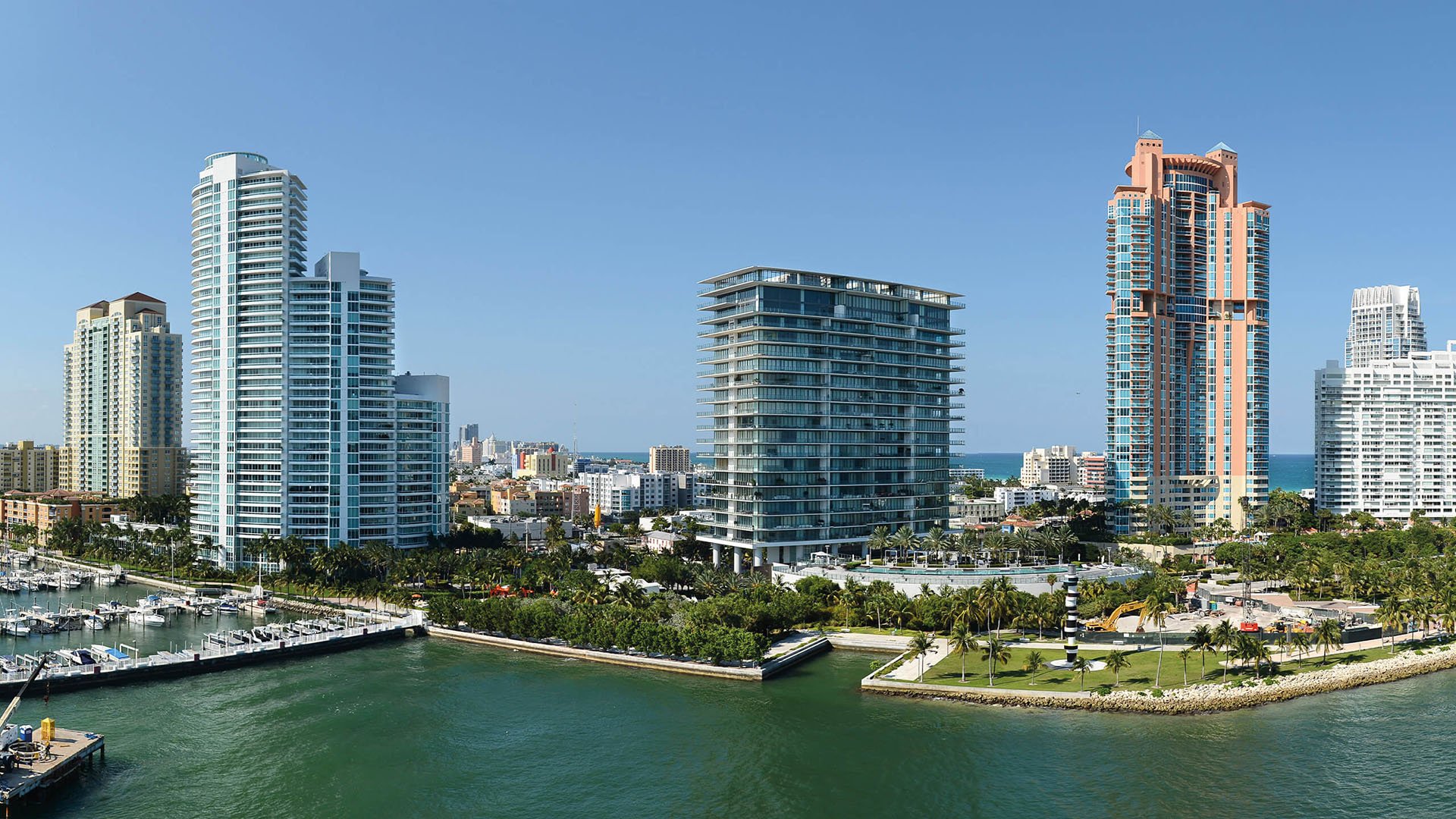
At Apogee South Beach, the privacy conversation begins with architecture, not marketing language. The tower is organized with 17 residential stories above a six-story amenity base, and that composition matters. Lower residences sit closer to the project’s social core, while the highest homes rise above it. For buyers comparing a ground-floor lanai with a penthouse, the distinction is less about security and more about daily exposure: who can see you, what you hear, and how much distance separates your home from the building’s most active spaces.
This distinction is especially important in a property conceived as resort-style living rather than an inward-facing private enclave. Two resort-style pools, a spa spanning more than 10,000 square feet, and substantial ground-level recreation areas create a richly serviced lifestyle, but they also concentrate movement and activity near the base. In practical terms, a lanai owner enjoys immediacy. A penthouse owner enjoys distance.
That trade-off is not unique to South of Fifth. Across the broader Miami Beach market, buyers weighing privacy often look to elevated, more insulated alternatives such as The Perigon Miami Beach, Shore Club Private Collections Miami Beach, or Continuum on South Beach when vertical separation is the priority. At Apogee South Beach, that same principle plays out within a single building.
A lanai residence can be deeply appealing. It offers private outdoor space and a more immediate relationship to the building’s leisure program. For a buyer who wants to step out quickly to the pool, spa, or shared terraces, that convenience can feel almost villa-like. Yet the privacy compromise is structural.
Ground-floor lanais face public or semi-public zones more directly than upper-floor residences. They sit closer to circulation paths, arrival sequences, and the routine movement generated by entry, exit, valet, and service activity. Even when landscaping and thoughtful planning soften the effect, the residence remains tied to a more active perimeter. In a glass-forward building that emphasizes openness and visual connection, ground level has fewer natural advantages for seclusion.
The issue is not simply pedestrian visibility. It is also the character of outdoor privacy. Lanai spaces tend to have less natural screening from surrounding properties and less commanding perimeter views than homes higher in the stack. That means outdoor living may feel less isolated, even when the terrace itself is generous. For buyers who define privacy as being able to read, dine, or entertain without feeling observed from nearby amenity zones or adjacent structures, the lanai format requires more tolerance.
There is also a sound component. Lower residences are more affected by pool activity, amenity deck use, and internal circulation. Valet and service operations, while part of a polished luxury experience, still create a background rhythm that is more noticeable near the base than several stories above it.
Penthouses at Apogee South Beach hold the clearer privacy advantage because elevation addresses multiple issues at once. Height reduces direct sightlines from streets, common areas, and neighboring buildings. It also separates the residence from the building’s busiest layers, limiting the effect of amenity traffic and operational noise.
Terraces at the top of the building typically feel more insulated because vertical separation changes the experience of outdoor space. A penthouse terrace is less likely to be visually entangled with pools, spa decks, or nearby mid-rise lines. Setback features at the upper levels further strengthen that sense of retreat, creating a more substantial buffer than the lower floors aligned more closely with the active base.
This is why the penthouse category continues to command a premium in the luxury market. The added value is not only the view. It is the combination of privacy, altitude, and psychological distance from shared spaces. Similar logic informs buyer interest in highly elevated oceanfront residences like 57 Ocean Miami Beach and more sequestered upper-tier product such as The Ritz-Carlton Residences® South Beach, where separation from high-traffic zones is part of the appeal.
For an Apogee South Beach buyer, privacy can be judged through three practical filters.
First is visual exposure. Ground-floor lanai units are the more exposed choice in terms of pedestrian and street visibility. Penthouses are the least exposed. If discretion matters in daily life, especially for owners who use outdoor space frequently, this single factor often settles the comparison.
Second is noise. Lower units sit closer to the amenity base, where recreation and building operations are concentrated. Penthouses, several stories above those activity zones, are generally less affected by the acoustics of resort-style living.
Third is proximity. Some buyers love being near everything. Others want a more ceremonial transition between residence and amenity. The lanai offers immediacy. The penthouse offers distance. Neither is inherently better in the abstract, but only one is superior when privacy is the leading criterion.
The market tends to recognize these privacy distinctions. Ground-floor lanai units are commonly positioned at a discount to comparable upper-floor residences, with asking patterns suggesting a spread of roughly 20 to 35 percent in some cases. Penthouses, meanwhile, can command materially higher premiums, sometimes several million dollars above lower-positioned alternatives depending on scale and terrace configuration.
That gap reflects more than square footage. It captures hierarchy within the building. At a property like Apogee South Beach, the stack itself creates a meaningful difference in how private a residence feels. Buyers are not paying only for larger views. They are paying for fewer interruptions, reduced sightlines, and a greater sense of remove.
A lanai can still be the right purchase. For a buyer who values convenience, spontaneous access to pools and wellness amenities, and a more resort-forward lifestyle, the lower privacy profile may be entirely acceptable. Some residents genuinely prefer the immediacy of a home that feels connected to daily activity rather than removed from it. In that case, the lanai delivers a very specific luxury proposition.
But if the brief is quiet discretion, the answer is simpler. The penthouse is the stronger fit. It benefits from minimal exposure, superior separation from common areas, better insulation from neighboring sightlines, and a more protected outdoor experience. Within a building that celebrates transparency and openness, the uppermost residences are where privacy is most fully recovered.
When the question is framed narrowly around privacy, penthouses win decisively at Apogee South Beach. The building-wide security profile may be shared across unit types, but true residential privacy here is defined by visual exposure, noise, and closeness to activity. On all three measures, the uppermost homes perform better.
Ground-floor lanai residences remain attractive for buyers who place a premium on access and ease. Yet that choice should be made with clarity. At this address, privacy trade-offs are not incidental. They are built into the relationship between the amenity base and the residential stack.
Are penthouses more private than ground-floor lanais at Apogee South Beach? Yes. Elevation, setback, and greater distance from common areas give penthouses a clear privacy edge.
Why do lanai units feel less secluded? They sit closer to pools, spa areas, arrival zones, and circulation paths, which increases nearby visibility and activity.
Is the privacy difference mainly about security? No. The greater distinction is visual exposure, noise, and proximity, not building-wide security systems.
Do lanais have private outdoor space? Yes, but that outdoor space is generally more exposed to nearby amenity zones and surrounding sightlines than a penthouse terrace.
Are penthouse terraces quieter? Typically yes. Their height places them farther from pool, valet, service, and amenity activity.
Does Apogee South Beach’s design affect privacy? Yes. Its transparent, glass-forward architecture favors openness and views, which can reduce seclusion at lower levels.
Why do penthouses often command higher prices? Buyers pay not only for views and scale, but also for stronger privacy and greater separation from high-traffic areas.
Can a lanai still be the right choice? Absolutely. It suits buyers who prioritize immediate amenity access and accept a more active setting.
Do neighboring buildings affect lower units more? Generally yes. Lower residences have less vertical separation and less natural screening than homes at the top.
Which option is better for a privacy-first buyer in Miami Beach? The penthouse is the more suitable choice, especially for owners who value discretion, quiet, and a more insulated terrace.
If you'd like a private walkthrough and a curated shortlist, connect with MILLION Luxury.
If branded residences are on your mind — as a home or as an allocation — we would be glad to share what we are seeing, privately.
Begin a quiet conversation