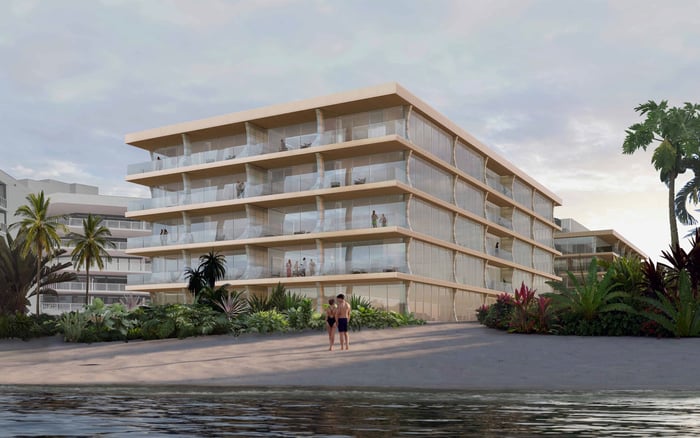
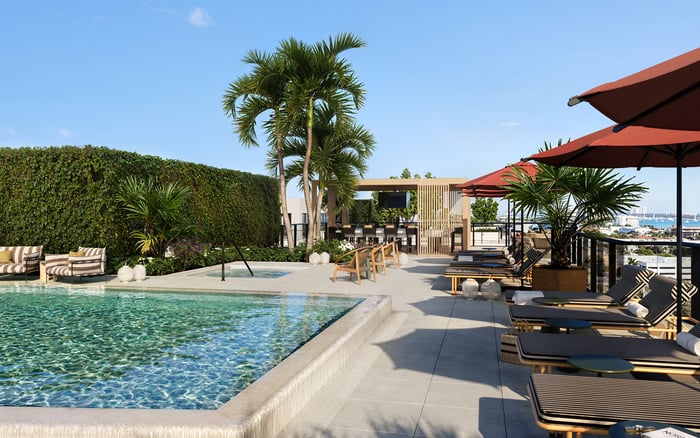
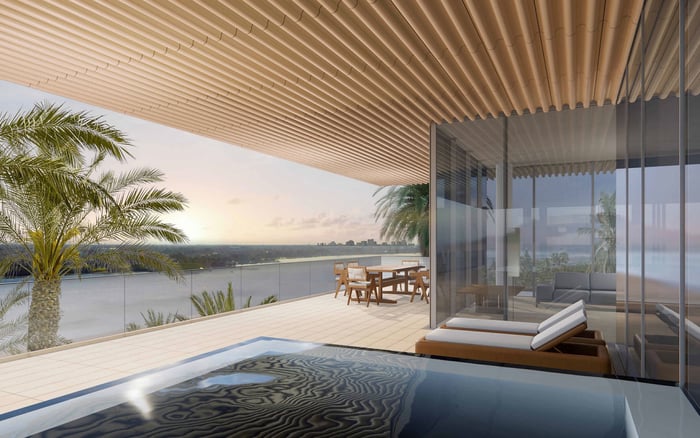
A buyer-focused comparison of Maison D’Or South Flagler and Banyan Tree Residences West Palm Beach through the lens of private entertaining, chef-ready kitchens, catering flow, and the practical value of shared dining spaces.
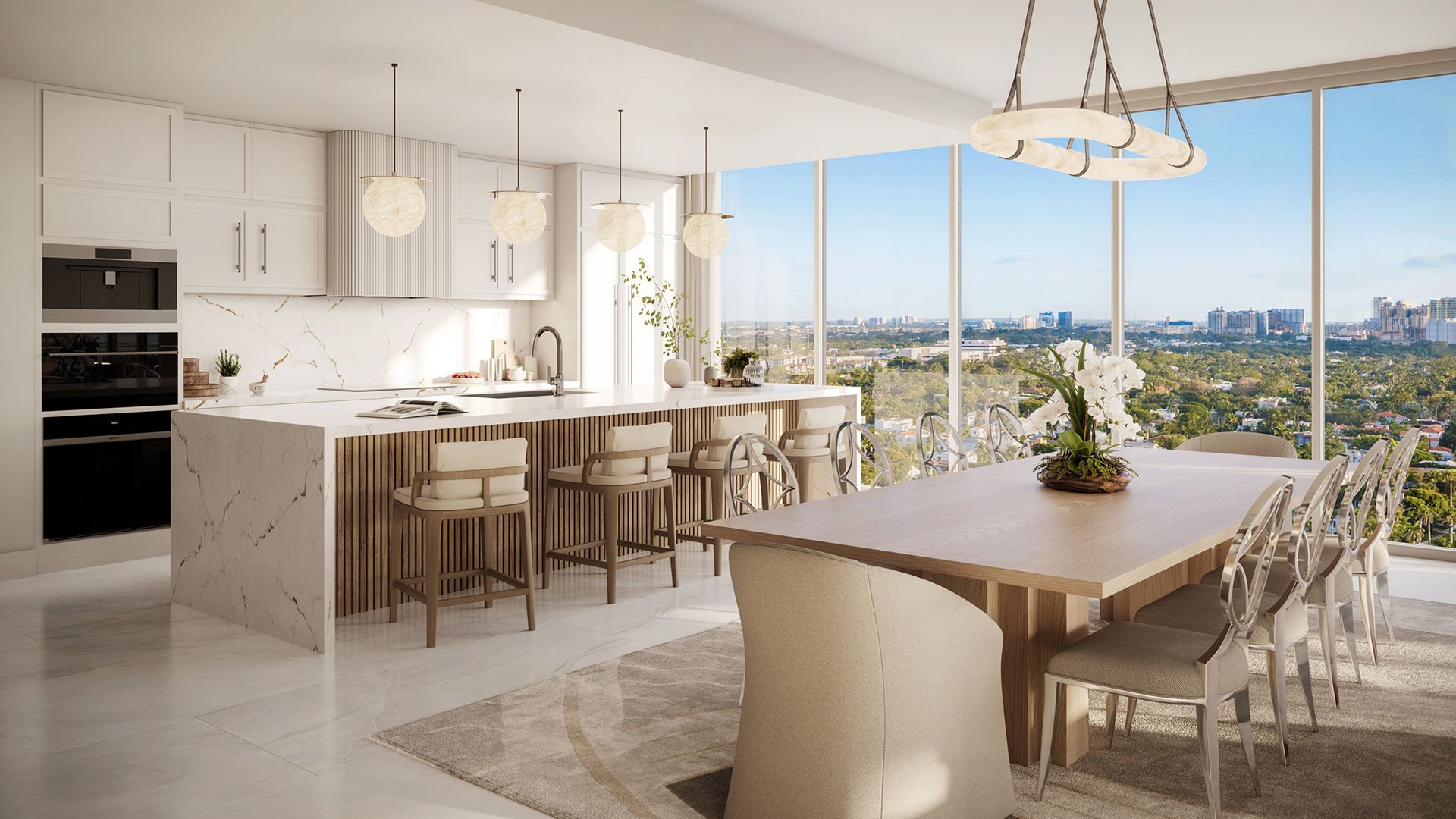
For many West Palm Beach buyers, the choice between Maison D'Or South Flagler and Banyan Tree Residences West Palm Beach is not simply about finish level, brand recognition, or a polished arrival. It is about where life actually happens once guests arrive.
Some owners want the dinner party to remain theirs from start to finish: the chef working inside the residence, the wine opened at the island, the final course served at a private table, and the evening conducted without dependence on a reservation calendar downstairs. Others prefer a building that absorbs more of the hosting burden, where shared hospitality spaces, catering coordination, and private dining amenities can reduce pressure on the residence itself.
That is the quiet trade-off. Maison D’Or South Flagler is best understood as the boutique, residence-first side of the conversation, with the strongest emphasis on chef-ready in-unit kitchens, private entertaining, and owner-controlled hosting flow. Banyan Tree Residences West Palm Beach belongs in the comparison as the more hospitality-oriented question buyers should diligence carefully, especially if shared dining rooms, catering circulation, or building-managed entertaining will influence the purchase decision.
Maison D’Or’s appeal, within this comparison, is the idea that the residence is not merely where the owner returns after using the building. It is the primary entertaining environment. That distinction matters for buyers who host often, employ private chefs, or prefer intimate evenings where the guest experience is shaped by the owner rather than by a shared amenity schedule.
A chef-ready in-unit kitchen is not only about appliances. It is about prep surfaces, storage logic, service distance, guest sightlines, noise control, and whether the kitchen supports both daily cooking and a more formal evening. The best residence-first layouts allow a chef to work without turning the home into a service corridor. They also let the host remain part of the evening rather than constantly managing the room.
For this buyer, the private dining room may be less important as a separate amenity and more important as a spatial condition inside the residence. Is there a true table moment? Can guests move from arrival to drinks to dinner without crossing prep areas? Does the living area support conversation while the kitchen remains active? These questions make Maison D’Or’s boutique framing meaningful. It represents the side of West Palm Beach luxury where privacy, discretion, and control outweigh the convenience of outsourcing the evening to common spaces.
With Banyan Tree Residences West Palm Beach, buyers should separate the appeal of hospitality language from the specifics that determine usability. The relevant question is not whether a building feels service-oriented in concept. It is whether its dining and catering structure, once reviewed in detail, aligns with the way the owner entertains.
If a buyer expects to use a private dining room frequently, the due diligence should be practical. How is it reserved? How many people does it comfortably serve? Is catering brought through guest-facing areas or through a more discreet path? Are outside chefs permitted? Are there restrictions around timing, staffing, storage, wine service, cleanup, or repeated use during peak season? These are not minor operational details. They determine whether an amenity feels effortless or ceremonial.
For some buyers, shared dining infrastructure is a luxury because it removes pressure from the residence. The home can remain pristine, the event can scale beyond the dining table, and staff can manage flow outside the private living environment. For others, the same arrangement may feel less personal. It can introduce scheduling, policies, and a subtle loss of control. That is why Banyan Tree should be evaluated not only by what is offered, but by how the owner would actually use it.
In ultra-premium residences, catering flow is often more revealing than finishes. A beautiful kitchen can disappoint if staff must pass through the heart of the party with trays, trash, flowers, ice, or rental pieces. A glamorous private dining room can feel inconvenient if deliveries, staging, and cleanup are awkward.
The Maison D’Or side of the equation is strongest for buyers who want the service choreography to remain inside their own domain. In that model, the owner decides how visible the chef is, where guests gather, when dinner begins, and how the evening winds down. The residence becomes the full hospitality platform.
The Banyan Tree side asks whether building-level hospitality can offer a smoother alternative. If the shared spaces are well planned and operationally flexible, they may support larger or more frequent entertaining with less strain on the home. If they are beautiful but difficult to reserve or too formal for casual use, they may become occasional showpieces rather than daily-life advantages.
This is also where other West Palm Beach options enter the buyer’s mental map. A purchaser looking at Alba West Palm Beach or Forté on Flagler West Palm Beach may ask the same question in a different vocabulary: how much entertaining should be absorbed by the residence, and how much should be supported by the building?
Maison D’Or South Flagler is the cleaner fit for the owner who values a private, residence-first entertaining rhythm. This buyer may host smaller dinners more often, prefer known staff, and care deeply about the choreography of the home. The ideal evening is not necessarily large. It is controlled, quiet, personal, and refined.
Banyan Tree Residences West Palm Beach may appeal to a buyer who wants the option of relying more on the building’s hospitality environment, provided the private dining and catering details satisfy the owner’s standards. This buyer may entertain in different formats: cocktails for a larger circle, family dinners beyond the residence’s normal table capacity, or events where professional coordination is part of the appeal.
The difference is philosophical as much as functional. Residence-first buyers tend to ask, “Can my home handle the way I live?” Hospitality-first buyers tend to ask, “Can the building extend the way I live?” Both are valid. The risk is buying one model while imagining the other.
In shorthand, this is a West Palm Beach and Palm Beach entertaining decision, shaped by boutique privacy, new-construction expectations, pre-construction diligence, and terrace lifestyle priorities. The labels are less important than the lived result: where guests arrive, where food moves, where staff waits, and where the owner feels most at ease.
Before committing, buyers should walk through a dinner party from beginning to end. Start with guest arrival. Where do cars stop? Where do guests wait? How visible is the transition from lobby to elevator to residence or amenity? Then move to food. Where does the chef prep, plate, store, and clean? If the event is in the residence, does the kitchen support both performance and discretion? If the event is in a shared private dining room, does the service path protect the atmosphere?
Next, test frequency. A private dining room that works once a year is different from one that can support monthly use. An in-unit chef-ready kitchen that feels impressive during a tour must also work on a Tuesday, when family, staff, deliveries, and guests overlap.
Buyers comparing The Ritz-Carlton Residences® West Palm Beach in the broader market may face similar questions, but Maison D’Or versus Banyan Tree sharpens the issue. One side emphasizes the residence as the owner’s private stage. The other invites a closer look at how building-level hospitality may expand, or complicate, the act of hosting.
The better choice is not automatically the building with more amenities or the residence with the more private feel. It is the one whose entertaining logic matches the owner’s life. Maison D’Or South Flagler is compelling for buyers who want chef-ready kitchens, private entertaining, and owner-controlled flow to sit at the center of the purchase decision. Banyan Tree Residences West Palm Beach deserves close consideration from buyers who may value hospitality-style shared dining, provided the operational details support how they truly host.
In West Palm Beach luxury, the difference between a beautiful residence and a deeply usable one is often found in the least photographed spaces: the prep area, the service path, the dining threshold, and the moment guests arrive before dinner begins.
What is the main difference between Maison D’Or and Banyan Tree for entertaining? Maison D’Or is best framed as residence-first, while Banyan Tree raises the question of how much a buyer wants to rely on building-level hospitality spaces.
Why do chef-ready kitchens matter in this comparison? They determine whether private chefs, hosts, and guests can move comfortably through an evening without disrupting the residence’s atmosphere.
Is a private dining room always better than dining inside the residence? Not always. A private dining room can be useful for scale, but in-residence dining may offer more privacy, flexibility, and owner control.
What should buyers ask about catering flow? Buyers should ask how food, staff, deliveries, cleanup, and service items move before, during, and after an event.
Does Maison D’Or suit frequent private hosts? It may suit buyers who prefer entertaining inside the residence and want the evening shaped around their own kitchen, table, and staff rhythm.
How should buyers evaluate Banyan Tree’s hospitality appeal? They should review reservation policies, dining-room usability, catering rules, guest circulation, and how often shared spaces can realistically be used.
What kind of buyer may prefer residence-first entertaining? A buyer who hosts intimate dinners, values discretion, and wants control over timing, staffing, and guest experience may prefer this model.
What kind of buyer may prefer building-level dining support? A buyer who entertains larger groups or wants less pressure on the residence may value shared dining infrastructure if it is practical.
Should buyers compare other West Palm Beach residences too? Yes. The same entertaining questions apply across the market, especially when kitchen planning, service routes, and amenity access affect daily life.
What is the best way to shortlist comparable options for touring? Start with location fit, delivery status, and daily lifestyle priorities, then compare stacks and elevations to validate views and privacy.
If you'd like a private walkthrough and a curated shortlist, connect with MILLION.
If branded residences are on your mind — as a home or as an allocation — we would be glad to share what we are seeing, privately.
Begin a quiet conversation