From Miami Beach compounds to Key Biscayne resort communities, tennis courts have become one of South Florida’s clearest indicators of a lifestyle-first, amenity-driven luxury home. This editorial examines why courts command attention, how private and shared facilities impact value, and what discerning buyers should verify before making an offer.
In South Florida, true luxury is almost never defined by a single feature. It is an accumulation of decisions: land, orientation, privacy, light, finish level, and how the home actually lives day to day. Still, certain elements communicate quality faster than others. A tennis court, especially one that is private, properly lit, and integrated into a cohesive outdoor plan, has re-emerged as one of the clearest shorthand signals of caliber.
At the top of the market, tennis reads as more than recreation. It implies land depth, separation from neighbors, and the kind of planning discipline that allows a property to hold multiple outdoor “rooms” without feeling crowded. It also points to a mindset that buyers increasingly expect: live with the convenience and cadence of a club membership, but on your own terms.
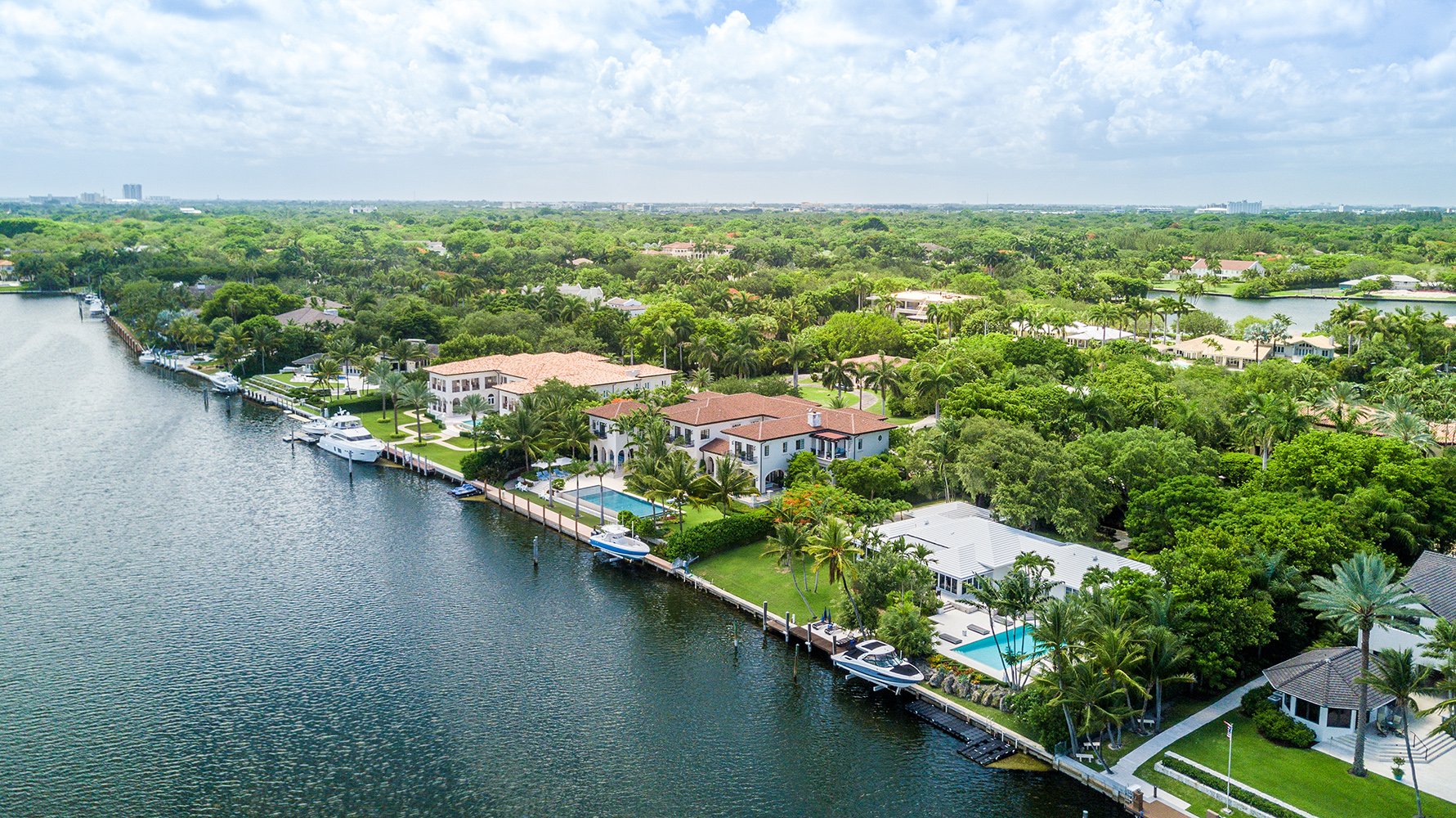
That expectation is easiest to see in trophy marketing. A Miami Beach estate on North Bay Road, widely profiled around a $169 million asking price, has been positioned as a benchmark waterfront compound. Its private tennis court is marketed as part of a broader amenity mix. The message is not that every owner will play daily. The message is that the estate is programmed like a self-contained resort, and the court is legible proof of that promise.
Headlines reinforce the psychology. Public coverage of major waterfront purchases in Coral Gables has helped normalize the idea that top-tier buyers are not just shopping for beautiful rooms. They are shopping for turnkey compounds. In that context, courts, gyms, entertainment zones, and wellness-forward outdoor programs are treated as core infrastructure, not optional extras.
In practice, most “tennis court” marketing in South Florida falls into two categories, and the difference is material.
A private on-lot court is a statement about land and lifestyle. It can also become a statement about noise, lighting, and adjacency, which is why the due diligence is not optional. When executed well, it is one of the few amenities that is both experiential and architectural: an outdoor room with precise dimensions, clear sightlines, and real permitting and maintenance requirements.
A shared court within a condo or community sells a different promise: convenience, consistency, and professional management. In dense neighborhoods, a well-run shared program can outperform a private court in day-to-day satisfaction simply because it is maintained on schedule, surfaced properly, and supported by staff and rules that keep access fair.
The deciding factor is not only ownership, but culture. A community with courts that are technically “included” can still disappoint if access is unreliable or if the amenity is treated as decorative. Conversely, a building that treats tennis as a signature offering can deliver an experience that feels genuinely club-grade.
Buyers should also recognize a quieter variable shaping demand: whether tennis is offered alongside other racquet sports. South Florida’s amenity arms race increasingly places tennis in the same sentence as padel. For many households, that pairing broadens the appeal, spanning serious players, casual players, and social-first residents who want more than one way to use the amenity deck.
The most useful examples are not always the newest homes. They are the listings and communities where tennis is presented as a primary differentiator, not a footnote.
In Miami Beach, the North Bay Road trophy estate referenced earlier has been marketed as a compound with tennis integrated into a larger lifestyle proposition. That integration is the point. At the top end, a court tends to be most valuable when it is not isolated. The strongest executions sit inside a complete outdoor narrative: arrival sequences, privacy hedges, entertaining lawns, waterfront moments, and wellness zones that feel designed, not collected.
In Coral Gables, Casa Arboles at 11501 Old Cutler Rd was publicly marketed around $14.9 million and explicitly noted for a lighted tennis court among its resort-style amenities. “Lighted” is not a throwaway descriptor. It signals usability, extended hours, and a level of investment that suggests the court was built to be played, not simply photographed.
Further north, tennis shows up in family-forward luxury enclaves where land is the headline and outdoor programming is expected. South Florida Business Journal reported a Pinecrest record sale around $19.5 million that included a full-size tennis court. It is a reminder that courts can anchor value well beyond coastal trophy corridors.
Demand is also visible in quieter ways. Major listing platforms treat “tennis court” as a searchable attribute in Miami and Miami Beach inventory. Put simply: buyers ask for it often enough that it has become part of the interface, which is exactly how lifestyle preferences become market behavior.
One of the more notable shifts is how condo communities have adopted tennis as a lifestyle anchor rather than a checkbox. In an urban setting, where square footage is negotiated and outdoor space is curated, tennis reads as genuinely rare. When it is done well, it creates a daily rhythm that differentiates the building more effectively than generic wellness branding.
Brickell offers a clear example. Brickell Bay Club is consistently profiled as a tennis-forward bayfront building, with courts positioned as a signature amenity supporting an active lifestyle. That framing matters in Brickell, where “wellness” can be vague. A tennis court is specific. It shapes resident routines, encourages community, and creates an after-work ritual that feels more private and intentional than joining a public club.
In Key Biscayne, tennis becomes even more institutional. Ocean Club is marketed as a large, resort-style condo community where tennis is central to the lifestyle stack alongside beach access and club facilities. The takeaway is not merely that courts exist. It is that tennis is embedded in the identity of the community. In practice, that tends to translate to better programming, stronger participation, and steadier maintenance standards.
Fisher Island, repeatedly positioned in brokerage community guides as one of Miami’s most exclusive private-island environments, also carries tennis as part of its signature amenity identity. In communities of that stature, tennis plays a dual role. It is recreation, and it is social infrastructure.
A tennis court can be a premium feature, or it can be a disguised project. In ultra-prime transactions, buyers can be tempted to treat it as a given. That is where expensive mistakes start.
First, clarify what is actually private. A listing may say “tennis court,” but that could mean a private on-lot court, a shared HOA facility, or access tied to a nearby club relationship. The valuation logic changes immediately once access becomes shared, scheduled, or contingent.
Second, verify usability, not just existence. Is the court described as lighted? Casa Arboles is a useful precedent because the lighting was explicitly noted in marketing, which implies deliberate evening use. If lighting is present, confirm that it is compliant and appropriate for the neighborhood context.
Third, assess maintenance reality. Resurfacing, drainage, fencing, and landscaping buffers are not cosmetic line items. They determine whether the court feels like a luxury asset or a recurring obligation. A well-designed court should feel integrated into the property, with appropriate privacy treatment and a sense that it belongs to the architecture rather than competing with it.
Fourth, study placement and adjacency. In close-in neighborhoods, location can affect the serenity of primary outdoor living areas. In a compound, the court should read as a deliberate zone, not a feature that interferes with waterfront terraces, pool decks, or the quiet enjoyment of the main entertaining program.
Finally, ask whether the market you are buying into values actual play. In some buildings and communities, tennis is an identity, not just a feature. That distinction shapes access, etiquette, and long-term satisfaction, which is why it should shape how you price the amenity in your own decision-making.
Padel has risen quickly in South Florida and is increasingly linked to real estate amenity strategies. Developers and communities incorporate it to differentiate luxury offerings and sharpen lifestyle branding. For buyers, the most accurate interpretation is additive.
Tennis remains a prestige sport with established court dimensions and a familiar culture. Padel introduces a social, high-rotation format that can broaden household participation. In communities where both exist, the amenity program reads modern and internationally fluent, without diminishing tennis’s long-standing status.
Projects that embrace a hospitality mindset tend to resonate with this hybrid demand. In Miami Beach, residences aligned with high-touch service and wellness positioning, such as Shore Club Private Collections Miami Beach and Casa Cipriani Miami Beach, speak to buyers who value curated living. Even when a particular building’s racquet offering is not the headline, the broader expectation remains consistent: amenity programs should feel considered, managed, and worthy of the address.
The current top tier of the Miami Beach market is increasingly shaped by the compound concept: privacy, waterfront positioning, and a complete on-site recreation and wellness program. The North Bay Road trophy estate widely profiled around $169 million is instructive because it demonstrates how tennis can be packaged as part of a total lifestyle system.
This is also why celebrity and headline deals matter in perception. Public reporting around major waterfront purchases underscores buyer appetite for homes that function like personal resorts. Tennis fits that narrative perfectly because it is experiential and instantly legible. You understand the lifestyle in a single image.
For buyers evaluating Miami Beach options where land is scarce and privacy is hard-won, the appeal is often less about competitive play and more about removing friction. No membership. No drive. No scheduling. No public exposure. It is luxury by subtraction.
In the oceanfront condo tier, a different form of subtraction is at work: removing the operational burden. For a buyer who wants a strong amenity set without owning, managing, or maintaining a private court, newer service-oriented beachfront residences can feel like the elegant compromise. In that vein, 57 Ocean Miami Beach and Setai Residences Miami Beach align with a Miami Beach buyer profile that values discretion, design, and a resort cadence.
From an investment standpoint, tennis is not only a lifestyle feature. It is a marketing signal that holds up in listing photography and in search filters.
When platforms allow buyers to search specifically for homes with tennis courts in Miami, and for private tennis courts in Miami Beach, they formalize demand. That matters because it expands your future buyer pool in a measurable way: the home becomes discoverable to a segment already pre-qualified by preference.
The signal also matters in positioning. Editorial and brokerage coverage has curated “tennis homes” around major events like the Miami Open, reinforcing tennis as a lifestyle narrative the market understands. For sellers, that narrative can simplify the message. The property is not only large. It is programmed.
That said, sophisticated buyers still separate presence from quality. A court that feels tired, noisy, poorly drained, or visually intrusive will be discounted. The premium goes to courts that are playable, visually quiet, and coherently designed within the overall landscape plan.
In South Florida’s ultra-premium segment, the tennis court has become a proxy for a broader idea: completeness. A home or community that supports wellness, social life, and private recreation without improvisation tends to hold attention longer and trade with more confidence.
For single-family buyers, a private court can be the difference between a beautiful property and a true compound. For condo buyers, community courts can deliver club-level living in neighborhoods where land is precious and management standards matter. And for many households, the trend toward multi-racquet offerings signals where the market is going: broader participation, stronger social programming, and amenity decks designed to be used.
If you track lifestyle cues the way the market does, tennis is now less about sport and more about identity. It is why the tag Tenniscourt keeps surfacing in luxury conversations, and why Brickell, Coral-gables, Key-biscayne, Fisher-island, and Miami-beach each express the amenity in its own way.
Is a private tennis court always worth paying extra for? Not always. The premium is strongest when the court is clearly private, well maintained, and integrated into the property’s overall outdoor plan.
Do condo tennis courts add value in neighborhoods like Brickell? They can, particularly when the building treats tennis as a signature amenity with reliable access and a broader wellness lifestyle.
What is the biggest risk when buying a home with a tennis court? Assuming it is turnkey. Condition, drainage, and whether lighting and usage align with local context should be verified.
Is padel replacing tennis in South Florida luxury communities? It is better viewed as parallel demand. Many buyers value tennis’s tradition and padel’s social format, especially in amenity-rich communities.
Explore South Florida’s amenity-driven lifestyle homes with MILLION Luxury.
If branded residences are on your mind — as a home or as an allocation — we would be glad to share what we are seeing, privately.
Begin a quiet conversation