From Fisher Island’s ferry-served seclusion to Sunny Isles’ engineered privacy and Brickell’s service-driven towers, South Florida’s top penthouses increasingly deliver estate-level living in the sky. This guide breaks down what sophisticated buyers should look for: layered arrival, full-floor planning, terrace-first living, staff infrastructure, and the subtle design choices that protect discretion without sacrificing the city’s best views.
South Florida’s ultra-luxury buyer has always valued what land provides: distance from neighbors, controlled sightlines, and the kind of quiet that signals true separation. What has changed is how effectively the market can reproduce those same cues vertically. For the most sophisticated purchasers, the best penthouses are no longer a consolation prize for giving up acreage. They are a deliberate upgrade, engineered to deliver privacy, volume, and outdoor living while removing the friction that often comes with maintaining a standalone estate.
Today’s top penthouse offerings are designed to feel estate-like from the first moment of entry. The strongest homes pair private or semi-private elevator arrival with generous interior scale, wide terraces that function as outdoor rooms, and building operations that can match the cadence of a well-run residence. The result is a more modern definition of privacy. It is not about isolation for its own sake. It is about control: control over arrival, access, sound, views, and service.
That is the core of the current “mansion-in-the-sky” proposition. In South Florida, it reads most convincingly in a handful of submarkets where architecture, zoning realities, and buyer expectations align. In those neighborhoods, vertical living can feel not merely luxurious, but genuinely protected.
Privacy in a tower is rarely absolute. Still, it can be exceptionally effective when a building is conceived with layers of separation and when a residence is planned with the same internal logic as an estate. Buyers comparing a trophy apartment to a waterfront home should look past marketing language and focus on the mechanisms that create discretion.
Start with controlled access. Gated environments, disciplined entry points, and tightly managed lobbies reduce exposure at the moment when privacy is most vulnerable: arrival. Fisher-island remains the clearest expression of this model, combining a residential island setting with a gated character and private ferry access that naturally filters traffic and preserves anonymity.
Next is the arrival sequence itself. In the most coveted residences, the elevator does not open into a corridor with neighbor activity and incidental encounters. It resolves into a private foyer, a vestibule, or directly into the home. That single detail changes the psychological experience of ownership. It establishes a true threshold and restores the sense that you are entering a private residence, not simply stepping onto a floor.
Then consider separation within the home. Mansion-like plans create distinct zones for entertaining, daily living, and support functions. Even without comparing exact dimensions, you can feel the difference in how the home moves. A well-zoned penthouse can host at scale without forcing daily life into a public performance.
Finally, privacy is operational. The best buildings protect discretion through systems: how packages are delivered, how visitors are managed, how valet flows are handled, and how resident-only spaces are maintained. A building that can absorb the logistics of modern life without routing everything through the owner’s front door is a building that quietly safeguards privacy.
Fisher-island has long been shorthand for privacy among global buyers because its discretion is not only architectural. It is geographic. Its status as a gated residential island with ferry access changes the practical experience of ownership. You are not simply choosing a building. You are choosing an environment where access is inherently filtered, and where the baseline expectation is quiet.
That geographic reality allows certain residences to read less like condominiums and more like estates with a staff-supported perimeter. The sense of protection is not created by a single amenity or a line item in a brochure. It is built into the way people arrive, the way the community functions, and the way daily rhythms stay predictable.
It also explains why ultra-luxury inventory there is often framed around rarity. Buyers are not only acquiring a home with views and finishes. They are acquiring a degree of separation that is difficult to replicate on the mainland, regardless of price point.
For purchasers who prioritize discretion over nightlife proximity, Fisher-island can feel like the closest vertical equivalent to an Old World compound: limited approach routes, consistent security protocols, and a resident profile that expects privacy as a default. It is not the right fit for every lifestyle. But for the buyer whose first requirement is controlled access, its appeal remains unusually direct.
Sunny-isles has become one of the most legible laboratories for mansion-in-the-sky living in South Florida. Many towers in this corridor are conceived around large-format residences, terrace-forward planning, and amenity programs that support an on-property lifestyle. For buyers who want oceanfront views without giving up a highly structured living experience, the proposition can be exceptionally clear.
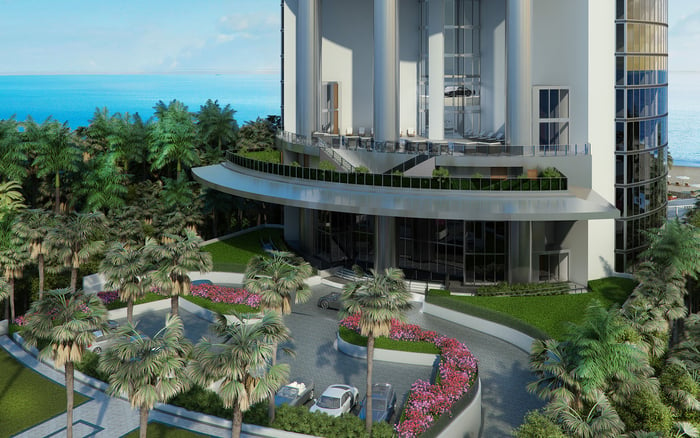
The most interesting evolution is not simply scale at the top of the stack. It is the way privacy is physically designed into the ownership experience. Car-elevator concepts, for example, transform arrival into something closer to a private motor court. You approach your home through your vehicle, reducing public exposure and turning access into a controlled sequence rather than a shared lobby moment.
That logic is extended in branded towers such as Bentley Residences Sunny Isles, which markets a “sky garage” lifestyle and penthouse positioning that is explicitly mansion-like in intent. For the right buyer, this is not theater. It is a practical reframing of security and convenience, emphasizing the ability to arrive and depart with minimal friction.
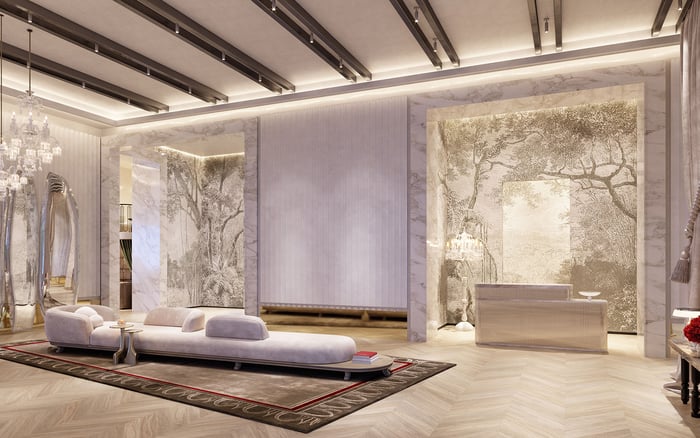
Design branding plays a parallel role in the estate analogy. A residence can feel more like a finished home when interiors are conceived as a complete environment rather than left as a generic developer canvas. In that context, Armani Casa Sunny Isles Beach speaks to a particular buyer preference: the assurance that materials, proportions, and detailing will feel cohesive, refined, and intentionally quiet.
Sunny-isles is not for everyone. Yet for buyers who value clarity, predictability, and oceanfront presence within a managed tower ecosystem, it is increasingly one of the region’s strongest matches for the vertical estate mindset.
If Sunny-isles is defined by engineered privacy and a resort-forward logic, Brickell is defined by service, velocity, and systems. In Brickell, the mansion-in-the-sky is less likely to rely on gates and more likely to rely on staffing and process: concierge workflows, valet operations, resident-only spaces, and the daily support that makes a high-rise home feel effortless.
This is why trophy projects in Brickell often lean into hotel-grade service narratives. The buyer who wants to land in Miami and have life instantly activated tends to value a building that can operate like a private club. In that setting, discretion is often achieved through delegation. When the building can handle logistics cleanly, the owner has fewer errands, fewer public touchpoints, and a calmer daily rhythm.
That service-forward positioning is part of the appeal behind Baccarat Residences Brickell, which is marketed around luxury lifestyle amenities and a hospitality sensibility. The advantage for the right owner is not only convenience. It is the ability to maintain privacy without sacrificing access to the energy of the city.
Brickell also illustrates how penthouses have begun to trade like trophy estates. Widely covered deals at the top reinforce pricing power and shape buyer expectations across the market. Even if a purchaser is not shopping at those record levels, the existence of that tier sets the standard: architectural presence, strong management, and true service infrastructure are no longer optional in the most compelling offerings.
Miami-beach remains the stage where the mansion-in-the-sky concept is most overtly cultural. Here, the top residences are as much about address and lifestyle as they are about plan efficiency. The best buildings deliver what can be described as protected exposure: you are close to the city’s glamour, dining, and beach culture, but you live above the noise with the option to retreat.
Record-setting penthouse sales in Miami Beach have been widely covered in recent years, reinforcing the region’s ceiling and cementing the idea that a condominium can compete directly with a standalone mansion. Among the most referenced examples is Faena House Miami Beach, which has been associated with a headline-making penthouse transaction.
For serious buyers, the headline is less important than what it signals about the product. A residence that can command that level of attention typically offers extraordinary volume, expansive outdoor space, and a building capable of supporting an estate-like lifestyle in the sky. In Miami-beach, the strongest penthouses combine resort-grade amenities with a genuine sense of sanctuary, a balance that can be difficult to achieve at street level.
The result is a category of home that is not merely a view play. It is a lifestyle solution for owners who want the city’s best experiences within reach while maintaining a controlled, private home base.
Across South Florida, mansion-in-the-sky residences tend to share a set of consistent cues. Tour enough of them and the distinction becomes clear: there is a difference between a large apartment and a true vertical estate.
Private arrival is the first cue. A dedicated elevator entry, a foyer that can actually hold art and furniture, and a threshold that slows the pace of entry all communicate that the home is meant to be lived in at an estate tempo. It also affects how you host. Guests can arrive without immediately stepping into the center of the residence.
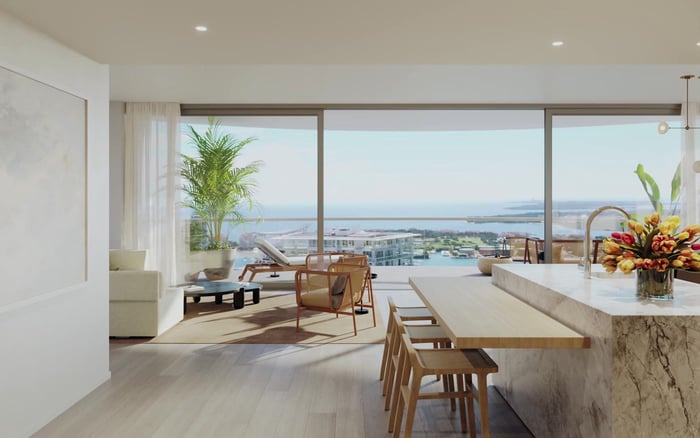
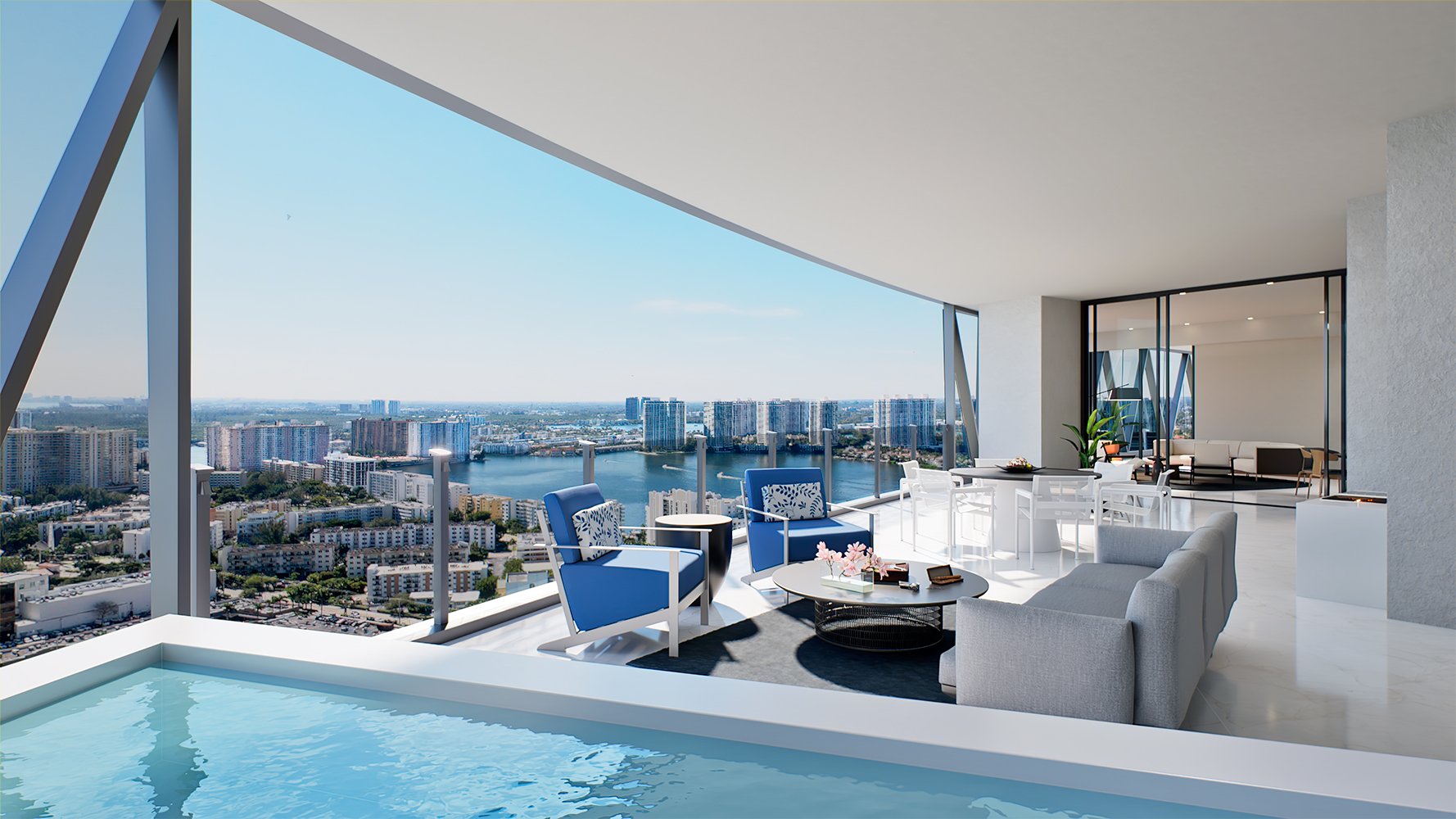
Terrace-forward planning is the second cue. The most persuasive penthouses treat terraces as outdoor rooms, not as decorative balconies. The goal is usable exterior space that supports dining, lounging, and quiet mornings. The best terraces feel like grounds in the sky, extending the home rather than merely framing the view.
The third cue is internal separation. Estate living depends on the ability to entertain without compromising privacy. Look for plans that naturally separate entertaining zones from bedroom wings, and for support spaces that allow services to function discreetly. A penthouse that forces everything through one central corridor rarely lives as well as its price suggests.
Finally, consider building capability. A residence can be impeccably designed, but if deliveries, valet, and guests all funnel through the same public choke points, discretion erodes over time. True estate living upstairs requires not only design, but operational maturity.
In a handful of Miami towers, architecture itself becomes part of the privacy story. Landmark buildings known for full-floor or near full-floor residences can reduce neighbor proximity and hallway traffic, which subtly improves discretion. Fewer doors per floor often means fewer accidental interactions, less noise transfer, and a more controlled sense of arrival.
Downtown’s One Thousand Museum Downtown Miami has been widely discussed as an architectural landmark, and its reputation is linked to the idea of elevated privacy through limited residence-per-floor planning in its upper-tier homes. For buyers who value design pedigree and a quieter form of exclusivity, that combination can be compelling.
In practical terms, landmark architecture also tends to attract a particular resident profile. Buildings that become part of Miami’s visual identity often draw owners who expect controlled access, professional management, and a measured lifestyle. The building’s identity can reinforce behavior, encouraging a higher baseline of discretion in shared spaces.
The trophy factor is not only about aesthetics. It can influence how a building is run, how residents behave, and how the ownership experience feels year after year. For the right buyer, that environmental effect becomes another layer of security.
A mansion in the sky should impress on the first tour, but it should also become easier to live in over time. Before you commit, pressure-test both the residence and the building with questions that reveal operational reality, not just staged appeal.
Start with arrival and privacy. How does the elevator resolve into the home? Is there a defined foyer or threshold, or does entry feel abrupt? Are there layers that allow guests to be welcomed without exposing private quarters? And in day-to-day use, does the building’s flow keep residents out of unnecessary public contact?
Then evaluate outdoor livability. Are terraces configured as functional rooms, or are they long and narrow with limited furniture potential? Do they feel wind-exposed at certain times of day? Is there enough depth to furnish properly, and does the layout support entertaining without compromising privacy?
Next, consider staffing and services. If you are replacing a single-family estate with a tower home, you are also replacing household infrastructure. Confirm the building’s ability to support your lifestyle: valet capacity, package handling, the maturity of management, and the overall reliability of service. A well-run building can make even a complex residence feel calm.
Also look closely at internal planning. Does the home have distinct zones that allow you to host while maintaining privacy? Are there support areas that keep the operational side of living out of sight? The strongest penthouses feel intuitive because they are designed around real use, not only visual impact.
Finally, test neighborhood fit. Sunny-isles, Brickell, Miami-beach, and Fisher-island each solve privacy in different ways. The right choice is less about a generic definition of prestige and more about alignment with your daily rhythm: how you arrive, how you entertain, and how much structure you want in your environment.
What makes a Penthouse feel like a mansion rather than a large condo? Private arrival, distinct living zones, and terraces that function as outdoor rooms. The strongest also have building services that replicate household support and protect discretion through daily operations.
Is Fisher-island the most private option in Miami? It is often viewed that way because geographic access is inherently controlled, creating a different baseline of discretion than most mainland addresses.
Do car-elevator concepts meaningfully improve privacy? They can, because they reduce lobby exposure and make arrival more controlled. The benefit depends on how well the system is integrated into building operations and how consistently it performs.
Should buyers prioritize services or square footage? For many owners, services win over time. A well-run building can make a residence feel calmer, more private, and easier to use than a larger home with weaker operations.
Explore South Florida’s most discreet, trophy-level residences with MILLION Luxury.
If branded residences are on your mind — as a home or as an allocation — we would be glad to share what we are seeing, privately.
Begin a quiet conversation