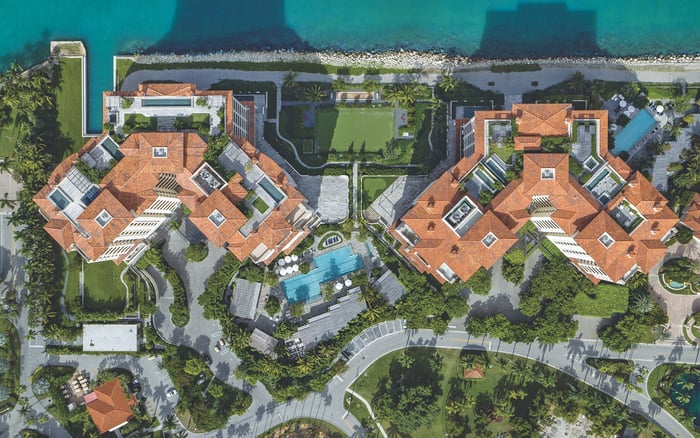
A family office lens on long-term stability at The Links Estates at Fisher Island: governance, carrying costs, liquidity, insurability, and legacy planning, with South Florida comparables.
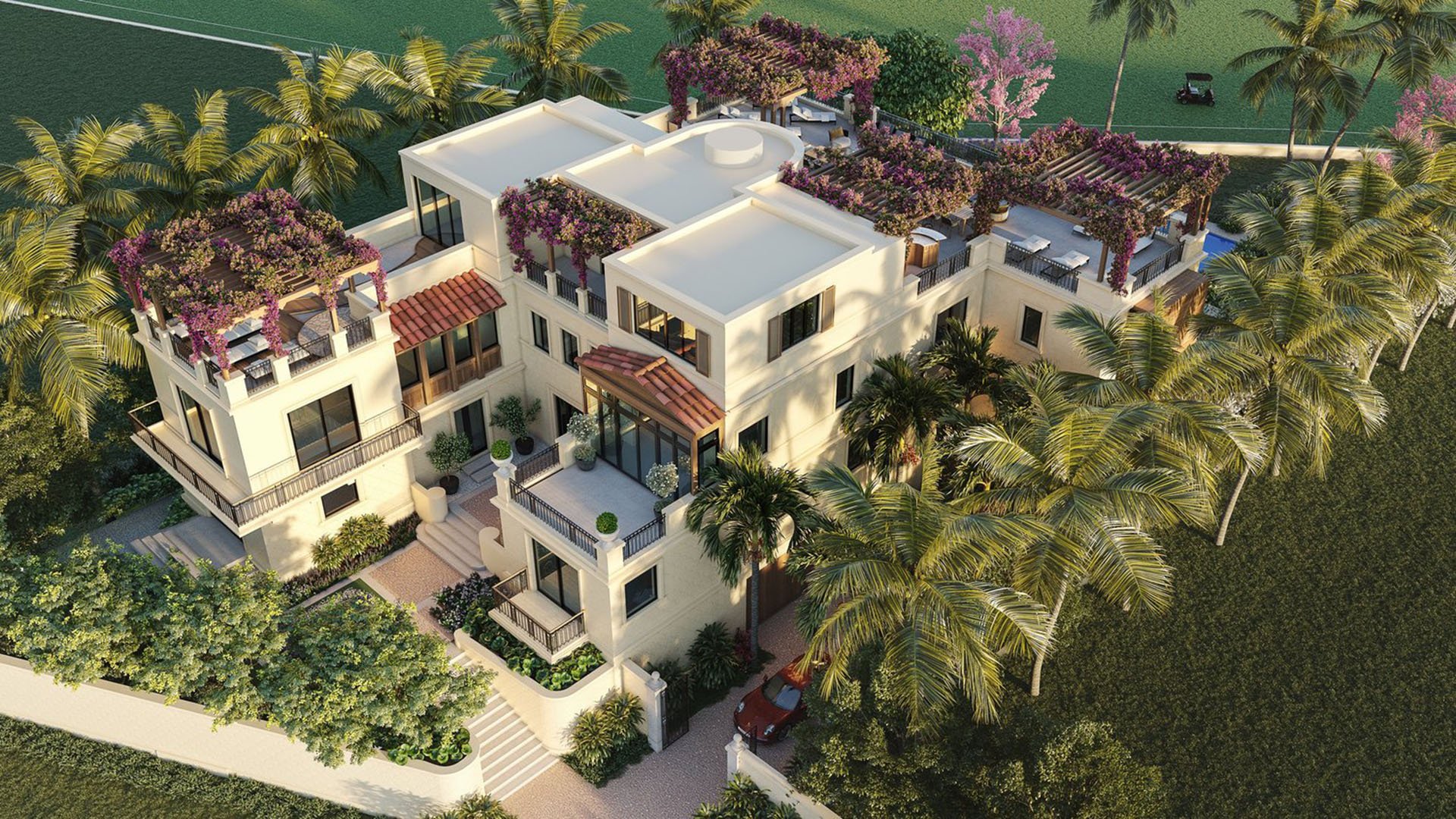
For a family office, “asset stability” is rarely a single metric. It’s the compounded result of legal clarity, durable governance, predictable operations, and a demand profile that can persist across cycles. In South Florida, this lens matters most in true trophy enclaves, where privacy and access control influence value as much as architecture.
At The Links Estates at Fisher Island, long-term stability is often assessed the way an institutional buyer would underwrite a private-market asset: identify non-negotiable risks, price the residual, and treat lifestyle benefits as a secondary dividend-not the underwriting thesis.
Because your inputs do not include project-specific numbers, unit counts, or association disclosures, this article focuses on the consistent decision architecture family offices apply when evaluating Fisher-island caliber holdings.
Family offices typically break stability into four practical buckets:
Title and jurisdictional clarity: a clean chain of title, unambiguous property boundaries, and an ownership structure that matches the family’s long horizon.
Governance durability: rules that protect quiet enjoyment, design cohesion, and neighbor quality. In gated-community environments, governance is a primary value driver, not a footnote.
Cost predictability: the ability to model carrying costs over decades, including reserves, staffing, maintenance, and evolving insurance markets.
Exit optionality: not “quick liquidity,” but confidence that a thoughtful sale is achievable without undermining price integrity.
In practice, Fisher-island assets are often underwritten as a hybrid of legacy home and private-club ecosystem: the residence sits on the balance sheet, while the surrounding infrastructure reinforces stability.
In ultra-premium residential environments, governance quality often functions as a proxy for future pricing power. Family offices focus on:
Whether additions, exterior changes, and landscaping are coherently regulated.
How leasing is governed, and whether community rules align with the family’s privacy expectations.
Stable rules mean little if enforcement is inconsistent.
This is why many long-horizon buyers benchmark Fisher Island against other highly managed, brand-adjacent buildings-even when the asset type differs. For instance, the service infrastructure associated with a waterfront trophy condominium like Apogee South Beach can serve as a governance comparison point for operational standards, even if the lifestyle and ownership profile are distinct.
Sophisticated families underwrite carrying costs with the same discipline they apply to operating expenses in a private company. The objective isn’t to minimize cost; it’s to maximize predictability and reduce the risk of disruptive capital calls.
Key diligence questions include:
How are long-term replacements budgeted? Is the community proactive or reactive?
Not whether assessments can occur, but whether they are foreseeable and planned.
Higher service can translate to higher stability when it’s consistent and properly funded.
Systems age; stability comes from realistic lifecycle planning.
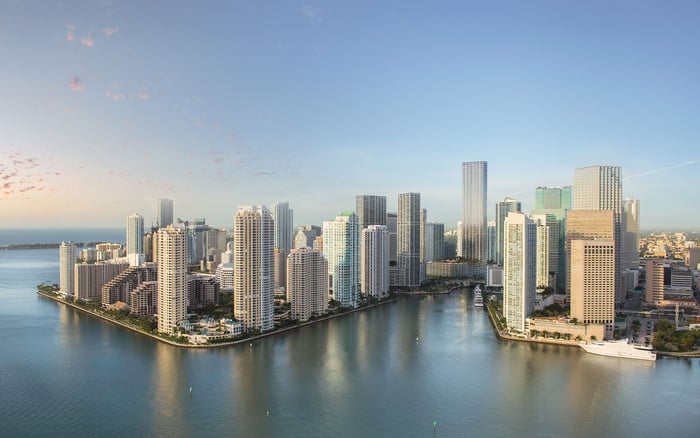
This framework also helps families compare island living with high-rise alternatives where operations are centralized. In Brickell, a new generation of branded vertical product such as 888 Brickell by Dolce & Gabbana can feel operationally “contained,” appealing to families who prioritize professionalized management. Fisher Island, by contrast, can offer a different kind of control: fewer variables, more privacy, and a community designed around separation from the city.
Family offices increasingly treat insurability as a forward-looking valuation factor. A residence can be exceptional and still prove to be a challenging hold if coverage becomes volatile or terms begin to limit ownership flexibility.
While every property’s profile is unique, the diligence logic is consistent:
Construction standards, elevation considerations, and the practicality of protective upgrades.
Whether coverage is effectively a “single point of failure” or layered with redundancy.
Disciplined maintenance can reduce future disputes.
In boardroom terms, stability is the ability to remain continuously insured on acceptable terms-without compromising the family’s broader risk framework.
Fisher Island’s appeal is inherently selective, and that selectivity can support stability when it aligns with enduring motivations: security, privacy, proximity to Miami, and an ownership culture built around discretion.
Family offices pressure-test demand with a simple thought experiment: if the current buyer cohort shifts, what remains constant?
For many principals, discretion isn’t a luxury; it’s an operational requirement.
Gated-community characteristics create a form of scarcity that is difficult to replicate.
The ecosystem can matter as much as the square footage.
Then they look outward to understand substitution risk. On Miami Beach, for example, a highly curated oceanfront offering such as The Perigon Miami Beach may compete for the same global buyer seeking privacy and design pedigree, but it expresses that value through a different vehicle: concierge-driven vertical living rather than a private-island environment. The comparison is less about which is “better” and more about which demand base is more durable for the family’s hold period.
Long-term stability does not require fast liquidity, but it does require credible liquidity. Family offices commonly build an exit plan on day one-even when the intention is to hold indefinitely.
They evaluate:
How many qualified buyers are realistic at the targeted price tier.
Trophy assets can require patience; stability comes from a financial structure that doesn’t force timing.
Privacy, condition, and clarity of dues and rules.
A common family-office preference is to avoid over-customization that narrows the buyer pool. The ideal is a residence that is personally meaningful yet broadly legible to the next principal.
Family offices rarely acquire trophy real estate in a personal name without first pressure-testing succession and governance. The objective is continuity: the asset should be straightforward to hold, operate, and transfer without creating family friction.
Typical considerations include:
Aligned with the family’s governance documents.
For renovations, leasing (if ever), and disposition.
If multiple households will enjoy the asset.
The stability premium at Fisher Island is often amplified when the residence becomes a family “platform” for gatherings and continuity-not merely a discretionary second home.
Even when a family is committed to Fisher Island, many still benchmark against alternatives to clarify what they’re paying for: privacy, views, service, or sheer irreproducibility.
A useful compare set can include:
In the Fisher-island and Miami Beach orbit.
In Brickell.
Farther north.
For instance, 2000 Ocean Hallandale Beach can be a thoughtful contrast for families who want an oceanfront experience with a boutique feel outside the Miami Beach spotlight. The goal isn’t to equate the assets; it’s to stress-test the assumption that Fisher Island’s scarcity and access control will remain uniquely valuable over decades.
When the conversation turns serious, family offices narrow in on the questions that predict stability-not headlines:
What is the community’s long-term capital plan, and how is it funded?
What rules most directly protect privacy and neighborhood quality?
Which costs are controllable, and which are structural?
If the family’s needs change, what is the cleanest exit path?
What is the minimum viable enjoyment threshold? (If the family can’t use it enough, stability becomes irrelevant.)
For a Fisher-island caliber residence, the “right” answer is not always the lowest cost or the most flexible rule set. It’s the configuration that preserves desirability for the precise cohort that can afford it-and wants what it represents.
Family offices are often comfortable with the reality that trophy real estate is not marked-to-market every day. Stability is earned through:
Consistent governance,
Disciplined maintenance,
A clear identity that doesn’t chase trends,
And an ownership structure designed for longevity.
In that context, The Links Estates at Fisher Island reads less like a speculative trade and more like a strategic holding: privacy-forward, rules-driven, and positioned for families who measure value in decades.
What does “asset stability” mean to a family office in Fisher-island markets? It means predictable ownership, defensible demand, and manageable risks across a multi-decade horizon.
Why does governance matter as much as finishes? Because rules and enforcement protect neighborhood quality, which supports long-term pricing power.
How do family offices think about carrying costs? They model expenses and reserves conservatively to avoid forced decisions from surprise capital needs.
Is liquidity a concern if the family plans to hold long term? Yes, because credible exit optionality protects the family if needs or strategy changes.
Do branded condos compete with Fisher Island in a family office portfolio? They can, but they offer a different value proposition: service-centric vertical living versus private-island control.
How important is insurability in today’s underwriting? It is central, since unstable coverage terms can impair both enjoyment and resale outcomes.
What customization choices can reduce resale stability? Overly specific layouts or extreme design decisions can narrow the buyer pool at the top end.
How do families plan for multi-generational use? They align entity structure and decision rights so the property remains easy to manage and transfer.
Is a gated-community feature a financial factor or a lifestyle factor? Both, because access control can function as scarcity, supporting demand durability.
What is the simplest way to start evaluating a Fisher Island purchase? Begin with governance, reserves, insurance posture, and an exit plan, then refine around lifestyle fit.
When you're ready to tour or underwrite the options, connect with MILLION Luxury.
If branded residences are on your mind — as a home or as an allocation — we would be glad to share what we are seeing, privately.
Begin a quiet conversation