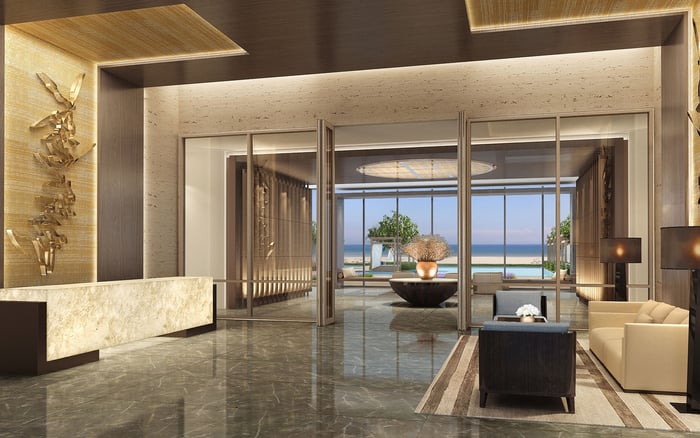
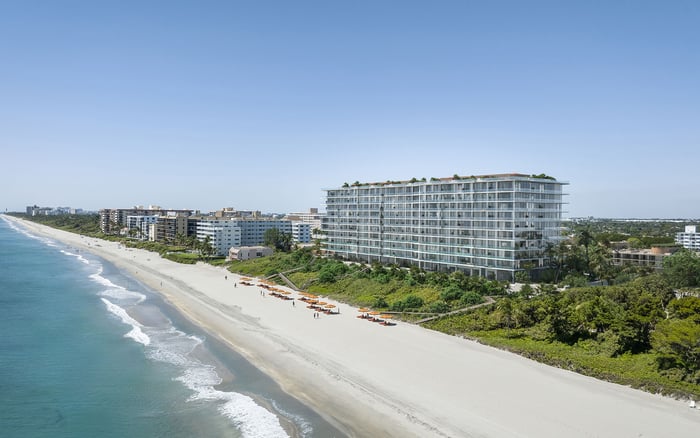
A refined comparison of Surfside and Bal Harbour for buyers who see club-centric living as a daily lifestyle choice rather than a line item of amenities.

For many luxury buyers, Surfside and Bal Harbour are considered together: intimate oceanfront enclaves, refined residential buildings, and a pace distinctly removed from the louder parts of Miami Beach. For the buyer focused on club-centric living, however, the comparison is more nuanced. The question is not simply which address carries the more recognizable name. It is which one makes the private-club experience feel essential to daily life.
Club-centric living is not the same as a long amenity brochure. It is a residential rhythm shaped by service, discretion, wellness, dining, beach access, and the sense that a building or neighborhood quietly organizes the day. A pool can be beautiful without feeling like a club. A lounge can be elegant without becoming a social center. What matters is whether the setting becomes a true extension of private life.
In that respect, Surfside and Bal Harbour appeal to different instincts. Surfside often favors the buyer who wants club life to feel residential first: calm, protective, intimate, and low-friction. Bal Harbour often favors the buyer who wants the club experience closer to the center of the lifestyle, with a more pronounced sense of arrival and daily polish.
Surfside is compelling when the buyer values quiet over display. Its appeal is less about theatrical arrival and more about sanctuary. When the club experience works here, it is usually woven into the residence itself: attentive lobby culture, beach service that feels unforced, wellness spaces designed for actual use, and common areas that do not demand social performance.
For the Surfside buyer, the strongest version of club-centric living is almost invisible. Staff know preferences without making a spectacle of them. Morning routines can move from residence to fitness to ocean without crossing a scene. Dinner at home can feel as curated as dinner out because the building’s service culture supports the private sphere.
This is where Surfside can matter more than Bal Harbour for a certain kind of owner. If the purpose of the club is to preserve calm, simplify ownership, and make an oceanfront lifestyle feel effortless, Surfside has a strong emotional logic. It is particularly attractive for buyers who want privacy without isolation, and for families or couples who prefer a polished neighborhood without constant social momentum.
The search language may be simple, but revealing: Surfside, oceanfront, beach access, boutique, second home. Those words point to a lifestyle where the club is not a destination separate from home. It is the atmosphere of home itself.
Bal Harbour carries a different kind of gravity. For buyers who want club-centric living to feel more formally integrated into the day, it can have the stronger pull. The lifestyle is not necessarily louder, but it is more defined by an elevated social framework: arrival, proximity, polish, and the sense that the neighborhood itself supports a cultivated daily circuit.
In Bal Harbour, the club idea often feels more externalized. The resident may want the building to provide wellness, service, and privacy, while also expecting the surrounding environment to reinforce the same standard. The day might include beach time, personal appointments, dining, shopping, and quiet entertaining, all within a compact luxury radius. For this buyer, the club is not only a private amenity layer. It is the organizing principle of the address.
That distinction is why Bal Harbour can feel more consequential for owners who use their residence as an active social base. A second home here may function less like an escape pod and more like a polished winter headquarters. Guests arrive easily into a recognized setting. The building’s service culture supports entertaining. The neighborhood carries enough identity to give the residence a larger stage without overwhelming it.
The Bal Harbour buyer is often not asking for more amenities in a numerical sense. The question is whether the whole environment makes a private-club lifestyle feel natural, expected, and efficient.
Ultra-premium buyers should be careful about comparing Surfside and Bal Harbour by checklist alone. Private dining rooms, pools, spas, lounges, treatment rooms, terraces, and beach service all matter, but the better question is how they behave during ordinary days.
Does the wellness area feel usable at the hour you actually train? Does beach access feel seamless with children, guests, or visiting family? Does the staff culture understand discretion? Are shared spaces designed for residents who truly live there, or for imagery? Can the building absorb a full seasonal cadence without feeling crowded or performative?
These questions reveal the true value of club-centric living. The strongest buildings do not merely collect amenities. They choreograph transitions: from car to lobby, from elevator to residence, from spa to beach, from private dinner to late-evening quiet. In Surfside, that choreography may feel more domestic and protected. In Bal Harbour, it may feel more formal and socially complete.
For buyers, the decision should start with personal cadence. If the ideal day is mostly private, with refined service in the background, Surfside may be the sharper fit. If the ideal day blends privacy with a more active luxury circuit, Bal Harbour may carry more weight.
Surfside makes particular sense for owners who prize stillness. It suits those who want an oceanfront residence to operate like a private retreat, not a hospitality stage. The best-fit buyer may entertain selectively, spend long stretches in residence, and value staff continuity more than a visible social calendar.
It is also persuasive for buyers who want a second home that resets the nervous system. In this scenario, the club experience should reduce decisions rather than create more of them. Breakfast, fitness, beach, work calls, family time, and sunset can all happen within a quiet residential loop. The luxury is not in being seen. It is in not having to negotiate the day.
This is why Surfside often resonates with buyers who already have access to intensity elsewhere. They may arrive from major financial, cultural, or family centers and want Miami to feel softer. For them, club-centric living matters, but only if it protects privacy.
Bal Harbour should rise to the top when the buyer wants the club experience to frame a fuller social lifestyle. This does not mean constant entertaining. It means the address itself contributes to a sense of cultivated ease. The owner may want privacy upstairs and a polished world immediately below.
This buyer often cares about how a residence receives guests, how the neighborhood reads to family and friends, and how daily routines connect to a broader luxury setting. Bal Harbour’s strongest appeal is that the private-club idea does not stop at the building door. It can extend into the way the entire day is composed.
For owners who split time between homes, that can be decisive. A seasonal residence must perform quickly. It should feel complete within hours of arrival, not after weeks of relearning the neighborhood. Bal Harbour is well suited to the owner who wants the setting to do more lifestyle work from the first day.
The better choice depends on whether the buyer sees the club as refuge or framework. Surfside is more compelling when the club is meant to disappear into the privacy of daily life. Bal Harbour is more compelling when the club is meant to organize the day with a higher degree of social and neighborhood polish.
Neither answer is universally superior. At the top of the market, the right address is the one that aligns with how the owner actually lives when no one is watching. If the residence should feel like a private oceanfront house with elevated service, Surfside may matter more. If it should feel like a complete club address with a cultivated surrounding circuit, Bal Harbour may matter more.
Is Surfside better for privacy than Bal Harbour? Surfside often appeals to buyers who want a quieter residential atmosphere. The best fit depends on the specific building and service culture.
Is Bal Harbour better for club-centric living? Bal Harbour can feel stronger when the buyer wants the club experience to shape the broader daily routine. It is especially relevant for owners who value a polished social framework.
What defines club-centric living in a luxury condo? It is the combination of service, wellness, dining, beach access, privacy, and social ease. The quality of operation matters more than the number of amenities.
Should buyers compare amenity lists first? Amenity lists are useful, but they rarely tell the full story. Buyers should focus on how spaces function during real daily use.
Is Surfside a good second-home market? Surfside can suit second-home buyers who want calm, privacy, and an effortless oceanfront routine. It is strongest for those who prefer retreat over visibility.
Is Bal Harbour a good second-home market? Bal Harbour can suit second-home buyers who want an address that feels complete immediately upon arrival. Its appeal is strongest when lifestyle infrastructure matters.
Which area is better for entertaining? Bal Harbour may feel more natural for buyers who entertain within a broader luxury circuit. Surfside may be better for quieter, more private hosting.
Does beach access matter more in Surfside or Bal Harbour? It matters in both, but the experience should be judged by ease, service, and privacy. The best beach access feels seamless rather than merely close.
What should buyers ask during a private showing? Ask how the building operates on a normal busy day, not only how it presents when empty. Service consistency is central to club-centric value.
What is the best way to shortlist comparable options for touring? Start with location fit, delivery status, and daily lifestyle priorities, then compare stacks and elevations to validate views and privacy.
When you're ready to tour or underwrite the options, connect with MILLION.
If branded residences are on your mind — as a home or as an allocation — we would be glad to share what we are seeing, privately.
Begin a quiet conversation