A refined buyer’s guide to evaluating Brickell bayfront residences beyond the first emotional pull of the water view, from orientation and terrace usability to privacy, building quality, lifestyle fit, and long-term ownership discipline.
A bayfront residence in Brickell can disarm even the most disciplined buyer. Biscayne Bay fills the glass, boats move across the horizon, and the city’s vertical energy becomes part of the room. Yet that first impression is only the beginning. In the ultra-premium market, the strongest purchase is rarely the one with the most immediate visual drama. It is the home that continues to perform after the panorama becomes part of daily life.
Sophisticated Brickell buyers treat the view as a luxury attribute, not a substitute for due diligence. They ask whether the floor plan brings the water into the rooms that matter most. They test whether the terrace is genuinely usable. They consider glare, privacy, noise, building arrival, service standards, parking flow, and the long-term character of the surrounding skyline. A residence can photograph beautifully and still fall short of the way its owner actually lives.
This is why a serious Brickell search should compare the full living proposition. Buildings such as Una Residences Brickell, St. Regis® Residences Brickell, Baccarat Residences Brickell, and Cipriani Residences Brickell may appeal to different buyers for different reasons, even when all are discussed within the broader language of bayfront living.
The words “bay view” can mean many things. A residence may face open water directly, angle toward the bay over neighboring structures, or frame the water as part of a wider city composition. None is inherently superior for every buyer. The question is whether the orientation supports the lifestyle you are seeking.
Morning light can be energizing, but it may also create glare in certain rooms. A wider eastern outlook may feel serene, while a more layered skyline-and-water view can offer visual interest at night. Some buyers prize a full aquatic horizon. Others prefer the depth created by a water view that includes architecture, bridges, movement, and city lights. The right answer depends on how you use the home, when you occupy it, and where you spend the most time.
Visit at more than one hour if possible. A residence that feels cool and composed in the morning may be brighter later in the day. A room that appears cinematic at sunset may have different privacy conditions after dark. The most valuable view is the one that remains comfortable, legible, and emotionally satisfying across the rhythm of daily life.
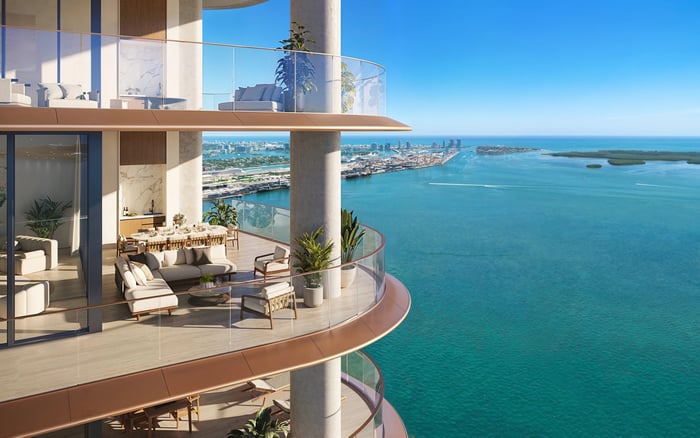
In South Florida luxury real estate, the balcony is often treated as a signature amenity. In practice, not every outdoor space works equally well. Depth matters. Proportions matter. So do wind conditions, furniture placement, access points, and the way the terrace connects to the interior.
A narrow balcony may deliver a beautiful photograph but little real use. A deeper terrace can become an outdoor salon, breakfast space, or evening retreat, provided it is sheltered and properly scaled. Buyers should stand outside long enough to understand sound, exposure, and comfort. Can two people dine without feeling compressed? Is there room for lounge seating? Does the terrace feel private from neighboring stacks, or does it invite constant visual overlap?
The best bayfront homes make the terrace feel inevitable, not decorative. Sliding doors, flooring transitions, ceiling heights, and sightlines should encourage movement between inside and out. When the terrace is part of the architecture rather than an afterthought, waterfront living becomes experiential instead of merely visual.
A great view cannot rescue a compromised plan. In Brickell, where many residences are designed around glass and verticality, buyers should pay close attention to room widths, column placement, ceiling character, storage, kitchen proportion, and the relationship between public and private spaces.
The strongest plans allow the primary living areas to command the outlook without sacrificing privacy in the bedrooms. They provide intuitive circulation, generous walls for art, and a kitchen that suits the owner’s actual entertaining style. Some buyers want dramatic open living. Others value separation, service areas, and quiet bedroom wings. Both can be luxurious when executed well.
Flow-through units deserve particular attention when available, because cross-light and opposing exposures can change the emotional character of a residence. Still, the term alone is not enough. The plan must be studied for practical benefits: ventilation, separation between rooms, views from both sides, and the ability to create distinct moods within the same home.
Brickell is not a secluded resort district. Its appeal is the combination of water, finance, dining, culture, and urban immediacy. That energy should be a feature, not a surprise. Before committing, a buyer should understand how the residence relates to nearby towers, streets, amenity decks, boat activity, and future urban life.
Privacy is not only about height. A high residence can still look into another tower. A lower residence can feel surprisingly private if its sightlines are protected. Study what is directly across, what is below, and how neighboring buildings interact with the unit. At night, interior lighting can change the privacy equation, especially in glass-forward homes.
Sound is equally important. The most elegant residence should still allow for rest. Listen from the terrace and from the bedrooms. Consider traffic, wind, mechanical systems, nearby venues, and building activity. A buyer who loves Brickell’s pulse may welcome a certain level of urban sound. A buyer seeking calm should be more selective about stack, height, glazing, and orientation.
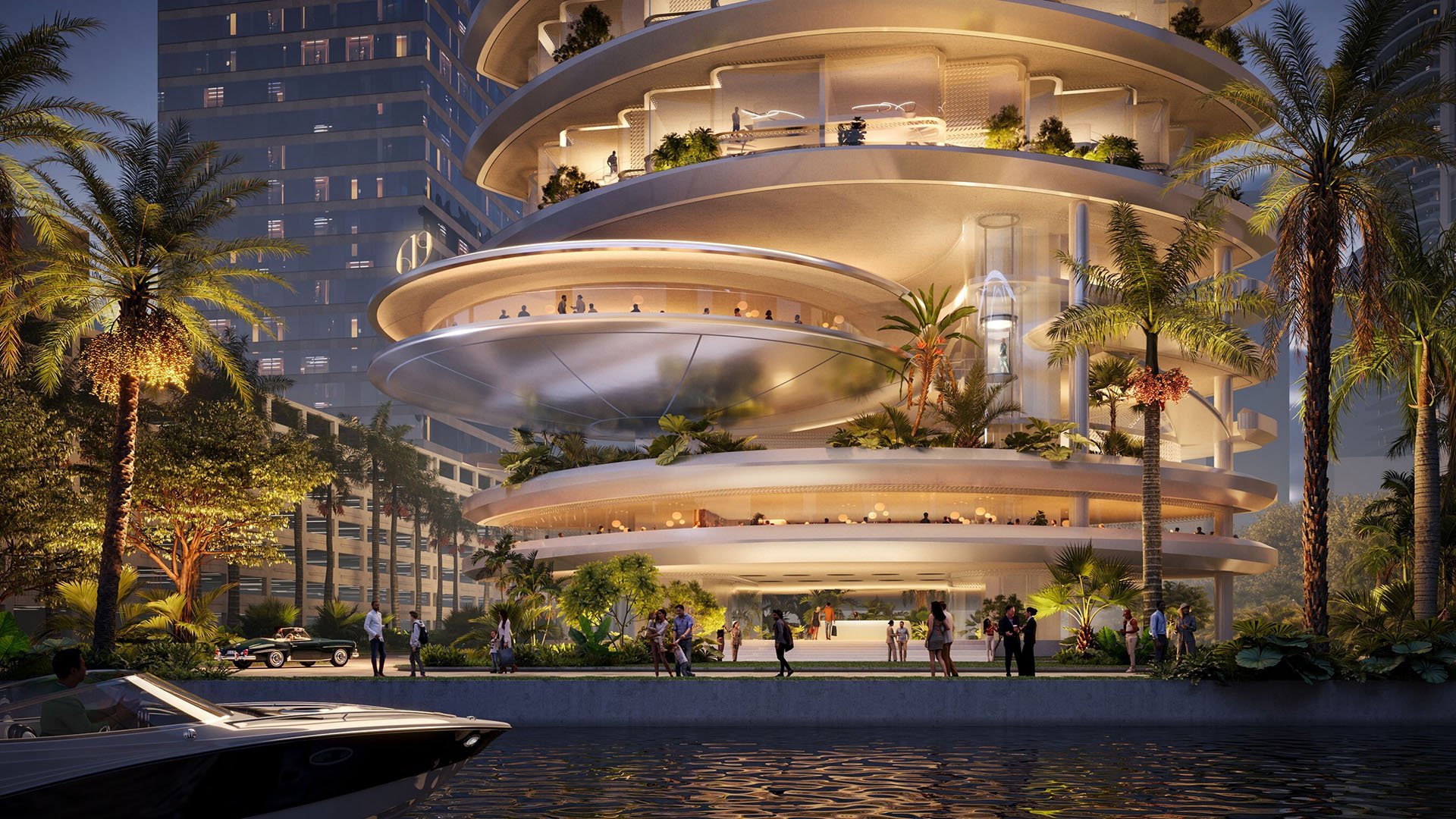
In the premium segment, the residence is only part of the acquisition. The building’s arrival sequence, staffing model, amenity quality, elevator experience, parking logic, security posture, and maintenance culture shape daily life as much as the view does.
A lobby should feel composed rather than theatrical for its own sake. Amenities should be useful, not simply numerous. Pools, wellness areas, private rooms, lounges, and service spaces matter most when they are maintained beautifully and scaled to the number of residents. For many buyers, the difference between a good building and an exceptional one appears in the quiet moments: how guests are received, how packages are handled, how service requests are resolved, and how calm the building feels during peak hours.
This is where comparisons across the Brickell luxury set become valuable. A buyer considering The Residences at 1428 Brickell may be weighing a different ownership personality than someone focused on 2200 Brickell. The right match is not only architectural. It is operational, social, and practical.
The guest sees the water first. The owner eventually sees everything else. Storage, service access, elevator wait, parking convenience, pet logistics, delivery flow, humidity management, and the ease of leaving for the airport or arriving after dinner all become part of the ownership experience.
A disciplined buyer should walk the path of daily life. Enter the building as a resident would. Move from car to elevator to residence. Look at where groceries arrive, where guests wait, where staff circulate, and where service interruptions might occur. These details rarely define the brochure, but they define living.
For second-home buyers, lock-and-leave confidence is essential. For primary residents, neighborhood convenience and building consistency matter more. For investors, the question becomes whether the residence has broad appeal beyond the owner’s personal affection for a single view. This is where a true buyer’s guide becomes useful: it forces the conversation away from emotion and toward repeatable judgment.
Not every buyer should pay the same premium for the same bay exposure. If you entertain often, spend long mornings at home, or want the residence to serve as a retreat, the view may be central to value. If you travel constantly or use the home mostly at night, floor plan, service, and access may deserve equal or greater weight.
The key is to price the view within a hierarchy. First comes location and building quality. Then plan, light, privacy, outdoor space, and finish potential. The view should elevate an already sound residence. It should not distract from a poor plan, uncomfortable terrace, or building that does not meet your standards.
Brickell rewards buyers who can admire beauty without surrendering judgment. The bay is powerful, but the best residence is the one that supports the life you intend to live in front of it.
What is the first thing to evaluate in a Brickell bayfront residence? Start with orientation and floor plan. A beautiful view matters most when the rooms, terrace, and daily circulation make it easy to enjoy.
Is a higher floor always better for a bay view? Not always. Height can improve perspective, but privacy, wind, elevator experience, and room proportions may matter just as much.
How important is the balcony in a bayfront purchase? Very important if outdoor living is part of the appeal. Depth, shelter, privacy, and furniture usability determine whether it functions as a true room.
Should I visit a residence at different times of day? Yes. Light, glare, sound, and privacy can change noticeably between morning, afternoon, and evening.
What makes a floor plan feel more luxurious? Generous room widths, intuitive circulation, strong bedroom separation, useful storage, and natural connections to the view all contribute.
How should I think about privacy in Brickell? Study nearby towers, amenity decks, and nighttime sightlines. Privacy depends on orientation and context, not just floor height.
Are amenities as important as the residence itself? They can be. Staffing, maintenance, arrival experience, wellness spaces, and elevator flow all shape the quality of ownership.
What should second-home buyers prioritize? Lock-and-leave confidence, service quality, security, easy access, and low-friction daily logistics should be high on the list.
Can a dramatic view hide weaknesses in a unit? Yes. Buyers should remain alert to awkward layouts, limited storage, narrow terraces, sound issues, or compromised privacy.
What is the best way to compare Brickell bayfront options? Compare view, plan, terrace, building operations, privacy, and lifestyle fit together rather than judging by the panorama alone.
For a discreet conversation and a curated building-by-building shortlist, connect with MILLION.
If branded residences are on your mind — as a home or as an allocation — we would be glad to share what we are seeing, privately.
Begin a quiet conversation