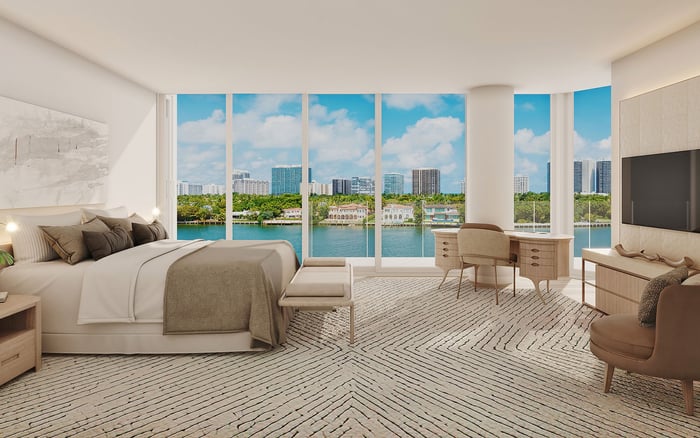
A discreet buyer’s framework for comparing family amenity priorities, teen-friendly spaces, guest-suite access, and ownership documents when evaluating The Perigon Miami Beach alongside Edgeworth West Palm Beach.

For affluent families evaluating The Perigon Miami Beach and Edgeworth West Palm Beach, the meaningful comparison starts beyond finishes, views, and service language. The sharper question is how each ownership model supports real life: visiting grandparents, teenagers seeking independence, younger children who need supervision, friends arriving for long weekends, and owners who may divide their time between South Florida and another primary residence.
The Perigon Miami Beach is a Miami Beach project, placing it naturally within the coastal lifestyle conversation. Miami Beach carries a distinct ownership rhythm: beach access, seasonal guest activity, high-touch services, and a premium on privacy within a highly social setting. Edgeworth West Palm Beach belongs in the Palm Beach County conversation, where family routines may center on clubs, schools, culture, dining, and a more town-and-neighborhood cadence.
For search shorthand, this may look like a Miami Beach comparison. In practice, it is a document review, a lifestyle audit, and a family governance decision. The polished amenity deck may shape the first impression, but the declaration, bylaws, reservation policies, staffing model, and house rules determine whether a residence actually works for a family.
Luxury buyers often ask about pool size, spa design, fitness-center quality, and the finish level of children’s or teen areas. Those questions matter, but they are secondary to access. A family amenity is only valuable if owners can use it when their household needs it.
The central question is whether each property functions as a conventional private residential condominium, a more hospitality-influenced model, or a hybrid with structured services and usage rules. Buyers should review whether amenities are owner-only, whether guests may access them without the owner present, how reservations are handled, and whether children and teenagers are subject to separate hours or supervision requirements.
This is where two projects can look similar in presentation yet feel very different after closing. One building may emphasize owner privacy and resident continuity. Another may place more weight on service flexibility, guest accommodation, and a managed experience. Neither is inherently superior. The right fit depends on how a family lives.
A dedicated teen room can be valuable, but only if it is designed and governed with sophistication. Families should ask whether the space is active or passive, visible or secluded, staffed or unstaffed, reservation-based or open access. A room with gaming, lounge seating, and media may sound compelling, yet the daily experience depends on acoustics, hours, age policies, and proximity to other amenities.
For families with middle-school or high-school children, the best teen spaces create independence without sacrificing control. Parents want young residents to feel that the building belongs to them, not that it was designed only for adults. At the same time, luxury buildings must protect the calm expected by owners without children. The balance is delicate.
Ask how the building treats friend groups. Can a resident teenager bring several guests? Is advance approval required? Are there limits during peak holidays? Does management distinguish between family guests, outside guests, and overnight guests? These rules will shape the social value of the residence more than any rendering.
Guest suites deserve close attention because they can materially affect how much residence a family truly needs to buy. For multigenerational owners, a guest suite may reduce pressure to purchase an additional bedroom. For families with adult children, it can create breathing room during holidays. For buyers who entertain often, it can separate visiting guests from the private household.
The operative details are everything. Families should examine how many nights can be reserved, whether blackout dates apply, whether access is first-come or priority-based, whether fees are charged, and whether guests receive amenity privileges. A beautifully appointed guest suite with limited availability may be less useful than a more modest suite governed by predictable rules.
Guest-suite access also raises questions of etiquette and discretion. In ultra-premium buildings, owners expect their visitors to be welcomed without the property feeling transient. The strongest policies make guests feel cared for while preserving the building’s residential character.
Investment thinking is not limited to yield. For many South Florida buyers, investment quality includes the ability to adapt as family needs change. Children grow older, grandparents visit more often, work schedules shift, and owners may spend longer or shorter stretches in residence from year to year.
Rent policies therefore matter, even for buyers who do not intend to rent immediately. Minimum lease terms, approval procedures, guest registration, and use restrictions can affect long-term optionality. A building with stricter rent rules may offer greater residential stability. A building with more flexible rules may appeal to owners seeking future liquidity or seasonal adaptability. The tradeoff is personal, but it should be understood before contract execution.
Families should also evaluate pet policies, service access, storage, parking, package handling, and elevator protocols. These practical details are rarely glamorous, yet they determine whether the home feels effortless on a school morning, during a holiday arrival, or after a long flight.
The smartest way to compare The Perigon Miami Beach and Edgeworth West Palm Beach is to create a family-use calendar. Mark school breaks, religious holidays, summer weeks, long weekends, grandparents’ visits, children’s birthdays, and periods when the residence may sit empty. Then test each ownership model against those real dates.
If the family expects frequent guests, the guest-suite rules become central. If teenagers will use the building independently, age and supervision policies matter. If the residence will be a second home, management responsiveness and remote-owner protocols deserve careful review. If the buyer expects a primary-residence feel, privacy, continuity, and resident culture should carry more weight than rental flexibility.
New-construction buyers should be especially disciplined. Early presentations can be elegant and persuasive, but operating rules often become clearer as documents mature. Ask for the latest versions, compare them line by line, and have counsel review the provisions that affect family use. Beautiful architecture sets the tone. Governance sustains the experience.
The Perigon Miami Beach and Edgeworth West Palm Beach invite a broader question now shaping South Florida luxury ownership: should a residence behave like a private family home with shared amenities, or like a managed environment with greater service architecture around guests and use? The answer depends on the buyer.
Families who prize quiet continuity may prefer the model that most clearly protects resident privacy. Families who host often may place a premium on guest-suite access and hospitality-style convenience. Families with teenagers may care less about formal entertaining rooms and more about flexible, well-governed spaces where young residents can gather safely.
The best purchase is the one whose rules match the family’s rhythm. In the ultra-premium market, that is the difference between a beautiful address and a residence that quietly works.
Is The Perigon Miami Beach relevant to a Miami Beach family buyer? Yes. The Perigon Miami Beach is identified as a Miami Beach project, making it part of the coastal ownership conversation for family-focused buyers.
Should I compare amenity lists or operating rules first? Start with operating rules. Amenity quality matters, but access policies determine how useful those amenities become for the household.
Why do teen spaces require special review? Teen spaces depend on age rules, supervision, guest policies, hours, and acoustics. A label alone does not show how the space will function.
Can guest suites reduce the need for a larger residence? Sometimes. Their value depends on availability, reservation limits, fees, blackout periods, and whether guests receive amenity access.
Are rental rules important if I do not plan to lease my home? Yes. Rental rules can affect future flexibility, resale positioning, and the building’s day-to-day residential character.
What should families ask about guests of teenagers? Ask whether nonresident friends are allowed, how many may visit, whether approval is required, and whether holiday restrictions apply.
Do pet policies matter in ultra-luxury buildings? They do. Pet rules can affect elevator use, service access, outdoor routines, cleaning standards, and overall convenience.
How should a second-home buyer evaluate management? Focus on remote-owner communication, arrival preparation, package handling, maintenance coordination, and guest registration.
Is new construction easier for family planning? It can be, but only if buyers review evolving documents carefully. Early presentations should be tested against final rules.
What is the best way to shortlist comparable options for touring? Start with location fit, delivery status, and daily lifestyle priorities, then compare stacks and elevations to validate views and privacy.
For a discreet conversation and a curated building-by-building shortlist, connect with MILLION.
If branded residences are on your mind — as a home or as an allocation — we would be glad to share what we are seeing, privately.
Begin a quiet conversation