Once defined by an independent, creative spirit, Coconut Grove is now being discussed as one of South Florida’s most consequential addresses for extreme wealth. A wave of headline waterfront acquisitions, paired with a carefully upgraded village core and a growing roster of luxury residences, has shifted the Grove from charming to strategic. For buyers, the opportunity is not simply to own in a fashionable pocket, but to secure a lifestyle that feels rare in Miami: walkable, waterfront-adjacent, culturally anchored, and quietly protected by low-supply geography.
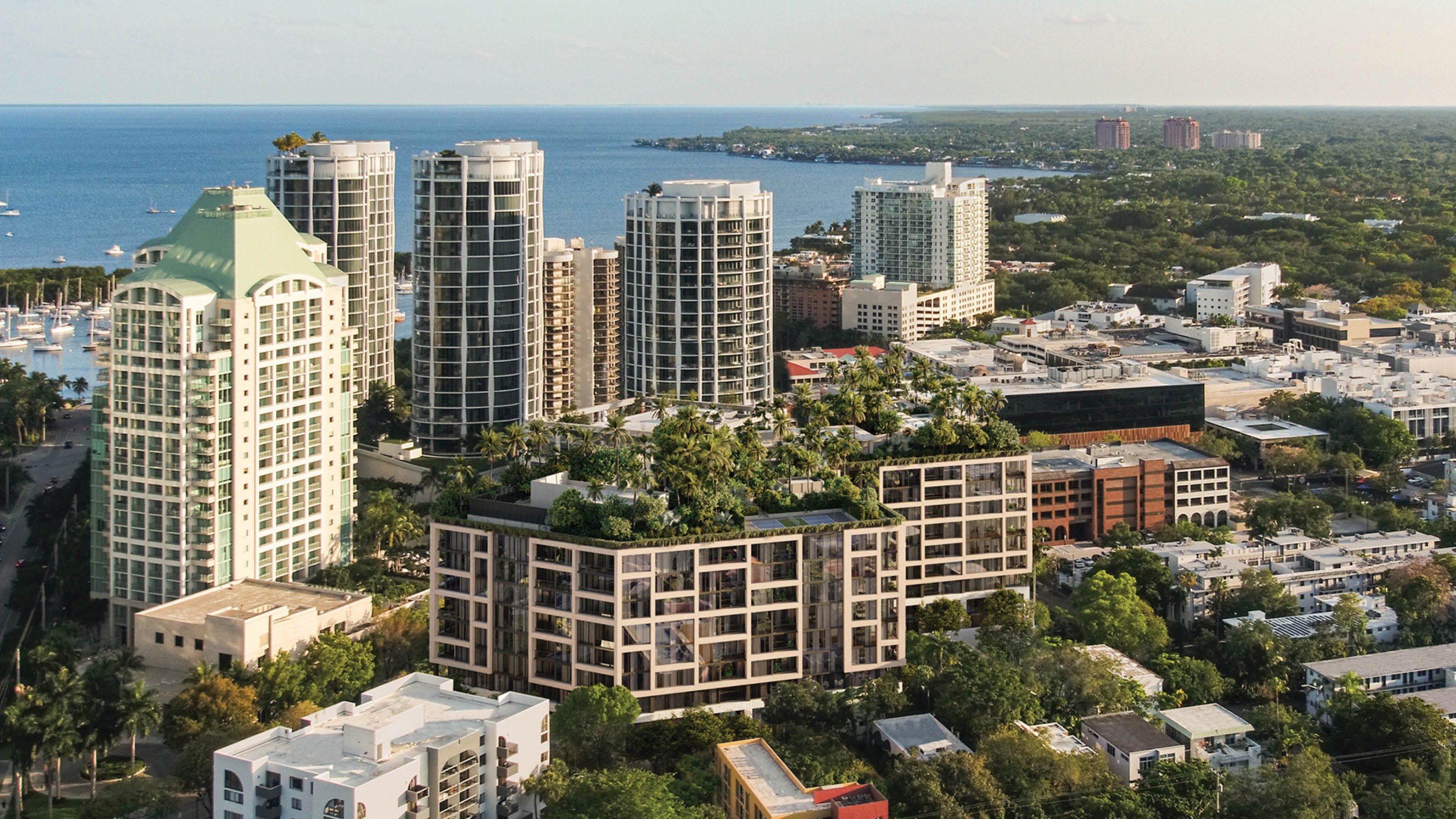
Coconut Grove is one of Miami’s oldest neighborhoods, and its age functions as more than a charming footnote. It is a form of structural differentiation. Many luxury districts in South Florida are defined by what is newly built, newly branded, or newly discovered. The Grove, by contrast, is defined by what has had time to settle in: a street scale that still feels human, a canopy of mature trees that changes the light, and an overall preference for places that read as established rather than freshly minted.
That independent, creative-minded identity has not disappeared. It remains visible in the way the neighborhood moves: residential blocks that feel calm, a village core that stays active without feeling engineered, and an aesthetic that favors texture over spectacle. Even as the market around it has intensified, the Grove continues to signal that it is not trying to perform as something else.
Yet the market reality surrounding Coconut Grove is unmistakably modern. Global capital has become more comfortable underwriting South Florida at the highest tiers. Trophy scarcity is now understood as a feature, not a flaw. And the buyer profile at the top end is increasingly shaped by relocation, residency planning, and long-term legacy considerations. The Grove now sits at the intersection of those forces.
That combination can feel paradoxical on first pass. Coconut Grove reads intimate, but transactions on a single waterfront stretch can still rewrite the conversation about luxury pricing in Miami. It can feel quiet, yet highly consequential. It can feel local, yet attract buyers who are comparing it to rare, low-supply enclaves around the world.
For the ultra-premium buyer, Coconut Grove offers a particular kind of comfort: a neighborhood with history and a real village center, while still close enough to the broader Miami engine to participate in it. The Grove’s appeal is not that it outshines more theatrical districts. It is that it does not need to.
Luxury real estate demand is often summarized as lifestyle, but in Coconut Grove, lifestyle is not a marketing abstraction. It is supported by the neighborhood’s physical form, which is precisely what many buyers find difficult to replace in South Florida.
National real estate coverage has framed modern Coconut Grove as unusually walkable for a luxury pocket of Miami. That matters because walkability changes behavior. It turns “near restaurants” into “we actually go.” It shifts a home from an occasional base into a daily residence. It also widens the buyer pool, pulling in people who prioritize convenience, routine, and a sense of place, not only square footage and water frontage.
This walkable quality is part of a larger upgrade cycle that has been visible in the village core. CocoWalk’s redevelopment into a more open-air, village-style destination and its LEED Gold certification signal a broader shift: investment that improves the everyday experience without forcing the Grove into a generic template. In luxury, that balance is rare. Buyers may want better retail, better public space, and a better overall feel, but they rarely want the neighborhood to lose its identity in the process.
Just as importantly, Coconut Grove’s new standing is being reinforced by narrative. Local media has explicitly branded it as a new center of “extreme wealth” in South Florida. That label matters because it changes how the market underwrites the future. It influences which comparables feel relevant, how scarcity is priced, and how comfortable sophisticated buyers feel allocating capital to a neighborhood that reads as globally recognized.
In parallel, South Florida’s broader residency story continues to shape decision-making at the top end. Major business press has highlighted the tax implications of ultra-wealthy moves to Florida, and reporting has specifically connected some high-profile purchases to residency planning and shifting domiciles. Buyers do not need identical motivations to feel the market impact. When relocations bring long-term, high-conviction owners, trophy supply tends to tighten, and pricing psychology moves with it.
None of this means the Grove has become only a wealth story. It means the neighborhood’s long-standing strengths are now being priced with a different level of seriousness. When lifestyle is backed by scarcity, and scarcity is backed by global attention, demand tends to become less cyclical and more strategic.
Coconut Grove’s current moment cannot be discussed without the transactions that reoriented the entire conversation. Headlines alone do not define a market, but at the ultra-luxury level they can reset expectations quickly, especially in a neighborhood where the rarest properties are extremely limited.
Widely reported coverage describes Google co-founder Larry Page purchasing a secluded waterfront Coconut Grove compound for $101.5 million, a multi-structure estate often referenced by the name “Banyan Ridge.” As a single data point, it signaled a new ceiling, not because it created value from scratch, but because it confirmed what the market was willing to underwrite for privacy, water, and rarity in the Grove.
Then, reporting indicates Page paid roughly $71.9 to $72 million for a second waterfront mansion in Coconut Grove, described as an off-market deal closing in early January 2026. Together, those purchases total about $173.4 million concentrated within one neighborhood, a figure that carries both financial weight and symbolic force.
This was not the first time Coconut Grove announced itself at the top tier. Ken Griffin’s reported $106.9 million Coconut Grove compound purchase in 2022 set a Miami price record at the time and foreshadowed the chapter the Grove is now living through. When such sales occur in close proximity, they create a narrative of inevitability. They tell sellers to hold the line. They tell buyers that they are competing for a truly finite set of assets.
For luxury buyers, these numbers are not only headlines. They are market signals. Trophy sales recalibrate what buyers believe is possible, and they adjust seller expectations across nearby streets, even when the rest of the neighborhood trades on different math. In the Grove, this effect can be especially pronounced because the neighborhood is both a brand and a geography. A single waterfront parcel can influence perceptions of the entire village.
At the same time, buyers should avoid lazy conclusions. A nine-figure waterfront compound does not mean every listing is priced like a trophy. Public data can show much lower “headline” statistics for non-trophy inventory, including median listing price measures that sit far below the waterfront stratosphere. Practically, the Grove is two markets at once: an ultra-rare waterfront trophy segment and a broader village inventory priced on its own fundamentals.
Understanding which market you are in is not a technicality. It affects how you negotiate, what you benchmark, and what kind of exit optionality you can reasonably expect.
In the ultra-luxury world, lifestyle is not just preference. It is durability. Coconut Grove’s fundamentals are reinforcing because they pair cultural depth with physical scarcity, which can help protect value through cycles.
Start with history. The Barnacle Historic State Park preserves an 1891 home associated with early Grove pioneer Ralph Munroe. In a region where so much of the built environment is recent, that kind of preservation anchors the neighborhood in a sense of origin. A place that protects its past often protects its sense of place, and sense of place is one of the most defensible forms of luxury.
Then there is culture at scale. The Coconut Grove Arts Festival traces its origins to 1963, beginning as a “clothesline” art show tied to publicity for Irma La Douce, and evolving into a major neighborhood institution. That continuity matters. For buyers who collect, entertain, or simply want a social calendar that feels locally rooted, cultural institutions are not background noise. They are part of what makes a neighborhood feel lived in rather than manufactured.
Nearby, Vizcaya Museum & Gardens remains a major cultural anchor frequently associated with the Grove area’s lifestyle pitch. It functions as both destination and reference point. It is the kind of landmark that reinforces a psychological boundary: you can be close to the city’s energy without living inside constant intensity.
Finally, consider what the Grove is not. It is not a fortress island like Indian Creek Village, often discussed as “Billionaire Bunker” with a high-security profile and a concentration of high-net-worth residents. Coconut Grove’s advantage is different: discretion through normalcy. For some buyers, it is easier and more comfortable to live in a refined village that does not announce itself as a gated headline.
This is where the Grove’s value story becomes cohesive. Scarcity is not only about how little inventory exists. It is also about how difficult it is to replicate a neighborhood’s identity. Mature tree canopy, walkability, cultural continuity, and a recognizable village core are not easily duplicated. Those qualities are not guarantees, but they are meaningful forms of insulation against sameness.
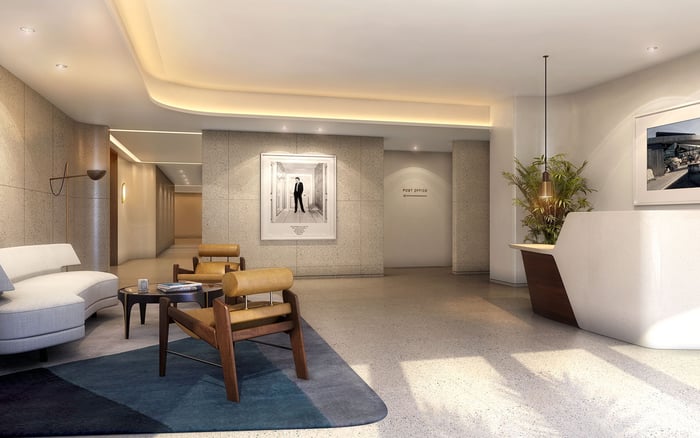
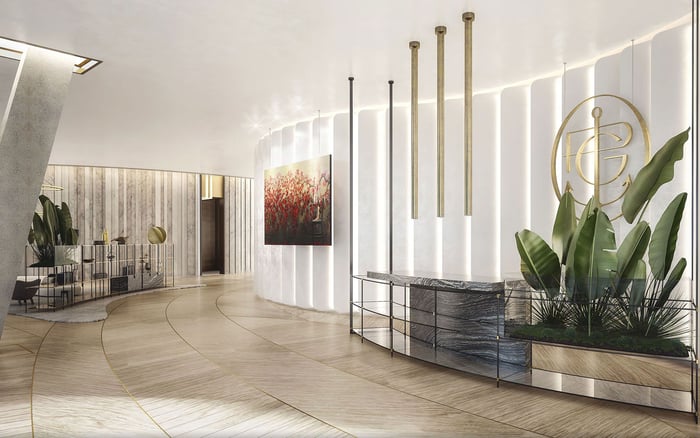
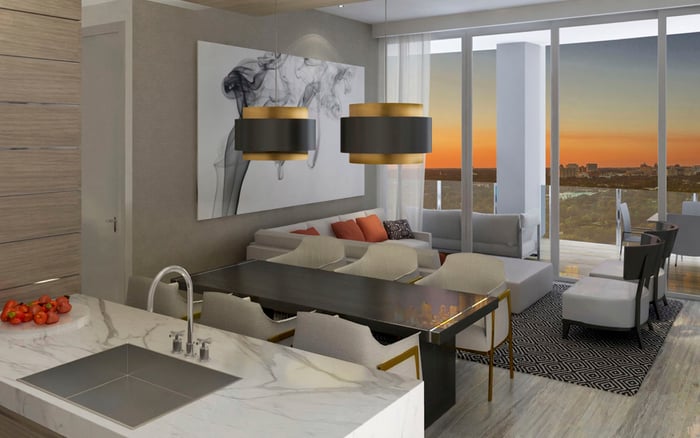
Coconut Grove’s modern luxury story is not only about legacy homes. It is also about an emerging set of new-construction and branded residences that meet contemporary expectations while staying compatible with the neighborhood’s scale.
A clear reference point is Park Grove Coconut Grove, a prominent luxury condo project designed by OMA (Rem Koolhaas’ firm). In the Grove, architecture matters because it is visible. Buyers are not purchasing a tower hidden among towers. They are purchasing a statement that must harmonize with a village context, where the surrounding fabric still reads as residential and established.
The next layer is brand signaling. Four Seasons-branded residences are being marketed for Coconut Grove, underscoring how legacy luxury flags are targeting the neighborhood’s buyer pool. In practice, Four Seasons Residences Coconut Grove speaks to a specific buyer: someone who values service culture, predictable standards, and a globally understood level of discretion. For many, the brand is not about flash. It is about a familiar operating system.
Wellness has also become a defining lens for luxury purchasing, and the Grove is now part of that conversation. The Well Coconut Grove aligns with the broader shift toward residences that promise not only design, but also a lifestyle framework built around routines, recovery, and longevity. The point is not that wellness is new. The point is that it has become explicit in how high-end product is positioned, and certain buyers are actively seeking it.
The Mr. C brand has also established a Coconut Grove luxury footprint, contributing to the neighborhood’s repositioning in the premium market. Mr. C Tigertail Coconut Grove embodies a hospitality-driven approach that appeals to buyers who want a turnkey, lock-and-leave experience without giving up the Grove’s residential feel.
A key takeaway for buyers: new inventory in Coconut Grove tends to arrive as targeted, boutique interventions rather than as a wave. That pacing matters. It supports pricing integrity, reduces the risk of sudden oversupply, and helps maintain the neighborhood’s signature scale. For a buyer underwriting long-term value, the supply story is not secondary. It is central.
Coconut Grove rewards precision. Its desirability can tempt even sophisticated buyers into simplifying the decision as “Grove equals safe.” A better approach is to underwrite by micro-location, product type, and lifestyle fit, because the neighborhood is not one uniform experience.
First, define your segment. Are you buying the waterfront trophy category, or are you buying village adjacency? These behave differently. Trophy assets can trade like collectibles with a global buyer base and different value drivers. Non-waterfront homes and condos often trade more directly on daily convenience, building quality, and the depth of end-user demand. Be clear about what you are purchasing, and what the likely resale audience will value.
Second, test the walkability claim against your own routine. The Grove’s reputation for walkability is meaningful, but walkability is personal. Visit at the hours you will actually live: morning drop-off, late dinner, weekend midday. A neighborhood can be walkable in theory but still feel inconvenient in practice if your typical routes do not align with where you spend time.
Third, verify the experience of discretion. Coconut Grove’s appeal often includes privacy through calmness rather than privacy through gates. That can be ideal, but it is not identical to high-security enclaves. If security posture is central to your household, compare the lived reality, not the marketing story. The right answer may still be the Grove, but diligence should be practical and specific.
Fourth, use culture as a proxy for resilience. Neighborhoods with durable institutions tend to hold value through cycles because they retain identity. The Barnacle, the Arts Festival, and the broader Grove narrative are not simply pleasant amenities. They can function as long-term insulation against sameness, which is a real risk in markets where luxury can become interchangeable.
Finally, be honest about investment goals. Some buyers prioritize legacy and use. Others require optionality, liquidity, and a clear resale audience. Coconut Grove can serve both, but the route changes depending on whether you are buying a trophy, a brand, or a purely residential home. When you align the asset with your intent, the neighborhood’s strengths become easier to capture and easier to defend.
Is Coconut Grove primarily a condo market or a single-family market? It is both. The Grove includes trophy single-family waterfront estates and a growing set of luxury condos and branded residences that appeal to turnkey buyers.
What made Coconut Grove’s ultra-luxury pricing feel “real” to the market? A series of widely reported trophy transactions, including a $101.5 million waterfront compound purchase and additional ultra-high-value deals, reset perceptions of the neighborhood’s ceiling.
How important is walkability in Coconut Grove’s value story? It is central. The Grove is frequently described as unusually walkable for a luxury pocket of Miami, which supports everyday livability and can widen the buyer pool.
Does Coconut Grove compete directly with Indian Creek Village? Not exactly. Indian Creek Village is often framed as a security-centric enclave, while the Grove tends to offer discretion through a village lifestyle and a more organic neighborhood fabric.
Explore Coconut Grove real estate with MILLION Luxury.
If branded residences are on your mind — as a home or as an allocation — we would be glad to share what we are seeing, privately.
Begin a quiet conversation