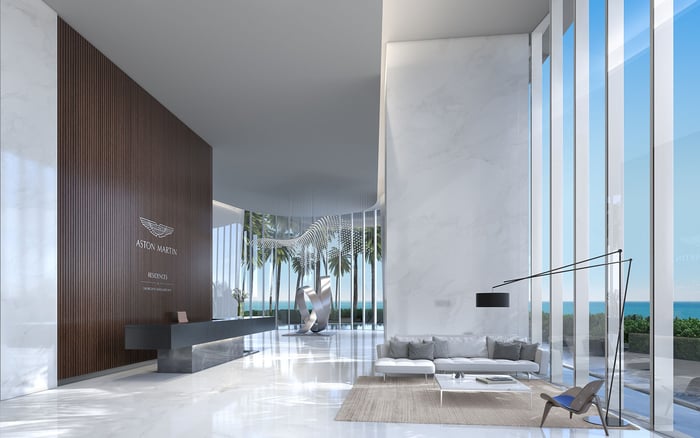
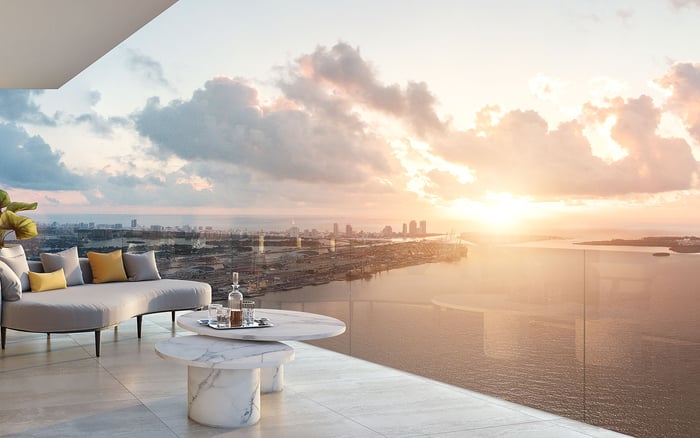
Miami’s next generation of ultra-tall, brand-led towers is converging around a widely referenced practical height ceiling of 1,049 feet, creating a new class of “sky estates” defined as much by service, resilience, and liquidity as by view. From Downtown’s emerging supertall skyline to Brickell’s branded waterfront ambitions and Sunny Isles’ beachfront statements, the market is rewarding scarcity, certainty, and operational excellence.
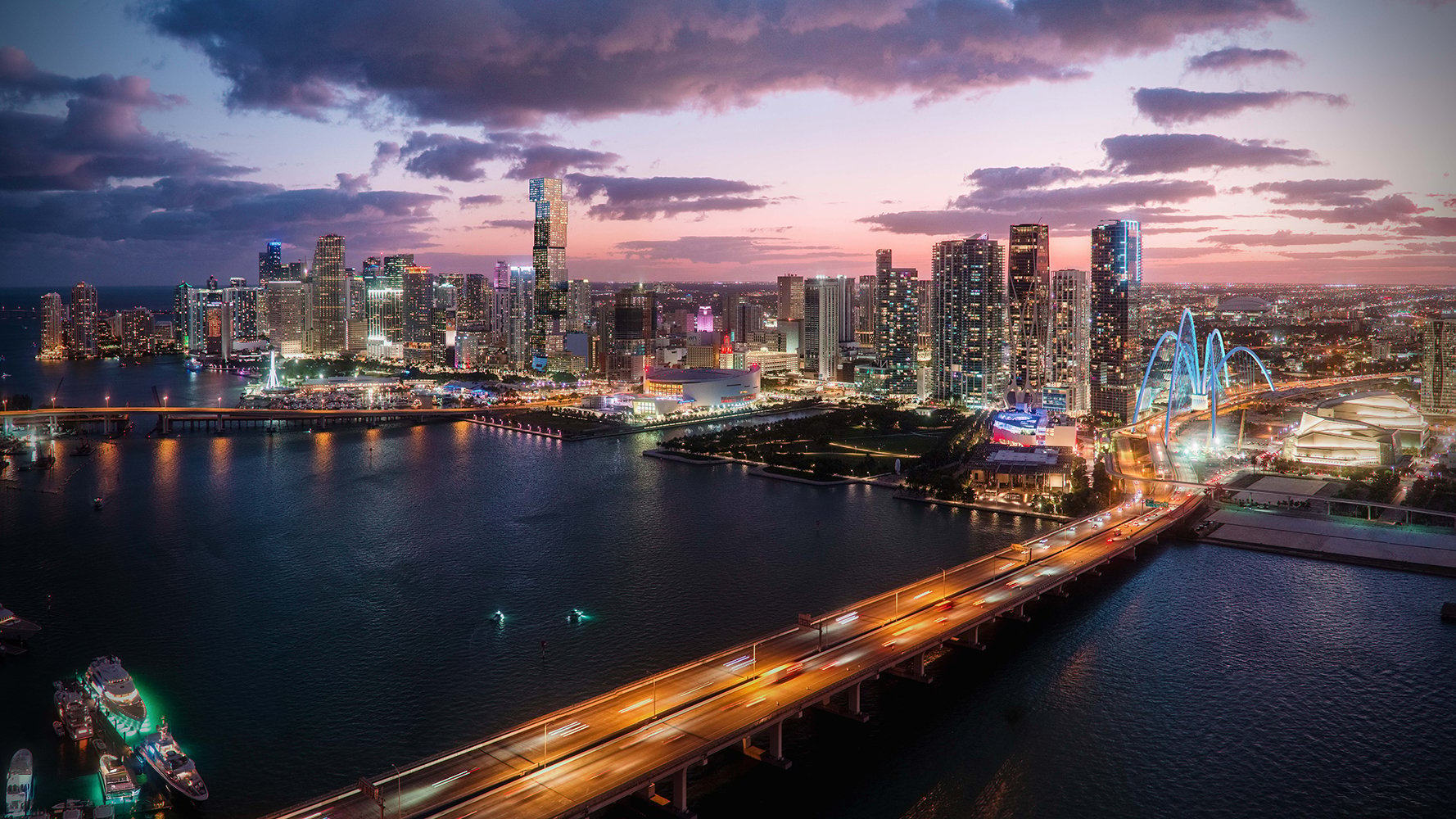
Miami’s newest statement towers are not only getting taller. They are clustering around a number that has started to function like a practical ceiling for the city’s next phase of vertical ambition: 1,049 feet. That height appears repeatedly in coverage of major proposals that have sought FAA approval, and it has become a convenient shorthand for the outer edge of what Miami can realistically pursue right now.
For luxury buyers, this is not trivia. It is a market signal. When multiple developers are aiming for a similar pinnacle, it suggests two things at once. First, Miami has matured into a globally legible trophy skyline market, one where height, design, and brand are part of the city’s competitive identity. Second, the very top of the product stack is becoming its own category, with expectations that are distinct from conventional luxury condominium inventory.
Those expectations are increasingly specific: hotel-grade service that actually operates at scale, stronger building systems, and capital structures that can hold up under real-world volatility. In other words, the conversation is shifting away from “How tall?” and toward “How enduring?”
In a market where new icons arrive quickly and attention is plentiful, the towers that perform best tend to pair scarcity with operational credibility. Height can capture headlines. Execution holds value.
The most visible expression of Miami’s supertall moment is the Waldorf Astoria Hotel and Residences Miami, publicly described at 1,049 feet and 100 stories. Its stacked, staggered glass “cubes” have become a signature silhouette, a design decision that reads as sculptural and instantly brandable.
Coverage of the project’s construction progress has indicated it surpassed one-third of its ultimate height in 2025, a reminder of how quickly Miami’s pipeline can move from marketing to material reality. Pricing has been reported with remaining residences starting in the low $3 million range, alongside a top penthouse marketed at $50 million. Just as importantly for buyers who track execution risk, the project has been reported to have secured a $668 million construction loan, framed in coverage as record-setting for Florida condo development.
That combination of height, design identity, and capitalization is increasingly the template. In Brickell, branded development is no longer a supporting storyline. It is the thesis. A prime example is Baccarat Residences Brickell, widely described as a three-tower plan with towers marketed around 57, 77, and 82 stories. Early pricing guidance has been marketed from approximately $2.3 million and up, reflecting how deeply the branded waterfront narrative has penetrated the high-end buyer mindset.
Brickell’s other branded entrants reinforce the same pattern: service expectations imported from hospitality, elevated amenity programming, and a level of lifestyle curation that can feel closer to a private club than a conventional condominium.
At the same time, Brickell and Downtown continue to absorb ultra-luxury inventory that is not oceanfront. Miami has been described as heavily weighted toward new-construction condos in urban neighborhoods such as Brickell, Downtown, and Edgewater, an allocation that reflects genuine demand for walkable city living rather than a retreat from the beach.
For buyers, the practical takeaway is straightforward. In these districts, the competitive set is no longer only local. It is increasingly international in feel, and that raises the bar on design, services, and building performance.
In ultra-premium residential real estate, “brand” can be either a label or a promise. Miami’s latest wave is clearly trying to make it the latter.
The reason is simple. At the top end, buyers are paying for frictionless living and reputational certainty. A strong brand can imply service standards, talent recruitment, and a global sales network. It can also supply a narrative that travels well across borders, which matters in South Florida’s buyer mix.
Florida’s international-buyer profile has repeatedly shown how important foreign purchasers are to the region and how frequently international buyers are cash buyers. In practical terms, that can reduce sensitivity to mortgage-rate swings at the high end, and it can keep demand steadier than in markets that depend more heavily on domestic financing.
Still, buyers should treat brand as the beginning of diligence, not the conclusion. The core question is operational: what is actually being delivered day to day? In the best branded residences, the identity is supported by staffing, training, and systems that behave like hospitality.
Where Brickell often expresses the brand story through urban convenience, Miami Beach tends to express it through privacy and membership-like access. Casa Cipriani Miami Beach speaks directly to that preference set: discreet luxury, social capital, and a hospitality-forward approach designed for buyers who already understand club culture.
And for buyers drawn to the hotel-service model without compromising on residential gravitas, St. Regis® Residences Brickell sits firmly in the conversation. The broader market has framed St. Regis in Miami as part of the push toward hotel-style services and amenities in new luxury towers, a trend that increasingly defines the Brickell corridor.
Miami’s vertical story is not one tower, and it is not one neighborhood. It is a pipeline, and that pipeline is becoming more complex as projects layer branding, mixed-use programming, and ambitious height targets onto schedules that must still clear regulatory, financing, and construction realities.
Downtown has several projects and proposals that collectively telegraph momentum. Okan Tower has been described as a mixed-use skyscraper planned around 903 feet, combining hotel and residential components. Another major planned entrant is The James Hotel and Residences, publicly described as an 82-story Downtown Miami tower with reporting citing a project cost around $850 million. Sonesta has also publicly announced it executed an agreement for The James, positioning it as a significant branded hospitality and residences expansion.
The key point for buyers is not to memorize a list of names. It is to recognize that Downtown is becoming a true multi-node luxury district, with multiple vertical centers of gravity. That shift can affect view corridors, traffic patterns, and even the competitive set for resale.
As the skyline densifies, the buyer’s advantage comes from clarity. Which projects have the strongest delivery visibility? Which have the cleanest positioning within their peer set? Which will still feel singular when several new towers are complete nearby? In a rapidly evolving environment, scarcity often depends on context as much as it depends on square footage.
South Florida’s ultra-luxury segment has been described as unusually active, supported by wealth migration and limited trophy inventory. Within that backdrop, one detail stands out: coverage has pointed to a sharp reduction in $10 million-plus condo listing inventory year-over-year.
In a market with fewer top-of-market listings, new construction becomes more than a preference. It becomes a source of supply that can be curated, financed, and delivered with a level of predictability that older trophy condos sometimes struggle to match.
This is one reason new-construction product continues to command attention even when the broader market becomes more price-sensitive. It is also why “trophy” is being redefined. Trophy no longer means only beachfront. It can mean the best views, the best services, and the best building systems in a central location.
For buyers, this structural scarcity changes the evaluation process. When inventory is thin at the top, the bar rises for what qualifies as a long-term hold. The best assets tend to be the ones with defensible differentiation. In today’s Miami, differentiation is increasingly created by a combination of brand clarity, operational competence, and a building’s ability to deliver a consistent experience over time.
Miami’s supertall era is not confined to the central business districts. Sunny Isles Beach continues to show how branded demand extends into oceanfront submarkets.
Bentley Residences Sunny Isles is widely marketed as a standout branded beachfront tower, and it captures a broader truth. The luxury buyer who wants sand and sea is also asking for the same level of specification, privacy, and service now expected in Brickell and Downtown.
At the same time, buyer scrutiny is rising around resilience. Market reporting has emphasized upgraded impact windows, backup power strategies, and code-driven storm hardening as key considerations in new development. For an ultra-luxury buyer, resilience is not a niche concern. It is part of the definition of quality, particularly for second-home owners who may not be in residence during a storm event.
The strongest projects treat resilience as foundational, not as an upgrade package. Buyers should listen closely to how a tower describes its approach. There is a difference between meeting code and planning for continuity. In a coastal market, sophistication shows up not only in finishes, but in systems.
Edgewater has increasingly been positioned as a major high-rise luxury hub, framed as a Biscayne Bay corridor absorbing significant new tower development and demand.
For buyers, Edgewater can offer a different value proposition than Brickell. It can feel more residential and view-forward while still remaining close to the cultural gravity of Downtown. The district’s evolution also creates a practical strategy: buyers who want new inventory and big water views may find more options along the bay corridor than in the most compressed parts of Brickell.
The key diligence item is competitive supply. As more towers rise in proximity, the premium will concentrate in the best exposures, the strongest amenity programming, and the most credible operations. The neighborhood story is real, but the building story is decisive.
In other words, Edgewater can be compelling, but it is not automatically a value play. The best residences will still be the ones that pair view, product quality, and service with a clear resale narrative. Buyers should evaluate each project on its own merits, and then place it within the neighborhood’s fast-changing context.
In the ultra-tall, branded segment, the decision is rarely about finishes alone. It is risk management, expressed through luxury.
First, understand height as a regulatory and aviation conversation, not just a design ambition. The repeated appearance of 1,049 feet in FAA-related coverage for major Miami projects underscores that airspace considerations can be a gating factor.
Second, follow the capital stack. Large construction loans, publicly reported in some cases, can signal institutional confidence, but buyers should still ask how the developer is sequencing sales and construction milestones. Certainty matters, particularly when the competitive landscape is dense and timelines influence both enjoyment and resale strategy.
Third, interrogate operations. In branded residences, service is part of the value proposition, but it must be delivered day after day. Ask who is staffing, what is included, and what is outsourced. A brand may set expectations, but the building’s actual operating model determines whether those expectations are met consistently.
Fourth, evaluate resilience as a system. Look for clear strategies around impact-rated building envelopes and backup power planning, along with an understanding that code-driven hardening is not the same as operational continuity.
Finally, consider exit liquidity. Miami’s high-end market is global. That can be a strength, but it also means your future buyer may compare your residence to other cities’ best-in-class product. In that context, brand clarity, view protection, and amenity differentiation are not indulgences. They are resale arguments.
Miami’s skyline expansion is widely tracked by industry resources that maintain dedicated city profiles, and the city’s rise into the ranks of major U.S. skyscraper markets is no longer theoretical.
For the luxury buyer, the opportunity is to choose thoughtfully within a rapidly improving product set. The next generation of towers is creating a more international standard of living in South Florida: high-rise homes that function like private clubs, supported by stronger building codes and increasingly sophisticated development financing.
The practical height ceiling of 1,049 feet may ultimately be remembered as a waypoint. The more durable story is what that ambition has forced the market to do: professionalize, differentiate, and compete at the level of global luxury capitals.
For buyers deciding between neighborhoods, the framework is consistent. Downtown is becoming more layered, Brickell is consolidating the branded thesis, Edgewater is rising as a bayfront alternative, and oceanfront submarkets continue to refine what trophy means. Across all of it, the towers that hold value best tend to be those that can prove their promise, not just advertise it.
Are Miami supertalls mainly in Brickell and Downtown? Most of the high-profile ultra-tall proposals and deliveries are concentrated in Brickell and Downtown, with Edgewater also emerging as a major high-rise luxury hub.
Why are branded residences so dominant right now? Brands help communicate service standards and lifestyle expectations, and they can resonate with Miami’s global buyer base, including many cash buyers.
Is oceanfront still the top trophy category? Oceanfront remains emotionally dominant, but trophy value increasingly includes engineering, services, and resilience, not just proximity to the sand.
What should I ask about resilience in a new tower? Focus on impact-rated building systems, backup power strategy, and how the building plans for operational continuity during storm events.
To explore South Florida’s most design-forward residences with discretion, connect with MILLION Luxury.
If branded residences are on your mind — as a home or as an allocation — we would be glad to share what we are seeing, privately.
Begin a quiet conversation