In South Florida, the top of the market is not merely resilient. It is narrative-driven. From a $120 million Star Island trade reported as a Miami-Dade single-family record to an $86 million condo penthouse widely covered as the county’s priciest condominium sale, 2025 reinforced a modern truth: in the trophy tier, price is only part of the product. The rest is provenance, privacy, design authorship, and the ability for a residence to function as cultural capital. This MILLION Luxury editorial unpacks what the year’s headline deals reveal about how ultra-luxury is marketed, negotiated, and valued across Miami-beach and Palm-beach, and what sophisticated buyers and sellers should watch next.
In the ultra-premium tier, records are rarely a surprise. They tend to be the visible result of three forces moving in alignment: genuine scarcity, global demand with the means to act quickly, and a narrative that is managed as deliberately as the transaction itself. In 2025, South Florida’s trophy market made that dynamic easier to see.
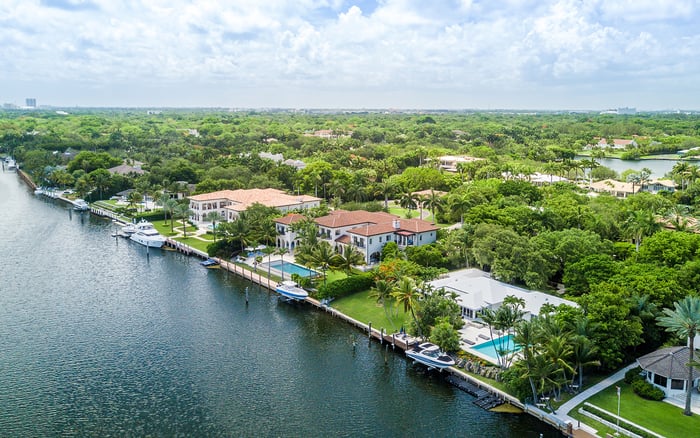
A Miami Beach property at 26 Star Island Dr reportedly closed around $120 million, widely covered as the most expensive single-family home sale in Miami-Dade history. Later in the year, a penthouse at The Seaway at the Surf Club reportedly sold for $86 million, widely described as the highest-priced condo sale ever in Miami-Dade. Even at a remove, numbers like these do what they always do at the top: they reset expectations, raise the ceiling of what sellers believe is possible, and hand brokers a fresh reference point for what “best in class” can command.
The more useful lesson, however, is not the headline price. It is how the deals were positioned, how their value was justified, and why they traveled so quickly through the market’s psyche. 2025 underscored that the trophy tier is priced through non-fungible attributes, executed through privacy-conscious structures, and marketed through a calibrated blend of discretion and selective public visibility.
A $100 million-plus closing is not a “comp” in the conventional sense. It behaves more like an anchor, and it can pull the conversation in ways that are helpful or misleading depending on how it is used.
First, trophy transactions often have no true substitute. In this tier, the buyer is rarely choosing between interchangeable options; they are acquiring a specific combination of location, frontage, privacy, and social signaling. That is why a prime waterfront estate with exceptional positioning can trade more like a collectible than a commodity. It is valued for its singularity and its unrepeatable setting, not for its proximity to a median price per square foot.
Second, the market absorbs the story as quickly as it absorbs the number. Coverage around the reported $120 million Star Island sale included references to the use of entities associated with a prominent seller and an entity tied to a buyer. The point is not intrigue. The point is mechanics: trophy transactions frequently prioritize privacy, and that privacy is often structured into the deal itself. The result is a useful paradox for anyone who sells at this level: the execution can be quiet while the impact is loud.
For sellers, an anchor can be powerful, but only when applied with discipline. A county record can support a premium when your property shares the same category-defining traits, not merely the same ZIP code or the same waterfront label. A record is a signal, not a guarantee.
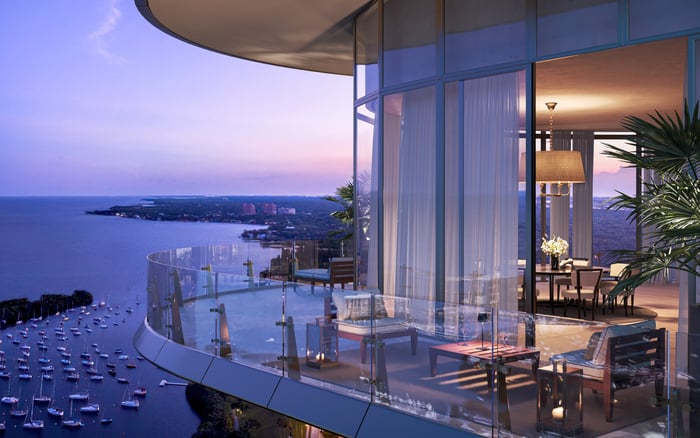
If the top of the condominium market had a defining theme in 2025, it was authorship. The reported $86 million Surf Club penthouse was covered not only as a price record, but as a design-forward trophy where the creative team itself was part of the value proposition. At this altitude, architecture and interiors are not decoration. They are provenance. They become a form of credentialing that helps the buyer justify a premium and helps the market remember why that premium existed.
The same logic shows up in branded, resort-adjacent demand. A Four Seasons Surf Club penthouse reportedly traded around $38 million, reinforcing how a hospitality halo can compress perceived risk for a global buyer. In a market where many owners split time across continents, operational confidence is not a footnote. It can be as persuasive as a view corridor, particularly when the buyer is underwriting ease of ownership alongside aesthetics.
For buyers evaluating Miami-beach condominiums, it is useful to separate lifestyle value from liquidity value. The best lifestyle experiences are not always the most liquid, and the most liquid offerings are not always the most personally satisfying. In this tier, a residence that consistently delivers service, privacy, and long-horizon brand equity can be easier to hold through cycles, because its appeal is less dependent on short-term sentiment.
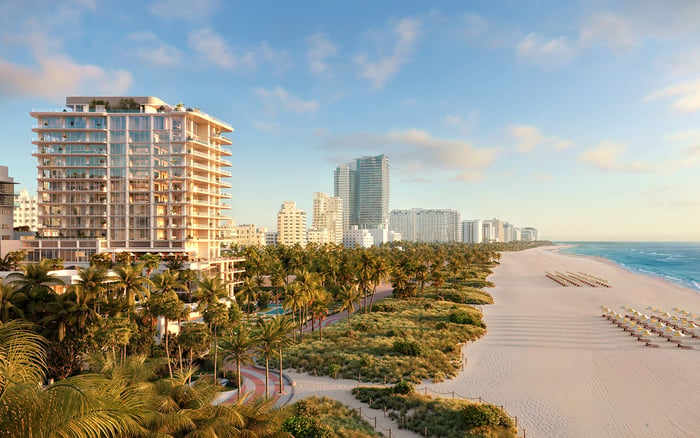
That framing is part of why ultra-luxury Miami Beach projects such as Setai Residences Miami Beach continue to read as long-horizon assets for certain buyers. They sit at the intersection of address, service expectations, and global recognition, all of which can support durability when the market shifts from exuberance to selectivity.
In the trophy segment, the market often prices the idea of a residence before it prices the residence itself. That is not irrational. It is how scarcity works when the supply is finite, the buyer pool is global, and the best inventory is sometimes promised before it is delivered.
One of the most telling 2025 datapoints was a report that the Shore Club Residences penthouse was in contract for $120 million-plus, despite the project delivering later. Even without a recorded closing, the existence of a $120 million-plus contract can operate as a signal. It communicates where a developer believes the ceiling is, and it offers future purchasers a narrative to step into. In an attention-driven market, narrative can function as a form of pre-valuation.
That signaling effect is also why sophisticated buyers should interrogate what the contract price is actually buying. In this tier, the premium is rarely about finishes alone. It is typically about floorplate scarcity, oceanfront permanence, privacy characteristics that cannot be manufactured later, and the credibility of the team delivering the product.
In the same Miami-beach conversation, Shore Club Private Collections Miami Beach has become part of the city’s broader storyline around next-generation trophy condominiums, where pre-completion demand is framed as evidence of global appetite. The key is to treat the signal as a signal: meaningful, market-moving, but not a substitute for a closed sale.
Luxury marketing loves checklists. Trophy pricing rarely does. At the very top, buyers tend to pay for what cannot be recreated later, even with an unlimited budget.
The Miami Beach estate known as OKTO at 88 La Gorce Cir reportedly traded around $75 million and was widely covered as a La Gorce Island record. Coverage emphasized approximately 260 feet of waterfront, a detail that matters because it is difficult, and sometimes impossible, to replicate. Frontage, dockage potential, view corridors, and privacy buffers are the levers that move pricing when the buyer’s objective is to own an exceptional position, not simply a large home.
The Star Island record functions in the same spirit. Whether the buyer renovates, rebuilds, or holds, land status and island scarcity do a significant share of the valuation work. In the trophy tier, the structure is often the negotiable portion; the setting is the irreplaceable one.
It is also why ambitious new-build visions can influence psychology long before they exist. A widely reported plan by developer Todd Michael Glaser tied to a spec strategy with a $300 million ask concept on Miami Beach illustrates how replacement imagination can shape resale posture. Even hypothetical replacement competition changes how sellers frame their own pricing, because it suggests what the next generation of “best” might cost.
For buyers who prefer a more contemporary oceanfront expression in Miami-beach, boutique new construction can also function as a hedge against future replacement costs. Projects like 57 Ocean Miami Beach speak to that preference for low-density living, where value is as much about privacy and proportion as it is about amenities.
In 2025, celebrity purchases continued to operate as narrative accelerants in South Florida. The reason is not celebrity for its own sake. It is the speed with which the media cycle turns a private residence into a cultural reference point.
A Coral Gables mansion purchase by The Weeknd was widely reported at $50 million and described as a local pricing milestone. The relevance is how quickly a single transaction can become shorthand for a category. Once a home is absorbed into public conversation, it often stops being evaluated like real estate and starts being evaluated like a symbol.
For neighborhoods, that kind of earned attention can recalibrate perception. For sellers, it can shift the conversation away from generic metrics and toward category position. For buyers, it can distort reality if it is used as a shortcut for valuation.
The disciplined approach is to treat celebrity transactions as proof of demand, not proof of equivalence. They validate that buyers with options are choosing South Florida, but they do not automatically validate any given asking price.
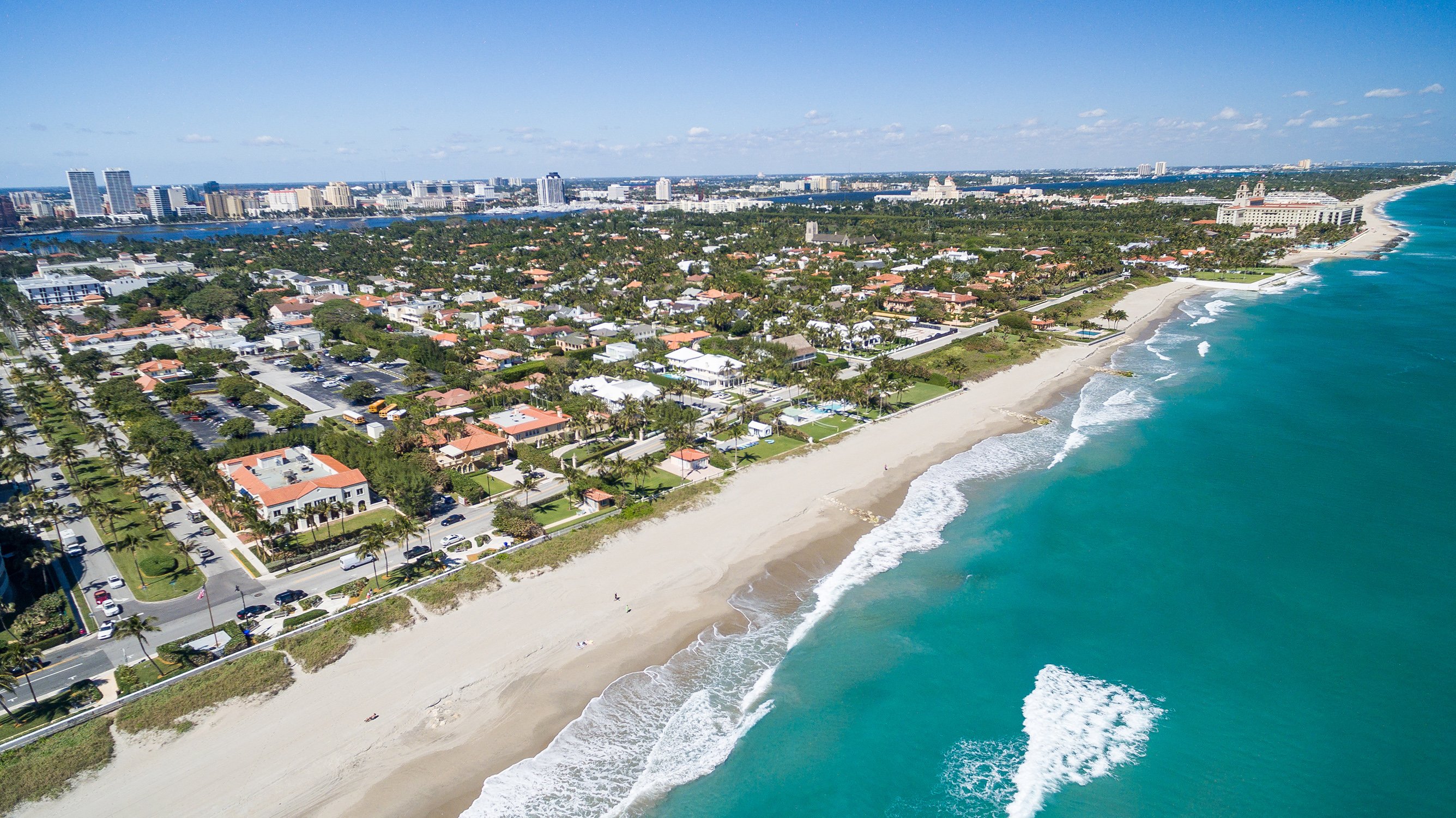
While Miami-beach headlines often dominate national coverage, Palm-beach continues to operate as a parallel theater with its own version of scarcity and prestige.
Coverage of a Billionaire’s Row sale in Palm Beach’s South Ocean Boulevard corridor reinforced a familiar truth: address prestige can behave like a comp unto itself when oceanfront inventory is limited. Broader reporting has characterized Palm Beach trophy homes as a distinct segment, often at $20 million-plus, marketed to a national and international ultra-high-net-worth audience.
For buyers comparing Miami and Palm Beach, the decision is frequently less about pure pricing and more about lifestyle cadence and social ecosystem. The valuation logic remains similar: scarcity plus permanence plus identity.
Miami’s luxury market is not simply local demand expressed in higher numbers. It is a global marketplace competing for attention with other global marketplaces, while offering a finite inventory of true trophy assets.
Miami Realtors reported that international buyers accounted for 49% of South Florida new-construction sales over an 18-month period ending June 2025. That figure is more than a statistic. It helps explain why the highest-performing ultra-luxury marketing is multilingual, culturally fluent, and operationally prepared for cross-border diligence. It also clarifies why certain properties trade on certainty as much as they trade on beauty.
This is where branded and service-forward residential experiences can outperform generic luxury. For an international buyer, certainty has tangible value: certainty of delivery, certainty of management standards, certainty of resale positioning, and certainty that the ownership experience will feel seamless even when the owner is absent.
Miami-beach has also cultivated a recognizable aesthetic culture that makes design feel like a form of certainty. Residences like Faena House Miami Beach have helped normalize the idea that an address can function as a creative signature, not merely a location. In the trophy tier, that signature can become part of the liquidity story.
At the trophy level, marketing is often two-track, and the best outcomes come from understanding how the tracks interact.
One track is the whisper ecosystem: controlled distribution, private networks, and a relentless focus on qualification. Industry commentary has increasingly described this off-market dynamic in South Florida luxury, and it aligns with what sophisticated buyers already know. Many opportunities above a certain threshold are introduced quietly, tested discreetly, and moved through relationships that reduce friction.
The second track is the public stage: selective headlines, record narratives, and visible social proof. Social platforms are often framed as demand engines in Miami, but in practice they tend to complement private outreach rather than replace it. The public narrative builds familiarity and aspiration. The private process builds certainty and speed.
For buyers, the implication is straightforward. If you only follow the public feed, you may arrive late to the most strategic inventory. If you operate only privately, you may miss how the market is being psychologically priced, and why certain assets are attracting attention that will matter at resale.
Trophy real estate can be a superb asset class, but only when the narrative is supported by fundamentals. In 2025, South Florida offered a clear reminder: the trophy tier remains active, but it is not casual. It is curated, and it rewards precision.
A practical framework:
Identify the non-fungibles. Waterfront frontage, privacy, and unobstructable views are worth more than amenity lists.
Separate record from relevance. A county record may not apply to your street, your building, or your floorplate.
Verify what the market is actually buying. In condos, it may be service and brand adjacency. In single-family, it may be land value and replacement friction.
Understand signaling. A $120 million-plus contract can move expectations, but it is not the same as a closed transaction.
Respect liquidity tiers. At the very top, fewer bidders means outcomes can be spectacular, but timelines can be idiosyncratic.
If there is a single takeaway from the year’s biggest numbers, it is this: price is only part of the product. The rest is provenance, privacy, design authorship, and the ability of a residence to function as cultural capital. That is why records become stories, and why stories, in turn, become pricing tools.
Is Miami-beach still setting the pace for trophy pricing? Yes. Widely covered 2025 transactions in Miami Beach and the Surf Club area helped reset the upper-end narrative for both single-family and condominium pricing.
Why do so many ultra-luxury deals use entities? Privacy and risk management. High-profile buyers and sellers often transact through entities to limit public exposure while keeping the deal process efficient.
Do pre-construction trophy contracts matter if they are not closed yet? They can matter as market signals. They influence expectations and positioning, but buyers should treat them differently than recorded closed sales.
How important are international buyers in South Florida new construction? Materially important. Miami Realtors reported international buyers represented 49% of South Florida new-construction sales over an 18-month period ending June 2025.
For discreet guidance on South Florida’s trophy market, connect with MILLION Luxury.
If branded residences are on your mind — as a home or as an allocation — we would be glad to share what we are seeing, privately.
Begin a quiet conversation