Record-setting transactions across Indian Creek, Bay Point, Star Island, Brickell, Coral Gables, and Palm Beach are reframing what “luxury” means in South Florida. Increasingly, the premium is attached to land itself: frontage, privacy, security, and long-term control. This MILLION Luxury editorial examines the signals behind recent headline deals and outlines how ultra-high-net-worth buyers can evaluate coastal land in a market where discretion and scarcity often matter more than finishes.
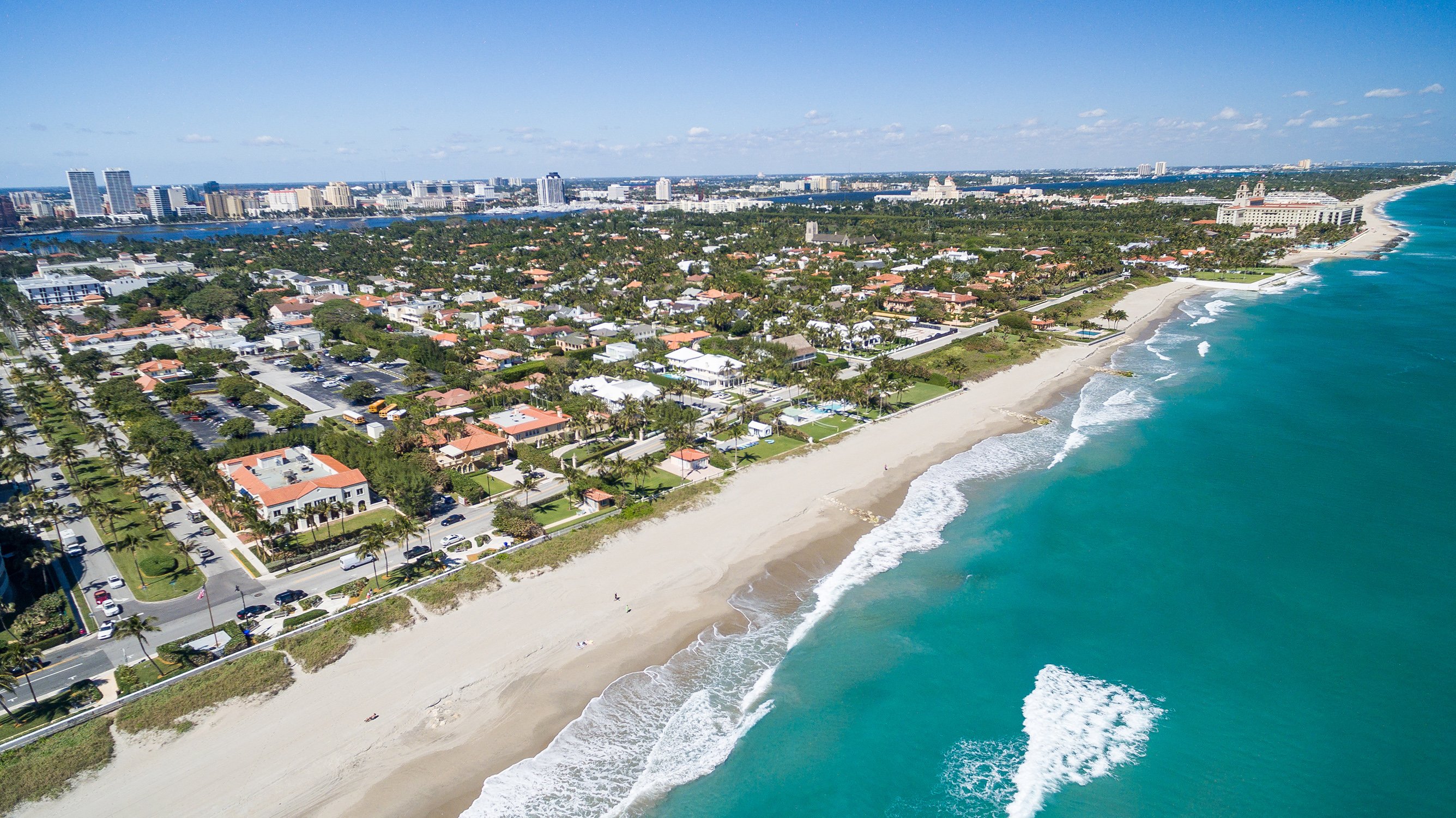
In South Florida’s ultra-premium market, the most meaningful upgrade is increasingly not a chef’s kitchen or a signature stone package. It is control: control of a view corridor, a setback line, the feel of a shoreline, the certainty of a neighbor, the angle of an approach, and the quiet of a driveway that disappears behind gates.
That is why recent record transactions read less like home sales and more like land acquisitions with optional architecture attached. A vacant waterfront lot on Indian Creek traded for $105 million in 2025, drawing attention not only for the number, but for what it confirmed: a true “blank canvas” can command trophy pricing on its own. In Miami’s gated Bay Point, a waterfront estate sale around $85 million set a neighborhood record, reinforcing how security and positioning can function as land amenities. On Star Island, a $120 million sale at 26 Star Island Drive was widely covered as a Miami-Dade residential price record, reminding the market that the rarest addresses can reset expectations for the ground beneath them.
For buyers, the implication is simple and consequential. Finished homes are consumable. Land is strategic. In a region where waterfront lifestyle and low-density privacy are finite, the parcel can be the most irreplaceable part of the asset, and the one with the greatest long-term leverage.
The past cycle produced a set of signals that are difficult to ignore.
First, land is trading at levels once reserved for completed compounds. The $105 million Indian Creek waterfront lot is an unambiguous expression of that shift.
Second, price discovery at the very top is real, even in ultra-rare locations. Reporting around the Indian Creek deal notes the lot had been marketed at dramatically higher prices before trading at $105 million. That distinction matters. It separates aspiration from liquidity, and it clarifies that scarcity does not eliminate negotiation. It simply compresses the set of alternatives.
Third, security and privacy are being capitalized into value. Bay Point’s record sale is routinely discussed alongside its gated character and high-profile residents. Put plainly: the gate, the controlled access, and the limited number of waterfront parcels are not lifestyle footnotes. They are part of the valuation, whether or not the buyer keeps the existing structure.
Fourth, scarcity in legacy enclaves remains structural. The Star Island record was framed around thin inventory and guard-gated prestige. When supply is constrained by design, land becomes the stable currency, and pricing becomes less about finishes and more about permanence.
Fifth, major capital is now pricing waterfront development potential at unprecedented scale. A roughly 4.25-acre waterfront assemblage in Brickell sold for $520 million, described as Miami’s largest-ever land deal by price. Even if your focus is single-family, that kind of benchmark influences how investors think about waterfront frontage across the urban core.
For discreet buyers, “comps” are often more narrative than spreadsheet. The best purchases are underwritten as a blend of scarcity, governance, privacy, and long-run optionality. Still, certain transactions reset the conversation and establish new reference points.
Indian Creek Village, often described in shorthand as the “Billionaire Bunker,” delivered a clear message in 2025 when the vacant 1.8-acre parcel at 9 Indian Creek Island Road sold for $105 million. The coverage was amplified by the lot’s adjacency to Jeff Bezos’ reported Indian Creek holdings, reinforcing a broader ultra-high-net-worth strategy: assemble, control, and create a private compound over time. The build can evolve. The control begins immediately.
Elsewhere in Miami, the Bay Point sale around $85 million underscored another truth: gated-community design is not simply a preference. It is a financial attribute. A guardhouse, controlled access roads, and a limited supply of waterfront lots can concentrate scarcity in a way that reads more like a private membership than a typical neighborhood. The premium is not just water. It is water plus governance.
On Miami Beach, the Star Island sale at $120 million, with seller Vlad Doronin and buyer Michael Ferro as identified in coverage, played a distinct role. Star Island is not merely waterfront. It is a prestige micro-market where a handful of addresses define the top of the range. In places like this, the land’s identity is part of its utility. The address itself becomes an amenity, and the market prices the continuity of that status.
In Brickell, the $520 million land purchase is a different kind of comp. It is not about a single driveway or a family compound. It is about a conviction that waterfront scale in Brickell can support future luxury outcomes. For residents who want Brickell’s proximity without the complexity of land acquisition and entitlement, projects like 2200 Brickell reflect a parallel path: turnkey ownership in a location that remains fundamentally supply-constrained.
Finally, the celebrity-driven headline in Coral Gables, with reporting that The Weeknd paid $50 million for a mansion, is a useful reminder that the land premium is not confined to barrier islands. In elite Gables pockets, lot size, privacy, and neighborhood control can carry as much weight as architectural style. The market is not only bidding on a house. It is bidding on how the site feels and how difficult it would be to replace.
The adjacency angle in Indian Creek resonates because it connects to a broader pattern: the family compound trend. Ultra-high-net-worth buyers increasingly treat property as an assemblage project, especially where children, staff, and security considerations intersect. One parcel provides residence. Another provides flexibility. Together they create a more resilient footprint.
A compound strategy changes how you value the neighboring lot. The premium is not only for its view or seawall. It is for optionality. An adjacent parcel can become a guest house today, an adult child’s home tomorrow, and a permanent buffer against future construction always. Optionality is not cosmetic. It is a form of control that compounds over time.
This is also where discretion becomes part of the underwriting. Many high-end transactions are executed through entities, and buyer identities can remain partially opaque. In Palm Beach reporting, the use of LLCs and privacy structures is highlighted as a feature of the market, one that can reduce transparency and complicate comparable sales. Buyers should assume that the best land opportunities can surface quietly, and that what you see publicly may not fully reflect what is actually clearing.
In practical terms, the most desirable parcels do not always announce themselves with a broad marketing campaign. They may trade through relationships, through limited exposure, or after a period of private negotiation. That is not a flaw in the market. It is a defining characteristic of the top tier.
A vacant lot is seductive because it offers freedom. It is also unforgiving because it offers responsibility. Your outcome is not only a purchase price. It is a multi-year sequence of design decisions, regulatory realities, and construction execution.
Start with the fundamentals you cannot renovate:
Then move to the realities you must underwrite:
Climate risk deserves its own sober line item. Sea-level rise and related pressures are increasingly discussed alongside luxury pricing, insurance, and resiliency. Yet market commentary continues to note that waterfront demand remains resilient. The practical takeaway is not to discount the oceanfront dream, but to evaluate it with the same seriousness you would apply to any long-duration asset. A thoughtful buyer does not ignore risk. They price it, plan for it, and prioritize the sites that can best support long-term stewardship.
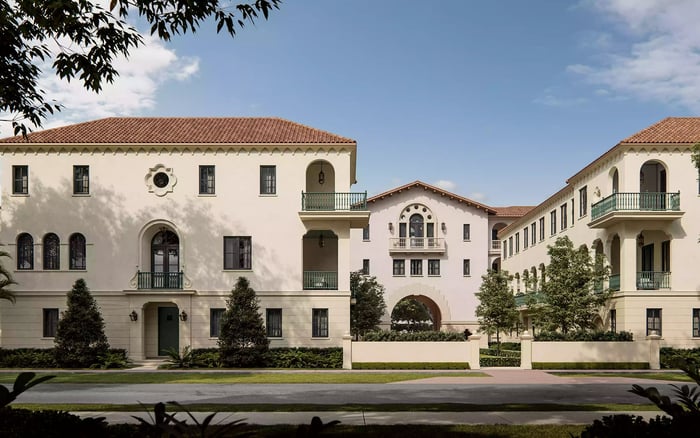
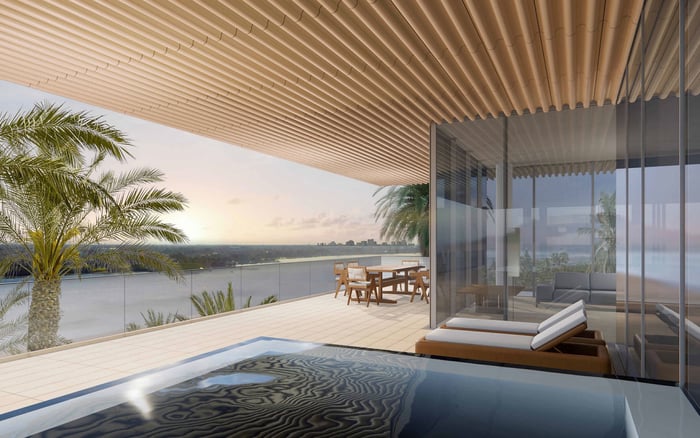
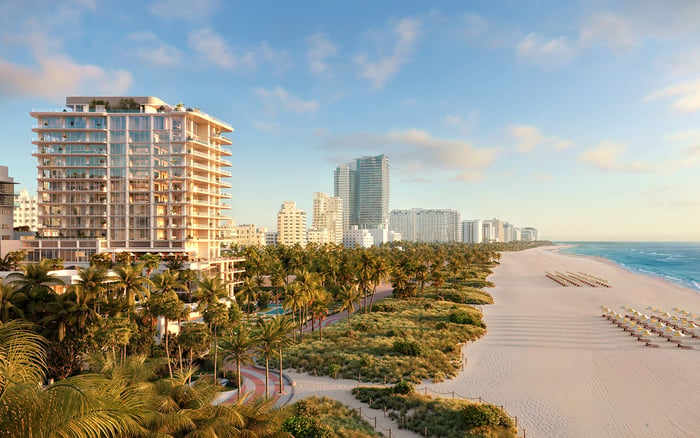
Not every buyer wants the timeline, decision load, and operational complexity that comes with a blank-canvas build. For those who prefer immediate usability, Miami-beach offers a version of waterfront prestige that can feel like land control without land complexity: low-density, service-driven residences that curate privacy, arrival, and daily life.
In this context, 57 Ocean Miami Beach speaks to the quieter end of the shoreline spectrum, where ownership can be about a tranquil daily rhythm as much as a headline address.
For buyers who prefer a globally recognized hospitality language, Setai Residences Miami Beach offers another route to the same core aspiration: coast, calm, and a high standard of service.
If your definition of value includes operational excellence, The Ritz-Carlton Residences® Miami Beach highlights a different advantage of condominium living. You can purchase into a lifestyle that is already engineered, with fewer unknowns than a ground-up estate build.
And for buyers who want the social privacy of a club-like environment, Casa Cipriani Miami Beach reflects the broader shift toward curated residential experiences: a way to secure Miami Beach presence while keeping the ownership structure clean and the day-to-day effortless.
These options do not replace estate land. They complement it. In today’s market, the most sophisticated buyers often hold both: a primary or seasonal condo in the core, and a longer-horizon land position in an enclave where control can be expanded over time.
The best way to read recent records is not as spectacle, but as a forward guide to what the market will continue to reward.
In other words, the buyer who wins in this market is not simply the highest bidder. It is the buyer who understands which forms of scarcity are permanent, and who is willing to pay for the types of control that cannot be manufactured after the fact.
Is buying a vacant waterfront lot in South Florida common at the ultra-luxury level? Yes. The $105 million Indian Creek vacant lot sale in 2025 is a clear example of blank-canvas land trading at trophy levels.
Why do gated neighborhoods command such strong pricing? Because security and controlled access function like land amenities. The record sale in Bay Point around $85 million reinforced how the gate and the waterfront combine into a scarcity premium.
Do celebrity purchases change the market? They can amplify attention and validate prestige. Reporting that The Weeknd paid $50 million for a Coral Gables mansion shows how elite submarkets compete on privacy and lot control.
How should buyers think about coastal risk without overreacting? Treat it as underwriting, not as a headline. Sea-level rise is part of the conversation, even as waterfront demand remains resilient.
Explore South Florida’s most discreet offerings with MILLION Luxury.
If branded residences are on your mind — as a home or as an allocation — we would be glad to share what we are seeing, privately.
Begin a quiet conversation