In Palm Beach, the top end is increasingly defined by a single question: do you buy history, or do you buy capability? From a freshly restored Addison Mizner estate asking $175 million to a Manalapan new-construction compound marketed around $285 million, today’s trophy decisions are less about décor and more about risk, resilience, and time. This MILLION Luxury editorial breaks down what wealthy buyers are really purchasing when they choose preservation-grade architecture versus engineered new buildouts and how nearby West Palm Beach offers a modern, service-forward alternative.
At the apex of South Florida’s single-family market, Palm Beach functions less like a location and more like a pricing philosophy. The island’s trophy inventory rewards two forms of scarcity that rarely coexist: architectural provenance and geography that cannot be reproduced. Buyers who can close with cash, move quickly, and absorb carrying costs without hesitation tend to set the tempo, and that tempo compresses the usual rules of comparison. It is one reason a fully restored landmark estate can trade at numbers that, on paper, look strikingly close to an ultra-engineered new build.
Right now, an old debate is being forced into a practical framework: are you buying a home with a story, or a home with systems? In Palm Beach, a historic property can deliver cultural signature and social recognition that new stonework, no matter how expensive, rarely duplicates with credibility. New construction, by contrast, can be designed from day one to meet contemporary expectations for resilience, privacy, security, and amenities, often arranged with a compound logic that did not exist when the island’s architecture was defining itself.
This is not primarily an aesthetic conversation. It is underwriting. It touches timelines, approvals, flood exposure, maintenance posture, and the intangible premium of owning “the one everyone knows.” At trophy price points, the decision is often less about décor than about how much uncertainty you are willing to carry, and for how long.
A clear illustration of the restoration thesis is Casa del Ensuenos, a renovated historic Palm Beach estate attributed to Addison Mizner. The property has been publicly covered as coming to market with a $175 million ask, placing it among the most expensive U.S. home listings. It was also reported as having traded for about $24 million in 2020, followed by a significant restoration and renovation.
For an elite buyer, the headline number is only the start. The real question is what that number purchases in terms of certainty. With a fully restored landmark, you are buying a version of “new” that has already been resolved: design intent aligned with the home’s original character, approvals and oversight that come with working on a historically significant property, and operational details that can surprise first-time preservation owners. A finished restoration can remove the most expensive variable in trophy ownership: uncertainty.
In this case, coverage has linked renovation decisions to flooding and king tide vulnerability, with town review and approvals tied to restoring an important historic home. That context points to the quiet advantage of buying after the hard work is complete. You may still inherit stewardship, but you are less likely to inherit the political and procedural drag of navigating the process yourself.
There is also a branding reality in Palm Beach. Authenticity is not merely taste; it is an asset. The island’s architectural identity is closely associated with Mizner and Mediterranean Revival. When that authenticity is present, and the residence reads as both historically correct and genuinely livable, the home can feel less like a discretionary purchase and more like acquiring a collectible with daily utility.
In short: a top-tier restoration does not only “save” a house. It packages history into a finished product, and the market routinely pays a premium for anything that reduces friction while preserving identity.
Palm Beach trophy pricing is also shaped by the way landmark provenance is marketed at the highest level. A widely covered example is an oceanfront Palm Beach estate associated with Aldo Gucci that came to market asking $205 million, after a reported price reduction.
Even when an asking price moves, the marketing thesis tends to remain consistent. At this level, narrative is not a nice-to-have; it is part of the asset itself. Oceanfront positioning, cultural association, and the sense of being unrepeatable are what allow a property to enter the $200M conversation in the first place.
For buyers comparing restored estates, this is the central point: you are not only buying square footage and finishes. You are buying recognition, and recognition is scarce by definition. A landmark can confer instant legibility within the Palm Beach hierarchy. That visibility can be valuable in ways that do not show up on a price-per-square-foot spreadsheet.
On the other side of the trade-off is the ultra-modern argument, now expressed at an extreme. In Manalapan, a proposed or under-construction listing at 1960 S Ocean Blvd has been marketed around $285 million and described in national coverage as America’s most expensive new-construction single-family home.
The marketing details underscore why new construction can command a different kind of premium. The project has been described as approximately 54,570 square feet and as an ocean-to-Intracoastal compound, a configuration that creates an enclosed, private-world feeling that many historic estates cannot match. This is not simply “bigger.” It is programmatic. Compound logic allows entertaining, daily living, and wellness to be separated and orchestrated in ways that align with how ultra-high-net-worth owners often use a modern property.
Coverage has also emphasized a designed-from-scratch amenity stack: leisure and entertainment features planned into the residence rather than adapted later. At this tier, scarcity can be manufactured through capabilities that are difficult to retrofit, such as specialized recreational rooms and showcase-level auto capacity. The message is straightforward: you are not purchasing a house with add-ons. You are purchasing an integrated lifestyle machine.
The trade-off is time and execution risk. New-construction trophy assets often require a multi-year buildout and a complex approval and construction pathway. For some buyers, that is an immediate disqualifier. For others, it is precisely the point. A long runway can be acceptable if it yields control, privacy, and a final product that does not carry the compromises of adaptation.
Palm Beach is often characterized as unusually insulated from typical affordability constraints, in large part because of ultra-high-net-worth demand and a high share of cash purchases. That matters because cash reduces sensitivity to rate environments and compresses decision cycles. At the trophy end, the question is rarely “can you finance it?” More often, it is “does this asset meet your personal standard of irreplaceability?”
Scarcity is structural. The island has a finite number of homes and limited ability to add supply. That constraint supports pricing across two seemingly contradictory categories: landmark estates that cannot be replicated and new trophy builds that are essentially bespoke, often with years of lead time. Both can be scarce, but for different reasons.
This is why a renovated historic estate and a not-yet-finished ground-up build can both find daylight at nine-figure asks. The market is less a single ladder and more a set of parallel lanes, each appealing to a different definition of value. One lane prices legacy and recognition. Another prices capability and control. Both are supported by the same underlying reality: there are only so many true trophy opportunities in the Palm Beach corridor, and global buyers understand that.
At the luxury end, “risk” rarely looks like a shortage of buyers. It looks like friction: approvals, timelines, vulnerability, and the ongoing obligations that come with operating a complex coastal asset.
For restored historic properties, friction is often front-loaded. Renovations tied to flooding considerations and king tides, as well as review processes for historically significant residences, are reminders that buying history can mean inheriting complexity. The upside is that when the work is already done, the buyer can enjoy the result without carrying the process.
For buyers who are contemplating their own rehabilitation, it is worth understanding the framework. Palm Beach County has a historic property tax exemption structure that can, under qualifying conditions, exempt up to 100% of the assessed value attributable to certain improvements or rehabilitation for a 10-year period. It is not a blanket benefit and it is not guaranteed, but it can meaningfully affect the restore-versus-rebuild math when a property qualifies.
Regulatory review is not confined to the island narrative. West Palm Beach has formal historic preservation review processes for designated properties, a reminder that preservation is a regional commitment, not a boutique rule set.
The common thread is simple: trophy homes are not only purchased, they are operated. Sophisticated buyers decide early what kind of operator they want to be, and they price their time and attention accordingly.
At this level, individual transactions can function as market signals. Larry Ellison has been linked in reporting to very large Palm Beach-area real estate spending, including a reported $173 million purchase of the “Gemini” estate in Manalapan, and a later resort acquisition. Coverage frames those moves within a broader pattern of billionaire migration and capital shifting into the region.
For buyers, the takeaway is not celebrity. It is validation. When long-duration capital commits at scale, it reinforces the idea that Palm Beach and its adjacent trophy corridors are competing globally as “store-of-lifestyle” assets. In other words, wealthy buyers are not only buying a residence. They are buying a position in a place that other wealthy buyers have also decided to anchor.
That matters in the South Florida context because it supports the premium for both lanes of the market. Landmark estates benefit from heightened interest in signature addresses. New builds benefit from a buyer pool that wants modern capability and is willing to pay for it, even when timelines are long.
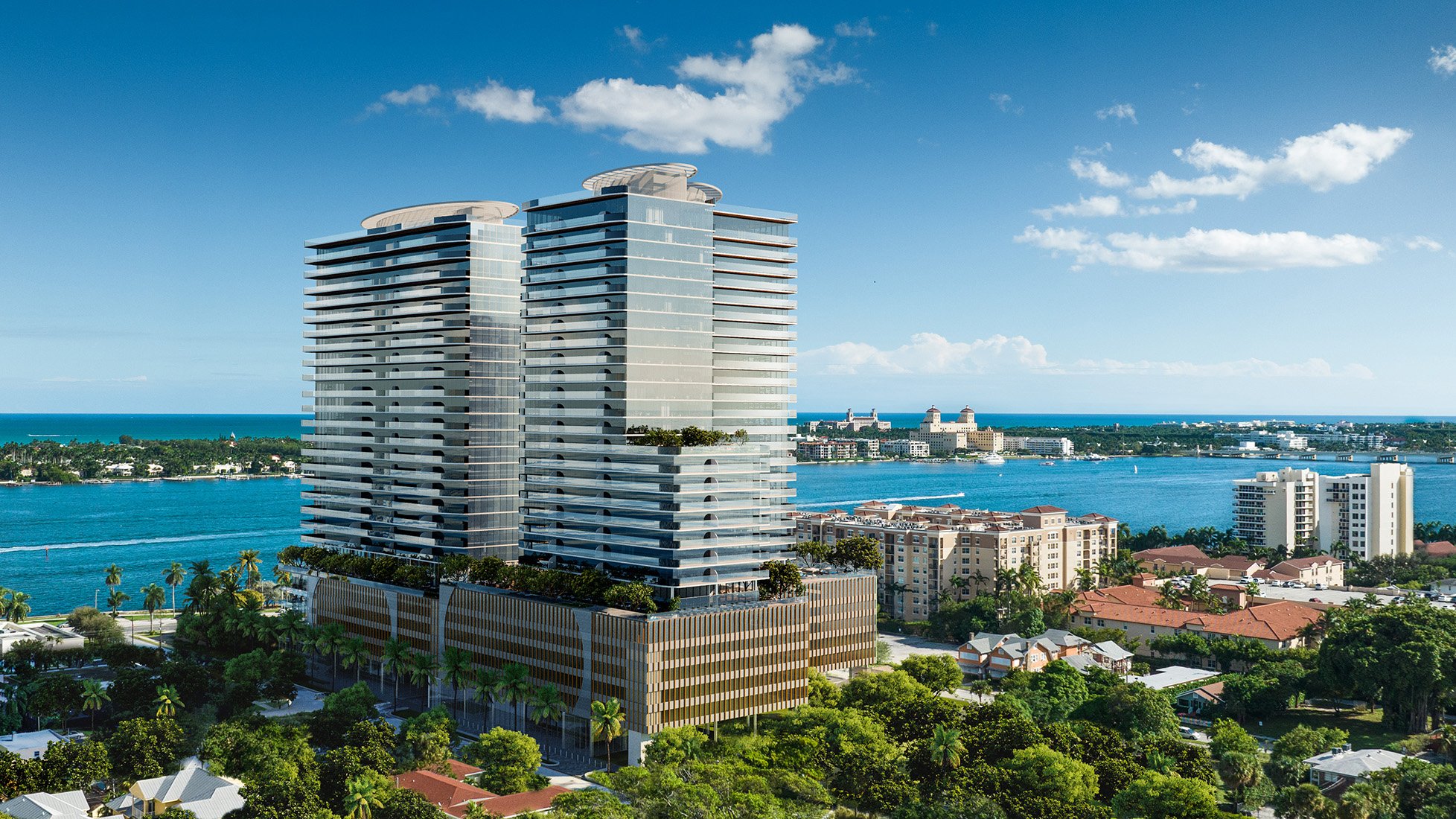
Not every buyer wants to steward an architectural artifact or wait through a multi-year custom build. A third path is increasingly visible across the Intracoastal in West Palm Beach: service-forward, new luxury residential development that emphasizes modern systems, security, and turn-key living.
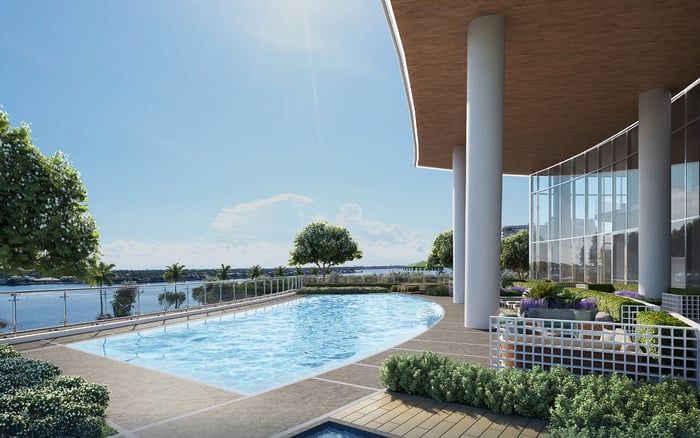
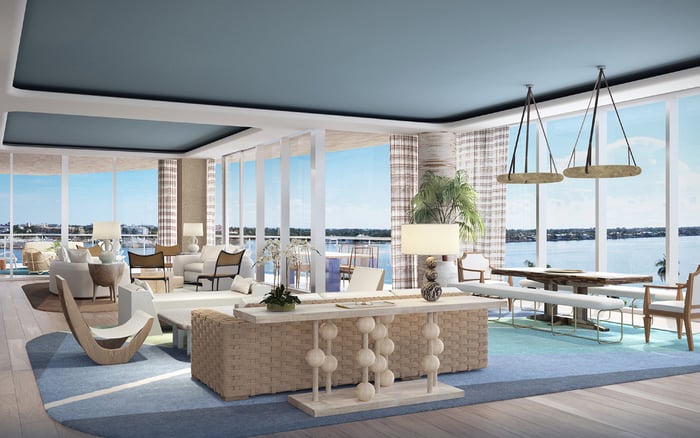
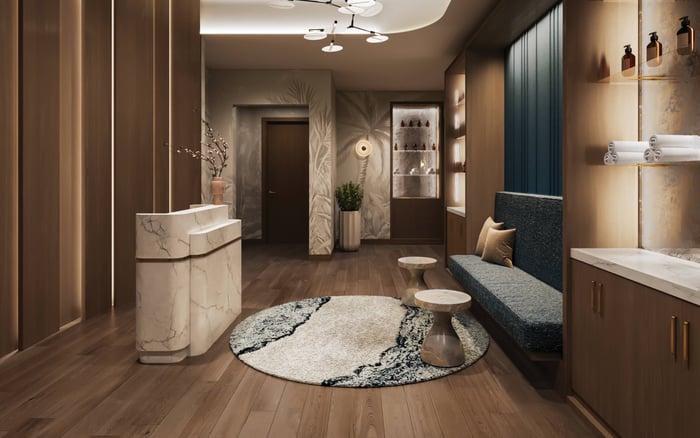
In practical terms, this lane appeals to owners who want Palm Beach proximity without Palm Beach ownership obligations, or who prefer a building format that reduces maintenance and concentrates amenities. For example, the hospitality-leaning sensibility at Mr. C Residences West Palm Beach speaks to a buyer who values a contemporary lifestyle product rather than a preservation-grade estate.
Similarly, branded residences such as The Ritz-Carlton Residences® West Palm Beach reflect the appeal of operational consistency and established service standards, especially for owners who split time between multiple homes.
For those who want a newer waterfront expression with a residential focus, Alba West Palm Beach and Forté on Flagler West Palm Beach sit within a broader wave of new development that has been publicly described as taking shape across the city. The segmentation is clear: Palm Beach trades on heritage and land scarcity; West Palm Beach increasingly trades on convenience, newer construction, and a service ecosystem.
This is not a substitute for the island. It is a different luxury logic, with a different operating model.
If you are deciding between a restored landmark estate and a new-construction compound, start with questions that have nothing to do with finishes.
First, define the asset you are actually collecting.
Second, price time as aggressively as you price the home. A fully restored estate may command a premium, but it can materially shorten time-to-enjoyment. A ground-up trophy build may offer ultimate control, but only if you can carry schedule risk and decision fatigue for years.
Third, be honest about your appetite for stewardship. Landmark ownership can be deeply rewarding, but it is rarely passive. Even when renovations are complete, historic properties typically require a more attentive operating posture, both to protect the architecture and to manage the realities of coastal conditions.
Fourth, underwrite water exposure and resilience as lifestyle, not just insurance. Coverage tying renovations to king tide vulnerability is a reminder that coastal luxury requires coastal planning. At the trophy level, resilience features are part of the ownership experience, not an afterthought.
Finally, consider the “third lane” if you value simplicity. A West Palm Beach luxury residence can offer modern systems and an established service environment without asking you to become a curator, a builder, and a facilities manager all at once.
Is a restored historic estate truly comparable to new construction at the top end? Yes. In Palm Beach, a finished, high-quality restoration can trade at trophy numbers because authenticity and scarcity are priced as features, not sentimental extras.
What is the biggest risk advantage of buying a completed restoration? Execution risk is often already resolved. Approvals, scope decisions, and much of the construction uncertainty may have been absorbed by a prior owner.
Why do some buyers still choose new construction despite long timelines? Control. A ground-up build can be designed around current lifestyle use, privacy, and amenities that are difficult to retrofit into older estates.
Does West Palm Beach compete with Palm Beach for luxury buyers? It competes for a different buyer profile: those prioritizing modern systems, service, and turn-key living over landmark stewardship.
For discreet guidance on Palm Beach and West Palm Beach trophy opportunities, connect with MILLION Luxury.
If branded residences are on your mind — as a home or as an allocation — we would be glad to share what we are seeing, privately.
Begin a quiet conversation