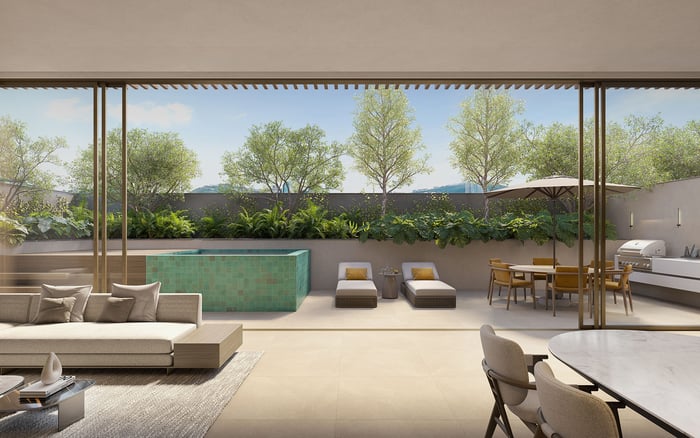
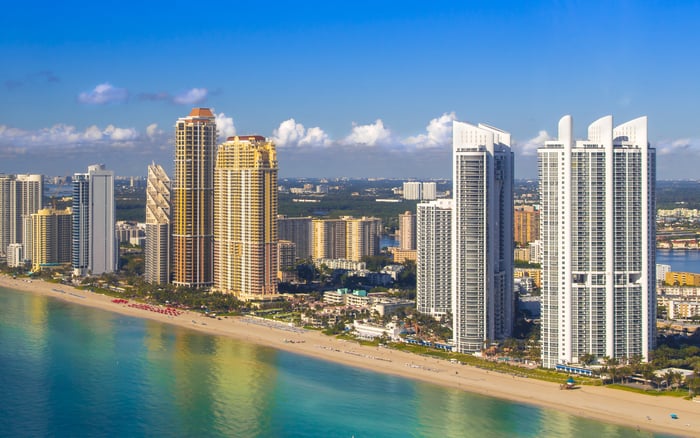
From Manhattan to Miami, the most competitive luxury towers are treating children’s spaces as design-forward, daylight-filled destinations, not afterthought playrooms. What began in New York as an amenity “arms race” has matured into a buyer expectation: flexible rooms that can host play, quiet homework, tutoring, and supervised programming, all within a hospitality-grade residential experience. For South Florida, where many owners balance full-time life with seasonal stays and multigenerational visiting patterns, these spaces are increasingly a proxy for how thoughtfully a building has been planned overall.
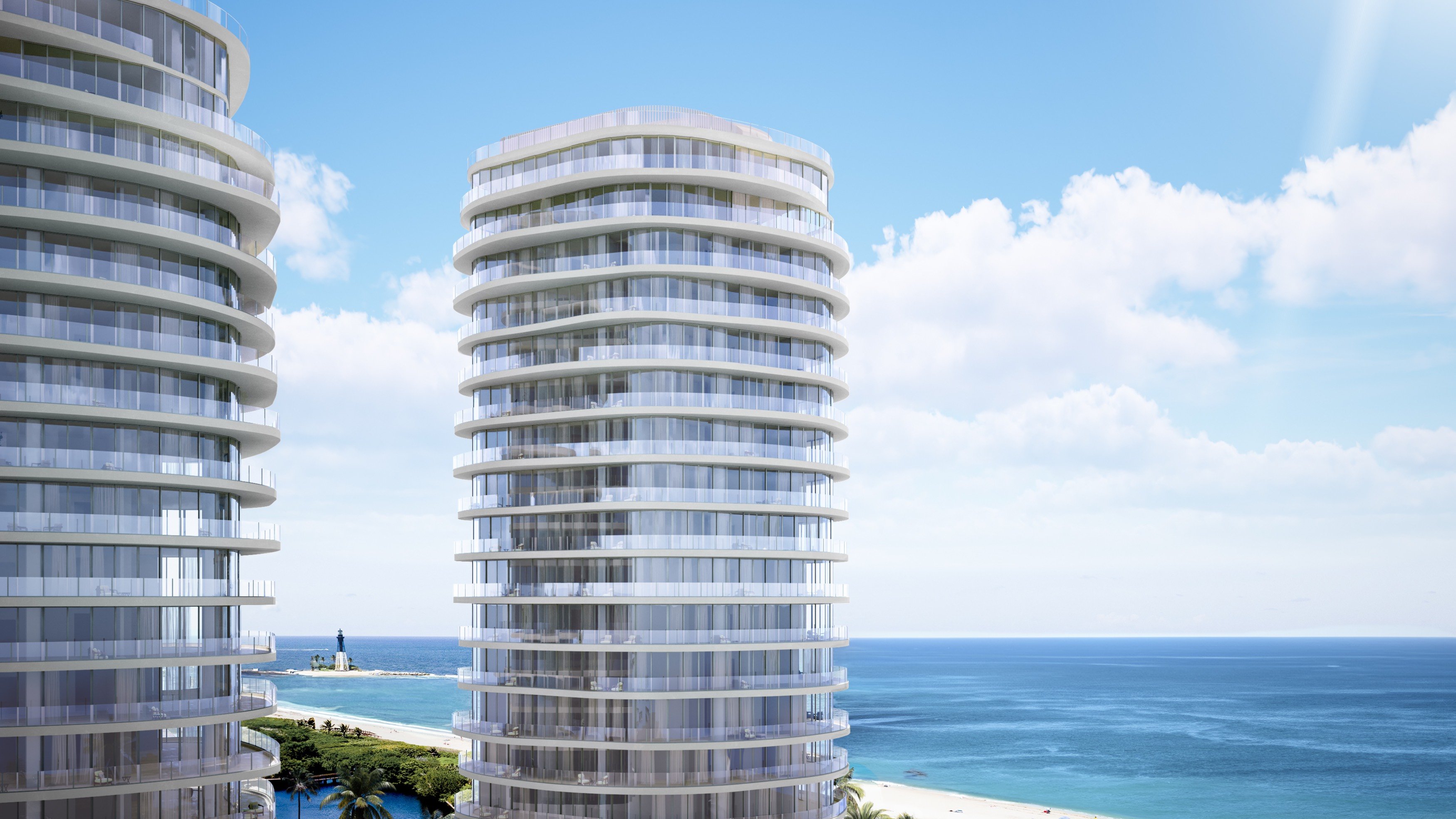
In ultra-luxury residential towers, the amenities that matter most are often the ones that simply make life easier. They remove small points of friction, help households run smoothly, and keep a residence feeling comfortable year after year, not just photogenic during a sales tour.
Children’s spaces have moved squarely into that category. What was once a modest, windowless room with a few toys has, in many top-tier developments, become a purpose-built environment with natural light, multiple activity zones, and finishes that match the adult lounges. In New York, editorial coverage has treated this evolution as a genuine differentiator, with developers investing in imaginative interiors that feel like a destination within the building rather than an afterthought.
South Florida is taking the same lesson and translating it to local patterns of use. Here, many owners balance primary residence life with seasonal stays, frequent visitors, and multigenerational rhythms. In that context, a well-designed kids’ club is rarely just about play. It is a signal that the building has been planned with real living in mind, including circulation, sound control, staffing needs, and how different groups coexist across amenity floors.
New York’s luxury condo market offers a clear case study in how quickly buyer expectations can reset when developers compete on lifestyle and livability.
Across multiple projects, coverage has highlighted a consistent upgrade cycle in kids’ amenities: larger footprints, more deliberate design, and layouts that can support programming. The most frequently profiled examples include:
The takeaway is not that every buyer will use these rooms every day. It is what the rooms communicate about the project. When a developer allocates prime square footage to a children’s space, provides daylight where possible, considers acoustics, and designs for multiple activities at once, that investment often tracks with similar care elsewhere. It suggests attention to resident flow, storage, staff logistics, and what can be called the building’s residential intelligence.
For South Florida buyers, New York’s example is useful because it shows how family amenities moved from novelty to expectation. Once the market establishes a new baseline, the absence of that planning becomes noticeable.
South Florida’s luxury buyer base is broad, but a recurring theme runs through many households: they host.
Even when an owner is not raising young children full-time, family and friends often arrive in waves. A second home becomes a hub for school breaks, holidays, and long weekends. A residence owned by a grandparent becomes the gathering place after the beach. In that scenario, a well-executed children’s area is less about babysitting and more about maintaining the tone of the home. It gives children a place to land, and it allows adult spaces to stay calm.
A building that handles family life gracefully often handles entertaining gracefully as well. It can absorb noise without disrupting corridors and adjacent lounges. It can separate active zones from quieter zones. It can create order through thoughtful adjacencies, clear circulation, and operational support. Those are not small details. They are the difference between amenities that look impressive and amenities that actually work when the building is busy.
This is also why, in neighborhoods where demand for larger layouts is pronounced, family amenities are increasingly part of the pitch. Marketing for projects such as Una Residences in South Brickell has emphasized 2 to 5 bedroom layouts and large square-footage options suited to families, paired with an amenity program described as recreation-forward.
In South Florida, branded and service-driven residential models have elevated expectations not only for how amenities look, but for how they are operated.
In Miami, concierge language and hotel-style systems have become central to the ultra-luxury narrative. Waldorf Astoria Residences Miami, for example, markets a branded-residence model with concierge and hotel-style services and highlights resident amenities through its official materials.
For families, that operational layer matters as much as design. A children’s room can be beautiful and still underperform if it lacks rules, staffing, and maintenance discipline. Buyers should listen for specifics on how a building intends to manage:
A playroom that is rarely staffed, inconsistently maintained, or difficult to access can become a purely visual amenity, good for marketing photos and not much else. A thoughtfully managed one becomes part of the building’s daily rhythm, especially during weekends, school breaks, and peak seasonal months.
A children’s amenity can photograph well and still fail in real-world use. Sophisticated buyers evaluate it the same way they would a fitness center or spa: with attention to flow, comfort, durability, and how well the space will hold up over time.
Key cues to look for:
New York’s coverage of upgraded kids’ spaces repeatedly points to this zoned approach, where imagination and function are designed together rather than improvised after the fact. In South Florida, where amenities often serve a wide range of visiting patterns, that flexibility is even more important.
The strongest local examples tend to appear in projects that already treat amenity programming as part of their identity. When a building is designed to operate like a complete lifestyle environment, children’s spaces are more likely to be properly located, properly finished, and properly supported.
In Coconut Grove, Park Grove Coconut Grove is often described in listing and brokerage materials as a design-forward community with extensive amenities and grounds, reinforcing its appeal to affluent households seeking a more compound-like feeling within an urban neighborhood. In settings like this, family spaces work best when they feel integrated rather than tucked away, and when outdoor-adjacent areas can absorb the energy of children without pushing that energy into quieter resident zones.
In Miami Beach, newer luxury inventory is increasingly evaluated through the lens of lifestyle completeness, not just ocean proximity. Five Park Miami Beach sits within that conversation, where buyers weigh how a building supports daily living, hosting, and the kind of amenity depth that makes an owner less dependent on external clubs. When kids’ rooms are planned as part of a broader amenity stack, they tend to be easier to find, easier to supervise, and more consistent in quality.
Also in Miami Beach, Shore Club Private Collections Miami Beach reflects the region’s ongoing appetite for hospitality-influenced residences. Even when a project does not market itself solely around children’s amenities, a hospitality-aligned approach often creates an operational environment where family use cases, from arrivals to scheduling, are treated as service moments rather than exceptions.
For owners who want a more established, service-forward framework in the same market, Setai Residences Miami Beach is part of the broader branded and hospitality-adjacent narrative that has shaped buyer expectations. In buildings with a strong service culture, children’s needs are more likely to be anticipated through policies, staffing, and maintenance consistency.
In Sunny Isles, Bentley Residences Sunny Isles is marketed as a high-end branded tower with expansive amenities and explicitly includes a kids club among its lifestyle features. For many buyers, that clarity matters. It suggests the developer expects real use and has planned for it as a distinct element of the amenity ecosystem.
Taken together, these examples point to a practical conclusion: in South Florida, the most compelling kids’ club spaces rarely stand alone. They function as one node in a connected network that includes pools, wellness, lounges, and attentive staff, all designed to keep the building feeling orderly even when it is full.
Well-executed family amenities tend to share the same design language as the rest of the property. When quality is consistent across spaces, the children’s area is more likely to age well, remain desirable, and feel like it belongs rather than feeling like a temporary add-on.
Look for:
These cues are not purely aesthetic. They influence behavior. A room with durable but residential-grade materials invites regular use. A layout with a calm corner and an active corner reduces conflict. Easy stroller access and nearby restrooms turn a space into something families can rely on, not something they use only when conditions are perfect.
In New York, developers have increasingly leaned into themed concepts for children’s spaces, including the “Camp Kent” approach associated with The Kent, to make the room feel like a place children want to return to. South Florida does not need to copy the theme. It benefits from borrowing the seriousness behind it: a clear concept, thoughtful detailing, and a room that is designed to be lived in.
Most sophisticated readers understand that amenities can support marketability. The more useful question is how children’s spaces tend to do that, and why the impact is usually indirect.
Kids’ clubs typically broaden the buyer pool by reducing the friction of choosing condo living over a single-family home. At higher price points, buyers want a building to feel like a complete environment, especially when they are choosing condominium living for service, security, and simplicity. A credible children’s amenity makes the overall lifestyle proposition more cohesive.
These rooms can also help a property stay relevant as preferences evolve. A well-designed kids’ club can, with minimal adjustment, become a teen lounge, a homework studio, or a tutoring room. That flexibility is the quiet hedge against shifting demographics, and it is one reason zoning and acoustics matter as much as playful design.
Finally, family-focused planning can imply a developer is interested in longer-term residents, not only transient demand. In New York, Brooklyn Point has been marketed with a 25-year NYC tax abatement, a detail that is frequently emphasized for longer-hold ownership. South Florida does not map directly onto that structure, but the underlying point remains useful: buildings that court long-term living tend to invest differently in everyday livability.
In the most successful towers, the best family amenities are not the loudest. They are the ones that allow other spaces to remain serene.
That can mean a kids’ room positioned to avoid hallway disruption. It can mean a check-in system that keeps the room orderly. It can mean adjacent lounge seating where a parent can take a call without leaving the floor. These are not brochure moments. They are the operational details that turn an amenity from “nice” into habit-forming.
For buyers comparing buildings, it helps to tour with real-life conditions in mind. Visit at a realistic time, not only during a quiet weekday showing. Ask how the space functions on weekends and during school breaks. Observe whether the design looks prepared for actual use: are materials resilient, are sightlines intuitive, is storage generous, and does the space feel like it will remain pleasant when it is busy?
When a children’s space is treated as a first-class amenity, it often reflects a broader commitment to planning, staffing, and resident experience. In South Florida’s competitive luxury market, that is a meaningful signal.
Are kids clubs only relevant for full-time families? No. In South Florida, they can matter just as much for second-home owners who host children and grandchildren during seasonal visits.
What is the biggest red flag in a children’s amenity space? A beautiful room with poor acoustics, minimal storage, and no clear operational plan for cleanliness and rules.
Do branded residences generally do family amenities better? They can, because hospitality-style staffing and service culture can make spaces easier to manage and more consistently maintained.
How should I compare two buildings with similar playrooms? Evaluate location within the building, daylight, zoning for multiple activities, and whether the space can evolve into homework and teen-friendly use.
For guidance on choosing a residence that truly supports your lifestyle, connect with MILLION Luxury.
If branded residences are on your mind — as a home or as an allocation — we would be glad to share what we are seeing, privately.
Begin a quiet conversation