Google co-founder Larry Page’s reported ~$173.4 million two-home buying spree in Coconut Grove has become a case study in how ultra-wealthy buyers now approach South Florida: not as a single trophy acquisition, but as a portfolio strategy optimized for privacy, flexibility, and long-term positioning. Framed against parallel moves by other high-profile buyers and a renewed national conversation about wealth taxes, these transactions help explain why Miami’s most guarded enclaves and branded, service-forward residences continue to attract global capital.

South Florida has always spoken fluently in waterfront, but the rhythm has changed. Instead of incremental upgrades, the market is seeing more decisive, portfolio-scale commitments executed with the quiet efficiency of private capital.
That shift came into sharper focus when Google co-founder Larry Page reportedly acquired two luxury estates in Coconut Grove for a combined approximately $173.4 million. Reporting cited a $101.5 million purchase followed shortly by a second, off-market deal for $71.9 million. The homes are said to be only a few minutes apart by car, a proximity that reads less like coincidence and more like strategy.
For anyone watching the top end of Miami’s residential landscape, the most instructive detail is not the celebrity buyer. It is the structure. A two-home acquisition in the same enclave points to a new kind of intent: selecting a geography and then purchasing enough within it to create operational control, privacy, and optionality.
In practical terms, this is not a single trophy transaction. It is an operating environment choice, shaped by water access, discretion, security, and the ability to manage variables that become harder to control in high-density settings. For the luxury real estate audience, the takeaway is simple: the ultra-premium market in South Florida is increasingly defined by how buyers assemble a position, not just what they buy.
One of the two reported acquisitions was Banyan Ridge Estate, described as a 4.5-acre waterfront compound on Biscayne Bay with more than 11,800 square feet and multiple structures. The property was reportedly listed at $135 million before trading at $101.5 million. Even at nine figures, pricing is not purely symbolic.
In this tier, negotiation often shows up through timing, terms, and discretion more than through dramatic headline discounts. Still, a meaningful gap between initial ask and achieved price can ripple outward. Sellers recalibrate expectations. Agents adjust their comps conversations. And buyers gain reference points for what “market clearing” can look like when an asset is exceptional but still subject to disciplined underwriting.
The second acquisition, Casa Bahia, was described as an off-market Coconut Grove transaction for $71.9 million. It was reported as a modern home built in 2015 with roughly 10,400 square feet, seven bedrooms, and eight bathrooms. The sellers were also reported to have purchased it for $45.9 million in 2021, a reminder of how quickly the top of the South Florida market can reprice when the buyer pool decides a location has become structurally more valuable.
Together, the specifics frame two distinct archetypes that matter in Coconut Grove. One is the legacy-scale land play: acreage, frontage, multiple structures, and a long-term compound logic. The other is a contemporary, turnkey estate: modern infrastructure, immediate usability, and a clean operational profile for hosting, living, and securing.
Ultra-wealthy buyers are increasingly described as building real estate compounds, and those compounds do not always require adjacent lots. Proximity can be the more flexible lever. Two properties minutes apart can serve different purposes without forcing a household to consolidate every routine, staff movement, and security protocol into a single address.
In practice, multi-home ownership in one enclave tends to deliver three forms of optionality.
First, operational flexibility. One home can be optimized for entertaining, hosting, and high-visibility social use. The other can be tuned for day-to-day living, children’s routines, quieter seasons, or simply a calmer footprint. That distinction can sound simple, but it becomes consequential when staffing, security, and waterfront logistics are part of daily life.
Second, privacy engineering. In a market where high-profile transactions attract attention even when ownership is structured discreetly, multiple residences create controlled alternatives. If one address becomes too visible, there is another nearby without abandoning the social and geographic ecosystem that made the neighborhood attractive.
Third, long-horizon value preservation. Large, low-density waterfront parcels in established neighborhoods often behave differently than high-rise inventory. Scarcity can create resilience when broader markets cool. That is why the top tier of single-family homes often trades less like housing and more like rare assets.
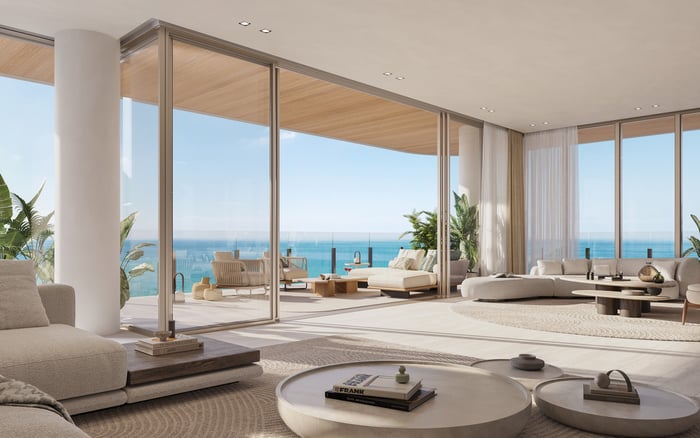
This is also where branded, service-forward living can complement a compound strategy rather than compete with it. Buyers who want Coconut Grove access with a lock-and-leave profile often evaluate residences such as Four Seasons Residences Coconut Grove alongside estate purchases. For many ultra-premium households, the decision is not either-or. It is frequently both, with each asset serving a different operational role.
The Page purchases were widely linked in national coverage to anxiety around a proposed California “Billionaire Tax” concept, discussed as a 5% levy on net worth above $1 billion. Importantly, this has been framed as a proposal and a motivating headline rather than enacted policy. Even so, proposals can change behavior, especially for ultra-high-net-worth families who plan for potential risk, not just current law.
Beyond attention-grabbing policy narratives, Florida’s draw remains structural. The absence of state income tax is consistently part of the relocation conversation. Wealth planning discussions also frequently cite debtor-friendly protections such as the homestead exemption.
For luxury buyers, the practical takeaway is less political and more procedural. Domicile is not a vibe. It is documentation, time allocation, and a coherent story supported by real assets and real routines. That is one reason South Florida purchases by ultra-wealthy individuals often appear in clusters rather than as one-off moves. Multiple acquisitions can help anchor a lifestyle pattern, establish presence, and support the operational reality of spending significant time in a single region.
Coverage has also characterized Page’s move as following a “Jeff Bezos playbook,” a shorthand for how Miami has become a credible stage for billionaire relocation and lifestyle re-centering.
Bezos announced plans to move to Miami and then began buying on Indian Creek Village, the hyper-exclusive barrier island frequently nicknamed “Billionaire Bunker.” He reportedly later added a third Indian Creek mansion for $90 million. The pattern is familiar: when the goal is privacy and control, one trophy home may not be sufficient.
Indian Creek’s appeal is not only status. It is scarcity and securitization. Low inventory, intense privacy expectations, and the operational reality of gated-community living create a market where transactions can move quickly and quietly. Public reporting has also highlighted how opaque this segment can be, including coverage around a $79 million sale that later became the subject of litigation.
For buyers who want the Miami Beach lifestyle with a different form of predictability, high-service residences can offer another route to privacy. Controlled access, built-in staffing infrastructure, and hospitality-grade operations can reduce exposure while keeping owners close to the cultural and social gravity that makes Miami Beach compelling. That is why the ultra-premium condo and condo-hotel conversation remains active, particularly among second-home buyers.
Not every ultra-premium buyer wants acreage, multiple structures, and layered gates. Many want a residence that performs. Discreet arrivals, reliable staffing, and operational consistency can matter as much as square footage.
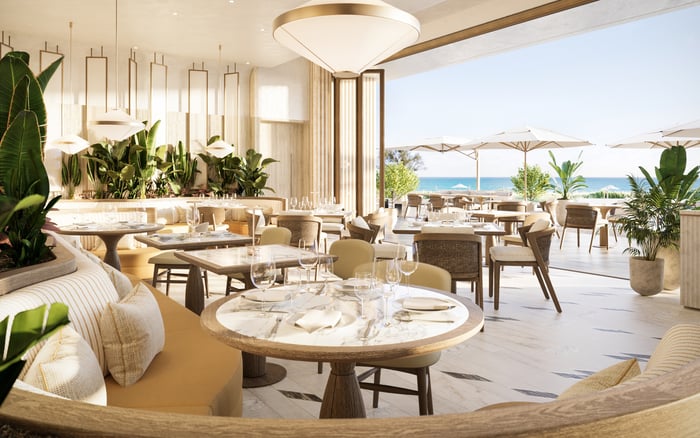
In Miami Beach, branded and legacy luxury towers compete less on raw size and more on what they remove from the owner’s day. A buyer weighing an estate strategy against a lock-and-leave approach will often consider properties like Casa Cipriani Miami Beach for a private-club sensibility, or The Ritz-Carlton Residences® Miami Beach for a hospitality-driven operating model.
Similarly, buyers who prioritize established global recognition and a fully staffed ecosystem often consider Setai Residences Miami Beach as part of their Miami Beach shortlist.
The nuance for decision-makers is that these choices can be complementary. A waterfront estate can anchor a family’s South Florida life with space, privacy, and control. A branded residence can add a turnkey in-city base that stays secure and effortless during travel-heavy months. In portfolio terms, each asset solves a different problem.
At the ultra-luxury level, a handful of trades can reframe the entire conversation. A major recent benchmark was the reported $120 million sale of Russian billionaire Vladislav Doronin’s Star Island estate, described as a record transaction for the Miami area and as surpassing a prior Miami-Dade record tied to billionaire Ken Griffin.
Record sales matter even when they are not directly comparable. They reset seller psychology, influence underwriting assumptions, and expand the definition of what “best in market” can mean when an asset has unique frontage, acreage, or security. They also sharpen the split between properties that are truly scarce and those that are merely expensive.
Griffin’s repeated high-end acquisitions in Miami have also been chronicled as a pattern, reinforcing a theme that continues to define this cycle: the top of the market increasingly behaves like a portfolio allocation. Capital is deployed across neighborhoods, formats, and time horizons, with buyers balancing lifestyle objectives against long-term positioning.
It is not only private buyers expressing conviction. Institutional money has also been pursuing South Florida luxury, including a reported $400 million acquisition of the W South Beach by the Reuben Brothers.
Hotel transactions are not directly interchangeable with residential values, but they shape the ecosystem. High-end hospitality investment often aligns with confidence in sustained demand for luxury experiences, staffing, and service culture. For residential owners, that can translate into deeper concierge norms, stronger brand gravity, and an expanded premium services market that makes high-touch living easier to maintain.
In other words, the residential story and the hospitality story reinforce each other. When institutional capital validates the long-term strength of Miami’s luxury travel and lifestyle economy, it supports the broader infrastructure that many residential buyers rely on, especially those who expect a market to function at a global standard.
For today’s ultra-premium buyer, the question is not “Will Miami stay hot?” A more precise question is which micro-markets and asset types will hold their edge when attention normalizes and the market returns to a steadier pace.
A few buyer-oriented filters are becoming clearer:
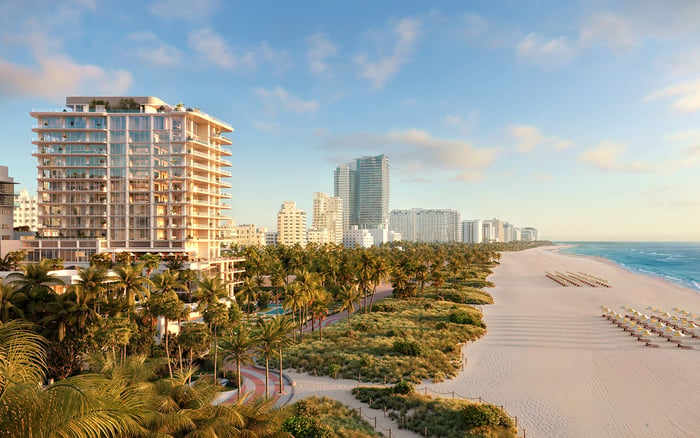
This is also where Miami Beach oceanfront boutique inventory continues to draw attention, especially when it offers a quieter scale than the mega-towers. For buyers focused on ocean adjacency with a contemporary, residential feel, 57 Ocean Miami Beach is the type of project that often enters the conversation.
Ultimately, Page’s Coconut Grove activity is best read as a case study in conviction. He did not select a single symbol. He selected a geography, then bought enough within it to create options. In a market increasingly shaped by privacy, operational control, and long-term scarcity, that approach is becoming the modern billionaire playbook.
Is the California “Billionaire Tax” already law? It has been widely discussed as a proposal and a catalyst in media coverage, but it has not been framed as enacted law in the reporting tied to these purchases.
Why would a buyer purchase two homes so close together? To create optionality: separate hosting and living zones, reduce visibility risk, and maintain a backup residence without leaving the same enclave.
Does an off-market sale mean a better deal? Not necessarily. Off-market often signals discretion and speed, and pricing can remain strong when the seller believes the buyer is uniquely qualified.
Is a branded residence a substitute for a waterfront estate? For some owners, yes. For others, it complements an estate by providing a lock-and-leave base with staffed operations and controlled access.
What should luxury buyers watch next in Miami-Dade? Record-setting trades and multi-property accumulation patterns, because they influence comps, seller expectations, and future inventory behavior.
For discreet guidance on South Florida’s most resilient luxury assets, connect with MILLION Luxury.
If branded residences are on your mind — as a home or as an allocation — we would be glad to share what we are seeing, privately.
Begin a quiet conversation