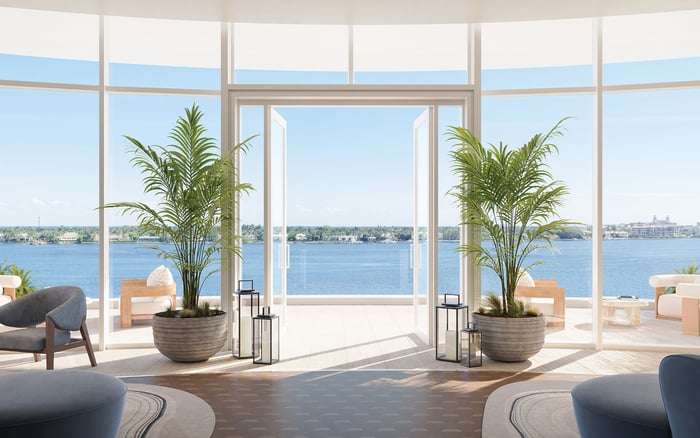
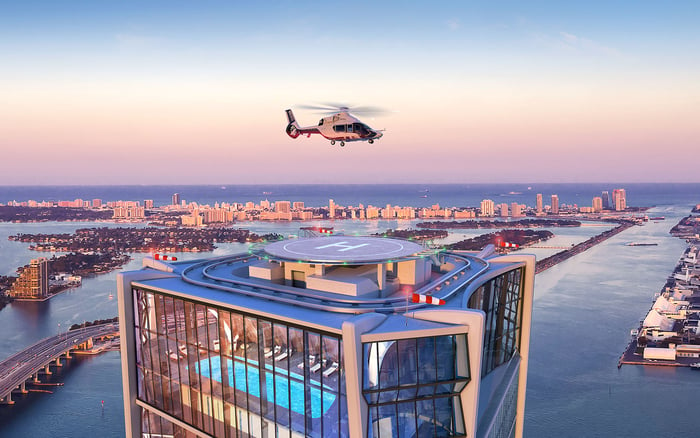
A buyer-focused comparison of Shorecrest Flagler Drive in West Palm Beach and The Delmore Surfside, framed around ownership control, air quality diligence, wellness operations, and credible recovery spaces.
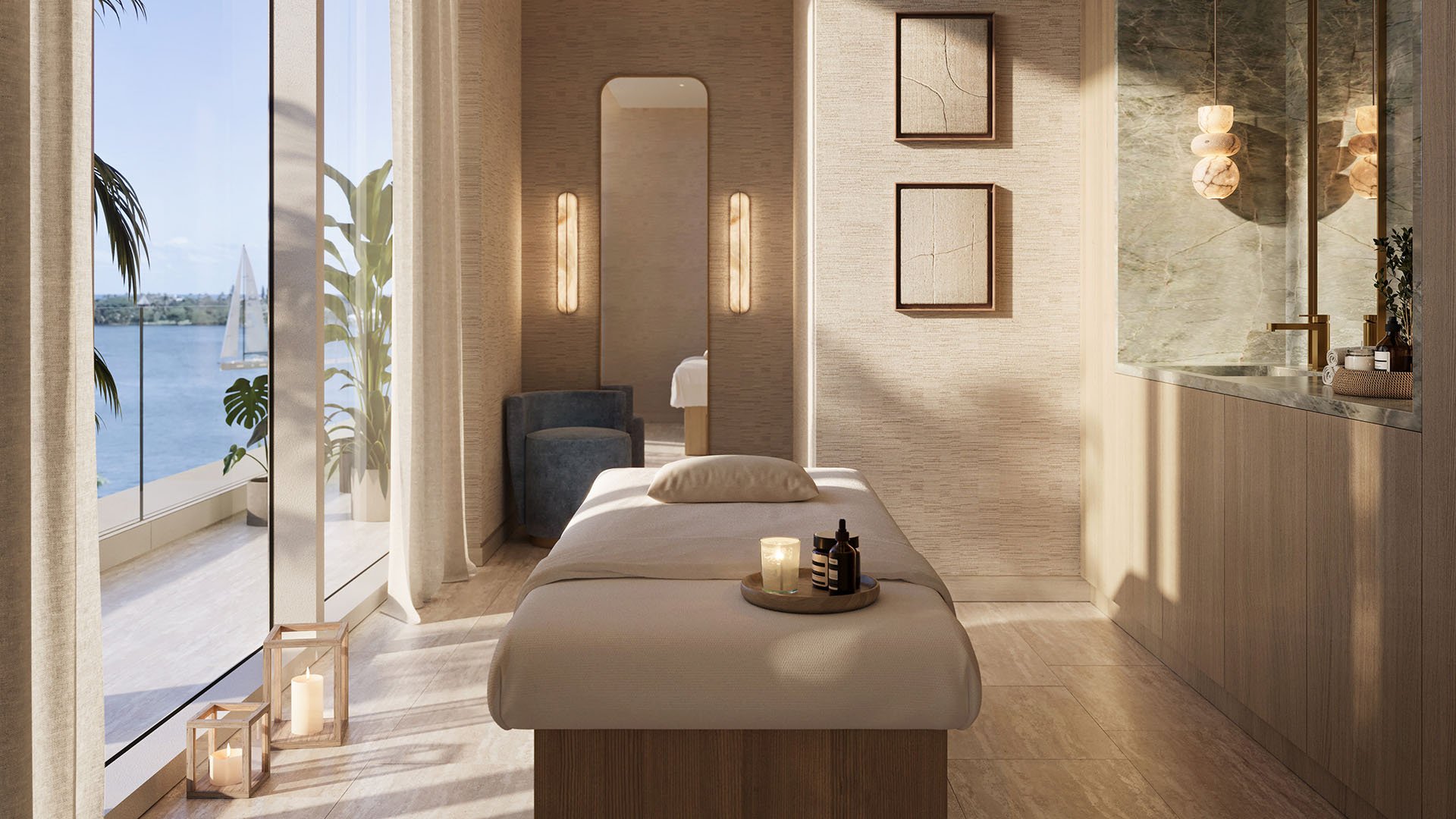
For a South Florida buyer at the top of the market, wellness is no longer a soft amenity category. It is a diligence framework. The serious questions are not whether a tower offers a fitness room, spa suite, or serene design language. They are whether the building can document how air is filtered, how shared wellness areas are maintained, who controls operating standards, and whether recovery spaces will function with privacy and consistency after closing.
That is why Shorecrest Flagler Drive West Palm Beach and The Delmore Surfside make a useful comparison. Shorecrest is the West Palm Beach, Intracoastal-side example, framed around a private-residence condominium model on Flagler Drive. The Delmore is the Surfside comparison point, positioned as a more hospitality-adjacent residential model with greater emphasis on services, membership concepts, and wellness-oriented operations.
The distinction matters because the buyer is not simply choosing between two coastal addresses. The buyer is choosing between two wellness delivery models: one centered on private residential control in a luxury tower setting, the other more closely tied to service integration and programmed resident support.
Shorecrest Flagler Drive West Palm Beach is the cleaner fit for buyers who want a conventional private ownership structure and residential control as the starting point. In this model, wellness credibility should be evaluated through building systems, condominium governance, operating discipline, and long-term maintenance. It is less about a hospitality-style promise and more about whether the underlying residential machine is technically sound.
For this buyer, the most important questions are direct. What filtration specifications are being used? What is the fresh-air strategy? How often are systems maintained? Who documents performance? What role does the association play in preserving wellness spaces over time? How are service contracts approved, reviewed, and funded? A beautiful amenity floor can lose credibility quickly when the operating plan is vague.
The Shorecrest buyer is likely to value discretion, privacy, and the ability to understand the building as a residential asset. That does not mean wellness is secondary. It means wellness must be proven through architecture, mechanical systems, maintenance schedules, and governance documents rather than through atmosphere alone.
The Delmore Surfside sits on the other side of the comparison. It is the stronger framework for discussing recovery spaces, wellness services, and hospitality-style resident support as part of ownership. The relevant diligence extends beyond the residence itself. Buyers should examine how services are delivered, what standards govern them, and whether wellness programming is durable enough to remain meaningful after the initial marketing cycle.
A more programmatic model can be compelling for owners who want support around recovery, scheduling, privacy, and day-to-day service. But the sophistication of the model also raises sharper questions. Which services are included, which are optional, and which depend on third-party arrangements? Are wellness concepts embedded in condominium documents, service agreements, or operating budgets? Can staffing levels change materially? Are recovery spaces designed for quiet, private use, or are they primarily lifestyle showpieces?
In Surfside, where residential expectations often blend privacy, beach proximity, and service culture, the answer may appeal to a buyer who wants a more managed experience. The Delmore model is not simply about owning a unit. It is about understanding how the resident experience is operated.
For both properties, air quality should be treated as a measurable standard. Buyers should ask for filtration specifications, fresh-air strategy, maintenance protocols, and documentation. Words such as purified, clean, elevated, or wellness-focused are not substitutes for technical answers.
This is especially important in luxury towers where residents may spend significant time indoors, move between private and shared areas, and expect consistency across the building. The questions should cover residences, corridors, fitness areas, spa or recovery rooms, and any enclosed amenity spaces. A buyer should also ask whether maintenance protocols are budgeted as recurring operating obligations rather than discretionary enhancements.
Air systems are not glamorous, but they are central to wellness credibility. They also reveal the difference between a building that markets wellness and a building that can operate it. In a private condominium model such as Shorecrest, the emphasis falls on residential systems and association discipline. In a service-integrated model such as The Delmore, the buyer should also test how operating teams maintain standards across programmed spaces.
Recovery has become one of the most overused words in luxury real estate. For discerning buyers, the question is whether recovery spaces are operationally credible. That means privacy, staffing, scheduling, maintenance, and protocols that feel disciplined rather than decorative.
A recovery room should not be judged by finishes alone. Buyers should ask how access is managed, whether the space can be reserved privately, how equipment is maintained, and who is responsible for hygiene standards. If services are offered, the buyer should understand whether they are part of the residential operation, arranged separately, or subject to future change.
This is where The Delmore’s more service-integrated character becomes central. It provides the stronger context for evaluating wellness services as part of the ownership experience. Shorecrest, by contrast, invites a more residential form of diligence: how wellness spaces are maintained, how association oversight works, and whether the building’s technical systems support the promise.
A buyer may be tempted to treat pool, waterview, or balcony language as wellness shorthand. That is not enough. Views, outdoor access, and aquatic amenities can enhance daily life, but they do not replace measurable operations.
Shorecrest is likely to resonate with the buyer who wants a waterfront condominium paradigm, private residential control, and a more traditional ownership framework. The wellness lens is practical: building operations, air filtration standards, HOA governance, and the maintenance of shared amenities. It is a strong fit for someone who wants to own a private residence first, then verify that wellness claims are supported by real systems.
The Delmore is better suited to a buyer who wants wellness to feel more integrated into the residential experience. That buyer may value service delivery, programming, and hospitality-style support, provided the operating standards are durable. In this model, diligence should focus on what is promised, what is documented, and what can be sustained.
The broader South Florida lesson is clear. New project buyers, especially in new-construction conversations, should separate wellness branding from wellness governance. Surfside and West Palm Beach may offer different lifestyle settings, but credibility comes from the same fundamentals: ownership structure, technical systems, operating standards, and a clear plan for care over time.
Before selecting either model, a buyer should request clear answers in five categories. First, ownership structure: who controls decisions affecting wellness spaces and services? Second, air systems: what standards are specified, and how are they maintained? Third, operations: who manages day-to-day service quality? Fourth, recovery spaces: how are privacy, staffing, and hygiene handled? Fifth, durability: which wellness features are contractually supported, budgeted, and governed?
The most compelling residence is not necessarily the one with the longest amenity description. It is the one where the buyer can understand how the promise will be delivered after the sales presentation ends.
What is the main difference between Shorecrest and The Delmore? Shorecrest is framed as a private condominium model, while The Delmore is more service-integrated and hospitality-adjacent.
Which project is better for conventional private ownership? Shorecrest is the cleaner fit for buyers who prioritize residential control in a luxury tower setting.
Which project is stronger for wellness services and recovery spaces? The Delmore is the stronger framework for evaluating programmed wellness, recovery spaces, and service-supported living.
What should buyers ask about air quality? Buyers should request filtration specifications, fresh-air strategy, maintenance protocols, and performance documentation.
Are wellness amenities enough to prove wellness credibility? No. Buyers should verify systems, operations, governance, staffing, and maintenance standards.
Why does HOA governance matter for wellness? Governance affects budgets, service contracts, maintenance discipline, and the long-term condition of shared wellness spaces.
What makes a recovery space credible? Privacy, scheduling, hygiene protocols, staffing, maintenance, and clear operating standards make recovery spaces more credible.
Should buyers compare services as carefully as floor plans? Yes. In a service-integrated model, the resident experience depends heavily on how services are structured and sustained.
Is Surfside relevant to the ownership model discussion? Yes. Surfside provides the context for The Delmore’s more hospitality-adjacent residential experience.
Is Shorecrest only about traditional luxury living? No. Shorecrest can be evaluated through a wellness lens, but the emphasis should be on residential systems and building control.
When you're ready to tour or underwrite the options, connect with MILLION.
If branded residences are on your mind — as a home or as an allocation — we would be glad to share what we are seeing, privately.
Begin a quiet conversation