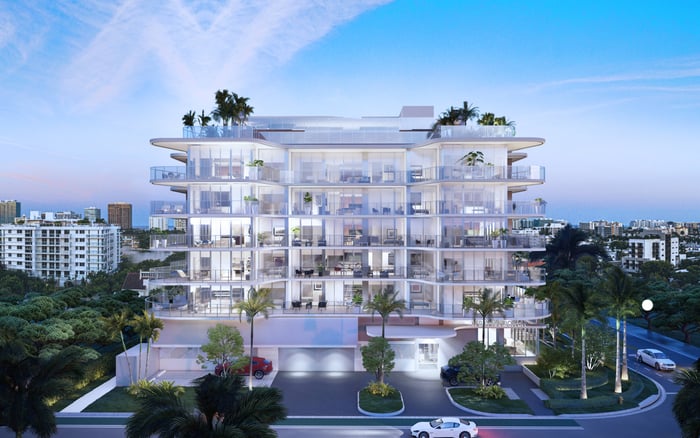
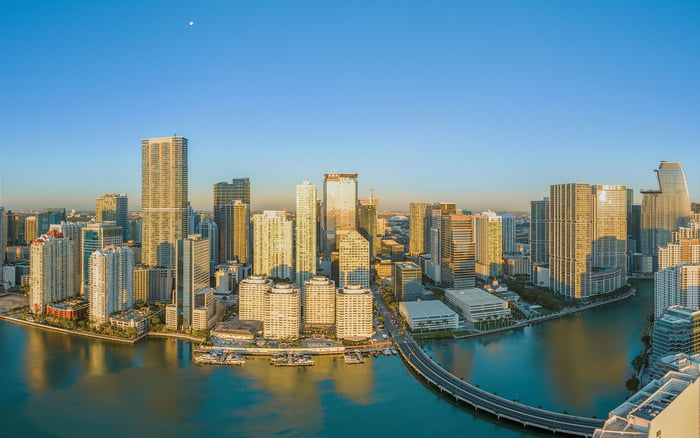
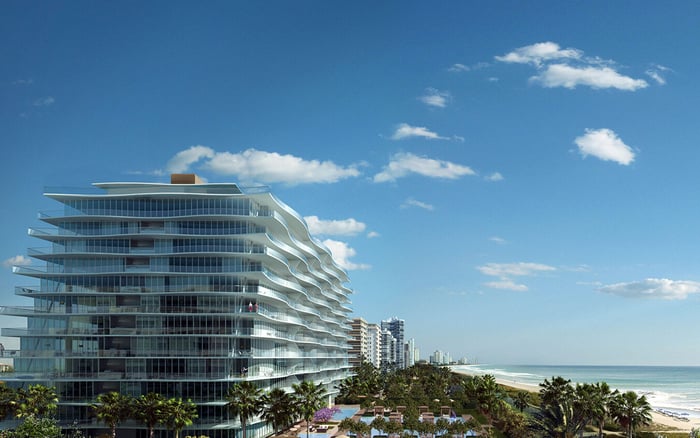
Origin Bay Harbor Islands is best understood first as a refined Bay Harbor Islands residential address, with Brightline proximity serving as a secondary layer of flexibility for households that regularly move across South Florida.
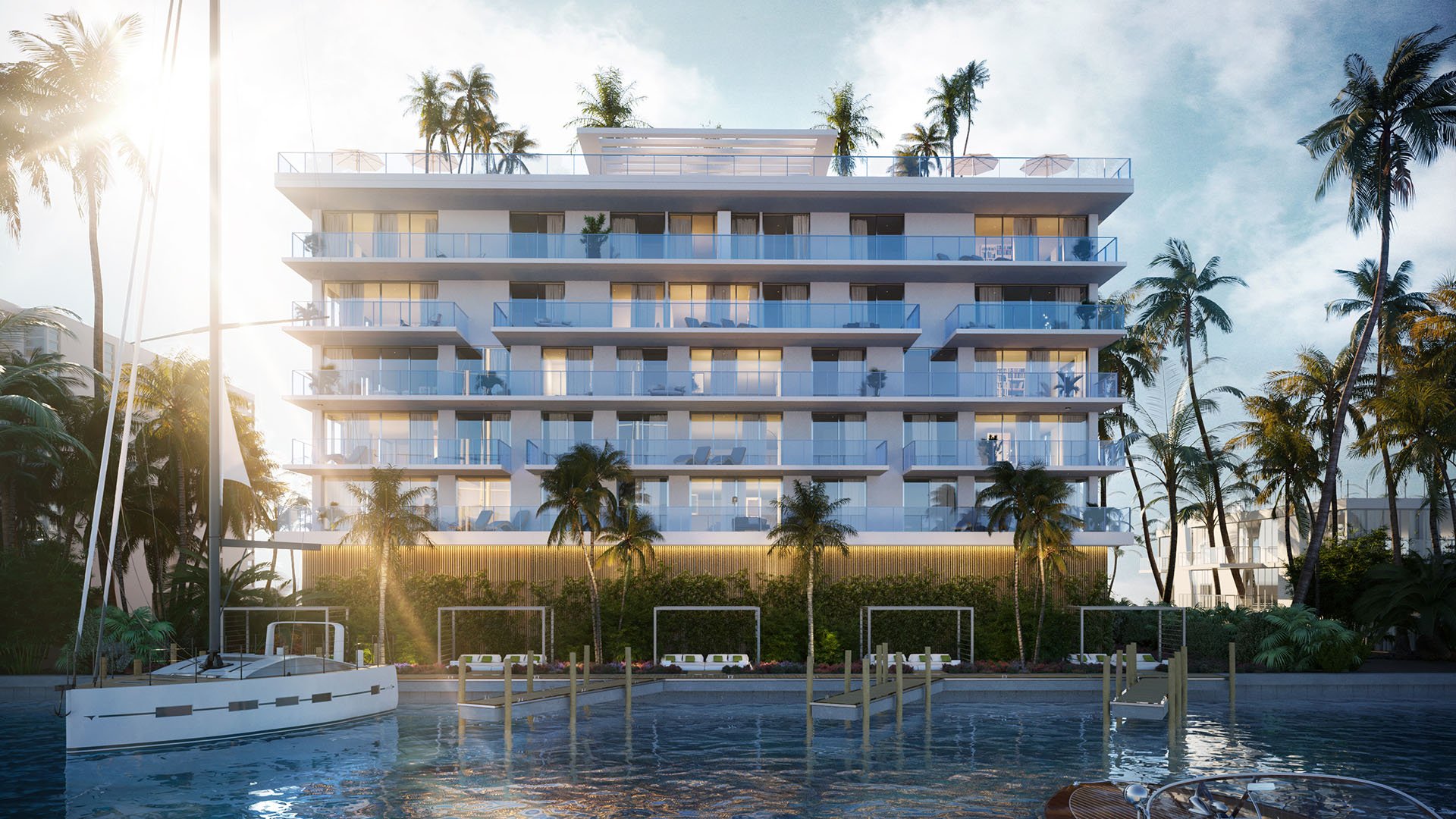
Origin Bay Harbor Islands should be evaluated first as a Bay Harbor Islands luxury residential project, not as a pure transit play. That distinction matters. For affluent households, the enduring question is not whether regional rail exists within the broader mobility map, but whether the home, setting, rhythm, and coastal access align with the way the household actually lives.
The core appeal of Origin Bay Harbor Islands is its island setting. Bay Harbor Islands offers a quieter residential context than many denser Miami-area coastal neighborhoods, while still placing residents within reach of Bal Harbour, Surfside, Miami Beach, and the broader coastal lifestyle. For buyers comparing different pockets of Miami and the beaches, that blend of discretion and proximity is often more important than any single transportation feature.
Brightline proximity can still be meaningful. It belongs in the conversation as an incremental lifestyle and mobility advantage, especially for households that move regularly between South Florida cities. But it should not be treated as the principal reason to buy. The more sophisticated view is to see rail access as optionality, not identity.
South Florida is becoming more multi-nodal. Business, dining, family life, schools, leisure, wellness, and second-home patterns are increasingly spread across several urban centers rather than confined to one downtown or one beach neighborhood. In that context, regional rail can add a useful layer to a household’s movement strategy.
For Origin residents, Brightline proximity is best understood as a supplement to cars, airports, drivers, and highways. It does not replace those options. Instead, it creates another choice when a meeting, family visit, cultural plan, or weekend movement makes rail more convenient than driving. That flexibility is the value proposition.
This is why the phrase “transit-oriented development” should be used carefully. Origin is not being positioned as a building whose identity depends on immediate station adjacency. The rail station is not described as being immediately adjacent to the property, so any serious buyer analysis should avoid language that implies a doorstep transit experience. The more accurate framing is regional connectivity from a residential island base.
The strongest Brightline use case belongs to households with recurring movement across South Florida. For a business owner or executive who frequently travels among major Florida business centers, regional rail can become a practical addition to the week. It may reduce friction on certain trips, create a more predictable travel option, or allow time in transit to be used differently than time behind the wheel.
For families, the benefit is more situational. Brightline access may matter when school, recreation, relatives, medical appointments, sports, or enrichment activities are spread across the region. It will not be equally valuable for every family. A household whose life is concentrated between Bay Harbor Islands, Bal Harbour, Surfside, and Miami Beach may use it rarely. A family with obligations in multiple South Florida nodes may find it more useful.
Second-home owners may also see the appeal. A second-home household often values ease and spontaneity. If regional rail reduces dependence on longer drives for certain trips, it can support a more fluid relationship with the residence. The benefit is not necessarily daily commuting. It is the ability to move more freely when plans change, guests arrive, or business pulls the owner elsewhere in the region.
A disciplined buyer should begin with an honest map of daily life. Where are the weekly meetings? Where do children attend school or activities? Where are relatives, preferred restaurants, clubs, doctors, airports, and weekend destinations? If those patterns are concentrated near the coast, the rail benefit may remain modest. If they extend across multiple South Florida cities, the benefit becomes more tangible.
This is especially important for investment-minded buyers. Transportation narratives can be attractive, but they should not overpower the real estate fundamentals. At Origin, those fundamentals remain lifestyle, island character, coastal proximity, and the appeal of Bay Harbor Islands as a quieter residential setting. Brightline can support the ownership story, but it should not be used as a substitute for evaluating the property on its own merits.
For many new-construction and boutique buyers, the best question is simple: would this residence still make sense if Brightline were used only occasionally? If the answer is yes, the rail connection becomes a welcome enhancement. If the answer depends entirely on rail access, the buyer may be assigning too much weight to a secondary feature.
Bay Harbor Islands has a particular appeal because it offers calm without isolation. Its residential scale can feel more composed than busier coastal corridors, yet it remains tied to some of Miami’s most desirable lifestyle destinations. Bal Harbour brings luxury retail and a polished village atmosphere. Surfside offers a walkable beach-town character. Miami Beach adds culture, dining, hotels, and nightlife. Together, they create a coastal ecosystem that supports both full-time living and seasonal ownership.
That ecosystem is the stronger lens for Origin. The household is buying into a way of living that prioritizes privacy, coastal access, and proximity to established luxury districts. Brightline adds a regional layer to that equation. It broadens the mobility story, but it does not redefine the address.
This balance is important because ultra-premium buyers tend to value optionality. They may keep several homes, maintain flexible business calendars, and move between social, family, and professional commitments with little notice. For that buyer, a residence does not need to solve every transportation need. It needs to sit within a smart network of choices.
The clearest way to think about Origin Bay Harbor Islands is this: buy it for the residential and lifestyle proposition, then value Brightline proximity according to actual travel patterns. If the household regularly moves between South Florida cities, rail access may become a meaningful convenience. If daily life is mostly coastal and local, it may be a pleasant but occasional advantage.
Either outcome is acceptable. The mistake would be to overstate the transportation feature or ignore it entirely. Origin sits within a broader South Florida region that is becoming more connected, more layered, and less dependent on a single center of gravity. For the right household, that context matters. But the center of the decision remains the island, the home, and the daily life it supports.
Is Origin Bay Harbor Islands a transit-oriented development? No. It is best understood as a Bay Harbor Islands luxury residential project with regional rail access as a secondary mobility benefit.
Should Brightline proximity be the main reason to buy at Origin? No. The primary reasons to evaluate Origin are its island setting, residential character, and proximity to coastal lifestyle destinations.
Who may benefit most from Brightline access? Households that regularly move between South Florida cities for business, family, leisure, or second-home travel may find it most useful.
Does Brightline replace the need for a car? Not for most Origin households. It should be viewed as one added option alongside cars, airports, highways, and private transportation.
Is the rail station immediately adjacent to Origin? The available positioning does not describe the station as immediately adjacent, so buyers should avoid assuming a doorstep rail experience.
How should executives think about the benefit? Executives who travel frequently among Florida business centers may value the added flexibility for certain regional trips.
Can families benefit from Brightline proximity? Yes, especially if school, recreation, relatives, or activities are spread across South Florida rather than concentrated locally.
Why does Bay Harbor Islands matter in this analysis? The island setting offers a quieter residential context while keeping residents close to Bal Harbour, Surfside, Miami Beach, and coastal amenities.
Is Brightline relevant for second-home owners? It can be relevant when it supports more spontaneous movement and reduces reliance on longer drives for certain trips.
What is the best way to shortlist comparable options for touring? Start with location fit, delivery status, and daily lifestyle priorities, then compare stacks and elevations to validate views and privacy.
For a confidential assessment and a building-by-building shortlist, connect with MILLION.
If branded residences are on your mind — as a home or as an allocation — we would be glad to share what we are seeing, privately.
Begin a quiet conversation