A family-oriented editorial guide to assessing shade, wind comfort, balconies, terraces and amenity usability before purchasing at Aston Martin Residences Downtown Miami.
At the upper end of South Florida real estate, the conversation often begins with architecture, views, arrival sequence and finish level. For families, however, the most luxurious residence is not simply the one that photographs beautifully. It is the one that performs at breakfast, after school, during a breezy weekend lunch and on the humid afternoon when children want to move easily between interior and outdoor spaces.
That is why buyers considering Aston Martin Residences Downtown Miami should place shade and wind comfort within the same due diligence conversation as floor plan, parking, storage and privacy. In a vertical Downtown setting, outdoor livability can vary by exposure, elevation, time of day and the way nearby structures shape air movement. A balcony that feels serene at one hour may feel bright or gusty at another. A terrace that appears generous on a plan may perform very differently once a stroller, highchair, lounge seating and shade strategy are introduced.
For family buyers, the goal is not to avoid sun or breeze. Both are central to the Miami lifestyle. The goal is to understand when outdoor areas are truly usable, how easily they can be supervised, and whether the residence supports the daily rhythm of children, parents, guests and staff.
A polished showing can capture a residence at its most flattering moment. Families should go further. Ask to experience or evaluate the home across the practical hours of family life: early breakfast, late afternoon play, sunset entertaining and weekend pool time.
Morning light can feel restorative in a primary suite, yet intense in a child’s bedroom if window treatments are not thoughtfully specified. Afternoon sun can bring drama and warmth, but it may also require a more serious discussion about glazing, cooling, shade devices and furniture placement. Evening conditions matter as well, particularly if the family expects to use outdoor seating after school or host weekend dinners.
The right question is not simply, “Does this residence get sun?” It is, “Where does the sun land at the hours when we actually live here?” Families should ask for a room-by-room reading of exposure, including children’s rooms, family rooms, kitchen areas and outdoor zones. A residence can be visually spectacular while still requiring careful planning to keep the most-used spaces comfortable.
Wind comfort is often discussed too abstractly. A family buyer should translate it into ordinary moments: opening a door with a toddler nearby, setting down homework papers, serving lunch outdoors, storing pool toys or allowing grandparents to sit comfortably on a shaded seat.
High floors may deliver a commanding sense of elevation, but higher placement can also make wind review more important. The issue is not only whether a breeze is present. It is whether the outdoor area remains usable for the activities the family values. Can children sit outside safely and calmly? Can an adult carry a tray without fighting gusts? Do doors close with control? Are loose furnishings appropriate for the exposure?
Ask how building management addresses balcony and terrace furnishings, umbrellas, planters and accessories. The most refined communities usually preserve a coherent exterior appearance, and that can influence what a family may place outside for comfort. A buyer should understand both the physical conditions and the rules that shape daily use.
Outdoor areas sell emotion, but family buyers should measure function. A balcony should be considered an extension of the plan, not a decorative strip beyond the glass. A terrace should be studied like a proper room, with circulation, seating, shade, supervision and storage needs.
Start with access. Which rooms open directly to the outdoor area? Can parents see the space from the kitchen or living area? Is there a natural place for a breakfast table, a reading chair or a small play moment without blocking circulation? Does the outdoor area support both adult entertaining and child-friendly use, or is it primarily a scenic edge?
Then consider surfaces and thresholds. Families with young children or older relatives should ask how interior and exterior transitions feel in daily use. A slight step, a heavy door or an awkward furniture layout can determine whether the space is used often or merely admired from inside. True luxury is effortless repetition. If a family can use an outdoor area three times a day without planning around it, that space has real value.
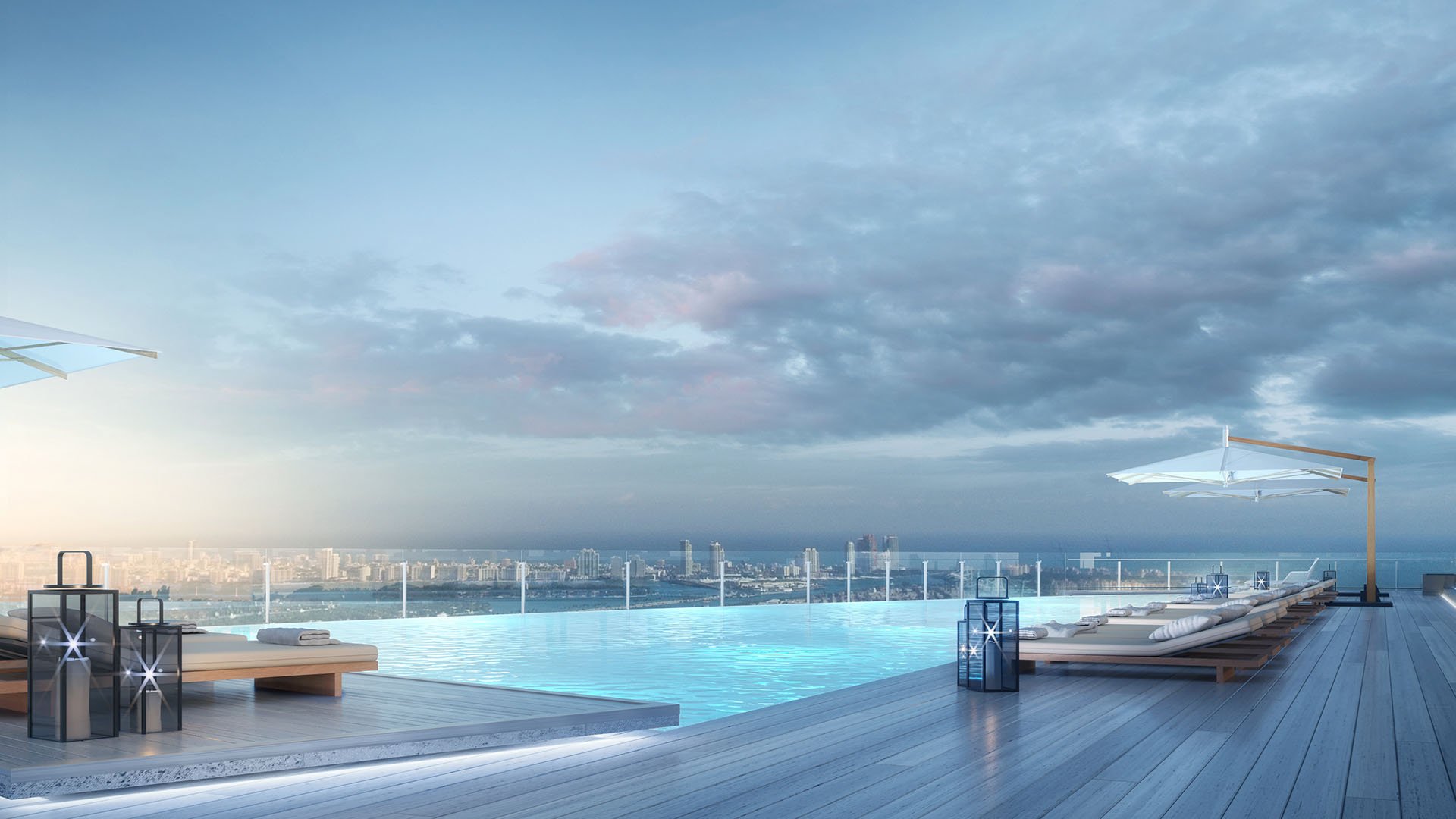
Private residences are only part of the family equation. Pool areas, lounges, arrival spaces and shared terraces can define the everyday experience of a building. A pool that is beautiful at noon may still require a separate assessment for shade, seating availability and wind exposure during the hours when families actually gather.
Ask about the daily rhythm of amenity use. Where do families tend to sit? Which zones are most sheltered? Are there comfortable places for a parent to watch children without standing in direct sun? Are shaded seats limited, or distributed across different times of day? Do breezes make certain areas more pleasant in summer but less appealing during stronger wind conditions?
The best question is practical: “On a typical weekend, where would a family with children spend two hours comfortably?” That answer can reveal more than a glossy amenity description. It clarifies whether the building supports long, relaxed use or quick visits between other plans.
In a Downtown tower context, waterview expectations can be central to the emotional appeal of a residence. Views can create a sense of calm, openness and value. Yet family buyers should avoid treating outlook as separate from comfort. The view you want may arrive with a specific exposure, a particular light pattern or a different wind profile.
The strongest purchase decision balances outlook with lived use. A panoramic orientation may be extraordinary for adults who entertain in the evening, while another exposure may offer more forgiving light for children’s rooms or daytime family living. The correct choice depends on the household’s priorities, not a generic hierarchy of views.
Buyers should compare exposures through a family lens: sleeping comfort, glare during homework hours, screen visibility, outdoor dining, noise perception and the feasibility of shaded seating. A residence does not need to solve every condition perfectly, but the trade-offs should be explicit before a contract becomes an address.
A discreet, well-advised buyer should request clarity on the following topics before moving forward. Ask whether sun or shade studies are available for the line or exposure under consideration. Ask how terrace and balcony rules address umbrellas, outdoor furniture, planters and child-oriented accessories. Ask whether any operational policies affect pool seating, guest use or outdoor amenity hours.
It is also sensible to ask how window treatments, glazing, cooling strategy and outdoor furnishing choices can improve comfort without compromising design. The answers may not all be contained in a brochure. Some will emerge through repeated visits, thoughtful questioning and practical observation.
For families, the right residence at Aston Martin Residences Downtown Miami should feel composed, not fragile. It should allow children to move naturally through the home, give parents places to supervise without hovering, and provide outdoor moments usable enough to become part of daily life. In the luxury segment, shade and wind are not minor details. They are the difference between a dramatic residence and a deeply livable one.
Why should family buyers ask about shade at Aston Martin Residences Downtown Miami? Shade affects how often outdoor areas can be used, especially by children, older relatives and guests during warm parts of the day.
Is wind comfort more important on high floors? It can be, because elevation may make breezes feel more pronounced. Buyers should test or discuss the specific residence rather than assume one condition applies to every home.
What should I ask about a balcony before buying? Ask when it receives sun, how windy it feels, what furniture is permitted and whether it can be comfortably supervised from inside.
How should a family evaluate a terrace? Treat it like an outdoor room. Consider seating, circulation, shade, safety, furnishings and whether it works for both children and adults.
Does Downtown living change the comfort analysis? Yes, Downtown settings can involve neighboring towers, changing light patterns and varied wind conditions, all of which deserve close review.
Should pool areas be visited more than once? Yes, because comfort can change by hour and day. Families should observe shade, seating and wind during the times they expect to use the amenities.
How does waterview appeal fit into the decision? Waterview can be highly desirable, but it should be weighed alongside glare, heat, wind and daily usability for the household.
Can window treatments solve all shade concerns? They can help significantly, but they do not replace a full review of exposure, outdoor usability and cooling performance.
What is the best way to compare two residences? Compare them by family routine: mornings, homework hours, meals, pool visits, guest stays and outdoor relaxation.
When should these questions be raised? Raise them early, before the emotional pull of the view or finishes overtakes practical due diligence.
If you'd like a private walkthrough and a curated shortlist, connect with MILLION.
If branded residences are on your mind — as a home or as an allocation — we would be glad to share what we are seeing, privately.
Begin a quiet conversation