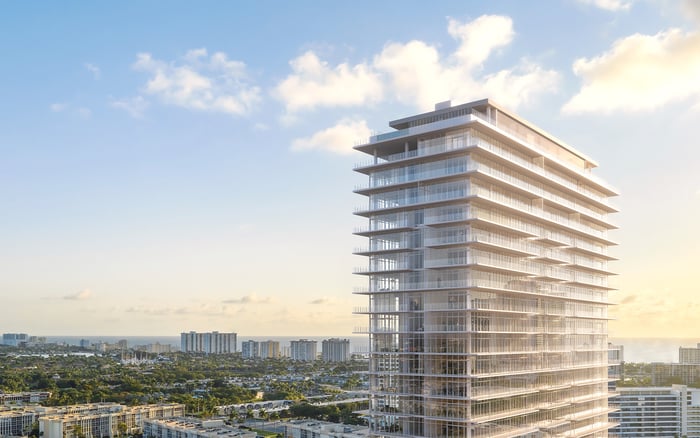
A buyer-focused due-diligence framework for evaluating Delano Residences & Hotel Miami and Shell Bay by Auberge Hallandale through brand credibility, governance discipline, and resale logic, without treating prestige as a substitute for documents.

In South Florida’s branded residential market, the name on the porte cochere can open the conversation, but it should not close it. Delano Residences & Hotel Miami and Shell Bay by Auberge Hallandale invite a sophisticated buyer to focus on two related questions: what does the brand actually control, and what will the ownership structure require over time?
That distinction matters. A hospitality name can influence perception, design language, service standards, and buyer confidence. Yet the long-term ownership experience is ultimately shaped by documents: declarations, budgets, operator agreements, use restrictions, reserve obligations, association governance, rental rules, and the practical mechanics of maintenance. Brand prestige may frame the lifestyle, but governance determines how that lifestyle is protected.
For Shell Bay by Auberge Hallandale, the clearest market lens is Hallandale Beach, within the broader Broward luxury corridor. The Auberge association is central to the project’s positioning, but a prudent buyer should separate brand identity from legal responsibility. Whether a hospitality brand is a licensor, operator, manager, service partner, or some combination of roles is not a semantic detail. It can affect standards enforcement, future continuity, and the owner’s day-to-day experience.
Delano Residences & Hotel Miami calls for the same discipline. The Delano name carries cultural resonance in Miami, but buyers should verify project-level details before relying on reputation alone. In ultra-premium real estate, the most elegant purchase is often the one where the buyer understands not only the finish package, but also the operating covenant behind it.
Brand value in a residential setting is not merely aesthetic. It can shape first impressions, rental desirability, guest expectations, and resale confidence. But prestige becomes economically meaningful only when the obligations behind the brand are clear. Buyers should ask what service standards are required, how long any brand agreement runs, whether renewal provisions exist, who pays for brand-related costs, and what happens if the relationship changes.
This is especially important when a project includes both residential and hospitality elements. A condo-hotel structure, or any arrangement with hotel-like services, can introduce added complexity around access, revenue participation, operating budgets, transient use, and insurance. None of these features is inherently negative. For the right buyer, they may be part of the appeal. The key is to understand whether the ownership model enhances flexibility or creates obligations that may not fit the buyer’s intended use.
The most disciplined buyers will not treat a branded residence as a trophy purchase alone. They will ask whether the brand supports durable demand from future buyers, whether the operating model is transparent, and whether the cost structure remains defensible if the market becomes more selective.
In prime residential property, governance is often less visible than architecture, but it can be more consequential over a decade of ownership. A well-governed association protects common areas, enforces standards consistently, budgets with foresight, and communicates with owners in a manner befitting the price point. Weak governance, by contrast, can erode even a beautiful asset.
For a buyer evaluating Shell Bay by Auberge Hallandale or Delano Residences & Hotel Miami, the governance review should begin before contract execution. The buyer should examine the declaration, association budget, reserve philosophy, voting rights, developer control provisions, management agreements, service contracts, leasing rules, alteration rules, pet policies, parking rights, storage rights, and insurance approach. If the residence is part of a mixed-use or hospitality-oriented environment, cost sharing between components deserves particular attention.
The point is not to search for flaws. It is to understand the operating culture of the property. Luxury buyers often focus on privacy, finishes, views, and amenities. Those are important, but governance determines whether the property remains serene once the building is fully occupied and the developer has transitioned control.
Resale is not a future problem. It is part of the initial underwriting. In a branded residence, future liquidity depends on a combination of scarcity, design relevance, service quality, carrying costs, rental permissions, buyer depth, and confidence in the building’s governance.
Resale also depends on how easily the next buyer can understand the asset. A residence with clean documentation, predictable carrying costs, and a clear brand role is easier to explain. A residence with ambiguous operating rights, complicated cost allocations, or uncertain restrictions may require deeper buyer education, which can narrow the market.
For investment-minded buyers, the question is not simply whether the property feels special today. It is whether the next owner will perceive the same combination of scarcity and order. Hallandale offers a distinct luxury context, and Shell Bay by Auberge Hallandale can be considered through that local lens. Delano Residences & Hotel Miami, meanwhile, should be evaluated with equal attention to brand durability, legal architecture, and buyer segmentation.
A new-construction purchase can be compelling because it allows early selection, contemporary design, and a first-generation ownership experience. It also requires careful reading of what is promised, what is aspirational, and what is binding. The most resilient acquisition is rarely the one driven by a single amenity. It is the one where the full ownership ecosystem makes sense.
Before making a commitment, a buyer should request the full package of governing and operational materials. That includes association documents, budgets, estimated assessments, reserve assumptions, purchase agreement terms, hotel or service agreements where applicable, brand agreement summaries where available, leasing restrictions, use rules, management structure, insurance framework, and any disclosures governing shared facilities.
The buyer should also consider practical questions. Who controls the association at completion and after turnover? Which amenities are owned by the association, and which are licensed or shared? Are there restrictions on access for guests, renters, or hotel patrons? How are major capital repairs funded? What rights does the brand have to enforce standards, and what rights do owners have if service falls short?
This is where discretion and sophistication align. The most capable buyers do not ask these questions because they are skeptical of luxury. They ask because they intend to preserve it.
A fair comparison between Delano Residences & Hotel Miami and Shell Bay by Auberge Hallandale should not be reduced to which name feels more glamorous. The better lens is fit. One buyer may prioritize the Miami cultural cachet implied by Delano. Another may be drawn to the Hallandale setting and the Auberge-linked identity of Shell Bay. Both instincts can be valid if the documents support the intended use.
The due-diligence standard should remain the same: verify the brand role, understand the governance structure, test the carrying costs, clarify rental and guest rules, and consider how a future buyer will evaluate the same property. In a market where luxury has become increasingly branded, discipline is not a restraint on desire. It is the mechanism that allows desire to endure.
Is brand prestige enough to justify a purchase? No. Brand prestige can influence demand, but the governing documents and operating structure determine the ownership experience.
How should buyers view Shell Bay by Auberge Hallandale? It can be viewed as a Hallandale luxury-branded residential opportunity, subject to careful review of project documents and agreements.
What should buyers verify about Delano Residences & Hotel Miami? Buyers should verify all project-specific details, including ownership structure, service model, association obligations, and resale considerations.
Why does governance matter in a luxury residence? Governance shapes budgets, standards, maintenance, owner rights, and the long-term calm of the property.
What is the key resale question? The key question is whether a future buyer will see the same value, clarity, and confidence that the original buyer saw.
Is a condo-hotel model always more complicated? It can be more complex because hospitality operations may affect use rules, costs, and access, so documents should be reviewed closely.
What makes Hallandale relevant in this comparison? Hallandale provides the local market context for Shell Bay by Auberge Hallandale and helps frame its buyer profile.
Can new-construction reduce due-diligence needs? No. New-construction can offer fresh design and early selection, but it still requires careful document review.
What should an investment buyer prioritize? An investment buyer should prioritize clarity of costs, governance strength, use flexibility, and future buyer demand.
Should buyers compare Delano and Shell Bay only by amenities? No. Amenities matter, but brand role, governance, legal structure, and resale logic are equally important.
For a confidential assessment and a building-by-building shortlist, connect with MILLION.
If branded residences are on your mind — as a home or as an allocation — we would be glad to share what we are seeing, privately.
Begin a quiet conversation