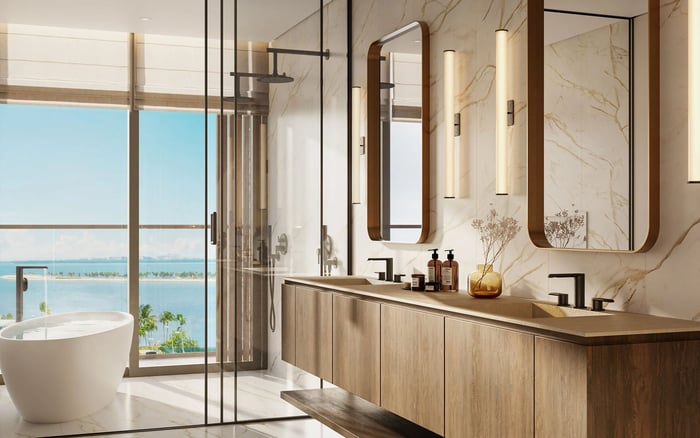
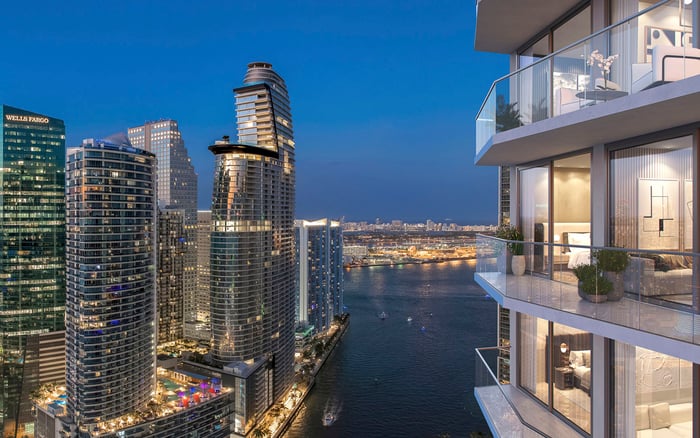
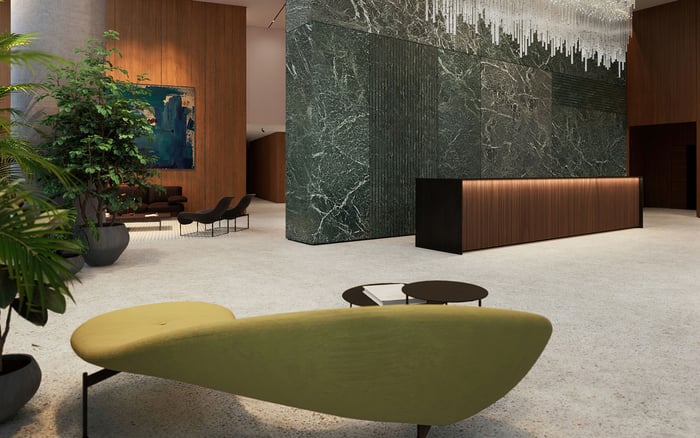
A buyer-focused guide to the practical questions families should ask before evaluating daily arrival, lobby, elevator, stroller, and school-run movement at 888 Brickell by Dolce & Gabbana in Brickell.
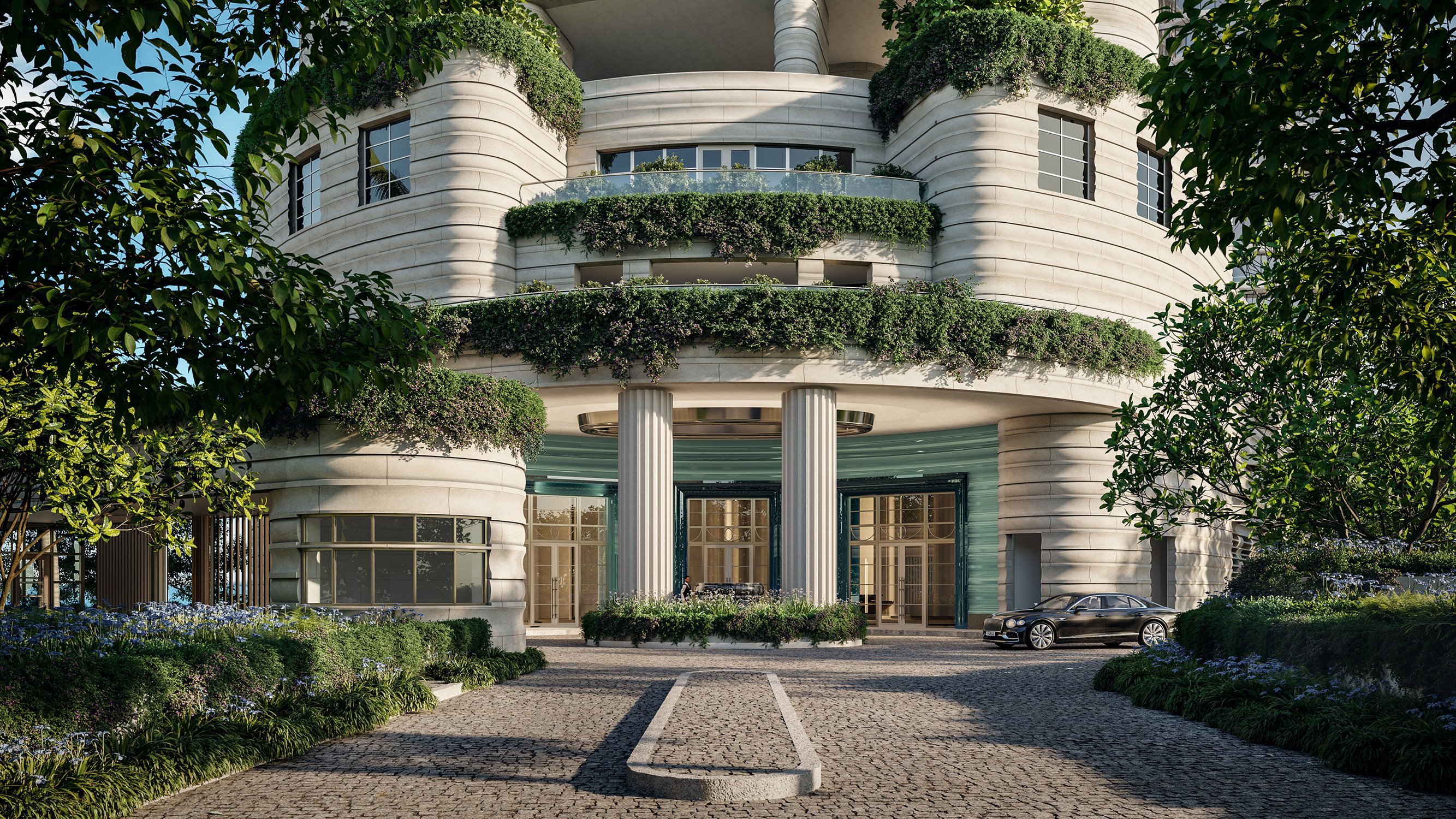
888 Brickell by Dolce & Gabbana is a residential project associated with Miami’s Brickell neighborhood, a district where the ritual of arrival can matter as much as the residence itself. For a family buyer, however, the most revealing question is not only how dramatic the lobby feels on a Friday evening. It is how the building performs at 7:35 on a school morning, when one parent is on a call, a child has a backpack, a caregiver is managing a stroller, and the car seat cannot become an afterthought.
That is the purpose of evaluating a family-entry sequence. The phrase is not a promise about any specific building feature. It is a practical lens for examining the chain of movement from curb to residence: vehicle arrival, door staff, valet or drop-off, lobby access, elevator routing, package or stroller management, guest permissions, and the final transition into the private home. In a luxury tower, these moments should feel composed. For families, they must also be legible, safe, and repeatable.
Brickell buyers often focus on views, finishes, branded design, amenities, and private entertaining. Those are legitimate priorities. Yet family life tests a residence through repetition. The question is whether the building’s most public spaces can support the most ordinary routines without friction.
A family should ask the sales team to describe, step by step, how a child enters the building on a weekday morning. The answer should not remain abstract. Ask where the car stops, who opens which door, how the child moves from vehicle to lobby, and whether that movement conflicts with other arrivals.
In Brickell, curb activity can be dense. A graceful family-entry plan should account for timing, rain, luggage, sports equipment, caregivers, ride-share vehicles, and visiting relatives. Buyers should ask whether the same route is used by residents, hotel-style guests if applicable, service providers, and deliveries, or whether distinct circulation patterns are planned. The more uses that share one path, the more important staffing protocols become.
For a buyer considering 888 Brickell by Dolce & Gabbana, the goal is not to assume difficulty. It is to make the invisible daily routine visible before signing. If a child’s path from car to elevator requires several handoffs, each handoff should be understood.
The family threshold begins before the lobby. Ask whether there is a designated resident drop-off zone, how valet activity is managed during peak periods, and whether a parent can safely pause without disrupting traffic flow. If a buyer expects nannies, drivers, grandparents, or school carpool arrangements, those scenarios should be discussed specifically.
The best question is often simple: “Where does my family stand when more than one car arrives?” That question reveals whether the entry is ceremonial only, or operational as well. It also clarifies expectations around luggage carts, umbrellas, child seats, and double strollers.
For high-service buildings, buyers should separate hospitality from procedure. Warm service is valuable, but families need repeatable rules. Who is authorized to release a child to a caregiver? Can the desk maintain approved names? What identification is needed for recurring pickups? Which policies are informal, and which are documented? A refined building should make discretion feel effortless, but child movement should never depend on memory alone.
Elevator routing is another essential part of the family-entry sequence. Buyers should ask how residents move from lobby to residence, whether elevator banks are shared with other uses, and how access control is handled for children, caregivers, tutors, or family guests. Avoid assumptions. A branded residential tower may have a sophisticated arrival experience, but the details determine how it functions for a household.
Ask whether children can reach the residence independently at an appropriate age, and what permissions are required. Ask how a caregiver brings a sleeping child upstairs. Ask where a stroller waits while a parent retrieves a package or speaks with the front desk. Ask whether elevator access can be programmed for different family members at different times.
These questions are not signs of distrust. They are signs of serious ownership. In a market where buyers compare New Project, New-construction, and Pre-construction opportunities, the most confident family decisions are made when daily circulation is examined with the same care as the kitchen, closet, and primary suite.
Luxury living is often photographed without objects. Family living produces objects constantly. Strollers, scooters, school projects, instrument cases, tennis bags, diaper bags, shopping bags, and pet gear all need a place in the sequence.
Ask whether stroller storage is contemplated, where large deliveries are staged, how grocery arrivals are handled, and whether families may use carts without waiting during peak periods. If storage is not designated, ask how management expects residents to handle the practical flow of belongings.
For buyers comparing Brickell with waterfront or low-density alternatives, this is where the tower lifestyle becomes clear. A compact, high-service vertical residence can be highly efficient for families, but only when movement is choreographed. If every return home requires negotiation, the residence may feel less private than its finishes suggest.
A private-school search, after-school activities, and caregiver scheduling can shape how a family uses a Brickell residence. Buyers should map the expected week and then test the building against it. Morning departures, afternoon returns, weekend lessons, birthday parties, visiting grandparents, and airport departures each create different pressure points.
Ask how early-morning departures are handled. Ask whether multiple vehicles can be called in sequence. Ask how the building manages a child arriving with a driver while a parent is still upstairs. Ask what happens during heavy rain, a building event, or a peak dinner hour.
The most useful conversations are concrete. “At 3:15 p.m., my child arrives with a caregiver and a scooter. What happens next?” A polished answer should identify people, places, and permissions, not simply reassure.
888 Brickell by Dolce & Gabbana carries a name that naturally invites attention from design-conscious buyers. For families, brand prestige should be paired with family proof. That means verifying how glamorous spaces accommodate ordinary needs without diminishing either.
If a home includes outdoor living, ask how balcony or terrace use interacts with child-safety expectations, house rules, and supervision. If a buyer is prioritizing views, including a waterview or high-floor perspective, ask how elevator wait times and emergency procedures are communicated to residents. If amenities include a pool or other shared spaces, ask how age rules, guest policies, and supervision requirements are administered.
These are not claims about what the project includes. They are the right categories of inquiry for a family buyer. The answers should be verified through the sales team, governing documents, management materials, and final building policies before a family relies on them.
Before treating family logistics as resolved, buyers should request a written explanation of resident arrival, guest access, valet or drop-off procedures, elevator access, caregiver permissions, package handling, stroller practices, and amenity rules. If the project is still evolving, ask which items are final and which remain subject to change.
Families should also ask to walk the sequence physically when possible. If the building is not yet complete, review plans with a representative who can explain circulation rather than only finishes. A beautiful rendering cannot answer who holds the door when a child is carrying a backpack and the parent is holding an infant.
The right residence should make family life feel discreet, not improvised. In Brickell, where energy is part of the appeal, the most livable luxury is often found in the transitions: the curb that works, the lobby that guides, the elevator that protects privacy, and the staff protocol that makes every arrival feel understood.
What is a family-entry sequence? It is the step-by-step path a family uses from vehicle arrival to the private residence, including staff interaction, access control, elevators, and belongings.
Is family-entry sequence an official feature at 888 Brickell by Dolce & Gabbana? It should be treated as a buyer due diligence framework unless confirmed in writing by the sales team or governing documents.
Why is this especially important in Brickell? Brickell’s urban pace can make curb, valet, and lobby coordination especially important for families with children, caregivers, and school schedules.
What should parents ask first? Ask the team to describe exactly how a child moves from car to residence on a busy weekday morning.
Should caregiver access be documented? Yes. Families should confirm how approved caregivers, drivers, tutors, and relatives are identified and granted access.
Are stroller and scooter logistics worth discussing? Yes. Small daily items can create large friction if storage, carts, and lobby movement are not clearly handled.
How should buyers evaluate elevator access? Ask whether access is private, shared, programmed by permission, or subject to rules that affect children and caregivers.
Can school-run routines affect the buying decision? Absolutely. The residence should support morning departures, afternoon arrivals, and unexpected schedule changes with minimal stress.
What should be verified before relying on any procedure? Confirm procedures through sales materials, management rules, condo documents, or written responses from the appropriate project representative.
What is the main takeaway for family buyers? Treat arrival as part of the residence, because daily movement often determines whether luxury feels effortless or merely impressive.
For a confidential assessment and a building-by-building shortlist, connect with MILLION.
If branded residences are on your mind — as a home or as an allocation — we would be glad to share what we are seeing, privately.
Begin a quiet conversation