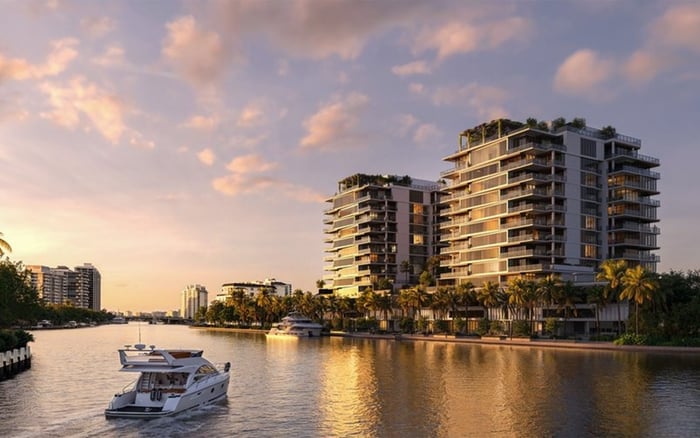
Bridge-free access is one of Fort Lauderdale’s clearest dividing lines in the upper waterfront market, especially for buyers whose vessels make fixed-bridge clearance a nonstarter. In this tier, private deep-water dockage is not a decorative amenity but a practical asset shaped by siting, channel conditions, deeded rights, and the daily convenience of moving directly from residence to inlet.
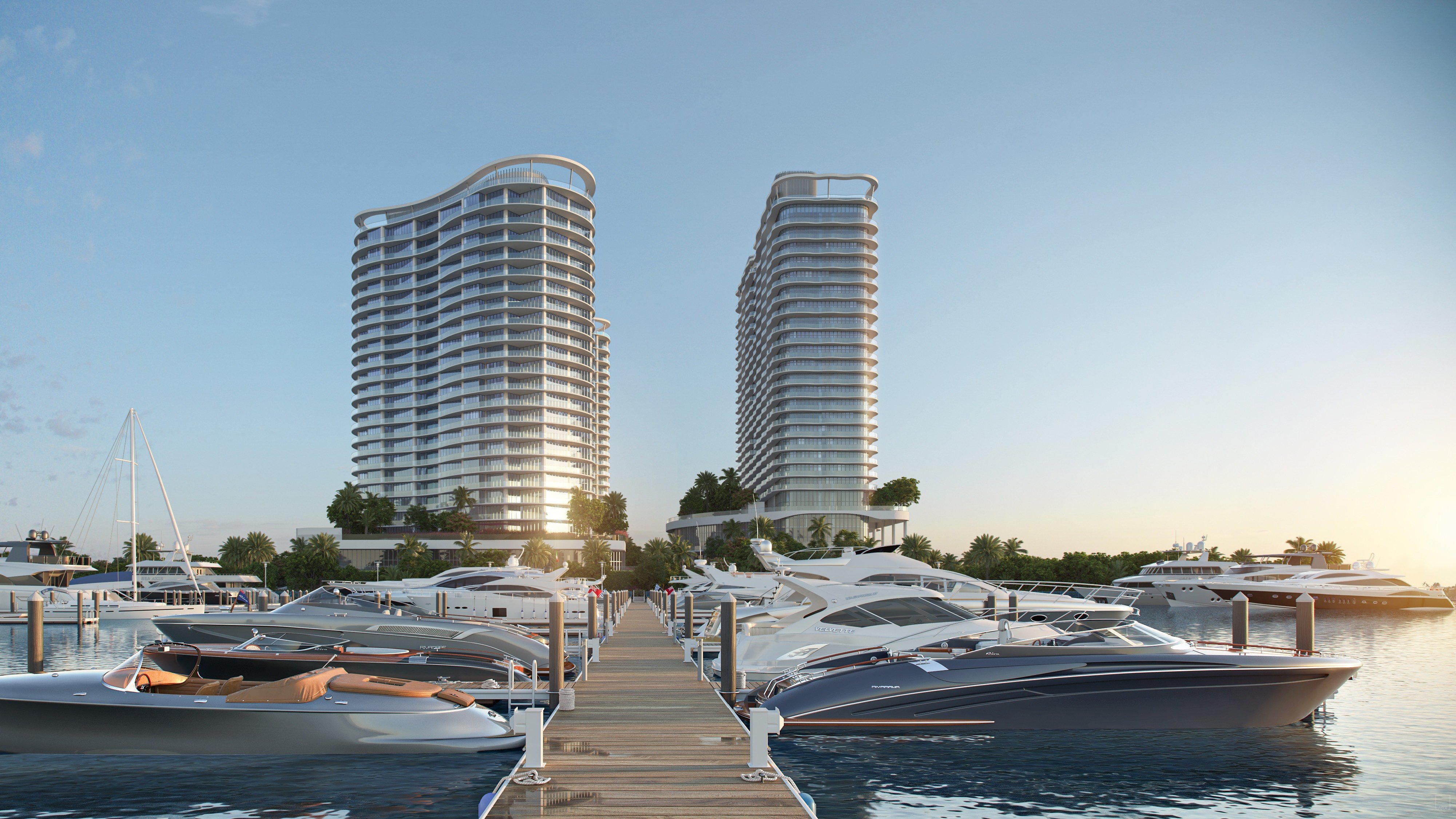
In Fort Lauderdale, waterfront value is inseparable from mobility. Buyers are not simply acquiring a view, a seawall, or a slip behind the property. They are buying the ability to leave home, move through the Intracoastal or New River system, and reach the Atlantic with minimal friction. For owners of taller yachts, that practical freedom begins with one threshold question: are there fixed bridges between the residence and open water?
That is why bridge-free access functions as a luxury-market filter rather than a niche preference. The 17th Street Causeway remains the most consequential fixed-bridge constraint in Fort Lauderdale, shaping where larger-vessel owners can realistically dock at home. When a listing is described as bridge-free or as offering unrestricted ocean access, the phrase carries real weight. It signals that vessel height, not just vessel length, has been accounted for.
In the city’s top waterfront corridors, deep-water dockage is valued as both utility and scarcity. Marina berths, wet slips, and dry storage can serve many owners well, but in the upper tier they do not fully replace the privacy, control, and immediacy of on-site residential dockage. For buyers seeking true live-aboard convenience for a substantial yacht, the market narrows quickly.
Deep-water dockage is often discussed casually, but sophisticated buyers know the term warrants scrutiny. Publicly maintained navigation channels and a private slip’s usable depth are not the same. A property may sit near a federally maintained route while its immediate basin, turning area, or dock line presents very different conditions. In some cases, private dredging and ongoing maintenance shape the real experience more than the broader chart suggests.
This is especially relevant on New River-connected parcels. Large-vessel use can be entirely viable there, but navigability depends on exact siting, channel conditions, turning geometry, and whether the property lies on the favorable side of bridge constraints. Even the most polished marketing language cannot substitute for a practical marine assessment.
For that reason, buyers in Broward’s upper waterfront segment should approach dockage due diligence with the same rigor they would apply to structural engineering or title review. Shore power, water service, vessel-lift capability, dock construction quality, and seawall condition all affect whether a property functions as a genuine yachting residence or simply photographs like one.
Fort Lauderdale’s luxury waterfront market is full of nuance, but one broad truth remains consistent: estates positioned east of the major bridge constraints are generally the most straightforward residential option for direct ocean access. That geographic advantage is one reason select waterfront homes command such sustained attention from yacht-oriented buyers.
The appeal is not only nautical. Port Everglades reinforces the area’s role as a serious ownership and service hub, supporting brokerage, storage, refit, provisioning, and marine infrastructure that make day-to-day yacht ownership smoother. In practical terms, owners want a home that works in concert with that ecosystem, not one that requires constant logistical compromise.
Even buyers considering luxury condominium living often benchmark their expectations against true waterfront functionality. In that sense, projects such as St. Regis® Residences Bahia Mar Fort Lauderdale, Riva Residenze Fort Lauderdale, Andare Residences Fort Lauderdale, and Auberge Beach Residences & Spa Fort Lauderdale illustrate how Fort Lauderdale luxury increasingly sells not just finish and service, but proximity to an elite coastal lifestyle anchored by the water itself.
The most expensive mistake in this niche is assuming that a visible dock is the same as fully usable, deed-secure private dockage. It is not. Buyers should verify riparian rights, dock easements, and maintenance obligations in the deed and title record before assigning premium value to a waterfront setup.
Just as importantly, they should separate three distinct questions that are often blurred together in marketing:
First, can the yacht physically reach the property without a fixed-bridge conflict?
Second, is there sufficient depth at the approach, basin, and slip for the vessel’s draft under normal conditions?
Third, does the property’s legal and physical infrastructure support the way the owner intends to use the vessel, whether for frequent departures, seasonal stays, or a larger crewed operation?
That framework matters because homes capable of accommodating 100-foot-plus yachts occupy a notably smaller universe. As a result, the premium is often strongest where a residence can credibly support larger-yacht ownership without off-site workarounds.
There is nothing inherently secondary about using a marina. For many owners, marina berths and dry storage solutions are entirely rational. But at the top of the market, owned dockage prevails because it compresses time and increases control. The vessel is at home, not elsewhere. Crew access is simplified. Security and privacy improve. Departure becomes spontaneous rather than scheduled.
That distinction is central to the psychology of ultra-prime waterfront acquisitions. In this segment, dockage is not an accessory. It is part of the residence’s operating logic. A buyer who would never accept valet-only storage for a collector automobile is unlikely to view off-site berthing as the ideal solution for a serious yacht.
The same preference appears in the way buyers compare neighborhoods, product types, and future options across the region. Someone studying waterfront luxury in Fort Lauderdale may also look at branded coastal alternatives such as Four Seasons Hotel & Private Residences Fort Lauderdale when weighing service and lifestyle, even if the core search remains focused on a residence with true boat-slip utility rather than resort-style adjacency.
Even a bridge-free property with direct water access is not exempt from real-world limitations. Seasonal weather, inlet conditions, and storm-preparation restrictions can all affect how and when dockage is used. Sophisticated buyers understand that nominal access and practical access are related, but not identical.
This is another reason discreet, high-level diligence matters more than broad assumptions. A well-positioned property with an excellent approach and upgraded dock systems may outperform a theoretically similar home whose basin, exposure, or maintenance history creates recurring friction.
For MILLION Luxury readers, the takeaway is simple: the best Fort Lauderdale waterfront purchases are rarely defined by frontage alone. They are defined by operational elegance. The yacht can clear the route. The dock can truly handle the vessel. The legal rights are in place. The owner can leave for open water without turning a residence into a negotiation.
Why is bridge-free access so important in Fort Lauderdale? It determines whether taller yachts can move from a home dock to the ocean without fixed-bridge clearance issues.
What is the key bridge constraint buyers watch most closely? The 17th Street Causeway is the principal fixed-bridge constraint shaping many larger-vessel siting decisions.
Does deep-water dockage always mean a yacht can use the slip comfortably? No. Channel depth, basin depth, turning space, and private dredging conditions all require separate review.
Are homes east of major bridge constraints generally better for yacht access? Yes. They are commonly viewed as the most straightforward residential option for direct ocean runs.
Can New River properties work for large yachts? They can, but only when exact location, navigation conditions, and bridge positioning align with the vessel’s requirements.
Why do private docks command such a premium? They offer convenience, privacy, and control that marina berths and dry storage do not fully replicate.
What legal issues should buyers verify with residential dockage? Riparian rights, easements, and maintenance obligations should all be confirmed in the title and deed record.
Do upgraded dock systems matter in luxury pricing? Yes. Features such as shore power, water service, and lift capability can materially improve usability.
Do very large-yacht-capable homes trade at a premium? Typically yes, because the inventory of residences that can truly support 100-foot-plus yachts is limited.
What is the smartest first question for a yacht-oriented buyer? Ask whether the route from dock to inlet is genuinely bridge-free for the specific vessel in question.
For a confidential assessment and a building-by-building shortlist, connect with MILLION Luxury.
If branded residences are on your mind — as a home or as an allocation — we would be glad to share what we are seeing, privately.
Begin a quiet conversation