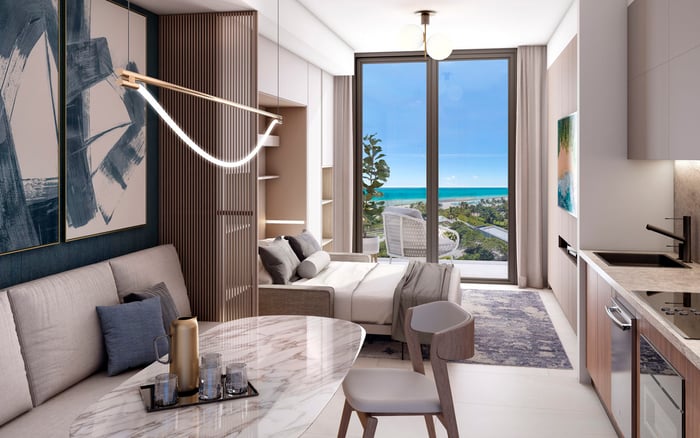
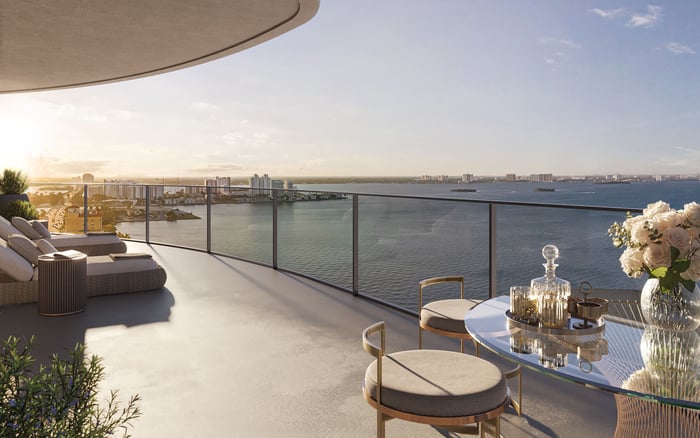
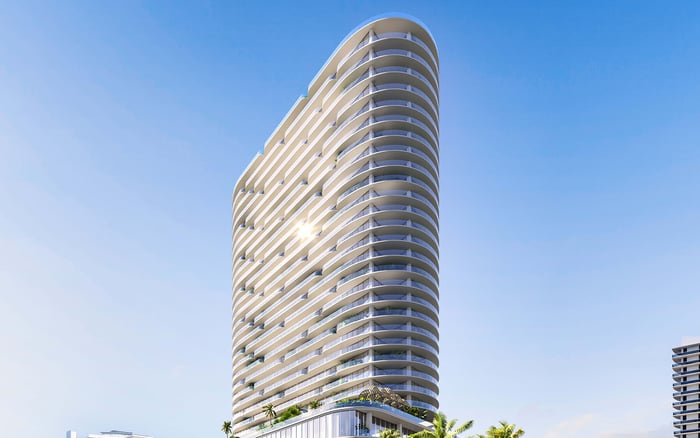
A conceptual MILLION Luxury analysis of how hypercar principles like lightweighting, airflow management, advanced materials, and precision fabrication adapt to the realities of coastal residential design in North Bay Village.
In automotive terms, Pagani signifies obsessive material research, aerodynamic discipline, and craftsmanship that treats every component as both functional and sculptural. In residential design, those same values can create a compelling architectural language, particularly in a place as exposed and visually charged as North Bay Village.
That distinction matters. There is no publicly confirmed official Pagani-branded development partnership in North Bay Village in the context discussed here. The more credible lens is conceptual: what would hypercar engineering mean when translated into a coastal residential building facing salt air, high winds, humidity, and exacting buyer expectations?
For readers, the answer is not literal automotive styling applied to a tower. It is a design approach grounded in advanced materials, environmental performance, fabrication precision, and exclusivity. In a market where differentiation matters, that combination has real resonance, especially in North Bay Village, where waterfront positioning already invites a more performance-driven architectural conversation.
North Bay Village occupies a highly specific setting within Biscayne Bay. That means constant marine exposure, intense light, reflective water, moisture, corrosion pressure, and planning realities that can either sharpen a design concept or expose its weaknesses. In this context, architecture has to do far more than look fast.
A building inspired by hypercar logic would need to reconcile expressive form with code, zoning, setbacks, and review constraints. It would also need to perform under severe hurricane wind conditions. This is where South Florida separates aesthetic ambition from true design intelligence. Lightweighting, in automotive terms, is often about removing mass. In coastal architecture, the goal is more nuanced: reduce unnecessary drag, refine assemblies, and improve efficiency while retaining the structural redundancy and storm hardening the climate demands.
That is why the most sophisticated comparison is not to a machine built for a racetrack, but to a residence engineered for permanence. Projects such as Continuum Club & Residences North Bay Village and Shoma Bay North Bay Village reflect how the submarket already rewards waterfront design narratives that feel distinctive rather than generic.
The phrase lightweight construction can be misleading in South Florida. A coastal tower cannot simply become thinner, lighter, or more delicate in the automotive sense. The climate requires stronger envelopes, robust structural systems, impact resistance, and carefully detailed assemblies that can tolerate salt, moisture, and pressure fluctuations over time.
Where hypercar thinking does translate is in selective optimization. Materials can be chosen not only for beauty, but also for corrosion resistance, precision tolerances, and performance under stress. Advanced composites have become increasingly relevant in architectural discussion because they offer formal flexibility and strong durability characteristics in harsh environments. Yet they remain costly, which means their role in luxury residential design is likely to be strategic rather than universal.
This is consistent with the way top-tier real estate evolves. At the ultra-premium level, the objective is not mass-market efficiency. It is a curated balance of high value, low volume, and tightly controlled execution. That ethos aligns naturally with the buyer profile drawn to branded, design-conscious residences and to projects that present technology as part of the lifestyle proposition.
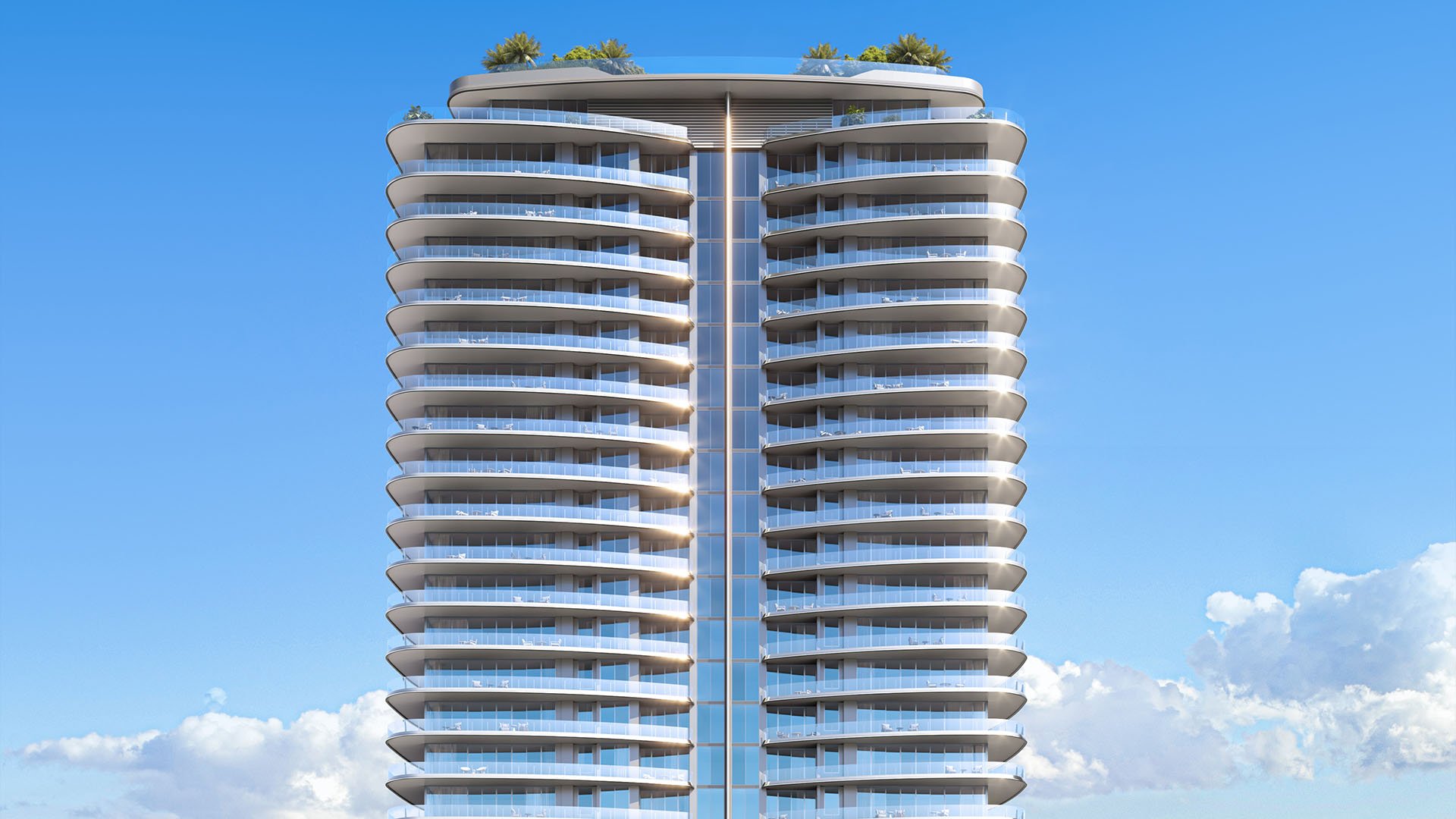
The clearest bridge between hypercar engineering and coastal architecture is aerodynamics. In a vehicle, airflow is shaped to increase stability, reduce drag, and improve cooling. In a waterfront building, wind analysis informs massing, balcony geometry, façade articulation, and pressure management across exposed surfaces.
That means curved edges, recessed terraces, perforated screening, and carefully profiled corners are not merely visual gestures. They can contribute to better wind behavior, improve comfort in outdoor living areas, and support more refined environmental control. In a bayfront setting, this kind of tuning can also help with natural ventilation strategies when conditions allow.
For buyers familiar with South Florida's most design-forward residences, this logic already feels legible. The Ritz-Carlton Residences® North Bay Village and Pagani North Bay Village illustrate how branded identity and performance language can sharpen a building's position in the luxury market. The lesson is not that one brand model copies another. It is that buyers increasingly understand performance language when it is expressed through architecture.
One of Pagani's strongest architectural parallels is not carbon fiber alone. It is manufacturing discipline. Hypercars are defined by extraordinary tolerances, layered craftsmanship, and component-level attention. In coastal residential development, that mindset appears in prefabrication, off-site assembly, and highly controlled fabrication processes that can improve finish quality while reducing variables in the field.
This is especially compelling in hurricane-prone markets, where compressed on-site timelines and better consistency can offer practical advantages. It also aligns with the way luxury consumers evaluate product today. Precision is not abstract. It shows up in the way façade panels align, how glazing systems meet structure, how louvers move, and how interior systems perform quietly without visual clutter.
In other words, craftsmanship is increasingly measured not only by artisanal finish, but by technical coherence. That is a meaningful shift in what ultra-modern luxury looks like in South Florida.
There is also a more intimate crossover between hypercar engineering and residential design: interior environmental control. Just as a high-performance car must carefully manage heat, airflow, and occupant comfort, a luxury waterfront residence in Miami-Dade must address humidity, mold prevention, salt-air wear, and thermal stability.
This is why smart HVAC, dehumidification, and responsive façade strategies matter so much in premium coastal architecture. Moveable screens, louvers, and shading devices operate almost like architectural active aero. They modulate sun, airflow, and environmental loads in real time, helping the building remain more comfortable and more durable.
Seen through that lens, the strongest version of a Pagani-inspired residence would not be one with automotive motifs. It would be one that feels exceptionally calm inside despite the aggression of the external climate. That kind of invisible performance is increasingly a defining luxury feature in waterfront design.
For the luxury buyer, the real value of the Pagani comparison is narrative discipline. It offers a framework for judging whether a residence is simply styled to look advanced or genuinely engineered to perform better over time. In the Miami market, that distinction matters.
The strongest projects will be the ones that unite sculptural identity with resilient detailing, premium materials with maintainability, and exclusivity with technical substance. Buyers are increasingly sophisticated about these distinctions. They recognize when branding is decorative and when it is supported by the logic of the building itself.
As an editorial idea, Pagani North Bay Village is less about a confirmed single project and more about a broader standard emerging across South Florida. The future of coastal luxury may belong to residences that borrow the mindset of elite engineering while remaining fully honest about the demands of the coast.
Is Pagani North Bay Village a confirmed official branded development? No public confirmation establishes an official Pagani-branded architectural partnership in North Bay Village within the context discussed in this article.
Why does the Pagani name fit an architectural discussion? It suggests precision engineering, aerodynamic thinking, advanced materials, and highly curated craftsmanship rather than superficial styling.
Can hypercar lightweighting work in coastal buildings? Only in adapted form. Coastal architecture still requires robust structural systems, impact resistance, and storm-ready detailing.
Why is North Bay Village relevant to this concept? Its Biscayne Bay setting creates constant marine exposure, strong light, humidity, and wind pressure that make performance-led design especially relevant.
What is the closest architectural equivalent to automotive aerodynamics? Wind-informed massing and façade design, including how balconies, corners, and terraces respond to airflow and pressure.
Are advanced composites useful in luxury coastal architecture? They can be, especially where durability, corrosion resistance, and formal flexibility matter, though cost can limit wide use.
How does fabrication quality influence luxury value? Tight tolerances and controlled production can improve alignment, finish consistency, and long-term performance.
What interior systems matter most in a waterfront residence? HVAC, dehumidification, and responsive shading are central to comfort, durability, and day-to-day livability.
What should buyers look for in a performance-led waterfront building? Look for resilient envelopes, refined wind response, durable material choices, and climate control that suits salt-air conditions.
What is the best way to shortlist comparable options for touring? Start with location fit, delivery status, and daily lifestyle priorities, then compare stacks and elevations to validate views and privacy.
When you're ready to tour or underwrite the options, connect with MILLION Luxury.
If branded residences are on your mind — as a home or as an allocation — we would be glad to share what we are seeing, privately.
Begin a quiet conversation