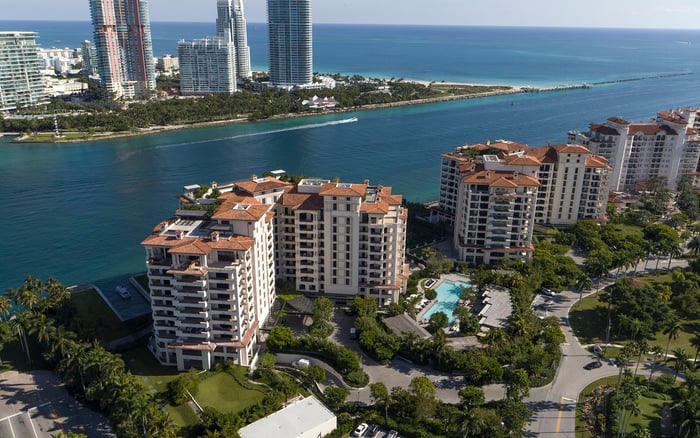
For South Florida luxury condominium buyers, milestone inspections deserve their own focused due-diligence conversation because they address building-wide structural issues, reserve obligations, financing risk, and potential assessments that a standard unit inspection may never capture.

In South Florida’s luxury condominium market, the private elevator foyer, stone kitchen, terrace exposure, and amenity program often command the first walk-through. Yet the most consequential due-diligence conversation may have little to do with the residence itself. It concerns the building: its structural condition, statutory inspection status, reserve obligations, repair trajectory, insurance pressure, and potential special assessments.
Florida’s milestone inspection framework applies to condominium and cooperative buildings that are three stories or higher, placing many waterfront and urban luxury towers squarely within its scope. A milestone inspection is a structural inspection performed by a licensed architect or engineer to determine whether a building shows evidence of substantial structural deterioration. That is a different exercise from a unit-level home inspection, which typically focuses on the interior residence, appliances, finishes, visible leaks, windows, electrical devices, and immediate occupancy concerns.
For a buyer considering Brickell, Miami Beach, Sunny Isles, Surfside, Bal Harbour, or other oceanfront and resale opportunities, this distinction matters. Prestige, height, service, views, and price do not replace a disciplined review of the building’s engineering and financial obligations.
A milestone inspection is not a broad warranty of future performance. It is a statutory structural review focused on building-wide components and the question of substantial structural deterioration. Qualifying buildings are generally required to complete the inspection by December 31 of the year they reach 30 years of age, and every 10 years afterward. Local enforcement agencies may require the process earlier, as soon as 25 years, based on environmental conditions such as proximity to seawater.
That earlier timing is especially relevant in coastal South Florida. Salt air, humidity, wind-driven rain, high water tables, and waterfront exposure can make the building envelope and structural maintenance conversation more complex. The point is not to assume a problem exists. The point is to avoid treating a high-value condominium purchase as though the only relevant inspection is inside the unit.
The process begins with a Phase 1 visual examination. If evidence of substantial structural deterioration is identified, a Phase 2 inspection may be required. Phase 2 can involve more detailed evaluation, including destructive or nondestructive testing at the professional’s direction. For a buyer, the difference between “Phase 1 completed with no further work required” and “Phase 2 pending” can affect timing, negotiation posture, financing expectations, and appetite for future capital calls.
The milestone inspection deserves its own due-diligence conversation because it sits at the intersection of law, engineering, finance, insurance, and transaction strategy. A general inspector may help a buyer understand the condition of one residence. A structural engineer can interpret inspection language. Legal counsel can evaluate disclosure rights and contract remedies. A financial advisor or accountant can model the impact of reserves, assessments, and carrying costs.
Those disciplines should not be compressed into a casual question at the end of a showing. Buyers should know whether the association has received a notice from the local enforcement agency, whether Phase 1 has been completed, whether Phase 2 is required, and whether any repair program is already contemplated. When notice is received, the association generally has 180 days to complete Phase 1. That timeline can matter if a transaction is moving faster than the building’s statutory review.
The central phrase to isolate is “substantial structural deterioration.” Ordinary maintenance language is one thing. Cosmetic repair language is another. A formal finding tied to substantial structural deterioration belongs in a more rigorous risk analysis, particularly when large common elements, construction access, waterproofing, concrete restoration, or temporary disruptions may be involved.
The milestone inspection should never be read in isolation. Florida resale condominium buyers are entitled to receive the inspector-prepared milestone inspection report summary when one is applicable. They are also entitled to receive the association’s most recent structural integrity reserve study, or a statement that the association has not completed one.
For certain condominium and cooperative associations with buildings three stories or higher, Florida law requires a structural integrity reserve study. These studies address major common elements such as roofs, load-bearing walls, primary structural members, floors, foundations, fireproofing, plumbing, electrical systems, waterproofing, exterior painting, windows, and other items with deferred maintenance or replacement costs above the statutory threshold.
For applicable buildings, associations are restricted from waiving or reducing reserves for structural integrity reserve study items. That makes future funding obligations central to the purchase decision. A building can feel impeccable in the lobby while still facing a substantial reserve schedule. Conversely, a building with known capital needs may be a rational purchase if the work is clearly scoped, funded, and understood before closing.
The cleanest review compares the milestone inspection, reserve study, current budget, reserve schedule, board meeting minutes, pending repair contracts, insurance position, lender concerns, and any approved or possible special assessments. In a high-net-worth context, this is not about avoiding every building with work ahead. It is about pricing risk intelligently.
Building-condition diligence is also a financing conversation. Condominium projects with significant deferred maintenance or unsafe conditions can face lender resistance under project eligibility standards. Even a cash buyer should care, because future resale liquidity may depend on whether typical buyers can obtain financing in the building.
Special assessments deserve the same scrutiny. Assessments tied to structural repairs, reserve shortfalls, insurance costs, or delayed maintenance can materially change the effective cost of ownership. A buyer should ask whether assessments are pending, approved, discussed in minutes, expected after a Phase 2 review, or embedded in future budget planning.
Insurance is part of the same ecosystem. A building’s maintenance history, structural work, waterproofing needs, and reserves can influence how risk is perceived. The buyer’s team should not treat insurance, reserves, and inspections as separate silos. They are often different expressions of the same underlying building story.
In Miami-Dade County, buyers may also need to consider local building recertification records in addition to state milestone inspection requirements. The overlap can be confusing. A building may have local recertification history, a state milestone inspection obligation, a structural integrity reserve study, and separate board-level repair planning. The presence of one document does not automatically answer every question raised by another.
The 2021 partial collapse of Champlain Towers South in Surfside, which killed 98 people, changed the way Florida condominium safety is discussed. For sophisticated buyers, the lesson is not fear. It is governance. The most desirable buildings will be those where boards, managers, engineers, and owners confront capital needs with clarity rather than delay.
Before the end of the inspection period, a buyer should request the applicable milestone inspection summary, structural integrity reserve study, current budget, reserve schedule, recent meeting minutes, notice of pending or approved assessments, and any documentation related to major structural or envelope work. The buyer should then hold a dedicated call with counsel, the real estate advisor, and, when appropriate, an engineer and financial advisor.
The questions should be direct: Has Phase 1 been completed? Was Phase 2 required? Was substantial structural deterioration identified? Are repairs recommended, contracted, funded, or merely discussed? Are reserves aligned with the study? Has the association waived anything it is no longer permitted to waive? Are lenders or insurers raising concerns? What would the monthly carrying cost look like if assessments are adopted?
This is the difference between buying a beautiful unit and buying intelligently into an entire building.
Is a milestone inspection the same as a condo unit inspection? No. A milestone inspection focuses on building-wide structural issues, while a unit inspection focuses on the individual residence.
Which South Florida buildings are generally subject to milestone inspections? The law applies to condominium and cooperative buildings that are three stories or higher, subject to timing rules and local enforcement.
When is a milestone inspection generally required? Qualifying buildings generally complete one by the end of the year they turn 30, then every 10 years afterward.
Can a building be required to inspect earlier than 30 years? Yes. Local agencies may require inspection as early as 25 years based on environmental conditions such as proximity to seawater.
What is Phase 1? Phase 1 is a visual structural examination by a licensed architect or engineer to look for substantial structural deterioration.
What happens if Phase 2 is required? Phase 2 is a deeper evaluation and may include destructive or nondestructive testing at the professional’s direction.
Why should buyers review the reserve study too? The reserve study helps show whether major common elements have future repair or replacement funding needs.
Can special assessments affect the real cost of ownership? Yes. Pending, approved, or likely assessments can materially change carrying costs and should be modeled before closing.
Does a milestone inspection guarantee a building is safe forever? No. It is a statutory structural review, not a warranty of future building performance.
Who should join the separate due-diligence conversation? Buyers should consider involving legal counsel, an engineer, the real estate advisor, and a financial advisor when the issues are material.
For a confidential assessment and a building-by-building shortlist, connect with MILLION.
If branded residences are on your mind — as a home or as an allocation — we would be glad to share what we are seeing, privately.
Begin a quiet conversation