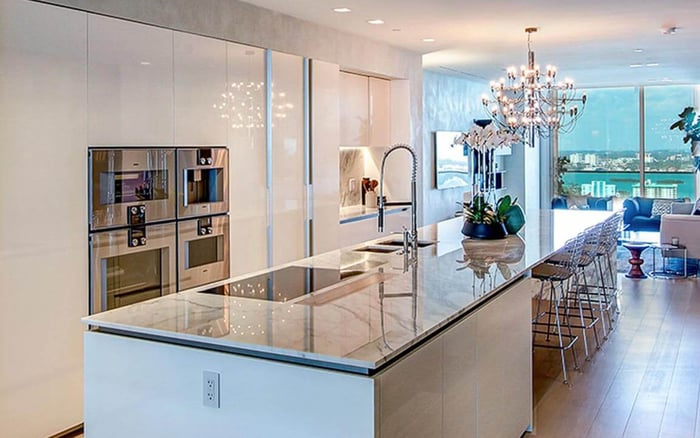
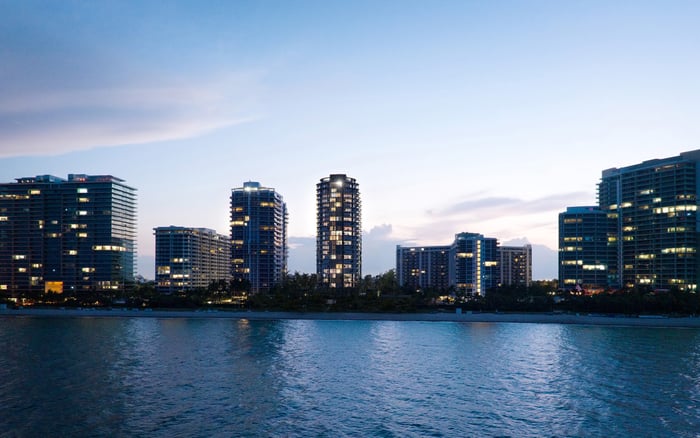
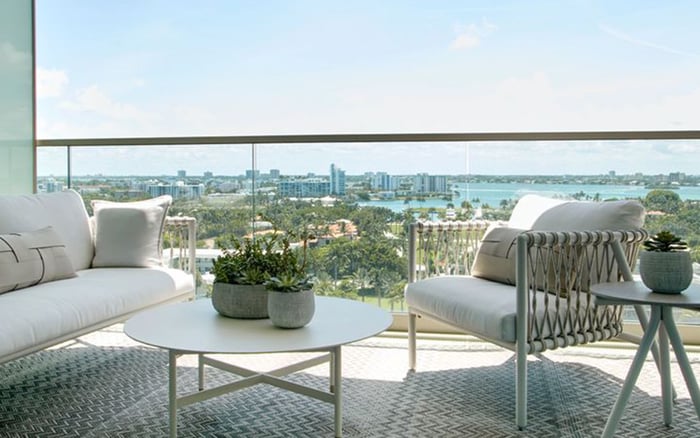
A practical buyer’s guide to evaluating rooftop rights at Rivage Bal Harbour, with emphasis on privacy, service logistics, governance, and future resale clarity.

In the most rarefied condominium purchases, the questions that shape long-term satisfaction are often not the most visible. Views, finishes, ceiling heights, and arrival sequences may define first impressions, but the roof can quietly determine how private, serviceable, and resilient a residence feels over time. For buyers evaluating Rivage Bal Harbour, roof-rights clarity belongs in the same conversation as floor plan, exposure, amenities, and building governance.
The issue is not simply whether a roof exists above a residence. It is who may use it, who may access it, who maintains it, what equipment is located there, what restrictions apply, and how clearly those rights are documented. In an oceanfront market where privacy is part of the purchase rationale, ambiguity can become costly. Clear rooftop documentation gives a buyer confidence that daily enjoyment, service operations, and eventual resale can be discussed with precision rather than assumption.
Bal Harbour buyers often think in terms of permanence: long hold periods, family use, seasonal occupancy, and legacy planning. That makes roof rights especially consequential. A beautiful upper-floor residence can lose practical appeal if service access is unclear, rooftop noise is poorly governed, or exclusive-use areas are not described in a way that a future buyer can understand quickly.
The first distinction is whether any roof area is part of the unit, a limited common element, an exclusive-use area, or a general common element. Each category carries different implications. A space that appears private in marketing materials may not be legally owned in the way a buyer assumes. A terrace may be appurtenant to a unit, while the structural roof beneath it remains maintained by the association. Mechanical zones, elevator overruns, life-safety areas, and access paths may also create rights that coexist with a resident’s expectations of privacy.
For Rivage Bal Harbour, careful review should focus on the condominium declaration, survey exhibits, floor plans, roof plans, rules and regulations, and any recorded amendments. The objective is to connect the lifestyle promise to enforceable language. If a rooftop area is intended for a penthouse or upper residence, the documents should make its boundaries, permitted uses, maintenance duties, and access limitations understandable without relying on informal explanations.
The most useful language is specific. It identifies the area, describes who may use it, sets out maintenance responsibility, and addresses association access for repair, inspection, emergencies, or code compliance. Vague language may not be fatal, but it invites negotiation, legal review, and disclosure questions later.
Privacy at the roof level is partly architectural, but it is also documentary. Screens, setbacks, landscaping, parapets, and elevation can contribute to seclusion, yet the governing documents determine who can enter adjacent areas and under what circumstances. A buyer should ask whether rooftop access is limited to certain residents, association personnel, vendors, emergency responders, or building staff.
The timing and manner of access matter. A rooftop area that requires periodic inspections can still feel highly private if access is scheduled, noticed, supervised, and limited. Conversely, even a visually concealed terrace can feel compromised if service personnel may cross nearby areas without clear rules. For new-construction buyers, this is the moment to review how the building anticipates maintenance from the beginning rather than after an issue arises.
Privacy review should also include sightlines from shared amenity decks, neighboring towers, roof equipment platforms, and service routes. The question is not whether complete invisibility exists. In a coastal condominium, some degree of building-to-building awareness is normal. The stronger question is whether the buyer understands the practical privacy profile before signing, and whether the documents support that understanding.
Sophisticated buyers sometimes view service access as an intrusion, but the right kind of access protects the asset. Roofs need inspections, waterproofing attention, mechanical service, drainage review, and emergency reach. If access is blocked, contested, or poorly planned, maintenance can become slower and more disruptive. If access is overbroad, the resident may feel that private enjoyment has been diluted.
The best outcome is balanced language. It gives the association and vendors the ability to maintain the building while limiting access to legitimate purposes. It should address notice, emergency exceptions, hours of entry, protection of finishes, restoration after work, and responsibility for damage. Buyers should ask how staff and vendors physically reach the roof, whether they pass through private residential space, and whether designated service routes exist.
For a high-value residence, the operational details are not minor. They influence noise, scheduling, security, insurance documentation, and wear on private finishes. They also affect how confidently an owner can host family or guests, knowing that building access is governed by procedure rather than improvisation.
Rooftop value is often tied to outdoor living, but outdoor living requires disciplined maintenance. Waterproofing membranes, drains, pavers, planters, railings, lighting, and wind exposure all raise questions. Who maintains each component? Who pays if a leak develops below? Are decorative improvements permitted? Are planters, kitchens, pergolas, audio systems, or shade structures restricted? Must alterations be approved by the association, an architect, an engineer, or municipal authorities?
A buyer should separate aesthetics from responsibility. A terrace may be styled for private use, while certain underlying building systems remain under association control. That division can work well if the documents are precise. It becomes problematic when owners assume control over elements they are not allowed to modify, or when the association expects the owner to maintain items that were not clearly assigned.
Insurance should also be reviewed. The owner’s coverage, association coverage, and contractor coverage need to align with the way the rooftop area is used and maintained. For an upper residence, the most elegant outcome is not merely a beautiful exterior space, but a clear chain of responsibility if weather, repair work, or accidental damage creates a claim.
At the luxury level, resale is shaped by confidence. A future buyer may love the view, the plan, and the address, but uncertainty can slow decision-making. If roof rights are cleanly documented, the listing conversation becomes more compelling. The seller can explain what is private, what is shared, what is maintained by the association, what the owner controls, and how access is handled.
This is particularly important for residences that carry a premium because of outdoor area, elevation, or roof adjacency. If the premium rests on a perception of exclusivity, the documentation should support that perception. Otherwise, the buyer pool may discount the residence, request additional legal review, or seek concessions.
For Rivage Bal Harbour, the strongest resale position will belong to owners who preserve records from the beginning. Keep approved plans, association correspondence, alteration approvals, maintenance receipts, insurance documents, and any clarifications that explain rooftop use. In a market where buyers expect discretion and precision, a clean file can be as valuable as a polished presentation.
Before contract deadlines harden, buyers should ask for the documents that define roof rights and review them with counsel. The review should cover legal classification, boundaries, access rights, service routes, maintenance allocation, alteration approvals, insurance, emergency access, noise rules, and any restrictions on private events or installed elements.
The most important test is whether the rights can be explained in one clear paragraph. If the answer requires caveats, assumptions, or undocumented oral assurances, the buyer should slow down. A luxury purchase should not depend on ambiguity. It should rest on a durable understanding of how the residence functions when no one is selling it.
The ideal conclusion is not necessarily maximum control. In a condominium, appropriate shared governance is part of ownership. The ideal conclusion is clarity: enough private enjoyment to support the lifestyle, enough service access to protect the structure, and enough documentation to support future liquidity.
What are roof rights in a luxury condominium? Roof rights define who may use, access, maintain, alter, or control rooftop areas and related building systems.
Why do roof rights matter at Rivage Bal Harbour? They can affect privacy, service access, maintenance responsibility, insurance review, and future resale confidence.
Is a rooftop terrace always owned by the unit owner? Not necessarily. It may be part of the unit, a limited common element, an exclusive-use area, or a common element.
What documents should a buyer review first? Start with the declaration, recorded exhibits, roof plans, rules, amendments, and any association approval procedures.
Can the association access a private rooftop area? Many buildings preserve access for inspections, repairs, emergencies, or code compliance, subject to governing documents.
How does service access affect privacy? Clear service routes, notice procedures, and access limitations help preserve privacy while allowing necessary maintenance.
Who typically maintains rooftop waterproofing? Responsibility depends on the condominium documents and should be confirmed before relying on any assumption.
Can an owner add outdoor features to a rooftop area? Additions may require association approval, professional review, permits, and compliance with building rules.
Why is roof clarity important for resale? Future buyers value certainty, especially when a premium is tied to outdoor space, elevation, or exclusivity.
Should a buyer rely on marketing language for roof rights? Marketing can frame the lifestyle, but enforceable rights should be confirmed in the governing documents.
If you'd like a private walkthrough and a curated shortlist, connect with MILLION.
If branded residences are on your mind — as a home or as an allocation — we would be glad to share what we are seeing, privately.
Begin a quiet conversation