Rising sea levels are reshaping how South Florida’s most discerning buyers evaluate coastal living, and how developers design, underwrite, and future-proof new inventory. For luxury purchasers, the conversation is less about alarm and more about resilience: elevation strategy, water management, mechanical placement, material choices, and operational readiness when weather turns. This editorial outlines the practical ways risk now appears in contracts, inspections, and building operations, plus the design playbook developers are using to protect lifestyle value from Miami-beach to Sunny-isles and Bal-harbour.
South Florida has always sold a promise: light on the water, a private arrival, and a horizon that feels personally owned. What has changed is not the appeal of the coastline, but the sophistication of the questions surrounding it. Rising sea levels are shifting the luxury buyer’s mindset from simple proximity to the sand toward a more layered definition of Oceanfront value, one that includes durability, operational continuity, and a building’s ability to age with composure.
For developers and architects, the mandate is straightforward and demanding. The product still needs to feel effortless, with a lobby that reads as gallery-calm, a terrace that feels protected when the wind picks up, and amenities that perform across seasons. At the same time, water must be treated as a design parameter from the first sketch, not a late-stage worry. In the most competitive enclaves, resilience is becoming a discreet form of luxury, expressed in how a site drains after a storm, how quickly common areas return to normal, and how little the resident experience shifts when conditions are less than ideal.
This is why New-construction along the coast is increasingly judged on decisions that rarely photograph well but matter for decades: where critical building systems live, how ground-floor spaces are organized, which materials can tolerate salt air and intermittent wetness, and how building leadership plans for disruption. For today’s buyer, the best Oceanfront address is no longer only the most beautiful. It is the one that stays beautiful, season after season, with minimal drama.
In a market where buyers often move quickly, sea level risk introduces a counterweight: deliberate diligence. The questions are not limited to views, finishes, and floor plans. They extend to elevation, water pathways, and the practical realities of coastal weather.
Luxury purchasers and their advisors often return to a small set of themes.
First is insurability and long-term carrying costs. Without quoting premiums or policy terms, it is still prudent to assume that flood-related insurance conditions can vary by building and evolve over time. That is not a prediction. It is part of the lived reality of coastal ownership. A sophisticated buyer treats it like any other variable expense and asks for clarity early, ideally before falling in love with a unit.
Second is building operations. The best-run towers and boutique properties differentiate themselves not only by service, but by preparedness. Backup power planning, pump systems, spare parts, and clear communication protocols can be the difference between a brief inconvenience and a drawn-out disruption. Buyers are increasingly attentive to the day-to-day competence behind the scenes because that competence protects comfort.
Third is resale and liquidity. Even in trophy markets, the buyer pool can become more selective when the narrative shifts toward risk. The appropriate response is rarely to avoid the coast entirely. It is to favor assets with a coherent resilience story, credible management, and design decisions that reduce exposure and simplify recovery.
Finally, there is the psychological layer. Coastal living is emotional, and for many families it is also a legacy asset. That combination makes buyers sensitive to uncertainty. Developments that can explain their approach to water with calm specificity, rather than marketing bravado, tend to earn trust and sustain demand.
Developers adapting to sea level realities are not rewriting the idea of coastal luxury. They are reinforcing the chassis beneath it.
One common shift is a more elevated approach to ground-level programming. Instead of treating the lowest level as the social heart, some designs prioritize a more resilient base, with carefully planned transitions from arrival to residential floors. The objective is to preserve ceremony and privacy while reducing vulnerability at the elevations most likely to see intrusion.
Another shift is mechanical strategy. Buyers may never tour a mechanical room, but they will feel its consequences. Locating critical systems in more protected areas and building redundancy into pumping and drainage supports faster recovery and reduces the chance that a single failure cascades into a building-wide issue. The most refined projects treat these choices as fundamental to lifestyle, not as back-of-house technicalities.
Site water management is also receiving more rigorous attention. In a coastal environment, water is not only an ocean condition. It is rainfall, groundwater, and runoff, often interacting in complex ways. Developers increasingly design for water to move where they want it to go, rather than hoping it stays away. That mindset shows up in grading, drainage planning, and the discipline to treat the site as a working system.
Material choice is another quiet but meaningful adaptation. Salt air and humidity already demand durability. When intermittent wetness becomes part of the planning assumption, choices around ground-floor finishes, exterior metals, glazing systems, and sealants become strategic. The best projects select materials that retain their visual integrity after repeated exposure, so the building continues to look composed even when conditions are not.
The most persuasive resilience design is often the kind you do not notice, because it keeps the experience consistent.
Parking and back-of-house circulation are frequently rethought to reduce sensitivity at the lowest elevations. A well-designed arrival sequence can still feel private and elegant while quietly directing vehicles, deliveries, and services through layouts that are easier to protect and restore. Done well, the resident experiences a sense of calm and control, even when the building is operating under stress.
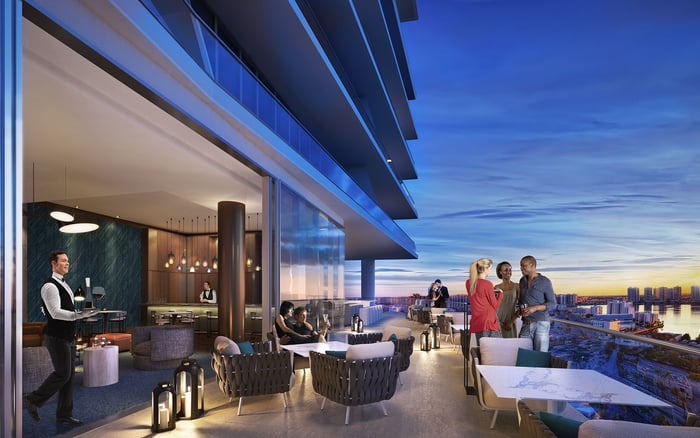
Amenity placement is another lever. Pools, spas, lounges, and fitness spaces can be planned to maximize views and privacy while also accounting for wind, rain, and the possibility of water intrusion. These considerations influence where an amenity sits, how it is enclosed, how surfaces are detailed, and how drainage is handled. The goal is not to turn amenities into bunkers. It is to keep them usable and presentable more often, with fewer closures and less wear.
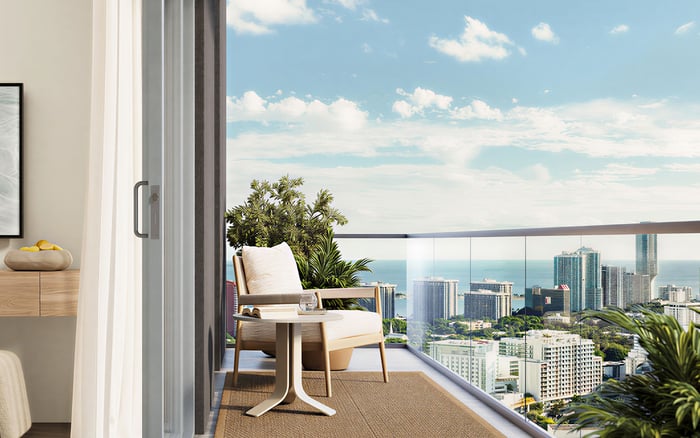
Residential planning matters as well. Buyers paying for Oceanfront living are purchasing the right to open doors and experience the air. Details like balcony thresholds, terrace drainage, and glazing performance are not minor specifications. They shape daily comfort, long-term maintenance, and the overall sense of ease. A terrace that drains well and a door system that performs consistently protect the lifestyle that sold the home in the first place.
Landscaping has also become more than decoration. In the strongest coastal projects, it functions as an infrastructure layer. It shapes runoff, buffers splash and spray, and preserves a resort-like atmosphere even when conditions are harsh. Planting, hardscape, and grading are used to keep the setting beautiful while supporting the site’s performance.
These moves share one ambition: make luxury feel timeless. Resilience is not a separate feature set. It is the invisible support that allows the visible design to remain serene.
Luxury development is always an exercise in confidence, but capital is becoming more precise about coastal risk. That does not mean money is leaving the shoreline. It means underwriting is paying closer attention to details that once lived in the background.
Lenders and equity partners increasingly want a clear view of risk management, construction approach, and operational planning. They may expect stronger documentation around how a site handles water, how the building is detailed, and how the team plans for long-term maintenance. The financial consequence is not always a headline. It can appear as additional diligence, revised contingencies, or a preference for teams with demonstrated experience in complex coastal environments.
For buyers, this can be a positive signal. When a project is required to prove its durability to sophisticated capital, it is more likely to arrive in the market with a robust approach to resilience. The diligence that capital demands often forces clarity, and clarity is valuable for owners.
It also reframes what “quality” means in New-construction. Beyond interior finishes and amenities, quality increasingly includes the competence of engineering, waterproofing, and building management planning. In other words, quality is now as much about what you never see as what you do.
Discretion is part of luxury, but so is discipline. For coastal acquisitions, a structured diligence process helps buyers keep romance and rigor in balance.
Start with the building narrative. Ask how the project team describes the site’s relationship to water and weather. Listen for plain language, not defensiveness. The strongest teams explain tradeoffs directly and can point to documentation that supports their approach.
Next, clarify what is truly protected and what is simply recoverable. There is a difference between a design that aims to prevent water intrusion entirely and a design that acknowledges the possibility of intrusion but prioritizes fast restoration and minimal damage. Either philosophy can be appropriate, but the buyer should understand which one they are buying and how it aligns with their expectations.
Review operational readiness with the same seriousness you would apply to finishes. Ask about emergency plans, communication protocols, generator strategy, and how management handles disruptions. Confirm what is owner responsibility versus association responsibility, since expectations differ by building and can materially affect the ownership experience.
Then evaluate the unit itself. Terrace design, door thresholds, and orientation can influence comfort and maintenance. Even within the same property, different exposures can experience different conditions. A disciplined review considers not only the tower, but the specific home.
Finally, treat insurance and association documents as part of the product. Terms, exclusions, and responsibilities can change, and they can shape costs and peace of mind. A luxury purchase benefits from professional review, especially when the asset is Oceanfront.
South Florida is not a monolith, and coastal risk does not present the same way everywhere. Micro-topography, infrastructure, and local planning approaches can create meaningful differences from one neighborhood to the next.
In Miami-beach, the appeal is cultural magnetism and an international lifestyle that compresses dining, design, and shoreline into a small footprint. The buyer conversation often includes how surrounding streets, access routes, and nearby infrastructure perform during heavy rain or high-water events. For some purchasers, convenience is part of resilience, meaning they want multiple ways in and out and services that remain dependable when the area is under strain.
In Sunny-isles, the experience can be more vertical and resort-forward, with a strong emphasis on panoramic water views. Here, wind exposure and tower operations can be as important as ground conditions. Buyers tend to focus on how the building is sealed, how balconies and glazing perform, and how the property manages exterior wear in a salt-heavy environment. The goal is consistent enjoyment of the views, with fewer operational interruptions.
In Bal-harbour, exclusivity and a quieter rhythm shape expectations. Buyers often prize privacy, controlled access, and a more curated streetscape. The resilience conversation can become highly specific, centered on how a property protects its sense of calm during disruptive weather and how quickly it returns to normal. In this context, resilience is part of the service story and part of the overall feeling of being insulated from the outside.
Across all three, the common thread is clear: luxury buyers are no longer purchasing only a residence. They are purchasing continuity of experience.
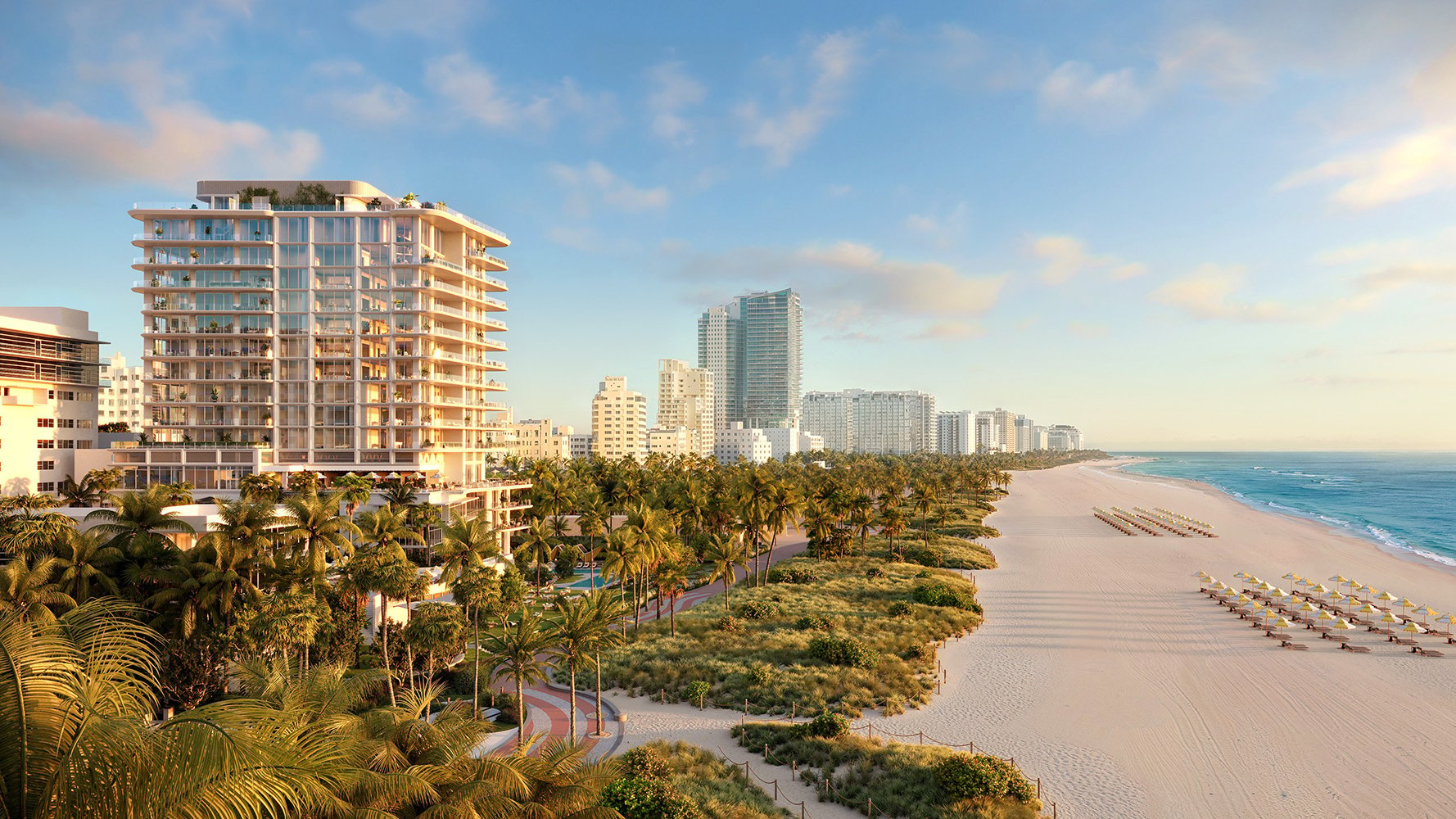
For a sense of how the market is packaging coastal living today, explore The Perigon Miami Beach as a neutral reference point. Regardless of which building ultimately wins your attention, the most useful takeaway is how contemporary projects present their thinking around site planning, building systems, and the everyday realities of Oceanfront ownership.
When evaluating any New-construction, look for a project that can articulate resilience without turning it into a slogan. Ask how the team is balancing architecture, engineering, and operations. In the luxury tier, the best answer is rarely a single feature. It is a chain of decisions that work together.
That chain often includes the unglamorous details that protect the glamorous ones: drainage strategy, waterproofing approach, and a management plan that acknowledges what it takes to keep a property pristine in a coastal climate.
Coastal real estate in South Florida has long carried a scarcity premium. As sea level concerns rise, that scarcity premium will increasingly be awarded to assets that can defend usability, insurability, and operational continuity.
From an Investment perspective, resilience can influence value in several quiet ways.
It can shape buyer confidence. The more uncertainty a purchaser feels, the more they may discount an asset, even if the lifestyle remains compelling.
It can influence ownership friction. Buildings that experience recurring disruptions, ongoing repairs, or chronic maintenance issues can create fatigue for owners, and fatigue can create supply.
It can affect the liquidity curve. In a fast market, average properties can trade easily. In a more selective market, differentiation matters more. A strong resilience story can function like a brand attribute, helping a building maintain demand even when sentiment shifts.
It can also reframe what “trophy” means. In an era of rising sea levels, trophy may increasingly describe a property that is both beautiful and operationally confident.
For buyers who love the coast, the strategy is not retreat. It is precision. Choose the right building, understand the obligations, and price the realities into the decision. Done well, Oceanfront ownership can remain one of the most emotionally rewarding and financially resilient ways to hold South Florida real estate.
How can I evaluate a building’s resilience without relying on marketing? Ask for specifics that can be verified: where critical systems are located, how drainage and pumping are approached, and how the building is designed to recover if intrusion occurs. Then corroborate the story by reviewing association documents and, when possible, speaking with building management about operations and preparedness.
What documents should my team review before I buy Oceanfront? Prioritize association documents, insurance-related materials, and any building disclosures that clarify responsibilities and operational practices. Your advisors should treat these as essential to the product, not as closing formalities.
How should I think about insurance and association responsibilities? Assume terms and conditions can vary by building and change over time. Clarify what the association covers versus what an owner must carry, and understand how responsibilities are handled when the building faces disruption. This framing keeps expectations realistic and helps you model ongoing ownership costs.
What questions should I ask about building operations after major storms? Ask how the property communicates with residents, what the generator strategy is, how pump systems are maintained, and how common areas are restored. The objective is to understand whether the building’s plan supports continuity of experience or simply reacts after the fact.
For tailored guidance on South Florida coastal acquisitions, connect with MILLION Luxury.
If branded residences are on your mind — as a home or as an allocation — we would be glad to share what we are seeing, privately.
Begin a quiet conversation