A discreet look at the corporate relocations and expansion plays influencing where luxury buyers are choosing to live across Miami, Broward, and Palm Beach, and how to position a residence around work-life proximity and long-term value.
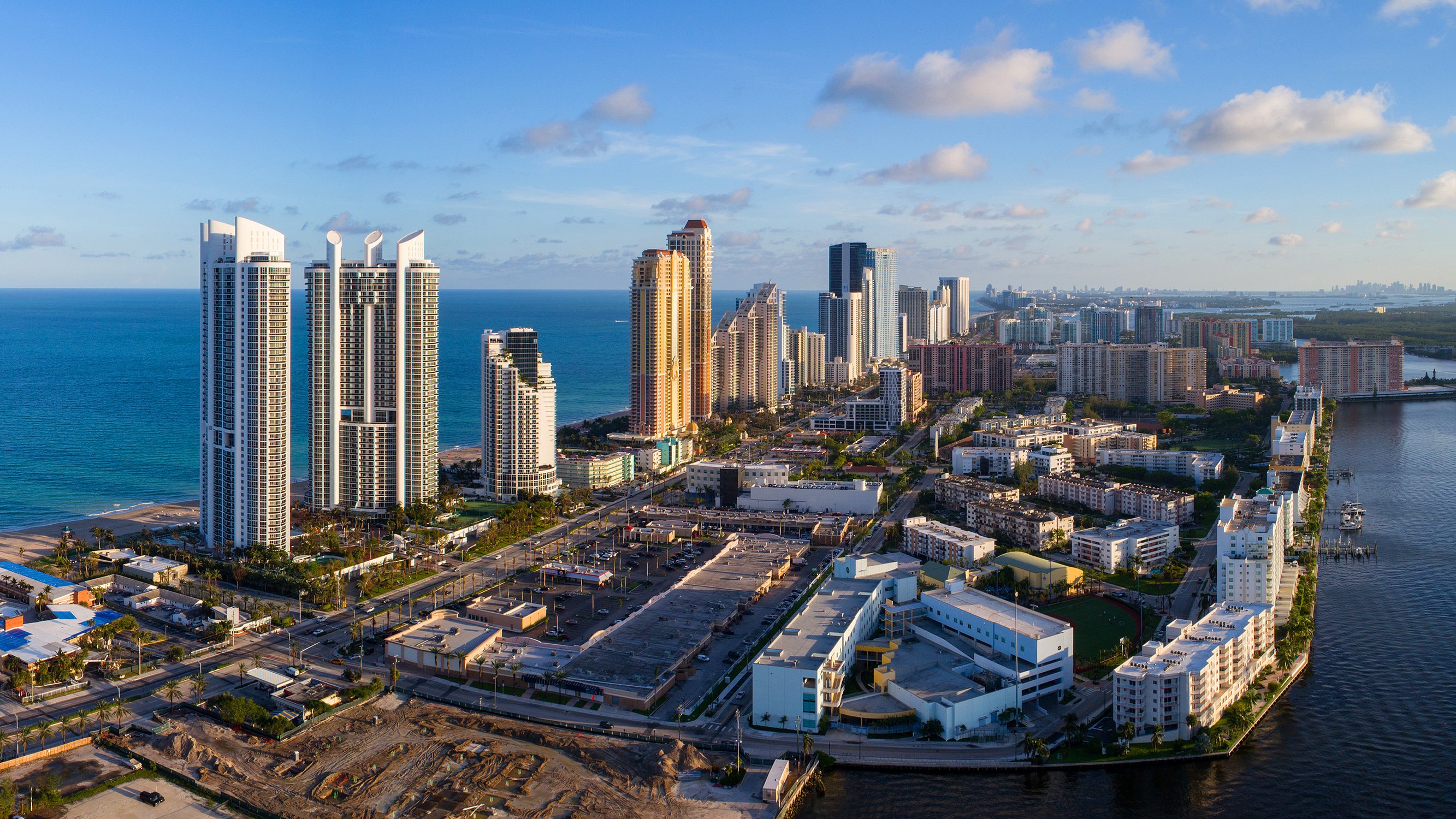
South Florida’s luxury housing market has always tracked capital. What feels different now is the breadth of the corporate map: finance, tech, aviation, consumer brands, and healthcare are all making meaningful bets across Miami-Dade, Broward, and Palm Beach counties.
That matters because value at the ultra-premium level is rarely driven by a single variable. It’s shaped by a buyer’s full operating system: proximity to the office (even if it’s only used three days a week), flight connectivity, privacy, walkability, and the social infrastructure that makes daily life effortless. When leadership and senior talent cluster, preferences concentrate as well-around specific neighborhoods, buildings, and lifestyle formats.
In 2025, Southeast Florida commercial real estate sales volume reached about $16.0B, up 26% year over year, the highest level since 2017. Miami-Dade led with about $7.1B, followed by Broward at $5.5B and Palm Beach at $2.8B. Office and industrial sales each reached post-pandemic highs, with office at about $3.2B and industrial at about $4.0B. In plain terms, the region isn’t behaving like a typical U.S. office market right now.
These 10 moves and commitments are the ones most likely to influence where executive buyers and high-earning teams choose to live-and which submarkets retain pricing power.
1. Citadel and Citadel Securities - Miami office presence and Brickell HQ plans A marquee finance platform now lists Miami among its office locations, and its associated market-making arm does as well. Separately, plans for a new Brickell headquarters tower have been publicly discussed with costs reported around $2.5B.
For luxury real estate, this is less about a single lease and more about signal. Large, permanent-feeling projects tend to encourage long-horizon household decisions: primary-residence upgrades, multi-year private school plans, and a greater willingness to pay for proximity and prestige.
2. Elliott Management - Contract to buy 701 Brickell A major hedge fund went into contract to buy the 32-story 701 Brickell for about $450M-an emphatic vote of confidence in Miami’s office core.
For buyers, institutional conviction often arrives before neighborhood lift: stronger services, more dining gravity, and a deeper weekday population that supports retail and wellness.
3. Amazon - Expanding to 75,000+ SF at Wynwood Plaza Amazon expanded its Wynwood Plaza footprint to more than 75,000 square feet. Wynwood is increasingly operating as a serious office node, not just a cultural district.
That evolution tends to amplify demand for nearby residences that are design-forward, lock-and-leave, and walkable to daily needs. It also encourages adjacent neighborhoods to price as “close to work,” not simply “close to nightlife.”
4. Varonis - Relocating headquarters to Miami (801 Brickell) A cybersecurity company relocated its headquarters to Miami and took 17,900 square feet on the 11th floor at 801 Brickell, moving about 100 employees.
Mid-sized HQ moves like this are quietly powerful. They create consistent buyer and renter demand from households that prioritize newer buildings, strong amenity decks, and predictable commutes.
5. Subway - Global dual headquarters in Miami Subway opened a “Global Dual Headquarters” in Miami, formalizing a major corporate presence.
Consumer brands bring a different kind of halo: executives who travel constantly, value airport access, and often want a second-home feel even when living full-time.
6. Galderma - New U.S. headquarters in Miami Galderma established a new U.S. headquarters in Miami, adding another high-profile tenant to the Brickell-area ecosystem.
Healthcare and beauty leadership tends to value privacy and service. In residential terms, that can translate to boutique inventory, discreet arrivals, and resort-caliber wellness.
7. TracFone (Verizon brand) - Miami’s largest office lease of 2025 TracFone signed Miami’s largest office lease of 2025 for 51,000 square feet in the Waterford Business District near Miami International Airport, while downsizing its HQ footprint.
Airport-adjacent employment centers can redirect demand toward neighborhoods that trade waterfront theatrics for commute certainty-especially for households with frequent business travel.
8. VSE Corporation - Relocating corporate headquarters to Miramar VSE relocated its corporate headquarters to Miramar at 3361 Enterprise Way, co-locating with its Aviation segment HQ and MRO “center of excellence.”
Broward’s executive buyer profile often differs from Miami’s: larger homes, more garage space, and quick highway access. Miramar’s corporate depth can reinforce that preference set.
9. DigitalBridge - Relocating to downtown Delray Beach (Sundy Village) DigitalBridge relocated to downtown Delray Beach in a deal reported at 79,141 square feet, underscoring how mixed-use downtowns can function as HQ magnets.
For luxury residential, it strengthens a clear thesis: “walkable, polished, and smaller-scale” remains a durable preference for certain leadership teams, particularly those with families.
10. D-Wave Quantum - Moving headquarters to Boca Raton D-Wave Quantum announced it is moving its headquarters to Boca Raton, adding an advanced-tech relocation to Palm Beach County.
Alongside this, Florida Atlantic University committed $20M to partner with D-Wave and bring a quantum computer to its Boca Raton campus, reinforcing a longer-term talent pipeline that can support high-income housing demand.
Leasing is one part of the story; pricing power is another. In Miami-Dade, Class A asking office rents were reported around $70.64 per square foot in Q3 2025, up 11.5% year over year. Class B was reported around $53.88 per square foot, up 16.5%.
Rising rents during a period when many U.S. office markets are still correcting suggests a meaningful share of companies are committing to place-not just space. For luxury buyers, that reduces one of the core risks of buying near a business district: the fear that the “center” will move again.
A practical but meaningful shift is now in effect: Florida repealed the state sales tax on commercial leases, effective October 1, 2025. For office, retail, and industrial users, that change removes a recurring cost that can influence location decisions at scale.
For high-end residential markets, lower operating friction can help keep corporate footprints steadier. That stability supports the surrounding ecosystem-private dining, health optimization, luxury retail, and the service economy that makes certain neighborhoods feel complete.
The relocation story is regional, but it shows up in highly specific residential choices.
In Brickell, the pattern is clear: finance and global HQ functions want immediacy, walkability, and a short path from elevator to meeting. Residences that feel tailored rather than generic tend to win. Buyers who want a modern waterfront address with a distinctly Brickell cadence often consider Una Residences Brickell, while those drawn to branded, fashion-forward vertical living may gravitate toward 888 Brickell by Dolce & Gabbana.
In Wynwood, office growth is pushing demand toward design-led living with a “creative capital” sensibility. The buyer profile skews younger, but the budgets can be serious-particularly among founders and senior tech hires who want to live where culture is made.
In Miami Beach, high-profile relocations add a different dimension: visibility, lifestyle, and privacy all matter at once. For a quieter, oceanfront posture that still reads undeniably Miami, 57 Ocean Miami Beach is the kind of building that fits buyers who want refinement without spectacle.
In West Palm Beach and the broader Palm Beach corridor, corporate expansion is supporting a “capital meets calm” lifestyle: shorter commutes, strong dining, and a more measured daily rhythm. Buyers seeking new luxury inventory with a downtown sensibility often explore Alba West Palm Beach.
South Florida recorded 361 sales of $10M-plus homes in 2025, the second-highest on record in that dataset, with wealth migration frequently cited as a key driver. This isn’t purely a Miami story, nor purely a beachfront story. It’s about households building a long-term base where business, travel, and lifestyle can be managed with minimal friction.
As corporate commitments deepen, the top end tends to bifurcate:
Neither is “better.” The advantage belongs to the buyer who aligns their residence with how they actually operate.
A few buyer-oriented filters can turn headlines into smart acquisitions:
First, prioritize neighborhoods with multiple demand engines. When a corridor has finance, tech, and lifestyle gravity at once, it can stay resilient even if one sector cools.
Second, treat commute optionality as a luxury feature. In 2026, the best residences support two modes equally well: a fast weekday commute and a weekend life that never requires leaving the neighborhood.
Third, remember that industrial strength matters. Southeast Florida’s industrial sales volume reaching about $4.0B in 2025 isn’t just a warehouse statistic. It reflects logistics and infrastructure confidence, which can support job durability and, by extension, housing demand.
Finally, track institutional real estate conviction. Large office trades and headline acquisitions often precede a new cycle of retail upgrades and public-realm investment, which can lift residential desirability.
Which South Florida areas benefit most from corporate relocations? Brickell, Wynwood, and the Palm Beach corridor are seeing some of the most visible momentum.
Are companies actually committing to office space in Miami right now? Yes-through notable leases and major office transactions that signal continued demand.
How do corporate HQ moves affect luxury condo pricing? They can increase demand for amenitized, lock-and-leave residences near employment nodes.
Does the repeal of the state sales tax on commercial leases matter to homeowners? Indirectly, yes, because it can reduce tenant costs and support longer-term office occupancy.
Is Wynwood becoming a true live-work neighborhood? Office growth and larger footprints are helping it evolve beyond a purely cultural district.
What is the significance of rising Miami office rents? Rising asking rents can indicate sustained tenant demand and confidence in the market’s core.
Are relocations limited to Miami-Dade? No. Broward and Palm Beach counties are also attracting headquarters and expansions.
How should frequent travelers choose a home base? Consider proximity to Miami International Airport or straightforward highway access to reduce friction.
Do mid-sized HQ moves matter as much as headline finance relocations? Often yes, because they create steady, repeat demand among well-compensated professionals.
What should buyers watch next in 2026? Track new leases, major office purchases, and the clustering of talent around specific corridors.
To compare the best-fit options with clarity, connect with MILLION Luxury.
If branded residences are on your mind — as a home or as an allocation — we would be glad to share what we are seeing, privately.
Begin a quiet conversation