In South Florida, historic designation is no longer a quaint footnote to coastal glamour. It has become a form of controlled scarcity that influences what can be built, what can be restored, and what a buyer ultimately values. From Miami Beach’s Art Deco fabric to Coral Gables’ Mediterranean design discipline, preservation is increasingly intertwined with the region’s most ambitious residential narratives, especially as wealth migration pushes demand into record territory.
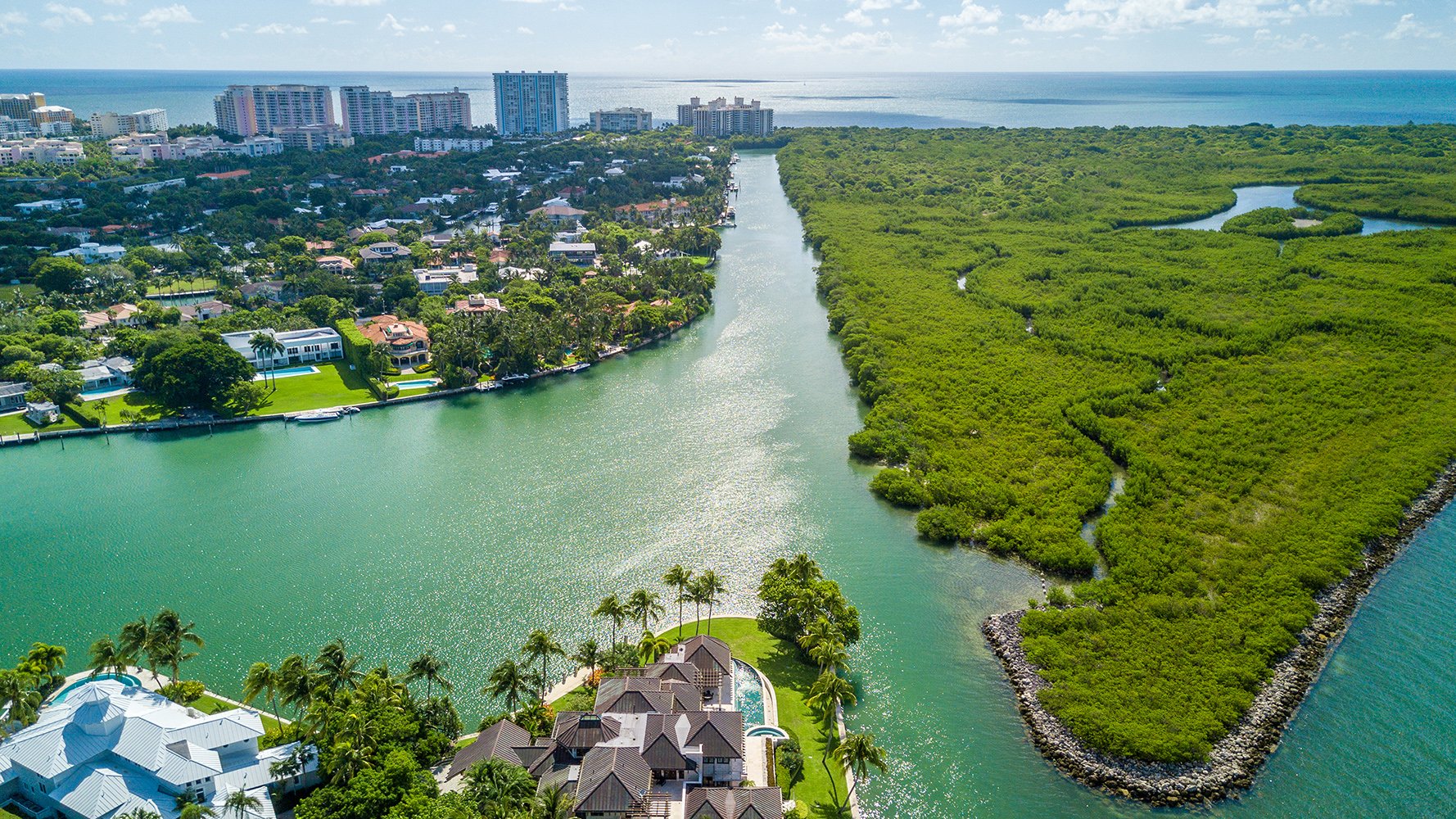
Luxury pricing in South Florida is usually framed by sun, tax posture, and global connectivity. Increasingly, a quieter force is shaping values: what a city will allow to change. Historic districts, landmark designations, and design review boards can extend timelines and narrow architectural options. In exchange, they create a condition ultra-high-end buyers recognize immediately: controlled supply.
That dynamic matters because demand has been anything but controlled. South Florida posted its second-highest year on record for $10M-plus home sales in 2025, widely tied to continued wealth migration. Over the last decade, Miami pricing has also reset dramatically, with single-family and condo values climbing steeply through December 2025. In that environment, buyers pay for certainty, not only views. Preservation, when it is well administered, is a form of certainty: a credible promise that a neighborhood’s signature streetscape will not be rewritten overnight.
For buyers, the takeaway is straightforward. A purchase inside a historically regulated area is not just a trade for square footage. It is an investment in a rule set that shapes future neighbors, future construction intensity, and the long-run visual identity of the block.
Miami Beach’s Art Deco Historic District is frequently cited as the world’s largest collection of Art Deco architecture, with more than 800 preserved buildings. That concentration is not simply cultural cachet. It is a zoning and review reality that influences massing, materials, and what can be demolished or substantially altered. It also helps explain why certain addresses feel irreplaceable even when the structure itself is not new.
Protections have also evolved. Collins Avenue, for example, was formally added to the Art Deco District in 1986, expanding what the city treats as protected Art Deco resources. For today’s buyer, boundary history matters because preservation is not fixed. It expands and tightens in response to political will, market pressure, and the perceived value of the architectural story.
A practical tool for anyone evaluating a Miami Beach purchase near a designated area is the city’s Historic Properties Viewer, an online map that catalogs designated and contributing buildings. If you are comparing a trophy residence against a nearby redevelopment opportunity, it is an efficient way to see what is likely to face review, what will be constrained, and what may be more exposed to change.
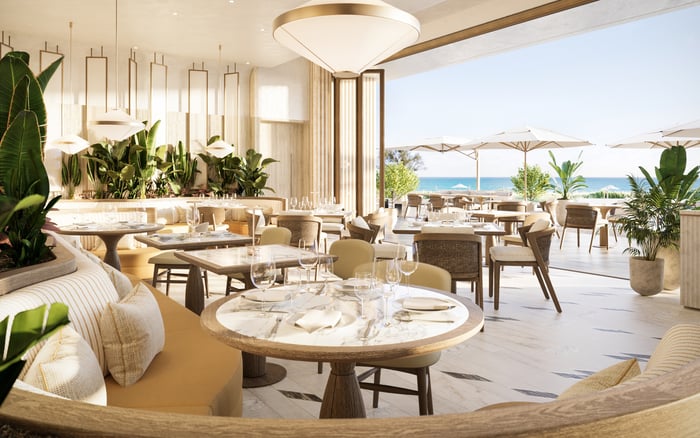
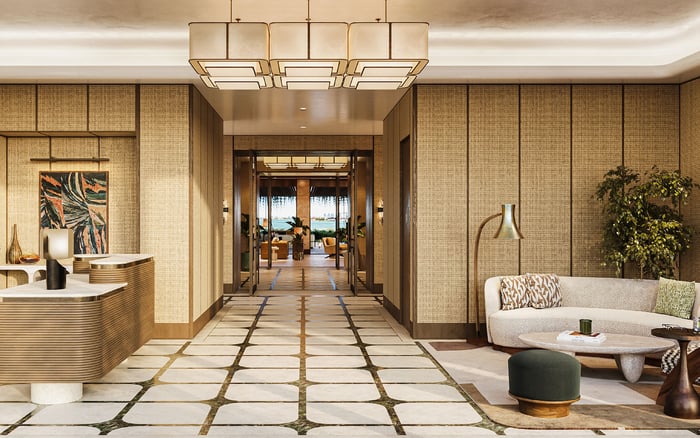
The luxury market has learned how to coexist with heritage. Many buyers want the cultural resonance of an established beach neighborhood while still expecting contemporary planning, privacy, and services. That blend is increasingly visible in the residential pipeline and in branded living. When the conversation shifts to oceanfront lifestyle with a quieter, design-forward stance, 57 Ocean Miami Beach often appears on the same shortlists as legacy hotel corridors, precisely because Miami Beach demand is no longer only about nightlife proximity. It is about long-term livability inside a constrained land market.
Preservation is often discussed as taste. Sophisticated owners and developers tend to treat it as underwriting.
Miami-Dade County offers a 10-year county ad valorem tax exemption for qualified improvements to historic properties, potentially exempting 100% of the assessed value of those improvements. In the right situation, that can reduce operating pressure and support higher-caliber restoration work rather than value engineering.
The county also highlights the federal 20% Rehabilitation Investment Tax Credit for certified rehabilitation of income-producing historic buildings. Even if you are not developing, incentives matter because they influence whether a neighboring historic asset is likely to be restored with care or sit in limbo while ownership waits for a more profitable outcome.
For luxury buyers, the relevance is twofold.
First, tax and credit structures can accelerate restoration cycles for prominent properties that define a neighborhood’s brand.
Second, incentives can be a signal. When a historic building changes hands quietly, incentives may be part of the logic, and that can foreshadow a quality upgrade to the surrounding streetscape.
South Florida preservation is also shifting in terms of whose history is protected. Miami-Dade’s Office of Historic Preservation explicitly links preservation to social justice and notes that designated sites have not reflected the county’s diverse heritage and population. That framing suggests a future where new landmarks and contributing districts may emerge in places long recognized locally, but underrecognized formally.
The National Trust for Historic Preservation launched a 2019 initiative in Little Havana aimed at protecting cultural character while improving residents’ quality of life. In parallel, Miami-Dade County granted Dade Heritage Trust $1 million in 2020 to start a Historic Preservation Revolving Fund for Affordable Housing. The fund’s approach has been concrete: it purchased a 1938 Art Deco building in Little Havana for $650,000 and restored units that reportedly rented around $900 per month under a 30-year affordability covenant.
For the luxury market, this is not a detour. It is an early indicator of how preservation narratives can broaden beyond beachfront Art Deco. As the region matures, high-value neighborhoods will increasingly be those with coherent stories, whether architectural, cultural, or both. For an investment-minded buyer, cultural preservation efforts also hint at where political support may land when contentious development proposals arise.
A clear pattern is taking shape in Miami Beach and along the oceanfront: restorations of historic hotels paired with new luxury residential components. The logic is straightforward. A landmark structure delivers immediate identity and a ready-made social scene. New residences provide the capital to make the restoration pencil and the product buyers now expect.
The next year reinforces that theme. The Delano Hotel in South Beach is slated to reopen in early 2026 following a landmark renovation, according to widely circulated Miami real estate coverage. Whether you buy next door or across the neighborhood, the reopening of a recognized name tends to raise the area’s hospitality baseline, which can influence residential desirability.
For buyers who want Miami Beach’s classic energy with a more service-calibrated lifestyle, branded residences have become a parallel track to historic hotel corridors. Setai Residences Miami Beach speaks to demand for discretion and consistency, while The Ritz-Carlton Residences® Miami Beach is often evaluated through everyday ease: arrival, security, and a hotel-grade operating standard without short-term tourism volatility at the doorstep.
In the same buyer conversation, private-club positioning now functions as an amenity category of its own. Casa Cipriani Miami Beach is frequently framed around membership-driven hospitality, a concept that resonates as buyers compare newer towers to older buildings with fewer operational layers.
If Miami Beach is the case study in district-based architectural protection, Coral Gables offers a different model: a citywide commitment to Mediterranean and Spanish-influenced design principles, reviewed through a formal “Mediterranean Design” framework and its Board of Architects.
For buyers, that governance can read as a luxury feature. Design review can be inconvenient for those seeking immediate change. It also produces an effect that is difficult to replicate: cohesive streets, predictable scale, and a shared palette that reinforces long-term desirability.
Coral Gables has also been recognized by the Advisory Council on Historic Preservation’s Preserve America program for preservation and heritage efforts. The stewardship is not abstract. In 2018, the Coral Gables City Commission unanimously approved allowing the Biltmore Hotel operator to direct 50% of annual rent payments toward restoring the historic hotel. The Biltmore is a National Historic Landmark, and renovations discussed at the time totaled about $25 million, including roughly $10.5 million aimed at preserving historic value.
In a luxury market, landmark restorations matter because they strengthen a neighborhood’s signature anchor. Buyers are not just purchasing a home. They are purchasing proximity to institutions that hold value across cycles.
Preservation and development are entering a sharper negotiation phase, especially where statewide housing policy intersects with local controls. Miami Beach officials have warned that proposed 2025 changes to Florida’s Live Local Act could enable demolition of many low-rise historic Art Deco buildings in favor of much taller housing, depending on how exemptions and definitions are applied.
At the same time, the city is actively evolving. North Beach had at least nine development initiatives underway by March 2025, including a proposed replacement for the Deauville at roughly 400 feet and the Ocean Terrace project spanning roughly 71st to 75th Streets.
The buyer lens is nuanced:
Luxury buyers do not need to become preservation attorneys. They do need to ask questions that reveal real constraints and real upside.
Is the property designated, contributing, or adjacent to a contributing structure? That distinction can affect everything from window replacement to future expansions.
What does the city’s online mapping show about nearby parcels? In Miami Beach, the Historic Properties Viewer is a practical starting point.
Are there incentives in play that could influence restoration quality nearby? County tax exemptions and federal rehabilitation credits can change an owner’s willingness to invest.
Is the neighborhood’s identity tied to a single anchor asset? Think flagship hotels, cultural campuses, or signature streetscapes. When those assets are restored, the halo can be meaningful.
How exposed is the area to state-level overrides? In the current environment, local character can be vulnerable if policy shifts favor density without clear preservation carve-outs.
What is the Miami Beach Art Deco Historic District?
It is a large historic area with more than 800 preserved buildings, known for a concentrated collection of Art Deco architecture.
Why does Collins Avenue matter in preservation terms?
Collins Avenue was added to the Art Deco District in 1986, expanding protected boundaries and signaling long-term commitment to preservation.
How can I check if a Miami Beach building is historic?
Miami Beach provides a Historic Properties Viewer that maps designated and contributing buildings.
Are there financial incentives for restoring historic properties?
Miami-Dade offers a 10-year ad valorem tax exemption for qualifying historic improvements, and it highlights the federal 20% rehabilitation tax credit for income-producing buildings.
Does preservation affect luxury pricing?
Yes. By limiting what can be replaced or scaled up, preservation can create scarcity and support neighborhood stability, both of which influence premium pricing.
What is Miami-Dade’s preservation approach changing toward?
The county explicitly connects preservation to social justice and acknowledges designated sites have not reflected the area’s diverse heritage, prompting heritage survey efforts.
What is happening in Little Havana related to preservation?
A preservation initiative launched in 2019, and a revolving fund has been used to rehabilitate endangered historic properties with affordability covenants.
Why are historic hotels being restored alongside new luxury residences?
Restored landmarks provide identity and a hospitality anchor, while new residences can supply capital and modern living standards that buyers expect.
What is the concern around the Live Local Act for Miami Beach?
City officials warned that proposed changes could enable demolition of low-rise historic Art Deco buildings to build taller housing, depending on how rules are applied.
What should I watch in North Beach?
Multiple initiatives are underway, including a proposed Deauville replacement and the Ocean Terrace project area, suggesting a period of accelerated transformation.
For discreet guidance on South Florida’s most design-led addresses, connect with MILLION Luxury.
If branded residences are on your mind — as a home or as an allocation — we would be glad to share what we are seeing, privately.
Begin a quiet conversation