A buyer-focused editorial guide to reading preconstruction condo appreciation in Miami Design District, with emphasis on contract timing, comparable corridors, product quality, and disciplined resale strategy.
Preconstruction appreciation in Miami Design District is not a single number. It is a sequence of signals, each revealing how the market values scarcity, design credibility, location, and timing before a residence is delivered. For the luxury buyer, the objective is not to chase a promotional increase. It is to determine whether today’s contract price may look rational, conservative, or stretched when measured against the next release, nearby new inventory, and future resale expectations.
The Design District attracts buyers who value cultural adjacency as much as waterfront drama. That makes price tracking more nuanced than in a purely beachfront market. The premium is often tied to architecture, walkability, interior specification, brand alignment, and access to Miami’s most design-forward commercial fabric. In this setting, appreciation is best read as a pattern: early pricing, subsequent release movement, contract velocity, inventory scarcity, and the way competing neighborhoods reset expectations.
For buyers comparing preconstruction options, the discipline is straightforward: separate the building’s narrative from the contract’s economics. A residence can be beautiful and still be poorly timed. Another may feel understated at launch and later prove resilient because its floor plan, exposure, and finishes sit in the narrowest part of the market.
The first signal is release pricing. Early buyers often enter before the market has fully tested a project’s depth of demand. If later releases ask more for similar lines, the spread between original and current pricing becomes the first indication of paper appreciation. That movement requires discipline. A rise in asking price is meaningful only if comparable residences continue to transact and the remaining inventory supports the premium.
The second signal is product scarcity. In luxury condos, not all square footage behaves alike. Corner residences, larger terraces, protected outlooks, private elevator entries, and efficient floor plans often retain greater negotiating strength. A smaller residence in a compromised line may not appreciate at the same rate as a larger, better-oriented home, even within the same tower.
The third signal is replacement cost. New-construction pricing is influenced by land, materials, labor, financing, design, and amenities. When new supply becomes more expensive to create, earlier contracts can appear increasingly attractive. Yet replacement cost alone does not guarantee appreciation. The finished residence still has to meet the taste level and lifestyle expectations of the next buyer.
The fourth signal is neighborhood comparison. A Design District buyer should watch nearby Midtown, Wynwood, Edgewater, and Brickell because these markets shape perception. When a buyer can choose between a design-centric residence, a bayfront tower, or a branded downtown address, relative value matters.
Miami Design District is not selling the same promise as a sand-facing tower. Its value proposition is urban, curated, and cultural. That can make appreciation less dependent on direct water frontage and more dependent on the quality of the immediate environment. Buyers are effectively purchasing access to a refined daily rhythm: galleries, design houses, dining, retail, and proximity to multiple Miami neighborhoods.
That positioning favors projects that understand discretion. The luxury buyer here may not need the tallest skyline statement. Instead, the emphasis may fall on privacy, service, architecture, ceiling height, proportion, and a sense that the residence belongs within the district rather than merely borrowing its name.
Projects such as Kempinski Residences Miami Design District illustrate how branded residential concepts can enter the conversation when buyers want hospitality-coded service near Miami’s design and retail core. Nearby, Miami Design Residences Midtown Miami gives buyers another lens for evaluating the broader district-adjacent market, especially when comparing walkable urban living against more traditional waterfront addresses.
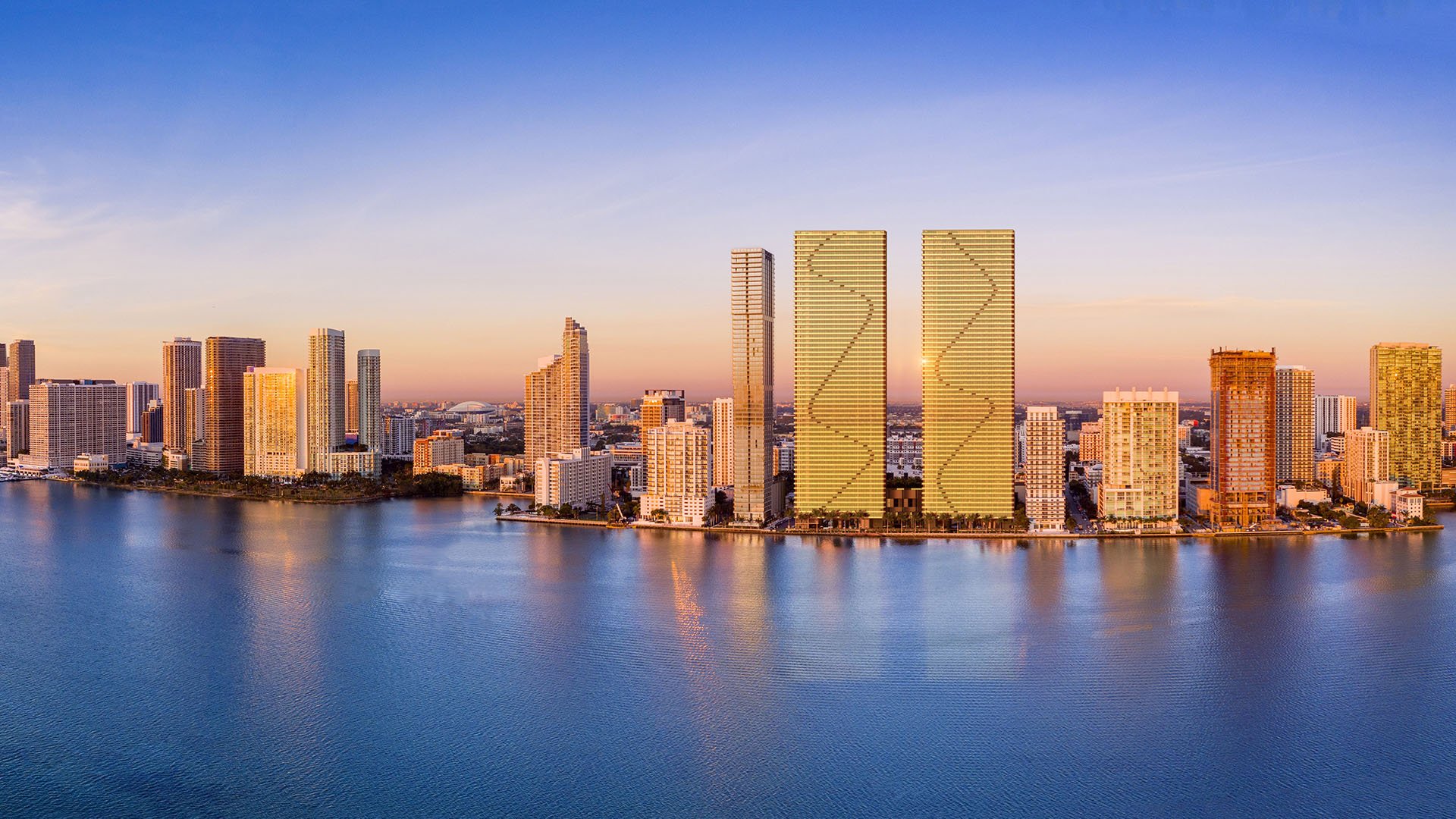
The most useful appreciation tracking looks outward as well as inward. Edgewater, for example, offers a different logic: water views, verticality, and proximity to the bay. A buyer studying Design District pricing may compare it with Aria Reserve Miami to understand how bayfront inventory prices against design-district adjacency. The comparison is not about declaring one superior. It is about identifying which premium is more durable for a specific buyer profile.
Brickell adds another benchmark. It is Miami’s global business address, with a different density, rental profile, and branded-tower conversation. A buyer considering an urban luxury residence may weigh Design District’s cultural positioning against the international visibility of 888 Brickell by Dolce & Gabbana. The question is whether the buyer values fashion-branded vertical prestige, district-level design culture, or a blend of both.
The islands and waterfront enclaves introduce another contrast. The Residences at Mandarin Oriental, Miami may appeal to buyers prioritizing service, water orientation, and a resort-like sense of arrival. Against that backdrop, Design District pricing must justify itself through lifestyle specificity rather than the universal appeal of open water.
Wynwood also matters. Its creative energy can pull younger luxury buyers northward, especially those who want proximity to art, restaurants, and a less conventional urban experience. For investment analysis, Wynwood’s influence is less about direct substitution and more about demand spillover. If buyers increasingly accept non-waterfront urban luxury in Miami, Design District residences may benefit from that broader shift.
Paper appreciation is not the same as realized profit. A preconstruction buyer may see later releases priced above the original contract, but the actual outcome depends on closing costs, transfer ability, deposit structure, market liquidity, and the completed building’s reception. Sophisticated buyers track the path from reservation to contract, from contract to topping out, and from delivery to the first wave of resales.
The cleanest appreciation is usually supported by three conditions: the buyer entered early, the selected residence remains scarce within the stack, and competing new inventory has repriced higher. If one of those conditions is missing, the story becomes more delicate. A later buyer may still do well, but the margin for error narrows.
It is also wise to track incentives. If a project raises headline prices but quietly expands concessions, the effective price movement may be less impressive than it appears. Luxury buyers should focus on net economics, not ceremonial pricing.
A disciplined buyer should keep a private pricing file. Track the initial price, deposit schedule, floor, exposure, interior package, parking terms, terrace condition, and any included upgrades. When the next release arrives, compare like with like. A higher-floor residence with better exposure may not be a clean comparison to an earlier lower-floor contract. The goal is to identify genuine appreciation, not flattering arithmetic.
Resale planning should begin before signing. Consider who the next buyer will be. Will they be a collector seeking design proximity, a seasonal resident seeking convenience, or an executive wanting access to Brickell without living in its densest core? The more clearly the residence answers that question, the more coherent its future market becomes.
What does preconstruction price appreciation mean? It refers to the increase in value or asking price between an early contract and later pricing, resale, or delivery-stage market perception.
Is appreciation guaranteed in Miami Design District condos? No. Appreciation depends on contract timing, product quality, market conditions, and the depth of buyer demand at completion.
Why track nearby areas like Edgewater and Brickell? Nearby luxury corridors help define relative value, especially when buyers compare urban design access with water views or branded towers.
What is the most important unit-level factor? Scarcity matters most, including floor plan quality, exposure, terrace usability, privacy, and the difficulty of replacing that specific residence.
Are early buyers always in the best position? Often, but not always. An early contract only helps if the residence is desirable and later market pricing supports the original decision.
How should buyers view developer price increases? They should compare increases against actual demand, remaining inventory, concessions, and similar residences in competing neighborhoods.
Can a non-waterfront condo appreciate strongly? Yes, if the location, design, service, and lifestyle proposition are compelling enough for the intended luxury buyer.
What role does investment strategy play? Investment strategy clarifies entry price, holding period, liquidity needs, and the most realistic exit buyer for the residence.
When should resale potential be considered? Before signing. The strongest preconstruction decisions usually begin with a clear view of future buyer demand.
How can a buyer avoid overpaying? Compare similar lines carefully, review the effective price rather than the headline, and remain disciplined about scarcity.
For a confidential assessment and a building-by-building shortlist, connect with MILLION.
If branded residences are on your mind — as a home or as an allocation — we would be glad to share what we are seeing, privately.
Begin a quiet conversation