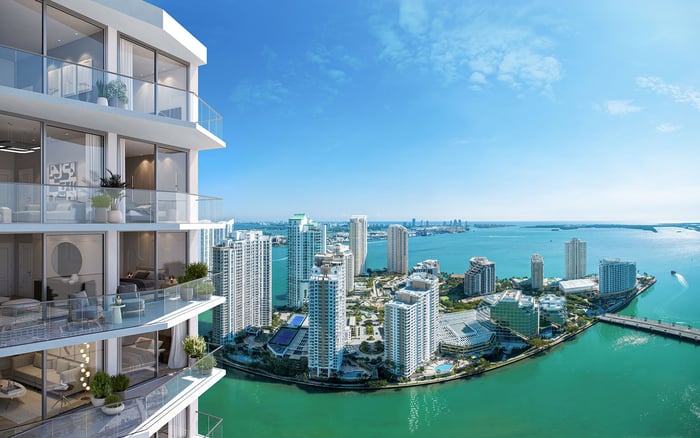
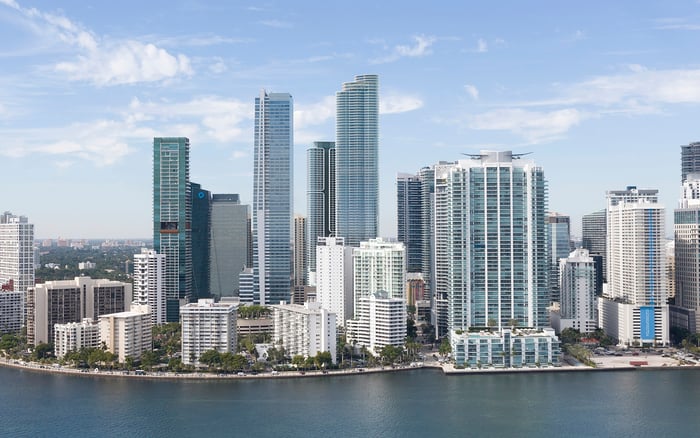
A privacy-focused framework for comparing residential hospitality at St. Regis® Residences Brickell and The Residences at Mandarin Oriental, Miami in 2026 without assuming unverified project details.

For buyers comparing residential hospitality in South Florida, privacy is best evaluated as an operating experience rather than a marketing phrase. The relevant questions concern arrival, access, circulation, guest handling, service requests and the separation of resident-only areas from shared spaces.
That framework can guide a review of St. Regis® Residences Brickell and The Residences at Mandarin Oriental, Miami. Because no project-specific fact table accompanies this comparison, buyers should confirm all current plans, services, policies and availability through official documentation and direct due diligence.
Privacy often depends on how people move through a building. Buyers should ask how residents, visitors and service personnel arrive, where their routes intersect and which areas require controlled access. Reception arrangements, elevator procedures, loading activity and guest authorization can shape daily life as much as design and finishes.
A useful review follows a complete visit from arrival to residence entry. Buyers can note the number of transitions, identify shared spaces and ask how access is managed at each stage. The goal is to understand the actual sequence rather than infer privacy from branding alone.
Residential hospitality can include several types of assistance, but buyers should rely on current written materials for the precise scope. Important questions include how requests are submitted, who may enter a residence, how authorization is recorded and whether service preferences can be adjusted.
Discretion also depends on communication. A buyer can ask how personal information, visitor details and residence-access instructions are handled. Any answer that affects ownership should be checked against the applicable agreements and policies.
A branded property may contain spaces intended for different users. Buyers should request a clear explanation of which areas are exclusively residential, which are shared and how those distinctions are enforced.
This is particularly important when evaluating privacy during busy periods. Rather than relying on general descriptions, purchasers can ask for current plans and operating information showing entrances, reception points, elevators and amenity access.
A full-time resident and a second-home owner may define privacy differently. One may prioritize a consistent daily environment, while another may focus on secure arrivals, residence preparation and support during extended absences.
Buyers should map each project’s documented procedures against their likely routine. The strongest fit is the one that supports how the owner expects to arrive, host visitors, request assistance and leave the residence unattended.
Reviewing Baccarat Residences Brickell can provide another project reference while buyers refine their questions. The purpose is not to rank brands without evidence, but to compare documented access arrangements, service structures and residential boundaries consistently.
The year 2026 should be treated as the period of comparison, not as evidence of a project milestone, price or availability. Buyers should obtain current materials, read the relevant ownership documents and seek appropriate professional advice before relying on any operational representation.
For both named projects, privacy should be tested through evidence: plans, agreements, policies and direct explanations of day-to-day procedures. This approach keeps the decision focused on the owner’s needs while avoiding assumptions based solely on a hospitality name.
What should privacy-minded buyers compare first? Begin with arrival, access, circulation and the distinction between shared and resident-only spaces.
Does a hospitality brand establish the complete residential experience? No. Buyers should verify the property’s current operating details and governing documents rather than rely on the brand name alone.
Why are elevator and entrance procedures important? They help show where residents, visitors and personnel may cross paths during ordinary use.
How should buyers evaluate residence access by service personnel? Ask how entry is authorized, recorded and limited, then confirm the answer in applicable written policies.
What should second-home buyers examine? They should review documented procedures for arrivals, absences, visitor access and any residence-related assistance.
How can buyers assess shared amenities? Request current information identifying who may use each amenity and how access is controlled.
Should buyers assume that 2026 is a completion date? No. In this article, 2026 is the comparison timeframe and does not establish delivery, completion or availability.
Why review ownership documents? They may clarify rights, restrictions, costs and procedures that cannot be confirmed through general marketing language.
Can another Brickell project help with comparison? Yes. A consistent review of another project can help buyers sharpen questions about access, service and residential boundaries.
What is the best final test of fit? Compare verified procedures with the owner’s expected routine, privacy preferences and service needs.
If you'd like a private walkthrough and a curated shortlist, connect with MILLION.
If branded residences are on your mind — as a home or as an allocation — we would be glad to share what we are seeing, privately.
Begin a quiet conversation