A buyer-focused look at how shifting private-school geography, daily commute confidence, and education-driven timing can influence luxury home values in Coral Gables.
For many affluent families evaluating Coral Gables, school access is not a secondary lifestyle note. It is part of the underwriting. The phrase “private school boundary shifts” can be imprecise, since private schools do not operate like public attendance zones. Yet in the luxury market, it describes a real set of buyer concerns: campus proximity, commute reliability, admissions timing, sibling logistics, car-line friction, after-school programming, and the social geography of where children build their daily lives.
That distinction matters. A buyer may not be purchasing within a formal private-school boundary, but they may still place meaningful value on a home that makes the school day feel easier, calmer, and more predictable. In Coral Gables, where privacy, historic streetscapes, established neighborhoods, and family-centered living often overlap, even modest shifts in perceived convenience can influence which homes receive the strongest attention.
At the top of the market, time has value. A residence that protects the morning rhythm, reduces cross-town uncertainty, and keeps parents close to campus routines can feel materially different from a comparable home with a more complicated school commute. The result is not a simple price formula. It is a premium for confidence.
Luxury buyers rarely decide on one variable. Architecture, lot quality, renovation level, security, outdoor space, tree canopy, club access, and proximity to cultural or dining corridors all matter. But for families with school-age children, education can become the organizing principle that ranks otherwise similar homes.
The search vocabulary is now unusually precise: Coral-gables, Private-school, single-family-homes, and New-construction are not casual labels for this buyer. They describe a lifestyle equation. A renovated estate may become more compelling if it sits within a convenient school-day pattern. A new residence may command more attention if it offers flexible bedroom planning, quiet study areas, staff quarters, and a drive pattern that does not strain weekday life.
This is why two homes with similar finish levels can perform differently. The more compelling asset may be the one that solves the family calendar. In a discreet market, that advantage may appear as fewer days of hesitation, stronger second showings, and more decisive negotiations, rather than a headline-making premium.
In the private-school context, boundary shifts are often about perception and practicality rather than formal eligibility. Families may respond to changes in campus demand, transportation patterns, grade-level transitions, sibling placement, and the growing desire to live closer to a preferred daily route. A home does not need to be adjacent to a campus to benefit. It needs to make the routine credible.
For Coral Gables sellers, this creates a more nuanced positioning strategy. The property narrative should not overpromise school access or imply admissions certainty. Instead, it should emphasize the home’s relationship to family logistics: ease of leaving the neighborhood, quality of the daily drive, space for children and tutors, and the ability to adapt through different academic stages.
For buyers, the prudent approach is equally disciplined. A glamorous kitchen or resort-style pool may win the first impression, but a school-week test drive can reveal the more durable truth. The strongest acquisition decisions combine emotion with operational clarity.
Coral Gables has traditionally been associated with estate living, but the luxury family conversation is broadening. Some buyers still want a gated residence or a large single-family home. Others prefer lock-and-leave ease, concierge privacy, and newly delivered spaces that reduce maintenance demands during a busy school year.
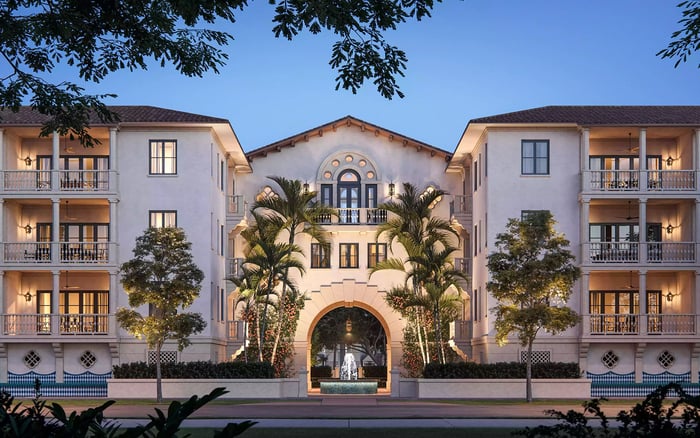
That is why boutique and village-style projects can enter the conversation. Ponce Park Coral Gables is relevant to buyers who want a Coral Gables address with a more contemporary residential format. The Village at Coral Gables speaks to the same broader shift: families are not only buying square footage, they are buying a way to organize daily life.
Nearby, Cora Merrick Park may appeal to purchasers who value a refined Coral Gables setting while remaining attentive to access, routine, and long-term resale positioning. These projects should not be viewed as substitutes for every estate buyer. Rather, they show how the family-driven luxury market is diversifying its acceptable formats.
The school-driven search often extends beyond municipal lines. Coconut Grove can be part of the same family calculus when buyers compare leafy streets, waterfront access, private clubs, and proximity to favored educational routines. The decision is rarely Coral Gables versus Coconut Grove in the abstract. It is a comparison of exact household rhythm.
A buyer considering Four Seasons Residences Coconut Grove may be prioritizing service, privacy, and a simplified ownership model. Another may prefer a Coral Gables residence because the school run, family network, and weekend patterns feel more natural. In both cases, education does not replace luxury criteria. It filters them.
This is where value can become highly localized. A buyer may reject a spectacular property if the weekday path feels inefficient, while moving quickly on a quieter home that supports the family schedule. The market rewards homes that align beauty with function.
Sellers should be careful not to make school claims that belong to admissions offices. The better strategy is to frame the residence around livability. Highlight bedroom separation, study spaces, guest suites for grandparents or caregivers, covered parking, storage, mudroom utility, security features, and calm arrival sequences. These details matter when a buyer is imagining the full school year, not just a weekend showing.
Photography and showing preparation should also reflect family sophistication without becoming overly staged. A library, media room, secondary lounge, or quiet garden terrace can suggest academic and emotional balance. Luxury families are often seeking a home that feels composed under pressure.
Pricing should recognize that education-sensitive demand can be powerful but not universal. The premium is strongest when the home also satisfies broader luxury fundamentals: condition, privacy, architectural integrity, outdoor living, and a location that will remain desirable beyond the children’s school years.
Before assigning extra value to school geography, buyers should pressure-test the assumption. Drive the route at the actual time of day. Consider rainy-day traffic, after-school activities, sports schedules, and the needs of multiple children at different ages. Confirm transportation policies directly with the school and avoid relying on casual neighborhood commentary.
It is also wise to separate personal utility from resale value. A home that perfectly serves one family’s campus routine may still need to appeal to the next buyer on architecture, lot quality, and location. The best purchases are not simply close to a school preference. They are excellent homes that also solve a school problem.
In Coral Gables, that balance is the point. Education-sensitive demand can sharpen buyer urgency, but lasting value still comes from scarcity, elegance, and daily ease.
Do private schools in Coral Gables have formal home boundaries? Private schools generally do not function like public attendance zones. Buyers usually focus on commute practicality, campus access, and family routine.
Can school proximity affect luxury home value? It can influence buyer preference, especially when two homes are otherwise comparable. The effect is usually strongest when convenience supports broader property quality.
Should sellers advertise a home as tied to a private school? Sellers should avoid implying admissions access or guarantees. It is safer to describe location, lifestyle, and daily convenience.
What should buyers test before paying more for school convenience? Buyers should drive the route during real school hours and consider weather, activities, and multiple drop-offs. Assumptions can be costly.
Are condos relevant for families focused on schools? Yes, some families prefer low-maintenance living and service-rich buildings. The right layout and location can make a condominium highly practical.
Do education-driven premiums last after children graduate? They can, but only if the home also has enduring luxury fundamentals. Architecture, privacy, condition, and location still matter.
Is Coral Gables competing with Coconut Grove for these buyers? Often, yes. Families may compare both areas based on commute rhythm, neighborhood feel, and preferred ownership style.
Can a renovated older home outperform new construction? It can if the renovation is strong and the location better supports the family schedule. Buyers weigh convenience against condition and design.
What is the biggest mistake education-focused buyers make? The biggest mistake is treating proximity as the only metric. A short distance can still be inconvenient if the route is difficult.
How should an international buyer approach this decision? International buyers should pair school planning with neighborhood orientation and resale analysis. Local daily rhythm is as important as the home itself.
When you're ready to tour or underwrite the options, connect with MILLION.
If branded residences are on your mind — as a home or as an allocation — we would be glad to share what we are seeing, privately.
Begin a quiet conversation