Florida’s waterfront condominium market is being recalibrated by a new, compliance-forward reality. After the 2021 Surfside collapse, milestone inspections and Structural Integrity Reserve Studies have moved from industry jargon to household terms, reshaping carrying costs, buyer diligence, and the redevelopment calculus along prized coastal corridors. For owners in older towers, the conversation is no longer only about view and amenities, but also about structural timelines, reserve funding, and governance. For buyers, it is a chance to separate truly resilient buildings from those facing expensive catch-up. And for developers, it has intensified a trend already underway: paying premiums to control scarce waterfront land and deliver a new generation of ultra-luxury, engineered-to-today’s-standards residences.
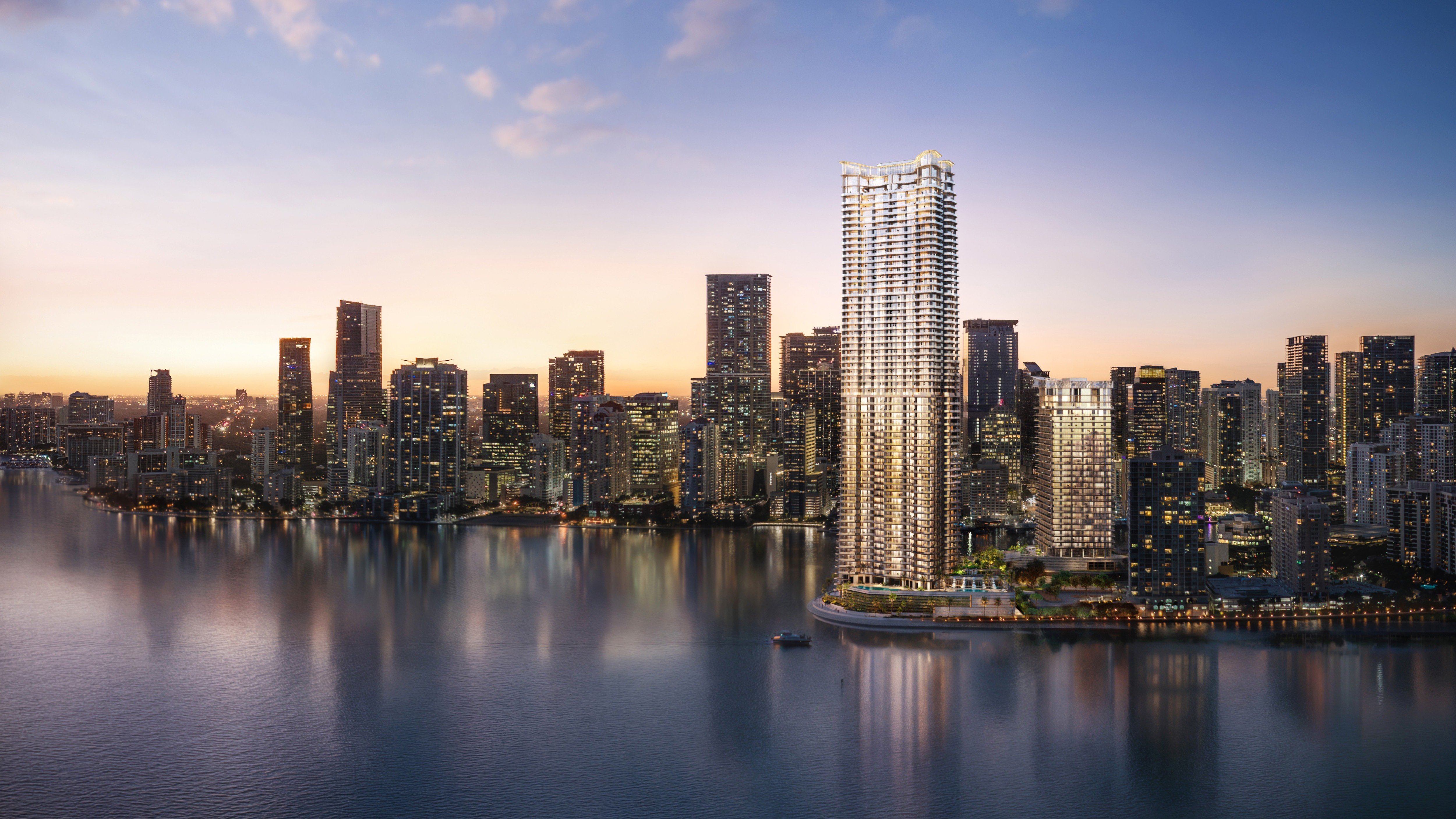
South Florida has always priced waterfront living on scarcity, lifestyle, and the kind of daily access to ocean and bay that cannot be replicated inland. Since the June 24, 2021 Surfside condominium collapse that killed 98 people, the market has learned to price something else with equal seriousness: structural certainty.
In the most affluent coastal enclaves, the core desires remain consistent. Sophisticated buyers still prioritize direct water exposure, privacy, service, architectural distinction, and a sense that the building’s brand matches its address. What has changed is the order of operations. Before a purchaser falls in love with the floor plan, finishes, or furnishings, they increasingly ask for a clear view into the building’s condition, the association’s planning discipline, and the path to compliance under Florida’s modern condo-safety framework.
That shift is practical, not emotional. Florida’s post-Surfside reforms require many condominiums three stories or higher to undergo Milestone Inspections and complete a Structural Integrity Reserve Study (SIRS). These terms are no longer niche language reserved for boards, managers, and attorneys. They have become decision points that shape carrying costs, negotiating posture, and how buyers compare one waterfront tower to the next.
The outcome is a market that is separating into two narratives. Some properties read as quietly durable, supported by transparent governance and capital planning that treats stewardship as part of the luxury experience. Others, even when they occupy an extraordinary coastal location, are starting to feel less like “discount luxury” and more like an unanswered balance sheet.
Florida’s statewide framework has effectively introduced two recurring ownership realities that now sit beside the traditional considerations of view, amenities, and service.
First are Milestone Inspections. Many associations must commission professional structural evaluations on a schedule defined by the new law and related guidance. The Florida Department of Business and Professional Regulation (DBPR) has published guidance aimed at helping associations navigate these requirements, and it has become a common reference point in board meetings, management updates, and transaction diligence.
Second is the SIRS, a reserve study centered on major common-element components. Under this framework, associations evaluate reserve needs for significant repair and replacement categories. The impact is direct: if the numbers identify a shortfall, the building must address it. In practice, that tends to show up through higher monthly fees, accelerated reserve contributions, special assessments, or a combination of all three.
Luxury buyers should recognize this as a pricing mechanism, not merely paperwork. Buildings that have funded reserves responsibly for years can look comparatively “more expensive” in monthly maintenance, yet less exposed to sudden, disruptive assessments. Buildings that kept monthly fees artificially low may now be forced into abrupt financial recalibration.
In today’s market, the premium is often paid for predictability, not just for marble, waterfront glass, or designer fixtures.
The sharpest financial consequences are concentrated in older inventory, including many waterfront properties originally designed for a different era of expectations and different assumptions about long-term funding. The SIRS framework forces a blunt conversation: what does it actually cost to keep a coastal high-rise safe, functional, and competitive?
In a market that prizes discretion, special assessments can become the loudest headline a building ever produces. For owners, a sudden assessment is not only a cash obligation. It can affect resale timing, buyer appetite, and negotiating leverage. For buyers, it becomes a window into the association’s governance culture, especially how candidly the board communicates, how quickly it addresses issues, and whether it plans ahead or reacts under pressure.
This is where the definition of “luxury” expands beyond the visible. It still includes ceiling height, view corridors, and curated amenities. Increasingly, it also includes:
Owners who understand the new environment are often more willing to pay for the unglamorous parts of ownership because the alternative is volatility. And volatility, in high-value waterfront real estate, rarely stays contained. It tends to surface during a sale, in a renegotiation, or at the moment a buyer asks for proof that the building is being managed to the standard its location demands.
Even well-run associations are navigating a crowded, deadline-driven environment. Reporting has highlighted a statewide rush to complete required inspections before deadlines, creating capacity constraints across the engineering and inspection ecosystem. That pressure matters because timing can change the owner and buyer experience.
When qualified professionals are scarce, scheduling can stretch. When schedules stretch, boards may feel compressed into decisions. And when boards feel compressed, communication can become more reactive, which is exactly what sophisticated buyers try to avoid. None of this automatically implies that a building is unsafe. It means the compliance cycle itself has become a transaction variable.
For buyers, the takeaway is straightforward: understand where the building sits in the process, what has already been completed, what remains, and whether additional phases or follow-ups are anticipated. For sellers, it is a reminder that proactive disclosure, orderly documentation, and a clear narrative can preserve pricing power even when the broader market is more cautious.
One of the most consequential secondary effects of the post-Surfside era has been the acceleration of developer interest in older waterfront condominiums.
Media coverage has described aging waterfront condos as becoming “gold mines” for owners because developers may pay premiums to control scarce coastal land for redevelopment. The strategic logic is familiar in South Florida: there is limited available waterfront property, and the path to new, high-end product often runs through existing buildings.
This is where compliance and land value intersect in a way owners cannot ignore. As reserve requirements and repair costs become clearer, some ownership groups become more open to buyout conversations, particularly when faced with major capital work. For developers, the arithmetic can look compelling: acquire a prime site with irreplaceable frontage, then deliver a modern tower calibrated to today’s expectations for engineering, amenities, and branded service.
Surfside has become an emblem of that transition. The highly visible Champlain Towers South site is slated for a new ultra-luxury project, The Delmore Surfside, widely covered as a marquee redevelopment. The planned project has been reported as designed by Zaha Hadid Architects, signaling the level of architectural ambition now being directed to the most scrutinized parcels.
Buyouts and redevelopments can sound simple in concept: aggregate ownership, terminate the condominium, and rebuild. In practice, they can be slow, contested, and legally complex.
Condo termination in Florida is governed by Chapter 718, and disputes often turn on a critical detail: whether a building’s original declaration requires a higher threshold than the statute’s default. That detail matters because many older condominiums were created with governing documents that can materially constrain termination efforts, even when a site appears highly desirable for redevelopment.
The Biscayne 21 dispute in Edgewater became a high-profile test of these dynamics, with owner holdouts challenging developer-led termination efforts. Later legal commentary noted that the Florida Supreme Court declined review in that matter, leaving appellate precedent in place and reinforcing the principle that older declarations can limit termination strategies.
For affluent owners, this is not merely a courtroom narrative. It is a value narrative. If you own in an older building that becomes “obviously redevelopable” because of location, the legal structure may determine whether a redevelopment premium is realizable, or whether it remains a theoretical number with no clean path to execution.
Against this backdrop, New-construction has become more than a lifestyle preference. For a segment of the market, it is a form of risk management.
Newer towers can still carry meaningful monthly fees, particularly when service levels are high and amenity programs are ambitious. However, the story is often more legible: contemporary engineering, clearer reserve planning from inception, and building systems designed for today’s coastal realities.
In Sunny-isles, the appetite for next-generation, branded oceanfront living remains evident in St. Regis® Residences Sunny Isles. Public project materials describe a 62-story plan with a limited number of residences, a scarcity posture consistent with how ultra-luxury now competes: fewer homes, higher privacy, and a stronger identity.
In Brickell, the waterfront skyline continues to evolve as projects replace or outclass older stock. Una Residences Brickell has been publicly reported as topping off at 47 stories, a reminder that the city’s most valuable corridors are still attracting capital even as the older condo ecosystem adjusts to new compliance costs.
And in Miami-beach, where global buyers expect artistry alongside service, Faena House Miami Beach underscores the enduring premium placed on residences that pair a premier location with an unmistakable point of view.
Taken together, these projects clarify the market’s current pricing logic: new product is not simply “new.” It is a confidence statement about systems, documentation, and the likelihood that the building’s operational reality will remain aligned with its luxury positioning.
In this cycle, sophisticated buyers often behave more like underwriters. That does not mean the romance of waterfront living is gone. It means the numbers, timelines, and obligations can be consequential, and the best outcomes tend to follow disciplined diligence.
Consider orienting your diligence around five buyer-oriented questions:
What has the association completed under the Milestone Inspection framework, and what remains? Request clear, current documentation and understand whether additional phases or follow-ups may be expected.
What does the SIRS reveal about reserve adequacy? The point is not to panic at large figures. The point is to understand whether the building is funding its obligations in a predictable way.
How has the board historically handled capital projects? A building’s culture shows up in timelines, transparency, and the willingness to address issues early.
How is cost distributed across owners? Assessments and reserve contributions do not land evenly across unit types and ownership profiles. Ask how the building has approached fairness and planning.
Does the building’s market positioning align with its operational reality? A tower can market itself as luxury while operating like a mid-market asset. In today’s environment, that mismatch tends to surface quickly.
This level of diligence is now part of buying well. It is also a practical way to protect long-term investment value in properties whose appeal should endure across market cycles, provided the building’s stewardship keeps pace with its location.
Owners in aging towers are now more frequently pushed into decisions that were once optional. For many associations and ownership groups, the choices tend to fall into three strategic directions.
Path one is comprehensive reinvestment: confront the reserve needs, fund them, and preserve the building’s standing through disciplined stewardship.
Path two is phased modernization: prioritize the most essential structural and system work while planning a longer runway for secondary upgrades.
Path three is redevelopment exploration: evaluate buyout interest and the feasibility of termination, recognizing that governance documents and owner consensus can be decisive.
None of these paths is universally correct. What matters is coherence and credibility. The market tends to reward buildings that choose a strategy, communicate it clearly, and execute it with transparency. Buildings that appear uncertain, fragmented, or perpetually “studying options” often invite sharper negotiation, even when their views and location remain exceptional.
South Florida’s most valuable addresses are defined by irreplaceable land and irreversible change. In the post-Surfside era, two numbers increasingly influence outcomes.
The first is the reserve funding requirement implied by engineering reality. The second is the premium a developer may be willing to pay for the underlying site.
When the first number rises, the second can become more persuasive, particularly for owners who do not want to fund major capital work in an older asset. Yet when the second number rises, legal and governance friction can intensify, as holdouts recognize the uniqueness of the opportunity and the rarity of waterfront land.
For buyers and owners alike, this is a market where information has become a luxury asset in its own right. Buildings that can document their condition, their obligations, and their plan tend to trade with more confidence. Buildings that cannot may still sell, but often with more volatility in pricing, timeline, and terms.
What is a Milestone Inspection and why does it matter to buyers? It is a state-mandated structural inspection framework for many condominiums three stories or higher. Buyers use it to understand a building’s condition, the status of compliance, and potential upcoming obligations.
What is a Structural Integrity Reserve Study (SIRS)? A SIRS evaluates reserve needs for major common-element repairs and replacements. In older buildings, it often drives higher monthly contributions, special assessments, or both.
Are older waterfront condos automatically a bad investment now? Not necessarily. Some are well-capitalized and well-managed. The key is verifying inspection status, reserve planning, transparency, and governance strength.
Will every older building be a redevelopment target? No. Scarcity helps, but feasibility depends on many factors, including the building’s original declaration language and the practical ability to achieve termination thresholds.
To discuss how today’s condo-safety era is affecting pricing, negotiations, and new-build opportunities, connect with MILLION Luxury.
If branded residences are on your mind — as a home or as an allocation — we would be glad to share what we are seeing, privately.
Begin a quiet conversation.jpg&width=700&height=438&fit=cover)