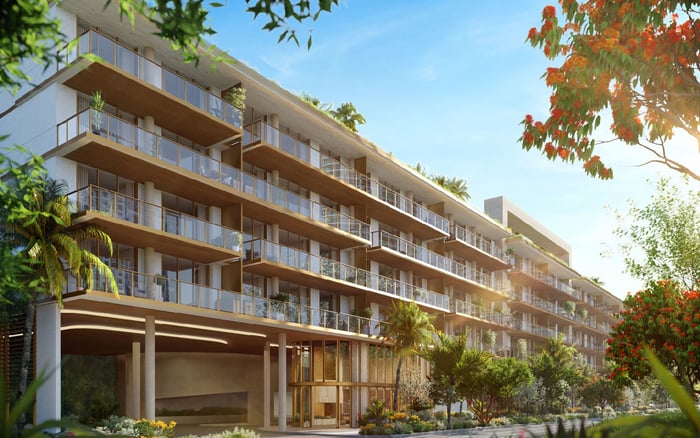
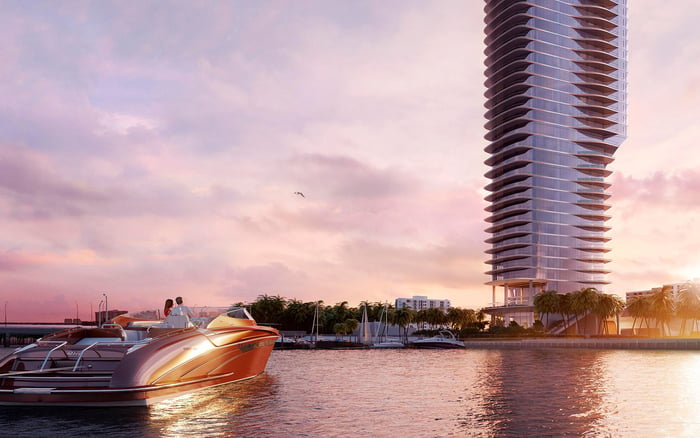
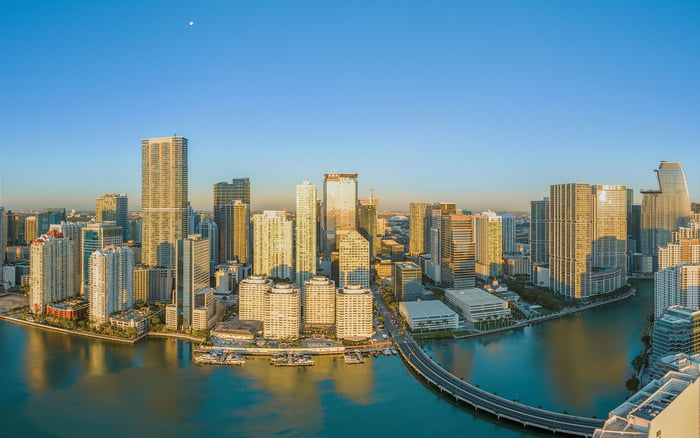
With Formula 1’s Miami Grand Prix extended through 2041, South Florida gains a rare long-horizon visibility event that reshapes where VIP demand concentrates, how developers program amenities, and how buyers underwrite lifestyle and resale. The race’s physical anchor at the Hard Rock Stadium complex in Miami Gardens matters as much as the global broadcast: it creates a durable northward gravity for hospitality, transportation, and premium short-stay demand, while Downtown and Brickell monetize the after-hours and waterfront brand halo. In parallel, Miami’s luxury condo sector continues to lean into experiential and branded living, from auto culture to F1-style simulators, adding a new layer to the region’s trophy-inventory competition.
Formula 1 is more than a loud, glamorous weekend on the South Florida calendar. It is a recurring global broadcast that repeatedly reintroduces Miami to a high-net-worth audience that collects experiences as deliberately as it collects assets. The Miami Grand Prix has been extended through 2041, and that single detail matters because very few cultural or sporting catalysts offer this level of long-horizon certainty.
In real estate, longevity changes behavior. Buyers evaluate second homes and pied-à-terres differently when they can reasonably expect an annual, predictable “Miami moment” for the next decade and beyond. Developers can justify permanent hospitality infrastructure and tightly defined amenity programming because the event is not a short-lived experiment. The market does not need to bet on a one-year spike. It needs to recognize a durable, repeatable influx of high-spend visitors, brand activations, and sustained media attention.
That is where the F1 narrative becomes relevant to investment thinking. It is not a promise of guaranteed appreciation. It is a visibility engine that tends to reward product with clarity, service, and lifestyle cohesion. In a market already driven by global capital and brand resonance, a recurring spotlight can strengthen the premium tier by keeping Miami continuously legible to international buyers.
The Miami Grand Prix is staged around the Hard Rock Stadium complex in Miami Gardens. That geographic fact is a quiet but meaningful distinction. Many luxury buyers instinctively equate Miami’s global identity with waterfront districts such as Downtown, Brickell, and Miami Beach. Yet the race’s on-the-ground logistics, VIP movements, and operational infrastructure are tied to Miami Gardens.
Over time, that can influence where ancillary development and visitor flows concentrate. It also helps explain why certain submarkets may benefit indirectly rather than directly. Miami’s core luxury neighborhoods can continue to capture pre-event and post-event dining, nightlife, and bayfront living, while the event’s practical “front door” sits north of the traditional luxury core.
A related signal is the shift from temporary event structures to lasting venue assets. The build-out includes a permanent approximately 190,000-square-foot Paddock Club hospitality building designed for large-scale VIP hosting. Permanent hospitality suggests a more institutional view of Miami as a fixture on the F1 calendar, and it encourages repeat behavior from brands and patrons who want consistency, not improvisation.
For buyers, this does not mean you should chase proximity to the stadium at the expense of lifestyle fit. It does mean you should watch transportation patterns, the evolution of premium lodging demand, and the way ultra-luxury marketing increasingly uses the Grand Prix as shorthand for Miami’s current era. When a city can sell a predictable, global week every year, the ripple effects tend to show up in how hospitality is planned, how VIP guests move, and where spend concentrates.
F1’s extension lands in a market with structural support that predates the race. Miami-Dade condominium pricing has recorded 14 consecutive years of appreciation, according to Miami Realtors. That long run matters because it frames event-driven narratives as accelerants rather than as sole drivers. A market with depth can absorb attention and convert it into transactions more reliably than a market trying to manufacture demand from scratch.
International demand remains central to the premium segment. Miami Realtors has also reported increased global buyer share in Miami new construction, with buyers represented from 73 countries. For trophy product, this is not a footnote. It is a mechanism that helps premium pricing clear even as domestic rate sensitivity ebbs and flows.
Meanwhile, late-2025 reporting on the luxury condo segment has pointed to a buyer resurgence with moderate price gains. The reminder is useful: the top of the market often behaves less like a purely local housing market and more like a globally traded store of value, where lifestyle and brand translate into price resilience.
A sophisticated takeaway is straightforward. F1 is additive. It reinforces Miami’s place in the global rotation of wealth, but it works best when paired with neighborhoods and buildings that already meet international expectations for service, privacy, and design. The event draws attention; the product has to convert it.
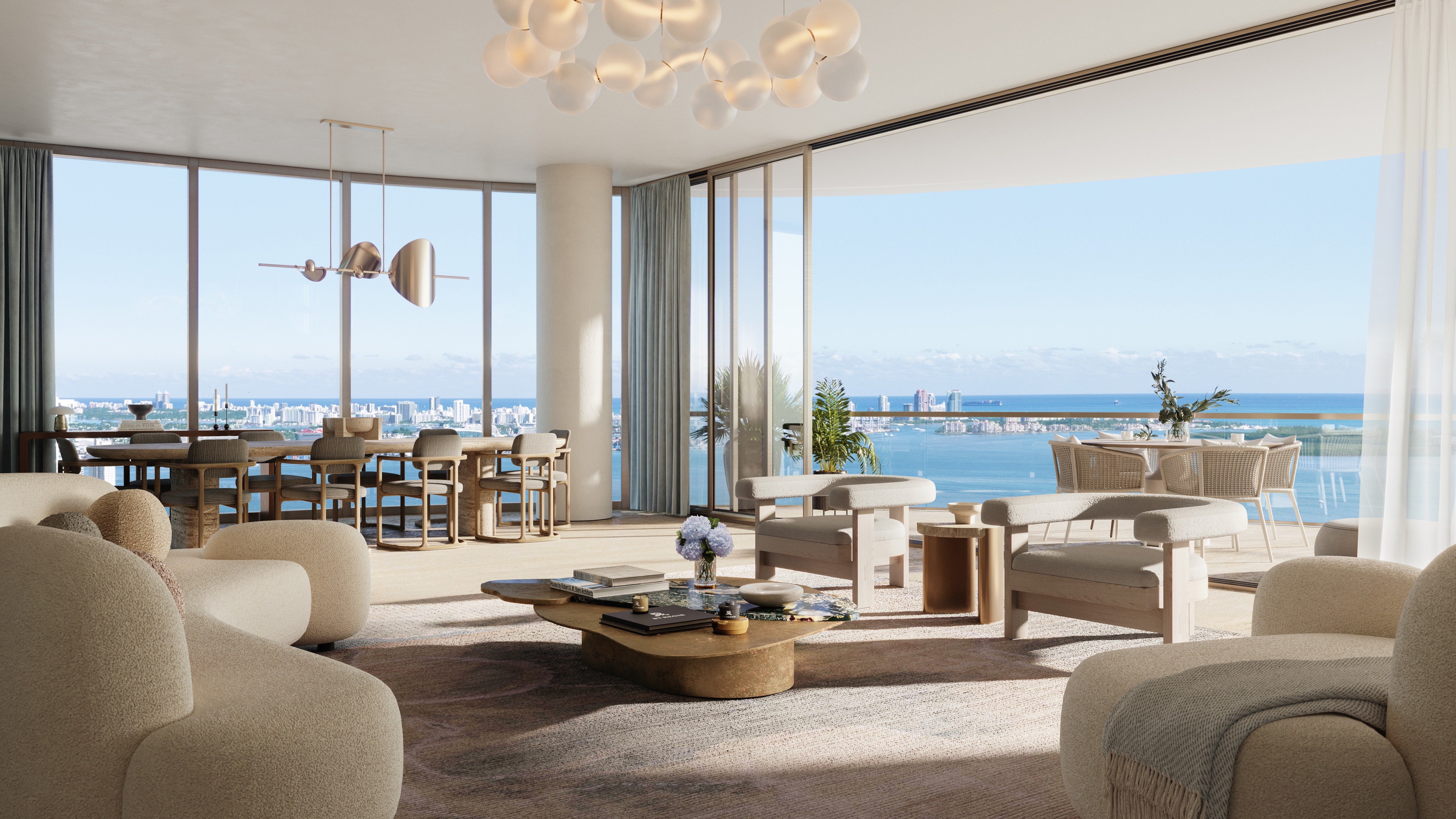
One of the clearest ways F1 is showing up in Miami real estate is not through stadium adjacency. It is showing up in amenity design and brand storytelling. Luxury condo developers have increasingly used Formula 1 racing simulators as signature amenities, positioning residences as “experience products” tied to the city’s racing identity.
This matters because it signals how competition at the top has evolved. A spa and a pool are now baseline. What differentiates trophy inventory is a curated set of spaces that feels like a private club and, increasingly, like a brand world. In Brickell, Mercedes-Benz Places Miami illustrates how branded residential living is marketed around experiential luxury rather than only finishes and views.
The simulator trend is not about turning every building into an arcade. In the strongest executions, it operates as a proxy for a broader promise: precision, performance, and a social scene that can be activated on demand. For some buyers, it is also a cue that the building understands hosting. If a property can support a private evening built around a simulator suite, it can usually support the broader cadence of entertaining.
The buyer lens should remain disciplined. Amenity concepts can help a building stand out, but only if they are paired with service delivery, thoughtful layouts, and durable operations. In luxury, the marketing is never the product. The product is the lived experience, year after year.
Although the race is anchored in Miami Gardens, the most consistent “halo” monetization often shows up in Downtown and Brickell. These neighborhoods serve as natural stages for the broader week: brand dinners, art and design tie-ins, waterfront entertaining, and late-night hospitality. They also offer the kind of density and recognition that visiting buyers and VIP guests can navigate quickly.
In Downtown, waterfront trophy towers compete on skyline presence and global recognition. Aston Martin Residences Downtown Miami sits squarely in that conversation, aligning a recognizable performance brand with a lifestyle that speaks to the same buyer who follows F1. Even when the race itself is elsewhere, the social calendar and the waterfront visuals that circulate during event week often map back to this district.
Brickell, meanwhile, is Miami’s high-energy capital market district with a luxury residential ecosystem that blends business travel with second-home ownership. The neighborhood’s trophy narrative is reinforced by landmark private residence offerings and by the broader branded-residence push. From a practical buyer standpoint, liquidity and rental demand often run deeper in neighborhoods that can serve both the event calendar and the day-to-day rhythm of global business.
If you are underwriting a purchase with any expectation of strong resale, remember that global buyers frequently default to recognizable districts first. Downtown and Brickell benefit from that pattern. The goal is not to buy “where the week happens,” but to buy where recognition, convenience, and lifestyle repeatability intersect.
If Downtown and Brickell monetize Miami’s global lifestyle halo, Sunny Isles has refined a different luxury language: oceanfront privacy paired with statement architecture and a strong branded-tower lineup.
The auto-branded niche is especially relevant when discussing F1’s cultural overlap with real estate. Bentley Residences Sunny Isles is widely covered as a flagship example of ultra-luxury living with car culture embedded into the building’s identity, including its signature vehicle elevator concept. That kind of product resonates with buyers who treat automobiles as part of a broader collecting mentality and who want their residence to reflect that identity.
It is also worth noting that Sunny Isles has an established benchmark in this category. Porsche Design Tower popularized the “car elevator” condominium concept in the Miami market and remains a reference point in conversations about auto-driven branding and pricing.
For buyers, the question is not whether you personally need a car elevator. The question is whether a building’s defining concept is coherent, rare, and executed at a level that remains desirable across cycles. Branded identity can support that, but only when the underlying service, layout quality, and long-term maintenance match the promise.
During global event weeks, Miami Beach often functions as the region’s living room: beautiful, social, and intensely curated. The appeal is not just sand. It is the ability to step into a hospitality ecosystem where service is expected and where discretion is part of the product.
This is why a new wave of residential offerings leans heavily into private-club positioning. Shore Club Private Collections Miami Beach speaks to buyers who want the aesthetics of a celebrated address paired with a residential cadence. Similarly, Casa Cipriani Miami Beach fits the profile of a hospitality-rooted brand translating its service DNA into residential living.
For F1-driven travel patterns, Miami Beach is often where the city’s social capital peaks, even if the race itself is elsewhere. That matters for owners who occasionally rent, host, or simply want the option to be close to the week’s most in-demand reservations without sacrificing privacy.
The underlying real estate lesson is consistent. In event-heavy cities, the neighborhoods that “hold the room” socially can command durable demand, provided the residential product delivers the quiet luxuries that high-end buyers prioritize: security, arrivals, staff quality, and the ability to disappear when you want to.
F1’s extension does not only influence the existing core. It arrives as Miami expands its luxury inventory pipeline in neighborhoods that can accommodate scale. Edgewater has been positioned as a major pipeline neighborhood for luxury condo development, supported by larger sites, bayfront settings, and proximity to Downtown, the Design District, and Wynwood.
Large-format waterfront product is increasingly part of the conversation here, including projects such as Aria Reserve, which has been marketed as a bayfront luxury development that illustrates the neighborhood’s shift toward mega-project living.
The buyer’s perspective on Edgewater should be pragmatic. New supply can deliver better layouts, amenity depth, and modern building systems. It can also introduce more competition at resale. When underwriting, prioritize views that cannot be replicated, governance prospects that suggest strong association management, and a location within the neighborhood that feels inevitable rather than speculative.
In a market where premium buyers can be selective, the edge goes to buildings that combine new-build appeal with enduring fundamentals. That means clean sightlines, predictable access, and a sense that the address will read clearly to an international buyer who may not follow neighborhood nuance as closely as a local.
F1 is not the only global catalyst on the calendar. Miami is expected to be a 2026 FIFA World Cup host city, and investor commentary has positioned the tournament as an accelerator for tourism visibility and real estate attention, particularly around hospitality and rentals.
Local reporting has indicated that governments allocated $46 million for World Cup-related infrastructure and operations support, including transportation and visitor readiness. Even when figures are framed through reporting rather than formal economic studies, the directional signal is clear: public-sector preparation tends to improve the visitor experience, and that can enhance repeat tourism.
Layer multiple global events together and you get a flywheel effect. Each event becomes marketing for the next. The city becomes easier to explain to a first-time international buyer because the narrative is reinforced repeatedly: this is where the world comes, and it comes with a calendar.
For real estate, the implication is not that every neighborhood benefits equally. It is that Miami’s global relevance becomes more continuous, which can raise the value of product that is already designed for international usage patterns: lock-and-leave residences, service-forward buildings, and locations that remain convenient even when the city is busy.
The best way to use the F1 extension in decision-making is to translate spectacle into criteria.
First, separate proximity value from halo value. Miami Gardens is the operational anchor, but the luxury buyer often monetizes the week through lifestyle districts that host the broader social schedule. Downtown, Brickell, and Miami Beach may capture much of the entertainment, dining, and waterfront hosting that surrounds the race.
Second, treat experiential amenities as signals, not gimmicks. A well-designed simulator lounge, private dining program, or branded service model can indicate management sophistication. It can also indicate a buyer profile that supports resale pricing, because buildings that attract consistent, quality demand tend to trade better.
Third, do not confuse global attention with uniform upside. In any neighborhood, the strongest outcomes usually cluster around scarcity: irreplaceable views, waterfront orientation, privacy, and a building identity that stays coherent when trends move on. The more a property relies on novelty alone, the more it needs flawless execution to remain relevant.
Finally, remember that top-tier Miami real estate is increasingly international. The winning product is the one that reads cleanly to a buyer arriving from London, Dubai, Mexico City, or São Paulo with consistent expectations: security, service, and a home that performs aesthetically as well as financially.
In the F1 era, the advantage goes to buyers who stay specific. Choose a neighborhood for the life you actually live, then choose a building for the quality you will still value when the cameras leave: operations, privacy, and an address that remains globally recognizable.
Is the Miami Grand Prix extension to 2041 meaningful for real estate? Yes. A long extension provides planning visibility for developers, hospitality, and buyers, and it reinforces Miami’s recurring global spotlight rather than a one-off surge.
Does the race location in Miami Gardens affect where to buy? It can. Miami Gardens anchors on-the-ground logistics, while Downtown, Brickell, and Miami Beach often capture halo demand tied to dining, hosting, and waterfront lifestyle.
Why are F1 simulators showing up in luxury condo amenities? They are part of a broader shift toward experiential luxury, where buildings compete on lifestyle programming and private-club energy, not only finishes.
How should international demand factor into a purchase? International liquidity can support resale and new-construction absorption. Focus on neighborhoods and buildings that read as globally recognizable and service-forward.
What is the best way to underwrite an F1-era purchase? Prioritize scarcity and durability: views, privacy, management quality, and a coherent brand or amenity strategy that will still feel relevant across cycles.
For a discreet, buyer-first strategy across Brickell, Downtown, Sunny Isles, and Miami Beach, connect with MILLION Luxury.
If branded residences are on your mind — as a home or as an allocation — we would be glad to share what we are seeing, privately.
Begin a quiet conversation