A discreet, buyer-oriented ranking of view-centric new construction, using verified project details in Coral Gables and Miami Beach, plus practical guidance on terraces, ceiling heights, and rooftop amenities.

In South Florida, views aren’t a single asset. They function as a system - elevation, orientation, glazing, and how outdoor space is designed to be used. A residence with floor-to-ceiling windows can feel expansive at a modest height, while a higher floor can still underperform if the terrace is too shallow for dining or if nearby structures dominate the sightline.
For buyers comparing Coral Gables and Miami Beach, “view-driven” shifts with the setting. Coral Gables tends to reward broader neighborhood panoramas and a sense of remove from the city’s visual noise. Miami Beach, by contrast, trades in waterline drama, sun path, and the immediacy of coastal exposure. The strongest new-construction homes treat the view as a daily ritual: breakfast on a deep terrace, sunset from a rooftop deck, or a living room framed with gallery-like clarity.
This editorial ranks five projects where the living experience is meaningfully shaped by outlook and exterior integration. The focus is on disclosed architectural and amenity cues that indicate how the view is likely to perform once you move in.
1. Ponce Park Coral Gables - elevated panoramas over South Gables Ponce Park Coral Gables is planned as an 11-story, 58-residence luxury condominium at 3000 Ponce de Leon Blvd, positioned around panoramic views of South Gables. That emphasis matters because it signals intent: layouts, glazing, and amenity placement are likely designed to keep the outlook central - not incidental.
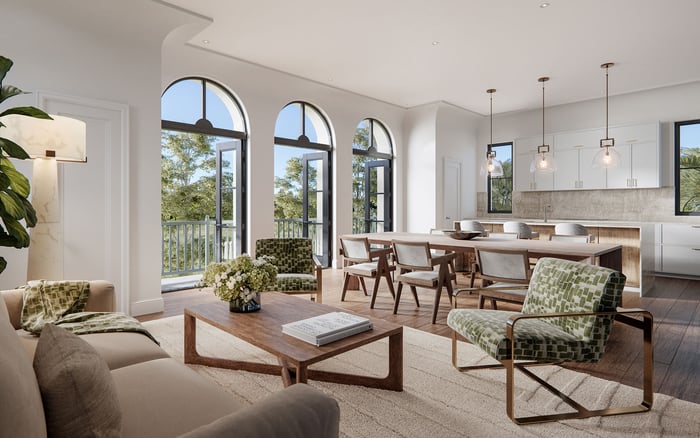
Floorplans featuring 11-foot-deep terraces, paired with 11- to 12-foot ceiling heights and floor-to-ceiling windows, read as a clear strategy. The terrace functions as a true outdoor room, and the taller ceiling line helps keep sightlines open even with substantial furnishings.
2. CORA Merrick Park - urban-district outlook with wellness-forward design CORA Merrick Park is planned as a 13-story, 74-residence condominium tower at 4241 Aurora St, near The Shops at Merrick Park. That proximity shapes the view experience: rather than long-distance horizon lines, many sightlines will be tied to a high-energy retail-and-dining district and the immediate streetscape.
With 10-foot ceilings and floor-to-ceiling windows, the project prioritizes daylight and connection to the neighborhood. Select private outdoor spaces - described as lanais up to 1,118 square feet - can fundamentally change how “view” functions day to day, because a lanai isn’t only about what you see; it’s about how often you step outside and actually live with it.
3. Five Park Miami Beach - skyline-meets-bay perspective in an elevated corridor Miami Beach view value often lives in a split-screen: water in one direction, skyline in the other. Five Park Miami Beach enters that conversation as a contemporary tower concept associated with open exposures and a more vertical, city-facing experience than classic oceanfront low-rise living.
For buyers who want a modern lens on Miami Beach rather than a purely shoreline one, Five Park Miami Beach can be a compelling starting point. The view-driven question here isn’t one postcard angle - it’s whether the building captures multiple compositions across the day.
4. Shore Club Private Collections Miami Beach - coastal presence with resort adjacency Some Miami Beach residences sell the horizon; others sell the lifestyle of proximity to it, with curated arrival sequences and amenity settings that make the view feel deliberate. Shore Club Private Collections is positioned for buyers who prefer a composed, resort-linked experience where the outlook is part of a broader daily rhythm.
In that sense, Shore Club Private Collections Miami Beach is view-driven not only for coastal proximity, but for the way projects of this type typically choreograph the transition from lobby to pool deck to private residence - keeping exterior light and air present throughout the experience.
5. Setai Residences Miami Beach - a refined, hotel-caliber view experience A premium view is also about restraint. In Miami Beach, the most sophisticated view-driven living often comes from controlled interiors that let the exterior read cleanly: calm finishes, quiet lines, and a sense that the residence is a frame rather than a stage.
For buyers drawn to that elevated hospitality standard, Setai Residences Miami Beach belongs in the conversation. The advantage is the expectation of a highly polished, service-minded environment where arriving home can feel as intentional as the view itself.
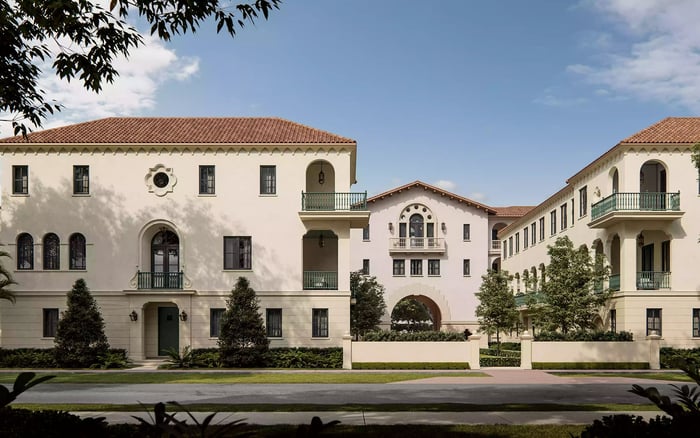
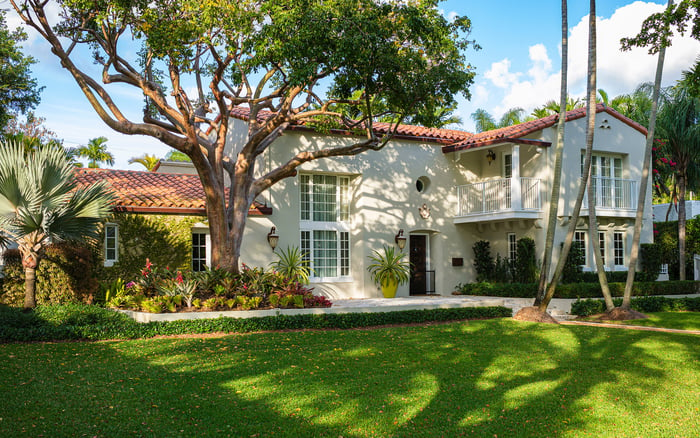
Coral Gables view culture tends to be more about breadth than spectacle - the pleasure of tree canopy, Mediterranean Revival streetscapes, and the quiet geometry of a planned city. In that environment, terrace design becomes decisive.
At Ponce Park Coral Gables, disclosed floorplan details point to 11-foot-deep terraces, with outdoor summer kitchens shown on terraces. That combination matters. A deep terrace isn’t just a balcony; it’s a dining-and-entertaining platform that makes the view usable, not merely visible.
CORA Merrick Park, by comparison, leans into a district view: adjacency to The Shops at Merrick Park and an on-site 5,000-square-foot public park shift the emphasis toward urban energy and landscaped frontage. If your priority is to feel plugged into a walkable scene rather than to chase a distant horizon, that distinction can be decisive.
Miami Beach is often misread as a simple oceanfront equation. In practice, view value is more layered. A residence can feel unmistakably “Miami Beach” with a city-and-water panorama even when the ocean isn’t the only protagonist.
That’s why newer towers and branded or hospitality-adjacent concepts matter in the view conversation: they often coordinate elevation, amenity decks, and unit glazing to keep light and exposure consistent. When narrowing options, press for clarity on how the best views are experienced from multiple spaces - living room, primary suite, and outdoor area. One spectacular angle from a single corner doesn’t automatically translate into daily livability.
A buyer evaluating new-construction homes should treat the view as a technical asset.
First, confirm ceiling height and window strategy. CORA’s residences list 10-foot ceilings with floor-to-ceiling windows, while Ponce Park is described with 11- to 12-foot ceilings and floor-to-ceiling windows. That difference can change how a room reads at sunset, when contrast is high and the exterior is brightest.
Second, interrogate terrace livability. An 11-foot-deep terrace is a genuine lifestyle feature, particularly when paired with an outdoor summer kitchen. Ask whether the terrace supports a dining table - not just a pair of chairs.
Third, consider rooftop access. Ponce Park includes a rooftop pool and rooftop lounge-style amenities, which can effectively extend your view even if your particular unit has a more limited angle.
Finally, understand the street-level program. Mixed-use can improve lived experience by making arrival more dynamic and supporting walkable convenience. Ponce Park is described as mixed-use with ground-floor retail, while CORA’s program includes retail and office components of a smaller disclosed footprint. Neither is inherently better, but they signal different day-to-day atmosphere.
There’s an emotional difference between boutique buildings and large-format towers. Boutique often means fewer neighbors, quieter common areas, and a more private relationship with terraces and views. Larger towers can deliver more dramatic elevation and more layered amenity environments.
In Coral Gables, the boutique impulse is reinforced by context: you’re buying into a refined city fabric, where an 11-story or 13-story height can still feel intimate compared to the verticality elsewhere in South Florida. In Miami Beach, the skyline impulse is part of the identity, and the best view-driven choices often come down to whether you want your view to feel serene, social, or cinematic.
If wellness is central, CORA’s pursuit of WELL Building certification positions the project around indoor environmental quality as a core promise, which can be as valuable as the view itself. If outdoor entertaining is central, Ponce Park’s deep terraces and rooftop amenities read as a stronger match for buyers who want to live outside without leaving home.
Which matters more for a great view: floor level or orientation? Orientation is often more decisive than floor level, especially when neighboring buildings shape sightlines.
What terrace depth feels truly usable for dining? Deeper terraces tend to support real furniture groupings; shallow balconies usually do not.
Are floor-to-ceiling windows always better in South Florida? They can be, but comfort depends on glazing, shading, and how the room is furnished for sun angles.
How do rooftop amenities affect view value? A rooftop pool or lounge can deliver the building’s best sightlines even if your unit’s view is partial.
Is Coral Gables better than Miami Beach for panoramic views? Coral Gables often offers broader neighborhood panoramas, while Miami Beach excels at water and skyline drama.
What is the main view difference between Ponce Park and CORA? Ponce Park is marketed around panoramic South Gables views, while CORA emphasizes district living near Merrick Park.
Do mixed-use buildings change the living experience? Yes; ground-floor retail and other uses can add convenience and street-level energy.
Why do ceiling heights matter for view-driven living? Higher ceilings keep sightlines open and make rooms feel brighter and more expansive.
Should buyers prioritize a private lanai or a rooftop deck? A private lanai supports everyday outdoor living, while a rooftop deck offers shared, often superior vantage points.
How can I compare view quality before completion? Review disclosed ceiling heights, terrace dimensions, and amenity placement, then confirm orientation on plans.
For a confidential assessment and a building-by-building shortlist, connect with MILLION Luxury.
If branded residences are on your mind — as a home or as an allocation — we would be glad to share what we are seeing, privately.
Begin a quiet conversation