Pompano Beach is moving from “great value on the sand” to a more complete coastal city, with a long-horizon downtown plan and a new generation of branded, design-forward oceanfront residences. For luxury buyers, the story is not just the beach. It is the convergence of public-realm investment, walkability, and a growing lineup of pre-construction options that signal a broader re-pricing of the market.
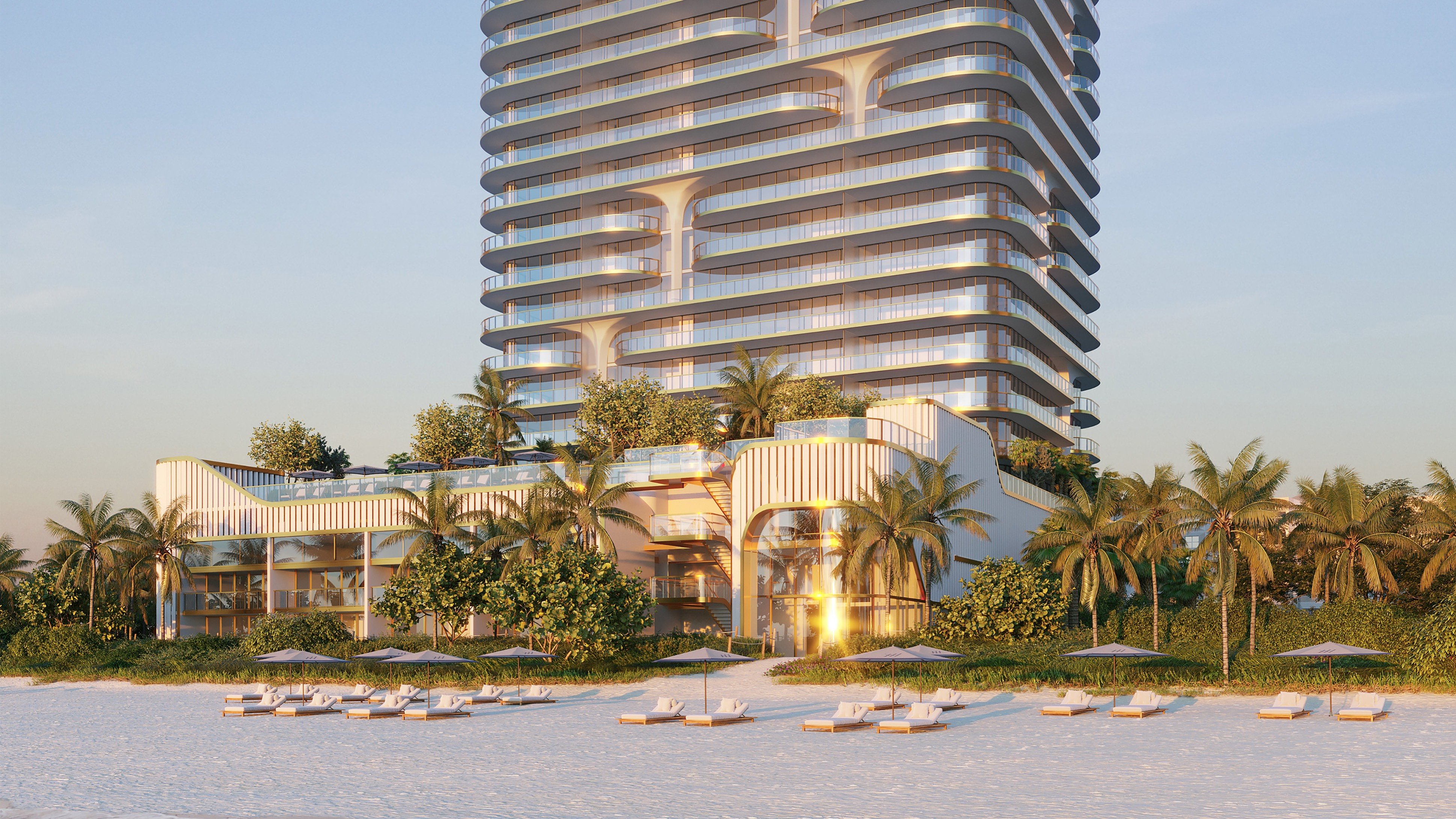
Pompano Beach has long offered direct ocean access and an easier pace than some nearby coastal enclaves, but this cycle reads differently: the city’s luxury proposition is increasingly shaped by civic-scale reinvestment alongside a more ambitious oceanfront mix.
In practice, two currents are moving together. First is a master-planned downtown redevelopment spanning about 75 acres, widely framed as a roughly $2 billion, long-horizon commitment to infrastructure, experience, and economic activity. Second is a new class of design-forward, amenity-rich towers marketed in the language of global hospitality and fashion, raising expectations around service, finishes, and privacy.
For South Florida buyers tracking the next “finished” coastal market in Broward, the story is not one building. It is a city working to lift the baseline.
Luxury real estate tends to perform best when it is supported by a durable public realm. Pompano’s downtown plan has been described as centering on a 12-block canal and waterway concept intended to operate as a walkable destination, often compared to a River Walk style feature.
That element matters because it signals intent. A water-oriented spine can function as a daily-use amenity for residents while giving visitors a reason to stay, which supports the fundamentals high-end buyers care about: a sense of place, activation, and the kind of coherent urban experience that holds value beyond individual projects.
Public financing tied to downtown infrastructure has been described as including a $64.5 million revenue bond, along with $25 million earmarked for land acquisition in the downtown core. Phasing and sequencing will always evolve, but the message is consistent. This is a municipality choosing to prioritize the expensive work that shapes outcomes.
For buyers considering pre-construction, that backdrop is a form of risk management. It is not a guarantee, but it is a signal that the city is attempting to influence the environment surrounding future inventory, rather than leaving the neighborhood’s trajectory entirely to private development.
Downtown narratives become real when residents can feel them in ordinary routines.
One of the most discussed components is the replacement of the existing City Hall with a new civic facility, paired with a 600-space parking garage as part of the buildout. Parking is rarely the headline, yet it is a quiet prerequisite for a functioning mixed-use district. A workable parking strategy supports dining, arts, and events without turning every weekend into a logistics exercise.
The plan has also been described as including a redesigned E. Pat Larkins Community Center budgeted at about $10.3 million, plus roughly nine acres of green and open space. Green space is not simply visual appeal. It is one of the clearest signals that a downtown is meant to be lived in, not only visited.
Beyond the core, the city’s Community Redevelopment Agency positions cultural and heritage assets as part of its portfolio, including restoration and public programming around the McNab House & Gardens. At the beachfront, the city has also announced a beach concession kiosk project with expanded public restrooms, targeted for completion in spring 2026.
Taken together, these moves help explain why Pompano Beach can feel less like a single strip of coastline and more like a coastal city building a fuller calendar.
On the sand, the conversation is increasingly defined by branded and design-led residences competing for global attention.
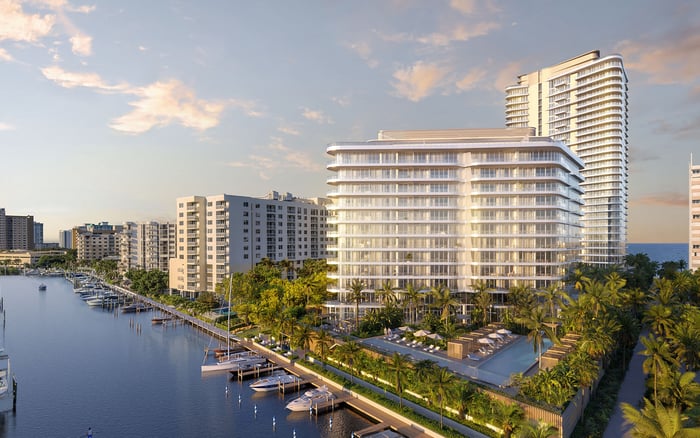
For buyers who value the resonance of a legacy hospitality name, The Ritz-Carlton Residences® Pompano Beach is marketed as a 32-story dual-tower concept with 199 residences, with a beach tower and a marina tower at 1380 S Ocean Blvd. Marketing materials cite residences roughly 1,309 to 4,850 square feet, with pricing promoted as starting around $1 million. That range is notable because it positions smaller, entry-level luxury layouts and larger, more estate-like residences under one branded umbrella, widening the potential buyer pool.
A more boutique interpretation of ultra-luxury branding arrives with Waldorf Astoria Residences Pompano Beach, promoted as a 28-story tower with 91 residences at 1350 S Ocean Blvd, commonly marketed from about $2.65 million. Amenities highlighted in marketing include a private marina with 19 slips, and delivery has been targeted for 2027. For some buyers, the marina component is the differentiator because it connects oceanfront living to boating access without requiring a separate club membership.
If you prefer a hospitality-forward lifestyle with added flexibility, W Pompano Beach Hotel & Residences has been presented as a mixed hotel and condo concept at 20 N Ocean Drive, with 74 condominium residences plus 296 furnished condo-hotel suites. Mixed-format projects can appeal to owners who want a highly serviced environment. They also merit sharper underwriting around management, usage, and the lived experience of shared amenities.
At the far end of privacy and brand-led design, Armani Casa Residences Pompano Beach is marketed as two 19-story towers with only 28 residences, one per floor, at 1550 N Ocean Blvd. Pricing has been promoted from about $5 million, with delivery targeted for 2028. The one-per-floor positioning is not a minor detail. It is a statement about acoustics, arrival, and the kind of discretion many ultra-high-net-worth buyers now treat as non-negotiable.
Luxury markets are typically more resilient when demand is supported by multiple reasons to be in the area. In Pompano, that broader conversation often includes The Pomp, promoted as a 223-acre mixed-use redevelopment concept tied to the larger entertainment, dining, and casino area.
For residential buyers, projects of that scale can matter indirectly. They can attract stronger operators, improve attention to roadways and access, and expand the everyday options that make second-home ownership feel simpler. The disciplined approach is to treat large initiatives as potential tailwinds, not immediate drivers, and to align expectations on timing.
Pompano Beach is compelling precisely because it is in transition. Transition can create opportunity, but only when you separate what is publicly disclosed from what is merely implied.
First, anchor your thesis to durable municipal investments. Downtown infrastructure, land acquisition efforts, civic replacements, and planned open space typically have a longer half-life than any single amenity package. These are the inputs that influence how a district performs over decades, which is the relevant horizon for legacy wealth.
Second, treat brand and program as a proxy for operational intent, not a substitute for diligence. Branded towers can set expectations around service and experience, but governance, expense profiles, and owner usage rules will define day-to-day reality and long-term satisfaction.
Third, view marketed pricing as directional. Several Pompano projects are presented with “starting at” figures. In an evolving oceanfront market, the more useful question is not the headline number. It is the value at each tier: view corridors, layout efficiency, elevator-to-door privacy, and whether the lifestyle offered actually matches how you live in South Florida.
Finally, consider timing with precision. With delivery targets such as 2027 and 2028 discussed for some projects, a pre-construction buyer is effectively purchasing a future version of the neighborhood. In Pompano Beach, that future is being built both downtown and along the beachfront, which is exactly why the city is drawing increased attention.
Is Pompano Beach mainly a beach market, or is it becoming a full-city play? It is increasingly a full-city play, supported by a widely publicized downtown redevelopment plan and multiple civic and cultural projects aimed at stronger day-to-day livability.
What is the headline scale of the downtown redevelopment? The downtown redevelopment has been described as covering about 75 acres and framed as a roughly $2 billion long-term investment.
What differentiates the newest luxury condos in Pompano? The newest wave is heavily defined by branding and program, including towers marketed with hospitality and fashion affiliations, plus marina-oriented amenities in select cases.
What timeline should buyers expect for upcoming beachfront improvements? The city has announced a beachfront concession kiosk with expanded public restrooms targeted for completion in spring 2026, while some new residential deliveries are targeted later in the decade.
For private guidance on Pompano Beach’s luxury inventory and positioning, connect with MILLION Luxury.
If branded residences are on your mind — as a home or as an allocation — we would be glad to share what we are seeing, privately.
Begin a quiet conversation