A buyer-oriented guide to evaluating biometric-access protocols at Park Grove Coconut Grove, with emphasis on privacy governance, service reliability, and resale perception.
At the top of the Coconut Grove condominium market, access is no longer a simple matter of keys, fobs, and front-desk recognition. For buyers evaluating Park Grove Coconut Grove, biometric access should be understood as both a physical-security feature and a data-governance issue. The distinction matters. A fingerprint reader, facial-recognition camera, or similar credential can make daily arrival feel seamless, but it also raises questions about consent, storage, vendor control, deletion, and future resale perception.
A careful buyer should not assume that a biometric feature is automatically more secure, more private, or more desirable than a staffed protocol supported by traditional credentials. The more relevant question is whether the building can explain the system clearly, operate it reliably, and document what happens to personal biometric records across the full ownership cycle.
This is especially important in a market where buyers compare privacy expectations across established residences such as Park Grove Coconut Grove, boutique Grove offerings, and newer service-led projects throughout South Florida. In that environment, access technology becomes part of the ownership experience, not a hidden back-of-house detail.
A biometric review begins with a simple inventory. Buyers should ask whether any biometric system is used for resident entry, guest access, staff circulation, garage access, elevator control, amenity entry, package areas, or service corridors. The answer should distinguish between mandatory use, optional convenience, and future systems that may be under consideration.
The same question applies to non-owner users. If tenants, domestic staff, private chefs, nurses, drivers, contractors, or recurring guests must enroll, the privacy implications broaden. A system that feels unobtrusive for an owner may feel invasive to employees or family members with less leverage to decline.
For Coconut Grove buyers who value discretion, the best protocol is not necessarily the most technically advanced. It is the one that is clearly defined, limited in purpose, and supported by alternatives when appropriate.
The critical diligence point is where the biometric template is stored. It may sit locally on a device, on building servers, with a third-party vendor, or in a cloud environment. Each model carries different operational and privacy considerations. Local storage may reduce broader exposure, while cloud or vendor-managed systems may introduce questions about contracts, access rights, and breach response.
Buyers should also identify who controls the data. Is it the condominium association, the property manager, the security vendor, or another technology provider? Control is more than a technical phrase. It determines who can authorize access, approve retention rules, respond to owner requests, and handle records when a vendor changes.
A mature protocol should disclose how biometric data is collected, used, retained, deleted, audited, and protected from unauthorized access. It should also explain what happens when an owner sells, a tenant leaves, a staff member is terminated, or a technology provider is replaced. If those answers are vague, the system may create more uncertainty than comfort.
In a high-service building, privacy should not be positioned as an inconvenience. Privacy-sensitive residents should confirm whether biometric enrollment is mandatory or whether key fobs, cards, PINs, staffed access, or mobile credentials remain available. Optionality can be especially important for international buyers, family offices, public figures, and households with cross-border privacy or reputational sensitivities.
The strongest systems allow residents to choose convenience without making enrollment feel compulsory. That approach can preserve the hospitality promise of a building while reducing friction for residents who prefer not to provide biometric identifiers.
This point is increasingly relevant as Grove buyers compare ownership models across projects such as Four Seasons Residences Coconut Grove, The Well Coconut Grove, and Mr. C Tigertail Coconut Grove. Service expectations may differ by building, but the privacy conversation follows the same basic architecture: consent, clarity, alternatives, and operational discipline.
Biometric access can enhance perceived security and hospitality when it is reliable, well documented, and integrated into daily building operations. It can also disappoint if the system proves fragile under real-world conditions. Buyers should ask how access works during power outages, internet interruptions, hurricanes, system maintenance, guest surges, and emergency response.
Fallback procedures should be specific. Who can override a failed credential? How are guests admitted if the system is offline? What happens when emergency personnel need immediate entry? How does the front desk verify identity when a resident cannot use the system? A luxury building cannot allow technology to become a bottleneck at the moment service matters most.
The best service cultures treat biometrics as an enhancement to trained staff, not a replacement for judgment. In a staffed residential environment, human discretion remains essential.
Resale is where biometric governance becomes visible. A well-managed system can support value by reinforcing the sense of security, privacy, and controlled access. A poorly governed system can create buyer hesitation if future purchasers view it as invasive, legally risky, operationally fragile, or insufficiently transparent.
For an investment-minded owner, the issue is not whether biometrics sound modern. It is whether a future buyer, tenant, lender, or family office adviser will see the system as professionally managed. Transparent rules can help reduce uncertainty during due diligence. Unclear rules can invite more questions at precisely the point when a seller wants confidence.
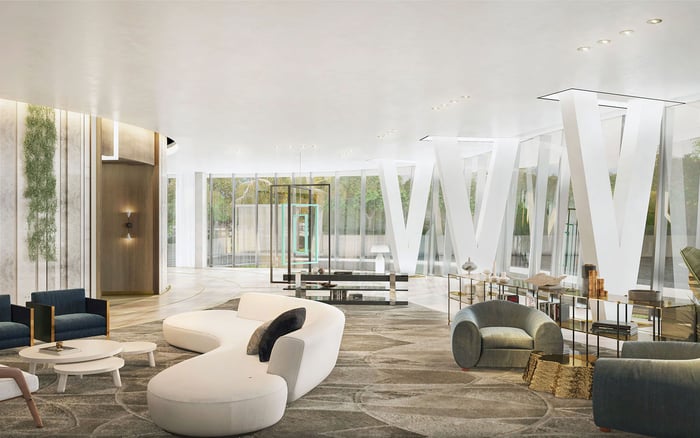
This is why buyers at Park Grove Coconut Grove should request current access practices directly from the association or management team before relying on assumptions. A polished lobby experience is only one layer. The governing documents, rules, vendor responsibilities, and deletion practices are the layers that determine long-term comfort.
The same discipline applies beyond the Grove. A buyer evaluating Vita at Grove Isle or other privacy-forward residences should consider how access policy, staffing, and data handling will be perceived by the next owner, not only by the current household.
Before contract or closing, ask for a plain-language explanation of the access system. Confirm whether biometrics are in use, which points they control, whether enrollment is optional, where templates are stored, who controls the records, and how deletion is handled after sale or departure.
Also ask for the failure plan. The answer should cover storms, outages, guest arrivals, staff changes, and emergency access. If management can answer confidently and consistently, biometrics may support the building’s service proposition. If the answers are improvised, the risk is not the technology itself. The risk is governance.
For Park Grove Coconut Grove and comparable top-project residences, the ultimate standard is elegant restraint: access that feels effortless, security that feels credible, and privacy policies that can withstand sophisticated buyer scrutiny.
Does this mean Park Grove Coconut Grove currently uses biometric access? Not necessarily. Buyers should verify current access practices directly with the association, property manager, governing documents, or security disclosures.
What is the first question to ask about biometric access? Ask where biometrics are used, such as entries, elevators, garages, amenities, guest access, or staff circulation.
Why does storage location matter? Storage location affects who may access the template, how it is protected, and what happens if the vendor or system changes.
Should biometric enrollment be mandatory? Privacy-sensitive buyers often prefer optional enrollment with alternatives such as fobs, cards, PINs, mobile credentials, or staffed access.
Who should control biometric data? The responsible party should be clearly identified, whether it is the association, manager, vendor, or another technology provider.
What deletion policy should a buyer request? Ask how records are deleted when an owner sells, a tenant leaves, staff access ends, or a vendor is replaced.
Can biometrics improve service? Yes, if the system is reliable, optional, well supported by staff, and backed by clear fallback procedures.
What are the main operational risks? Key risks include outages, hurricanes, internet interruptions, failed credentials, guest delays, and emergency-access confusion.
Why do international buyers care about this issue? Biometric data can raise privacy, liability, and reputational concerns across borders, especially for family offices and public figures.
Can weak biometric policies affect resale? Yes. Future buyers may hesitate if the system feels invasive, poorly documented, legally uncertain, or operationally fragile.
For a confidential assessment and a building-by-building shortlist, connect with MILLION.
If branded residences are on your mind — as a home or as an allocation — we would be glad to share what we are seeing, privately.
Begin a quiet conversation