A buyer-focused look at mental-health quiet zones in South Florida luxury residences, and how to distinguish true sensory design from wellness branding.
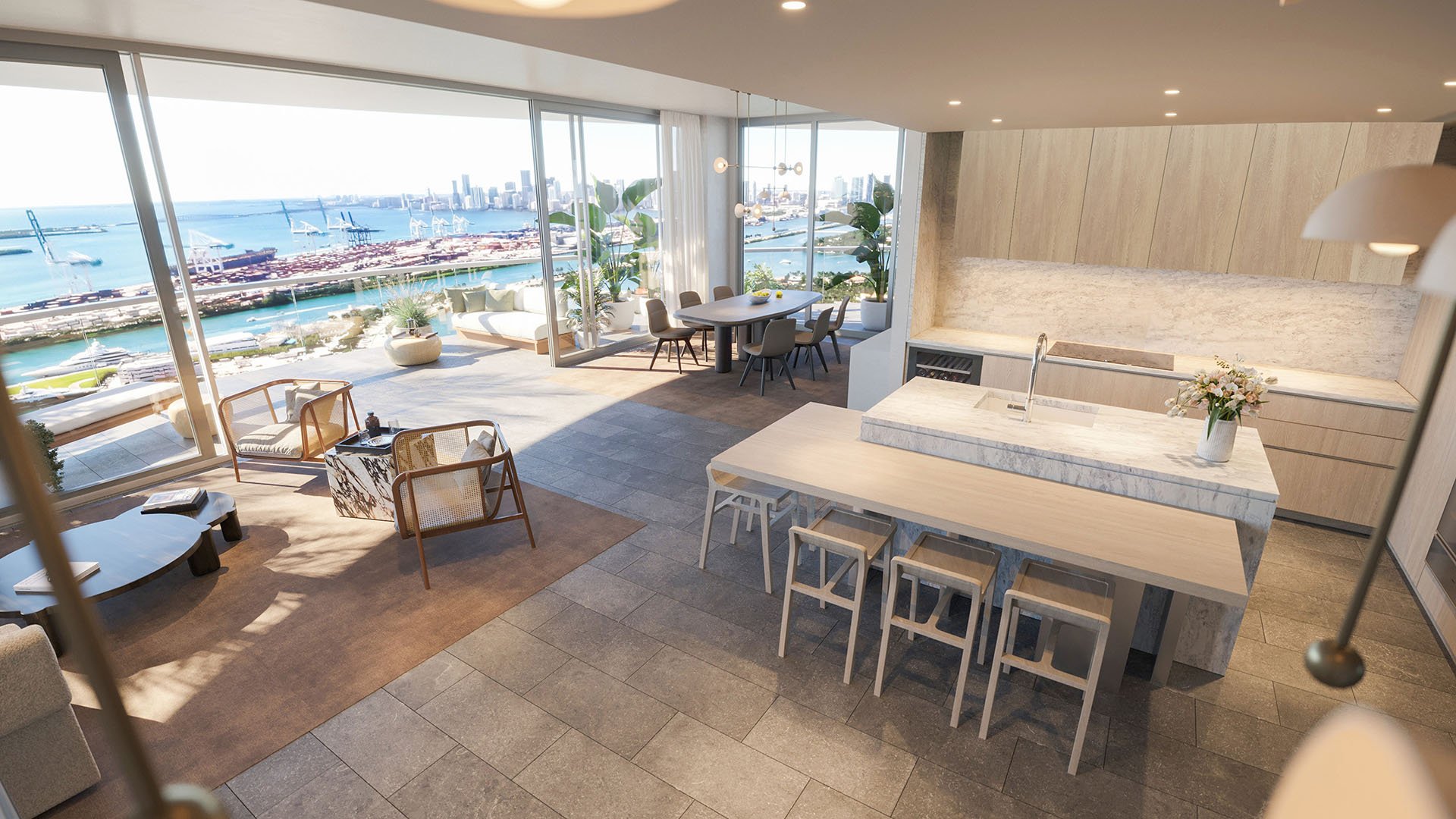
In South Florida luxury real estate, wellness has become one of the most repeated words in the sales gallery. It can mean a spa, a cold plunge, a meditation room, a yoga terrace, or simply a softer palette in the renderings. Mental-health quiet zones demand a more disciplined conversation. They are not decorative wellness. They are an architectural promise that a resident can retreat from sound, interruption, brightness, crowding, and the performative atmosphere that can follow amenity culture.
For a buyer, the distinction matters. A quiet zone should not feel like one more room to tour. It should feel like a controlled pause within the building, protected from elevator noise, pool activity, lobby traffic, and social programming. Its value is not how photogenic the space appears. Its value is whether it remains calm when the building is fully occupied and the day is at its loudest.
That is why residences under consideration in Brickell, Miami Beach, Bay Harbor Islands, Coconut Grove, and other high-demand settings deserve a more exacting wellness checklist. A buyer considering 2200 Brickell, for example, should ask not only which amenities are included, but how quiet is sequenced, separated, and maintained.
True quiet is planned before the furniture arrives. It begins with placement. A credible mental-health quiet zone should not be an afterthought carved from leftover square footage beside a corridor, service room, or high-traffic amenity deck. It should sit within a circulation pattern that reduces accidental noise and social friction.
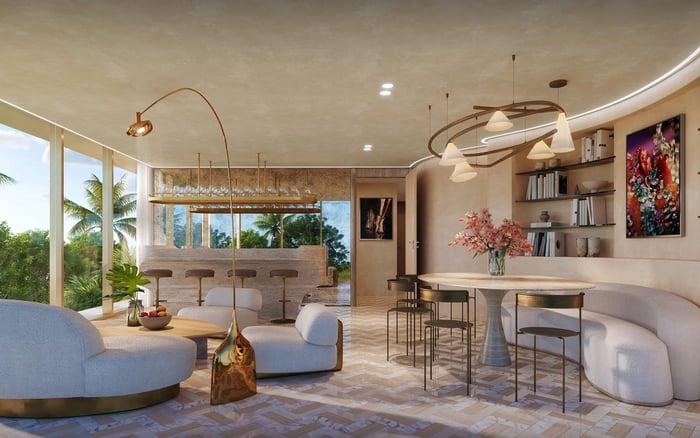
It also depends on sensory restraint. Materials should absorb rather than amplify. Lighting should be calm without becoming dim or theatrical. Seating should allow solitude without making residents feel exposed. Views can help, but a view alone does not create a quiet zone. A spectacular room can still fail if it echoes, overheats, or sits too close to the building’s energy.
This is where amenity marketing often reveals itself. If the conversation focuses entirely on the label, the rendering, or the lifestyle vocabulary, the buyer should go deeper. Ask how the space is insulated. Ask whether reservations are required. Ask whether phones, music, food service, or group events are allowed. The more a quiet zone behaves like a social lounge, the less likely it is to function as mental-health infrastructure.
The best test is practical. Imagine using the space when the pool deck is active, guests are arriving, and the fitness center is full. Does the route to the quiet zone pass through noise, or does it create a gradual transition into calm? Does the entry feel discreet? Is the furniture arranged for privacy, or does every seat face another resident?
Buyers should also ask who controls the room. A quiet zone with no operating rules is vulnerable to drift. Over time, it can become a waiting area, a laptop lounge, or overflow space for programming. Real wellness requires management discipline. The building must decide that quiet is an amenity in itself, not a room to be monetized or constantly activated.
In branded wellness environments such as The Well Bay Harbor Islands and The Well Coconut Grove, the buyer conversation should remain precise. A wellness identity does not remove the need to examine acoustics, privacy, circulation, and operating culture. A sophisticated buyer separates the promise of restoration from the mechanics that make restoration possible.
South Florida living is rich in stimulation: light, water, dining, culture, boating, hospitality, and constant social motion. For many buyers, that is the appeal. The most successful residences do not reject that energy. They balance it with places where the nervous system can stand down.
This balance is especially relevant in vertical living. A private residence may be serene, but the shared building experience can still be active. Lobbies, pools, gyms, terraces, elevators, valet areas, and amenity floors all shape the resident’s day. A quiet zone becomes meaningful when it gives owners a neutral interior space that is neither home nor spectacle.
In Miami Beach settings, the contrast between resort energy and residential calm can be especially important. A buyer looking at The Perigon Miami Beach might reasonably consider how the building’s shared spaces support privacy and decompression. In Coconut Grove, the expectation may lean more naturally toward canopy, softness, and retreat, but the same questions still apply. Calm should be designed, not assumed.
Mental-health quiet zones must be discreet. Residents should not feel that using the space announces stress, fatigue, or a need to withdraw. The best quiet rooms avoid clinical language and spectacle. They are elegant, neutral, and normal to use at any hour.
This matters for ultra-premium buyers who value privacy as much as finish level. A meditation room at the center of an amenity tour may photograph well, but it may not be where an owner wants to sit after a demanding day. A well-placed quiet zone allows use without performance. It protects the resident from being watched, greeted, interrupted, or socially obligated.
That emotional discretion is part of luxury. The room should not ask anything of the resident. It should not require attire, conversation, scheduling, or explanation. It should be available as a subtle extension of the home, quietly supported by the building’s design and rules.
The most revealing questions are simple. Where is the quiet zone located in relation to elevators, service areas, fitness rooms, pools, and entertainment spaces? What materials are used to control sound? How is the room lit throughout the day? Are there policies around calls, music, children, private events, and group classes? Who enforces those policies?
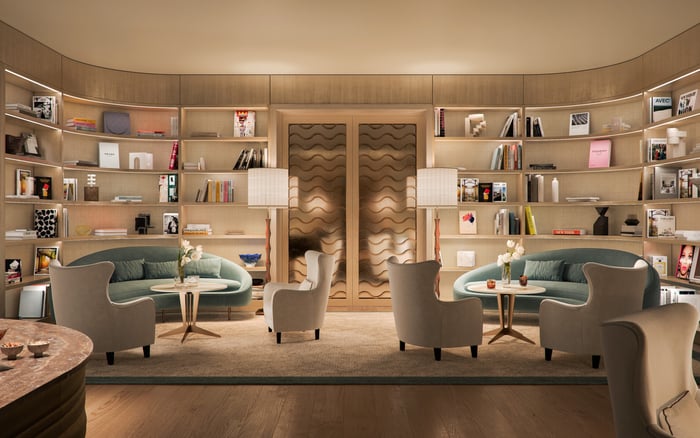
Buyers should also ask whether there are multiple scales of quiet. A large room can be beautiful, but some residents need small, individual refuge. Others may want a contemplative garden, a library-like setting, or a spa-adjacent lounge. A strong wellness program offers choice without turning every quiet space into a branded moment.
At The Residences at 1428 Brickell, as with any prominent urban residence, the essential question is not whether the amenity package sounds complete. It is whether the building can protect calm inside a dense, high-energy environment. That is the difference between a feature and a lived benefit.
Real wellness feels repeatable. It is not dependent on a perfect afternoon, an empty building, or a freshly staged sales gallery. It works on a weekday morning, during a holiday weekend, and after a late dinner. It is supported by architecture, operations, and resident culture.
It also feels quiet before it becomes silent. The transition matters. A building that moves residents from arrival to refuge through thoughtful thresholds can lower sensory load gradually. This may be achieved through softer lighting, calmer corridors, reduced visual clutter, and spaces that do not force interaction.
The future of wellness in South Florida luxury real estate will likely be judged less by how many amenities a building names and more by how intelligently it edits them. Buyers are learning that calm is not a slogan. It is a standard. The most convincing buildings will be those that treat silence, privacy, and sensory control as essential residential services.
What is a mental-health quiet zone in a luxury residence? It is a shared or semi-private space designed to reduce sensory load, support calm, and offer residents a discreet place to decompress.
Is a quiet zone the same as a meditation room? Not always. A meditation room may be one expression of quiet, but a true quiet zone depends on acoustics, privacy, lighting, and operating rules.
How can buyers tell if a quiet zone is real or just marketing? Ask where it is located, how sound is managed, what activities are allowed, and whether the building protects the space from social overflow.
Why does acoustic control matter so much? Sound is one of the fastest ways a calm space can fail. Materials, placement, and adjacency all influence whether the room feels restorative.
Should quiet zones be reservable? Sometimes, but over-scheduling can make the space feel formal. The best approach depends on the building’s size, culture, and intended use.
Are wellness-branded residences automatically better at quiet design? No. Branding can signal intent, but buyers should still evaluate the physical and operational details that make quiet possible.
What role does privacy play in mental-health amenities? Privacy allows residents to use the space without explanation or performance, which is essential for emotional ease and daily usability.
Can an outdoor space function as a quiet zone? Yes, if it is shielded from noise, crowding, and visual exposure. A garden or terrace must be managed as carefully as an interior room.
Is this trend relevant beyond ultra-luxury condos? Yes. Any residential building that promises wellness should consider how residents recover from noise, social demands, and overstimulation.
What should buyers prioritize first? Prioritize location within the building, sound control, privacy, and clear rules. Furnishings and branding should come after those fundamentals.
For a tailored shortlist and next-step guidance, connect with MILLION.
If branded residences are on your mind — as a home or as an allocation — we would be glad to share what we are seeing, privately.
Begin a quiet conversation