A refined guide for international and design-led buyers evaluating boutique residences in Coral Gables, with emphasis on scale, privacy, architecture, daily rituals, and long-term fit.
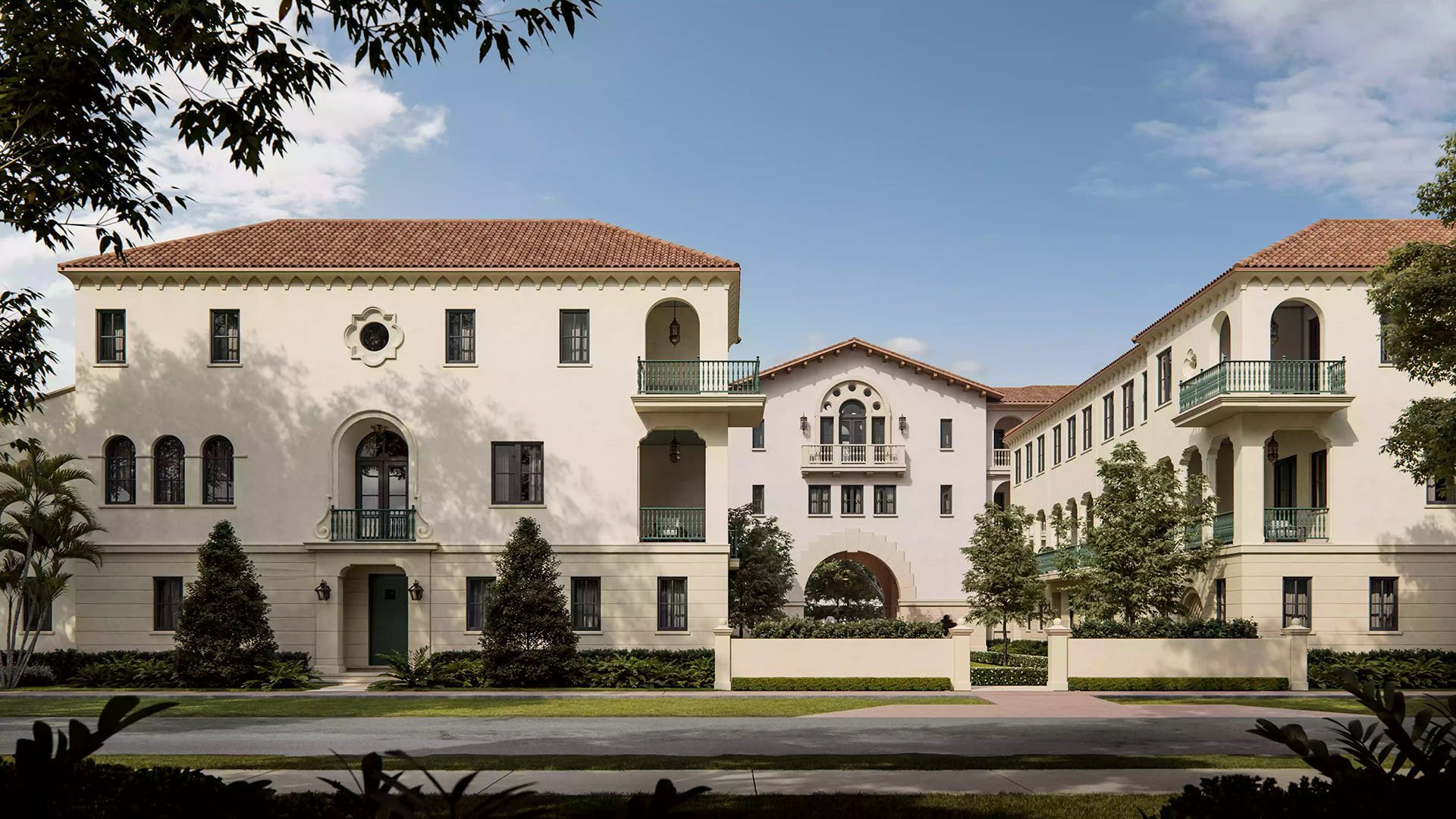
A buyer arriving from Paris often brings a precise instinct: an appreciation for proportion, restraint, privacy, and the quiet choreography of daily life. Coral Gables answers that sensibility in a South Florida register. The setting is warmer, greener, and more car-oriented than the Right Bank or Saint-Germain, yet the best boutique residence here can still deliver a familiar refinement: human scale, gracious entries, layered landscaping, and a sense that architecture should improve the day rather than dominate it.
This is not the same decision as buying a high-floor trophy condominium on the ocean or a branded tower in the urban core. A boutique residence in Coral Gables should be judged by intimacy, not spectacle. The essential question is not simply what you can buy, but how you want to live once the novelty of the purchase has settled into routine.
In a boutique building, scale is the first luxury. Fewer residences can mean a more residential atmosphere, a calmer lobby, and a stronger sense of recognition among owners, staff, and neighbors. For a Parisian buyer accustomed to buildings where the entry, stair, courtyard, and street relationship matter as much as the apartment itself, this is a natural lens.
Finishes still matter, but they should not be the opening question. Marble, millwork, appliances, and fixtures can impress during a tour, while the less visible elements shape ownership for years. Look at the width of corridors, the privacy of elevator arrivals, the transition from parking to residence, the acoustics at the entry, and the natural light in the spaces where you will actually spend your mornings and evenings.
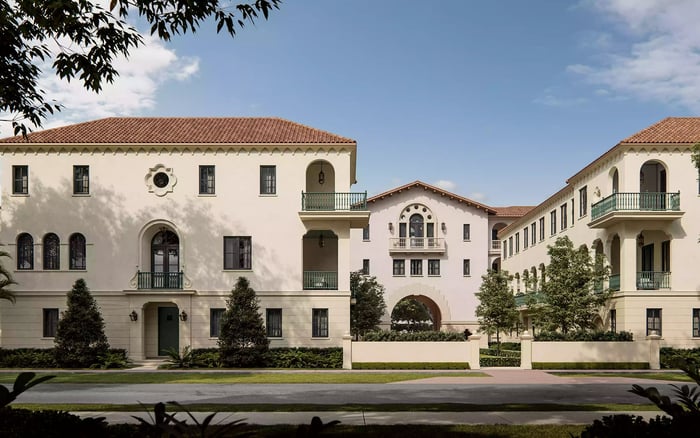
In Coral Gables, projects such as Cora Merrick Park invite buyers to think beyond the unit plan and ask how the residence relates to neighborhood life. The right building should make it easy to move between private retreat and the surrounding city without feeling exposed.
Paris buyers understand micro-location. One street can feel formal, another intimate, another practical but less poetic. Coral Gables rewards the same discipline. Rather than treating the city as one broad prestige address, study the daily map: where you will walk, where guests will arrive, where you will dine casually, where you will take coffee, and how easily you can reach Miami, Coconut Grove, Brickell, or the airport when needed.
A Coral Gables search should also separate romance from logistics. A beautiful address may still fall short if the parking flow is awkward, the outdoor space is ornamental rather than usable, or the route to daily conveniences is less intuitive than it appeared on a weekend tour. Conversely, a quieter setting may prove more luxurious if it supports a repeatable rhythm.
For buyers who want a village atmosphere rather than a tower experience, The Village at Coral Gables belongs in the conversation because it frames the purchase around place, not only product. The best boutique decision begins with the surrounding blocks.
The most revealing part of a boutique residence is often the first ninety seconds. How does the building receive you? Is the entry discreet or theatrical? Does the lobby feel staffed, staged, or genuinely livable? Is there a clear sense of privacy from street to elevator to front door?
For a buyer used to Parisian thresholds, this matters deeply. The pleasure of coming home is cumulative. It includes the approach, the landscaping, the lighting, the scent and temperature of common areas, and the ease with which bags, guests, drivers, pets, and deliveries are handled without friction.
A boutique building should feel composed even on an ordinary Tuesday. If the arrival depends on perfect staging or an empty lobby to seem elegant, keep looking. True residential quality remains persuasive when the building is in normal use.
Boutique residences often attract buyers who have already lived in larger homes or more conventional condominiums. They know that square footage alone is not the measure of comfort. A well-planned residence can feel generous because circulation is efficient, rooms have clear purpose, and the indoor-outdoor relationship is natural.
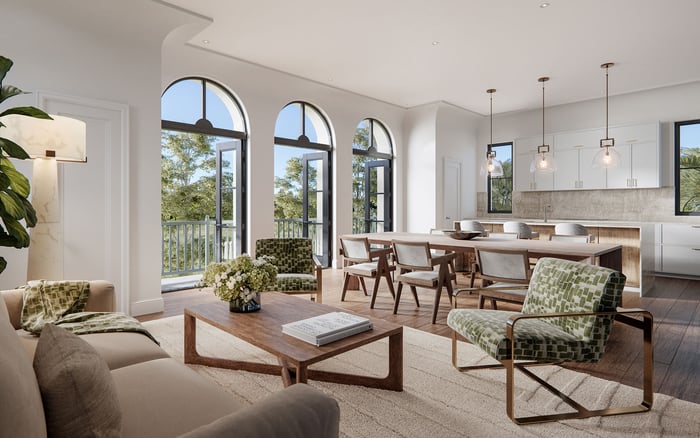
For a Paris-to-Coral Gables buyer, the kitchen deserves particular scrutiny. Is it designed for real cooking, discreet catering, or primarily visual impact? Can a dinner unfold without clutter overtaking the living space? Is there enough storage for seasonal wardrobes, tableware, art books, luggage, and the practical items that rarely appear in renderings?
Outdoor space should be evaluated with the same rigor. A terrace that looks impressive on a plan must have usable depth, sensible access, and enough privacy to become part of daily life. In South Florida, shaded outdoor living can be as important as interior volume.
The strongest Coral Gables buyers are often also considering Coconut Grove, Brickell, Miami Beach, or Bay Harbor Islands. Each speaks to a different version of South Florida life. Coral Gables tends to appeal when the buyer wants elegance without constant spectacle, proximity without density as the defining feature, and architecture that feels grounded.
Still, comparison sharpens judgment. Coconut Grove may appeal to buyers seeking a more bohemian garden character near the bay. A wellness-oriented buyer might study The Well Coconut Grove as a useful contrast to the Coral Gables mood. Brickell, by comparison, may suit a buyer who wants vertical energy and immediate access to a financial district lifestyle.
The point is not to crown one neighborhood universally. It is to identify which setting will still feel right after the first season of ownership. A boutique residence succeeds when the neighborhood and the building share the same temperament.
Discreet luxury depends on management. Before committing, ask how the association is structured, how maintenance decisions are handled, and how the building intends to preserve its character as it matures. Boutique properties can be deeply satisfying, but they require thoughtful governance because each owner’s experience is more closely tied to the whole.
Service expectations should be clarified in practical terms. A smaller building may feel more private, but it may also offer a different service model than a large luxury tower. Decide whether you prefer hotel-like intensity or residential quiet. Neither is inherently superior. The right answer depends on how often you will be in residence, whether you entertain, and how much support you expect when you arrive after travel.
For buyers drawn to the central Gables lifestyle, Ponce Park Coral Gables naturally prompts these questions: what kind of ownership culture is being created, and will it match the buyer’s expectations for discretion, upkeep, and ease?
The most reliable test is not the gala evening, the holiday stay, or the first tour with perfect lighting. Imagine an ordinary day. You wake early, make coffee, step outside, take a call, receive a delivery, meet a friend, return at dusk, and close the door behind you. Does the residence make that day better?
A Paris buyer may be especially sensitive to this standard because the finest urban homes are measured in rituals. The view from the breakfast table, the quiet of the bedroom, the dignity of the entry, the relationship between public and private rooms, the feeling of the street below: these are not secondary details. They are the architecture of daily satisfaction.
In Coral Gables, the boutique choice is ultimately an edited one. It asks the buyer to resist excess, study proportion, and choose a residence with enough grace to remain compelling after the market conversation has moved on.
Is Coral Gables a good fit for buyers relocating from Paris? It can be, especially for buyers who value architecture, neighborhood character, privacy, and a more composed pace than denser urban districts.
What defines a boutique residence in this context? It is generally a smaller-scale residential setting where privacy, design coherence, and daily ease matter more than spectacle.
Should I choose Coral Gables over Miami Beach? Choose Coral Gables if you prefer greenery, neighborhood rhythm, and understated elegance; choose Miami Beach if ocean proximity is central to the lifestyle.
How important is outdoor space? Very important, but only if it is usable. Depth, shade, privacy, and access matter more than headline size.
What should I study during a private tour? Focus on arrival, acoustics, storage, natural light, elevator privacy, parking flow, and how the plan supports daily routines.
Are finishes the main differentiator? No. Finishes create first impressions, but planning, management, privacy, and location usually determine long-term satisfaction.
Can a boutique residence work as a second home? Yes, provided the service model, security, maintenance standards, and access logistics match how often you plan to use it.
Why compare Coconut Grove during a Coral Gables search? It offers a nearby but different lifestyle reference, helping buyers clarify whether they prefer garden informality or Gables formality.
What is the biggest mistake buyers make? They fall for presentation before testing the ordinary day: storage, deliveries, guest arrival, noise, and practical neighborhood movement.
What is the best way to shortlist comparable options for touring? Start with location fit, delivery status, and daily lifestyle priorities, then compare stacks and elevations to validate views and privacy.
For a confidential assessment and a building-by-building shortlist, connect with MILLION.
If branded residences are on your mind — as a home or as an allocation — we would be glad to share what we are seeing, privately.
Begin a quiet conversation