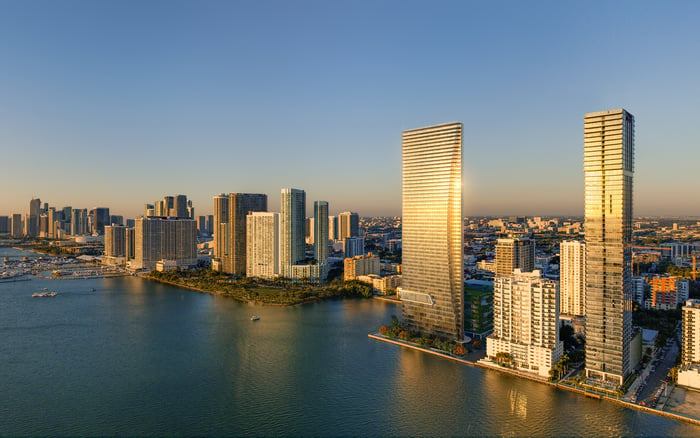
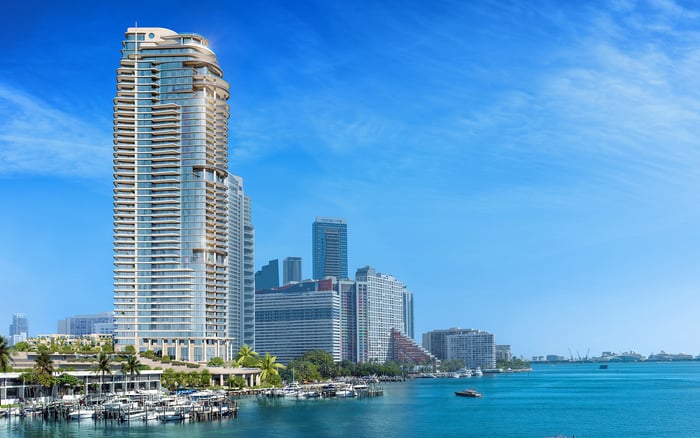
A due-diligence framework for evaluating shoreline infrastructure, storm exposure, documentation, responsibility, and potential capital work when considering waterfront property near Villa Miami.

For buyers considering Villa Miami, the water should be treated as both a lifestyle feature and a distinct due-diligence category. The review can address shoreline structures, storm exposure, site drainage, available records, maintenance obligations, and the process for funding future work.
The scope depends on the property. A condominium review may focus on association documents, shared responsibilities, reserves, insurance materials, and planned projects. A single-family acquisition may require closer study of the parcel boundary, marine structures, access, permits, and owner obligations.
Comparisons with Aria Reserve Miami should not rely on the outlook alone. Buyers can ask how each property's shoreline system is documented, maintained, inspected, and financed.
Before interpreting an elevation, permit, or construction detail, confirm which authority governs the parcel and which current requirements apply. Counsel and appropriately qualified technical professionals can help identify the relevant rules without relying on assumptions drawn from another South Florida waterfront property.
Elevation records also require context. A survey should identify the measurement reference used, while a qualified professional should explain how the recorded figures relate to the applicable standard. Buyers should avoid comparing figures that use different reference systems without professional interpretation.
A records review can include available surveys, permits, approved plans, inspection records, engineering materials, warranties, invoices, and correspondence concerning shoreline work. Missing or inconsistent documents are reasons to investigate further rather than fill gaps with assumptions.
The visible wall is only one component of the waterfront edge. An inspection may consider the wall, cap, joints, supports, drainage, soil conditions, dock connections, transitions to neighboring structures, and practical access for future work.
Potential warning signs should be evaluated by a qualified professional. Buyers can ask whether observed cracking, movement, corrosion, exposed reinforcement, soil loss, depressions, or water intrusion indicate a maintenance issue or a larger structural concern.
Access and staging also belong in the review because they may affect how work could be performed. Rather than relying on a generic allowance, buyers can request property-specific scopes that account for the actual site and proposed work.
For condominium purchases, determine how the governing documents classify shoreline and marine components. Review available budgets, reserve materials, engineering reports, insurance documents, meeting records, pending projects, and assessment information with appropriate advisers.
Responsibility should be traced beyond the physical structure. Buyers comparing the ownership framework with Una Residences Brickell can ask who approves work, who selects contractors, how costs are allocated, and what documentation owners receive.
New construction should not end the inquiry. Buyers can request available civil, structural, marine, and closeout records and ask whether any open items, warranties, maintenance plans, or future obligations apply.
A useful financial review separates immediate maintenance, targeted repair, and broader replacement possibilities. Each scenario should be based on the property's actual conditions and a clearly defined scope prepared by qualified professionals.
Quotes can identify what is included, such as design, surveys, permitting, mobilization, access, drainage work, dock interfaces, and site restoration. Buyers should also ask what assumptions or exclusions could change the final amount.
Documented findings may inform negotiations, but any proposed price adjustment, credit, repair obligation, or escrow arrangement should be evaluated within the purchase agreement and with legal advice.
Descriptions such as “new seawall” or “recent marine work” should prompt a document review. Buyers can request the permit record, approved scope, final inspection materials, contractor information, invoices, warranties, and any engineering correspondence available for the completed work.
An independent inspection can help assess current observable conditions and whether the documentation aligns with the structure presented. The goal is not to dismiss prior work, but to understand precisely what was completed and what obligations may remain.
The same discipline applies when considering The Ritz-Carlton Residences® Miami Beach or another South Florida waterfront residence. Architecture, amenities, and views can be evaluated alongside the records and responsibilities that support long-term ownership.
A buyer can organize the review into legal, technical, operational, and financial workstreams. Counsel can address governing documents and contractual protections; surveyors and engineers can interpret site information; inspectors and contractors can evaluate condition and scope; and financial advisers can help assess potential ownership exposure.
Questions should remain property-specific. Confirm who is responsible, what has been documented, what remains uncertain, and how possible future work would be approved and funded. This approach helps keep the waterfront setting in perspective while the underlying ownership obligations receive equal attention.
What should a buyer review first at a waterfront property? Begin by confirming the governing authority, property type, and party responsible for shoreline infrastructure.
Is a seawall elevation enough to assess the property? No. The broader review may include condition, drainage, adjacent grades, access, documentation, and maintenance responsibility.
Why should a professional interpret elevation records? Elevation figures can use different measurement references, so professional interpretation helps prevent an inaccurate comparison.
Which records can support a claim of recent seawall work? Ask for available permits, approved plans, inspection records, engineering materials, invoices, warranties, and contractor details.
Should condominium buyers investigate shoreline infrastructure? Yes. They should understand how governing documents assign maintenance, approval, reserve, and cost obligations.
How should a buyer estimate possible marine work? Request property-specific scopes for maintenance, repair, and replacement rather than relying on a generic allowance.
Why does site access matter? Access may influence how contractors plan staging and perform work, so it should be addressed in any proposed scope.
What visible conditions merit professional review? Cracking, movement, corrosion, exposed reinforcement, soil loss, depressions, and water intrusion should be evaluated rather than interpreted casually.
Does a closed permit replace an independent inspection? A permit record and a buyer's condition assessment serve different purposes, so buyers may choose to review both.
How can shoreline findings affect a purchase decision? Findings can inform risk assessment, negotiations, contract terms, and planning for potential ownership costs.
If you'd like a private walkthrough and a curated shortlist, connect with MILLION.
If branded residences are on your mind — as a home or as an allocation — we would be glad to share what we are seeing, privately.
Begin a quiet conversation