A buyer-focused framework for assessing wind and flood coverage, condominium deductibles, retained risk, documentation quality, and future resale liquidity in Surfside.

In Surfside, insurance diligence is more than a closing task. It is part of evaluating the residence itself. The annual premium matters, but so do coverage boundaries, hurricane deductibles, flood exposure, association finances, and the ease with which a future buyer can secure financing.
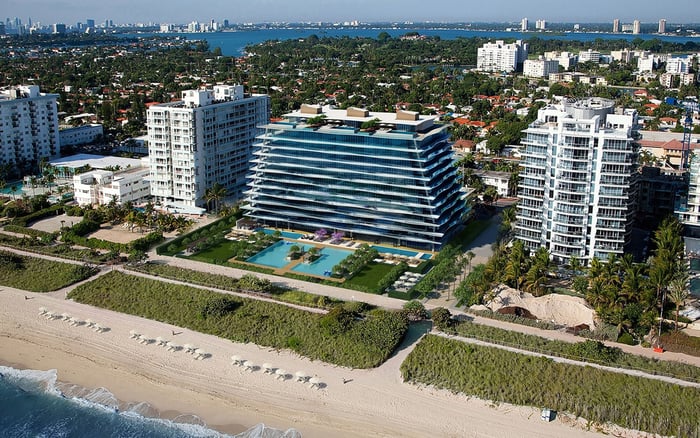
That broader view is especially important for an oceanfront or waterfront condominium. Buyers comparing residences at Arte Surfside or elsewhere along the shoreline should calculate total retained risk rather than treat a quoted premium as the final cost. This Buyer's Guides framework focuses on the documents and questions that can preserve both ownership confidence and long-term resale appeal.
Florida residential property policies generally must provide windstorm coverage, subject to statutory exceptions and permitted exclusions. A policyholder may also exclude windstorm coverage through a signed written acknowledgment. The word “insured,” therefore, does not establish that a residence has the protection a coastal buyer expects.
Confirm whether wind protection appears in the unit policy, the condominium master policy, a separate wind-only policy, or an endorsement. Wind-only coverage can address hurricanes, tropical storms, tornadoes, and other high-wind events, but it generally does not cover flooding, storm surge, or other non-wind water damage.
Treat wind and flood as distinct exposures. Review the flood-zone designation, available elevation or flood documentation, and storm-surge exposure alongside the insurance structure. For buyers using Citizens coverage, flood requirements also warrant early attention: beginning January 1, 2024, flood insurance became mandatory for new and renewal policies with wind coverage on dwellings carrying replacement costs of $600,000 or more, with broader implementation scheduled through 2027.
Obtain the master-policy declarations and association insurance summary, then identify precisely what the building policy covers and what remains the owner's responsibility. Interiors, improvements, contents, fixtures, and other components may not all fall on the same side of that boundary.
This review should be residence-specific. A buyer considering Ocean House Surfside should not assume that another condominium's coverage structure applies. Ask an insurance adviser to compare the master policy and proposed unit policy side by side, identify gaps, and confirm that the lender will accept the resulting program before contractual contingencies are removed.
A hurricane or wind deductible can differ materially from the standard deductible for other covered losses. Determine whether each deductible is a fixed amount or a percentage of insured value. On a luxury property, a percentage can create substantial out-of-pocket exposure even when the premium appears competitive.
Apply the same analysis at the association level. A high master-policy wind deductible or restricted coverage can reach owners indirectly through assessments and pressure on association finances. Add the unit deductible, the potential share of an association deductible, uncovered interiors, and plausible assessment exposure. The total is a more revealing measure of retained risk.
When comparing The Delmore Surfside with another Surfside opportunity, request deductible examples in dollars rather than percentages alone. Clear arithmetic makes different insurance structures easier to compare-and easier to explain when the residence returns to market.
Qualifying wind-mitigation features may generate premium credits when supported by the appropriate inspection form. Eligible credits can be substantial, potentially reaching up to 90% when inclusive of a Building Code Effectiveness Grading discount, but buyers should evaluate the actual quote rather than assume the maximum applies.
Wind-mitigation reports are commonly valid for five years. Verify the date, confirm that the insurer accepts the documentation, and determine whether a new inspection is necessary. The core diligence file should also include flood-zone and elevation records, exclusions, deductible schedules, master-policy declarations, and the association insurance summary.
Prompt, organized delivery matters. If records are unclear or slow to arrive during the acquisition, a future buyer and lender may encounter the same friction. Documentation quality is therefore both an operational issue and an investment consideration.
Mortgage lenders commonly require wind coverage in Florida coastal markets, even though the state does not universally require homeowners to purchase it. Unclear coverage, large deductibles, or rising insurance costs can complicate financing and narrow the future buyer pool.
The most resilient purchase is not automatically the one with the lowest premium. It is the residence whose risks are understandable, whose coverage layers fit together, and whose association can clearly explain its deductible exposure. That principle applies equally when reviewing The Surf Club Four Seasons Surfside or a less prominent building nearby.
Before closing, secure complete policies and endorsements, verify wind and flood separately, model deductibles in dollars, inspect mitigation documentation, and review potential assessment exposure. A clean diligence package gives today's buyer clarity and tomorrow's buyer fewer reasons to hesitate.
Does a condo master policy cover my residence completely? Not necessarily. Confirm which interiors, improvements, fixtures, contents, and other components remain the unit owner's responsibility.
Is wind insurance the same as flood insurance? No. Wind coverage generally does not cover flooding, storm surge, or other non-wind water damage.
Can windstorm coverage be excluded from a Florida residential policy? Yes. Subject to applicable rules, a policyholder may sign a written acknowledgment excluding windstorm coverage.
What should I check on a hurricane deductible? Determine whether it is fixed or percentage-based, then translate the percentage into a dollar amount using the relevant insured value.
Why does the association deductible matter to a unit buyer? A large master-policy deductible can affect association finances and create indirect exposure through assessments.
When should insurance be reviewed during a purchase? Review it before removing contingencies, since lenders generally require acceptable coverage before closing.
What flood information belongs in the diligence file? Include the flood-zone designation, available elevation or flood documentation, and an evaluation of storm-surge exposure.
How long is a wind-mitigation report commonly valid? It is commonly valid for five years, although the buyer should confirm that the insurer accepts the existing report.
Can mitigation features reduce premiums? Qualifying features may generate credits when properly documented, but the actual benefit must be verified in the insurance quote.
What insurance qualities best support resale? Clear coverage, manageable retained risk, organized records, and predictable ownership costs can reduce financing friction for a future buyer.
If you'd like a private walkthrough and a curated shortlist, connect with MILLION.
If branded residences are on your mind — as a home or as an allocation — we would be glad to share what we are seeing, privately.
Begin a quiet conversation