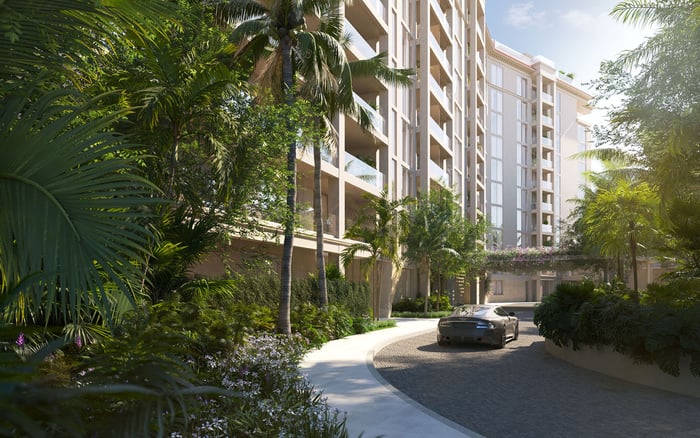
A discreet buyer’s guide to evaluating amenity depth in Coral Gables and nearby South Florida neighborhoods without sacrificing privacy, residential calm, or architectural restraint.
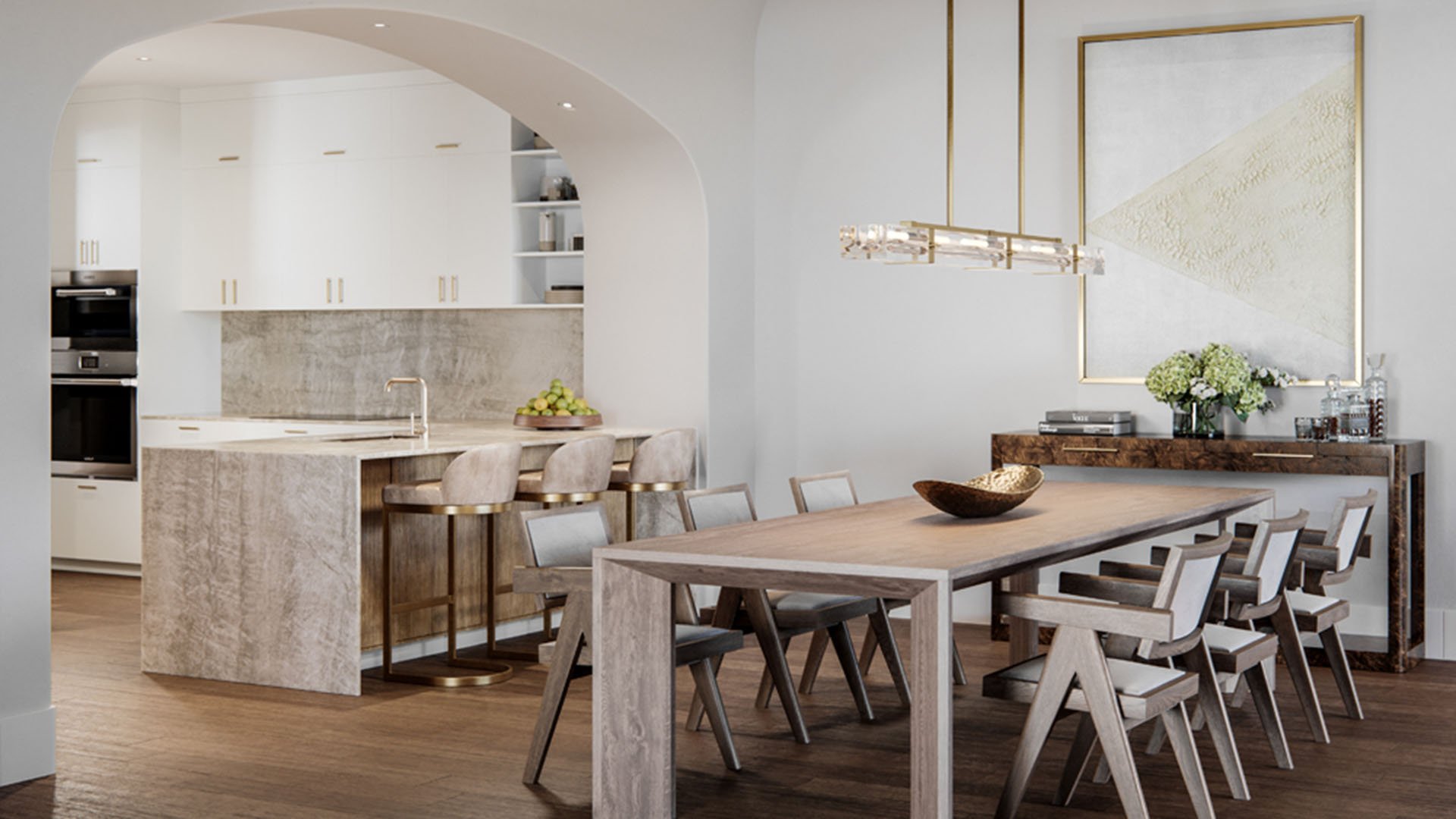
For a buyer arriving from Paris, the most compelling South Florida home is rarely the one with the loudest amenity brochure. It is the one that understands discretion. The right residence gives structure to daily life: a place to exercise without leaving the property, receive guests without exposing the private home, work quietly, park comfortably, and move from travel back into routine with minimal friction.
That is the difference between amenity depth and a resort feeling. Amenity depth is useful, layered, and carefully edited. A resort feeling is theatrical, transient, and often too public for a primary residence. In Coral Gables, where buyers often seek a calmer residential cadence than the most visible waterfront or nightlife districts, that distinction matters.
The question is not simply whether a building has amenities. The sharper question is whether those amenities reinforce the way you want to live.
Amenity depth begins with variety, but it is proven by relevance. A long list can be less valuable than a smaller set of spaces that will be used often and well. Before a showing, divide amenities into three categories: daily, weekly, and occasional.
Daily amenities might include fitness, package handling, parking flow, pet logistics, co-working, or a quiet lobby sequence. Weekly amenities may include private dining, guest suites, wellness rooms, children’s spaces, or meeting rooms. Occasional amenities, such as event spaces or grand entertainment areas, can be beautiful, but they should not dominate the ownership experience unless hosting is central to your lifestyle.
This is where Coral Gables can appeal to a buyer who values order. Projects such as Cora Merrick Park sit within a conversation about residential convenience rather than spectacle. The point is not to replicate a hotel. It is to create a home base that makes the rest of life feel composed.
Coral Gables carries a different emotional proposition from Miami Beach, Brickell, or Sunny Isles Beach. The buyer is often not chasing maximum visibility. The preference is for architectural continuity, neighborhood usefulness, and a softer sense of arrival. Even when amenities are substantial, the mood should feel residential first.
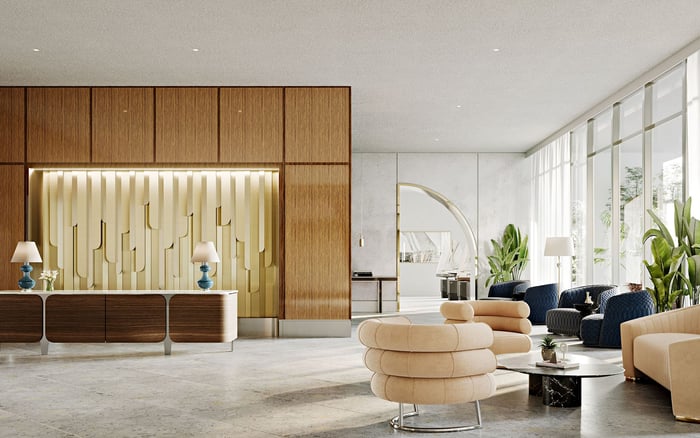
When comparing homes, study the sequence from curb to residence. Is the lobby a stage, or does it provide a graceful threshold? Does valet activity feel calm, or does arrival resemble a hotel porte cochere at peak hour? Are social spaces placed so owners can bypass them, or must every resident move through the same public theater?
At The Village at Coral Gables, the name itself places the buyer in a residential frame of mind: a setting to consider for those who want amenity access to feel woven into everyday life rather than announced as a destination.
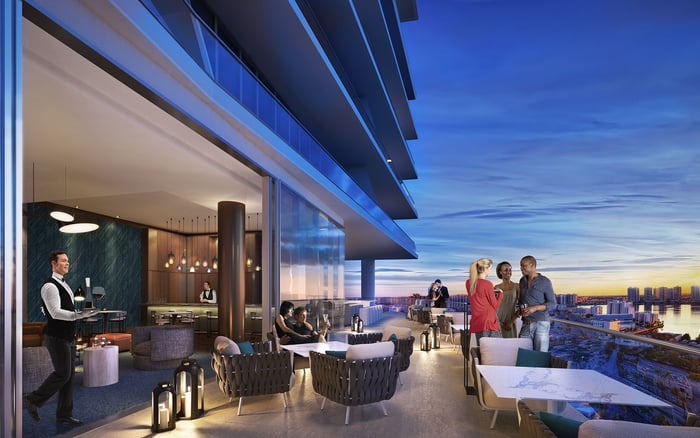
The resort feeling usually appears in five places: arrival, pool culture, food and beverage programming, guest circulation, and noise transfer. A property can be beautiful and still feel wrong if these elements are not aligned with your privacy threshold.
At arrival, look for separation between residents, guests, service providers, and deliveries. A refined building makes logistics nearly invisible. At the pool, consider whether the space is designed for daily use or weekend performance. A pool can be elegant without feeling like a club. For food and beverage, ask whether service is optional and discreet, or whether it becomes the property’s central identity.
Guest circulation is equally important. If friends, staff, or visiting family must pass through intensely shared amenity spaces to reach private areas, the building may feel less residential over time. Finally, listen. Amenity depth should not announce itself through sound. The best buildings allow owners to use shared spaces without feeling that shared life has entered the residence.
A sophisticated buyer should tour beyond one neighborhood, even if Coral Gables is the leading preference. Coconut Grove may appeal when the brief calls for greenery, privacy, and a softer coastal rhythm. Four Seasons Residences Coconut Grove belongs in that comparison for buyers weighing service expectations against a more residential atmosphere.
Brickell offers another test case. It can be compelling for buyers who want a more vertical urban lifestyle, with immediate access to business and dining. Yet in Brickell, the amenity question becomes especially precise: does the building provide calm above the city, or does it intensify the city’s energy inside the residence? The Residences at 1428 Brickell is a relevant point of comparison for buyers evaluating how urban convenience and private residential identity can coexist.
Miami Beach, by contrast, often introduces a stronger leisure component. That can be ideal for a second home or beach-driven routine, but the buyer seeking Coral Gables restraint should be selective. The Ritz-Carlton Residences® Miami Beach offers a useful lens for understanding how branded service, waterfront living, and privacy expectations can be balanced without assuming every owner wants a resort atmosphere.
Lifestyle is not an abstract luxury word. It is the daily choreography of the home. Where do you take a morning call? How does a trainer arrive? Where do children, visiting parents, or staff wait? Can you host dinner without turning your private residence into an operating room of logistics? Can you return from a flight and move from car to kitchen to bedroom without friction?
The best amenity programs answer these questions quietly. They do not demand participation. They support it. For Parisian buyers in particular, this may feel familiar: the most elegant buildings are often the ones that do not insist on being noticed.
In Coral Gables, Ponce Park Coral Gables can be considered within that broader search for a home where amenities serve privacy, proportion, and routine. The goal is not to own the most programmed address. It is to own the most livable one.
Walk the building at the hour you expect to use it. If you exercise early, tour early. If you entertain on weekends, visit when social spaces are active. Ask yourself whether the property feels better when it is occupied, or whether its beauty depends on being empty.
Study staff posture. Formality is not the same as service. The right service culture is attentive without being familiar, present without being performative. Review how many spaces require reservations, how many are walk-in, and how often private events may affect owner use.
Finally, compare the residence itself against the amenities. A great amenity program should never compensate for a compromised floor plan, weak storage, awkward kitchen flow, or insufficient privacy within the home. In the best purchases, the private residence is strong enough to stand alone, and the amenities simply make ownership easier.
What does amenity depth mean in a luxury residence? It means a thoughtful range of services and spaces that support daily living, not just a long list of features.
How can I tell if a building will feel too much like a resort? Pay attention to arrival, pool culture, guest traffic, sound, and whether social spaces dominate the resident experience.
Is Coral Gables a good fit for buyers who value privacy? Coral Gables can suit buyers seeking a more residential rhythm, especially when the building’s service model is discreet.
Should I prioritize amenities or the residence itself? Prioritize the residence first. Amenities should enhance a strong floor plan, not distract from compromises inside the home.
How many amenities are enough? Enough means the building supports your daily and weekly habits without adding complexity, noise, or unnecessary cost.
Are branded residences always more resort-like? Not necessarily. Some branded residences emphasize service and discretion, while others lean more heavily into hospitality energy.
What should Paris-based buyers consider first? Focus on privacy, staff culture, ease of arrival, storage, guest flow, and how the home will function after long-haul travel.
How should I compare Coral Gables with Coconut Grove? Compare the emotional pace, access needs, building scale, and whether each neighborhood supports your preferred daily routine.
Is Brickell too urban for a discreet buyer? It depends on the building. Some buyers enjoy urban access if the residence and amenity areas remain calm and private.
What is the best way to shortlist comparable options for touring? Start with location fit, delivery status, and daily lifestyle priorities, then compare stacks and elevations to validate views and privacy.
To compare the best-fit options with clarity, connect with MILLION.
If branded residences are on your mind — as a home or as an allocation — we would be glad to share what we are seeing, privately.
Begin a quiet conversation