Each winter, Palm Beach County does not simply get busier. It becomes more liquid. Equestrian sport, polo, and yachting bring an international audience with the means to buy quickly, often in cash, and the region’s housing market responds with a familiar pattern: tighter inventory, faster decision cycles, and a premium on turnkey waterfront living. For buyers, the opportunity is not just timing a purchase “before season.” It is understanding what winter demand actually consists of: discretionary second-home capital, relocation-driven tax planning, and a lifestyle requirement for proximity to the venues that define the season. For sellers, it is about presenting a home that reads as effortless, resilient, and immediately usable. Below, MILLION Luxury outlines the forces behind Palm Beach’s winter surge, the data points worth watching, and the practical due diligence that sophisticated buyers now treat as standard.
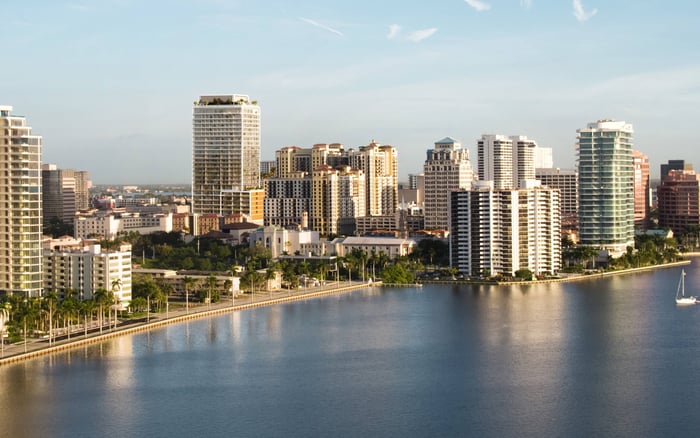
Palm Beach County’s winter market is not a vague idea of a “busy season.” It is a repeatable, highly observable migration of people, horses, and yachts, followed closely by capital. Anyone who has watched the island and its neighboring waterfront corridors from December through April recognizes the sequence: restaurants book out earlier, event invitations stack up, traffic patterns shift, and real estate conversations move from browsing to decision.
What makes this cycle unusually durable is the kind of resident it attracts. Seasonal residency in Florida is well documented in academic research on “snowbirds,” and that structural flow helps explain why demand can strengthen even when other U.S. markets feel uneven. In Palm Beach, the winter audience also tends to treat a home as a lifestyle instrument rather than a purely financial holding. The purchase is often evaluated through the lens of how the season will actually feel day to day, not only what the asset might do on paper.
For West Palm Beach buyers in particular, winter brings a sharper checklist. Walkable dining, waterfront light and views, privacy, and a commute profile that works for events, visiting family, and business all rise in importance. The diligence is still there, but the emotional context is more immediate. Buyers are standing in the climate they want, watching the calendar they are about to live, and that compresses the distance between “interesting” and “let’s do it.”
Palm Beach’s winter calendar is not merely social. It is economic, and the scale is one reason the housing market behaves the way it does.
Wellington’s Winter Equestrian Festival has been positioned as a major economic engine for the county. For early 2025, the Palm Beach County Sports Commission estimated the festival generated $536.2 million in economic impact from January through March, a year-over-year increase reported at 33%. Wellington International has also reported the event drew more than 31,000 competitors from all 50 states and 50 countries. That level of participation is more than a headline. It is a proxy for how international the winter audience is, and why housing needs extend beyond a primary residence. In addition to second homes, winter demand often includes short-term bases, long-stay rentals for extended teams, and practical housing for staff.
Polo reinforces the cadence. The Palm Beach International Polo Season is marketed as running December through April, a timeline that mirrors the peak in-residence period for many second-home owners. Polo also compresses geography. Buyers who intend to participate or host tend to place a premium on proximity and ease. That can translate into preference for turnkey condos and lock-and-leave living, where arrival is simple and the home is ready without a long ramp-up.
Then comes yachting. The Palm Beach International Boat Show is framed by its organizers as a premier destination for the boating world, and industry coverage of the 2025 show cited strong turnout alongside an estimated $1.05 billion-plus statewide economic impact. Even when a visitor is not actively shopping for a vessel, the show functions as a magnet for high-spending households. Many will extend a trip into property tours, and that overlap often pushes real estate timelines forward.
Across equestrian sport, polo, and boating, the common denominator is concentration: high-net-worth visitors arrive in a defined window and share overlapping lifestyle needs. In South Florida, that kind of concentration has real consequences for inventory, negotiation dynamics, and the value placed on homes that are immediately usable.
The winter narrative is persuasive, but sophisticated buyers still want numbers, even when they treat them as context rather than gospel.
Market reporting for Palm Beach County pointed to 1,706 residential sales in November 2025, up 19.7% year over year, a sign of demand firming as the season approached. In the same snapshot, the median single-family price was cited at $605,000, up 0.8% year over year, while the median condo price was cited at $320,000, up 3.2% year over year.
Those countywide medians are not intended to describe the ultra-premium segment, where pricing can be non-linear and where comparable sales can be thinner. Their value is directional. They show a market with participation and forward motion. When transaction counts rise heading into winter, the upper tiers often feel even tighter because the buyer pool is disproportionately discretionary and often able to move quickly.
Liquidity is the statistic that tends to matter most in this environment. The same market report cited roughly 48% of home purchases in November 2025 were cash, compared with about 27% nationally. It also noted the cash share varied by property type: 56.5% of condo transactions and 41.4% of single-family transactions were all-cash.
In a winter market, cash is not just a financing choice. It is a negotiating posture and a timeline advantage. Sellers interpret cash as certainty, and in competitive situations certainty often becomes a price lever. Even for buyers who prefer to finance for portfolio reasons, the local context is clear: transactions that remove friction tend to win.
Palm Beach’s winter buyer is often shopping in multiple markets at once, including New York, Connecticut, California, and increasingly global gateways. The question is not whether interest exists. The question is what converts that interest into a contract. In winter, the conversion trigger is typically the promise of a season that works without compromise.
Three forces tend to define winter decision-making.
First is immediacy. Many buyers arrive with a calendar already set. There are equestrian days, polo afternoons, evenings on Worth Avenue, and weekends that fill quickly with visitors. A home is not purchased as an abstract idea. It is purchased as a base of operations. That is why the “turnkey” premium can widen in winter, even when broader conditions cool. The home has to function now, not after months of renovations and back-ordered materials.
Second is discretion. Luxury-market coverage has noted Palm Beach’s ability to attract high-end buyers even when other markets slow. A winter purchase is frequently executed quietly, sometimes through entities, and commonly with an emphasis on privacy, security, and staff logistics. In that context, the right property is not only beautiful. It is operable. It supports discreet arrivals, predictable service needs, and the ability to lock and leave without worry.
Third is the trophy signal. Publicly reported deals reinforce the region’s ceiling and shape expectations around what “top of market” can look like in Florida winter markets. A widely covered December 2025 sale involved William Wrigley Jr.’s North Palm Beach compound, reported around $97.5 million and characterized as a record for Lost Tree Village. In the broader Florida luxury landscape, a Redfin roundup of top 2025 deals reported the most expensive U.S. home sale of 2025 occurred in Naples, at $133 million. Buyers do not need those numbers to justify a purchase, but they do internalize what they imply: this corridor continues to draw top-tier capital, and scarcity is real when the season peaks.
Taken together, these forces explain why winter behavior can feel different. Buyers are not merely optimistic. They are activated. Their timelines are shorter, their standards are higher, and their willingness to pay for certainty increases.
For many households, winter begins as a seasonal ritual and evolves into a residency conversation. South Florida can function as a second-home market and a primary relocation destination at the same time, and the shift from one to the other often happens gradually.
Florida’s tax structure remains a core incentive in relocation planning. Florida has no state income tax, and high-net-worth planning sources also emphasize the absence of state capital gains tax. That does not eliminate complexity, and it does not make every move straightforward. It does, however, change the math for entrepreneurs, investors, and executives evaluating where to establish primary residency.
Property tax planning can also be part of the decision. Florida’s homestead exemption is often summarized as providing up to $50,000 in assessed-value relief for qualifying primary residences. In addition, the “Save Our Homes” assessment limitation is commonly described as a cap on annual assessed-value increases for homesteaded properties. For buyers who intend to hold long term, that framework can create a more predictable ownership trajectory once residency is established.
In practice, the luxury buyer’s question is less “Is Florida favorable?” and more “Which property supports a clean residency file and a livable year-round rhythm?” That is where second-home intent sometimes becomes primary-home execution. The home has to work beyond the season, with practical storage, privacy, security, and everyday usability that makes full-time residence feel natural.
Winter shopping can feel light, but the best acquisitions are built on serious due diligence. In coastal South Florida, beauty is not enough. Buyers want to know how a property performs.
Hurricane risk and insurance availability are now standard line items in coastal ownership. Reporting has described how ultra-wealthy homeowners adapt with resilience upgrades and specialized planning, and it has also highlighted the role of private-client insurance approaches that may bundle coverage across homes and high-value assets such as art, jewelry, and watercraft.
The practical takeaway is not anxiety. It is specificity. Ask early about elevation, building systems, window and opening protection, generator strategy, and the operational plan for storm preparation when you are not in town. If the home is a condominium, diligence expands to the association itself. Understand reserves, maintenance cadence, and what is covered versus what is inside the unit. A well-run building is not just convenient; it can materially change ownership experience and risk posture.
New construction can reduce near-term maintenance surprises, but it does not eliminate coastal responsibilities. The strongest winter purchases combine beauty with boring excellence: predictable operations, a clear insurance posture, and a building culture that treats preparedness as routine rather than as a once-a-year scramble.
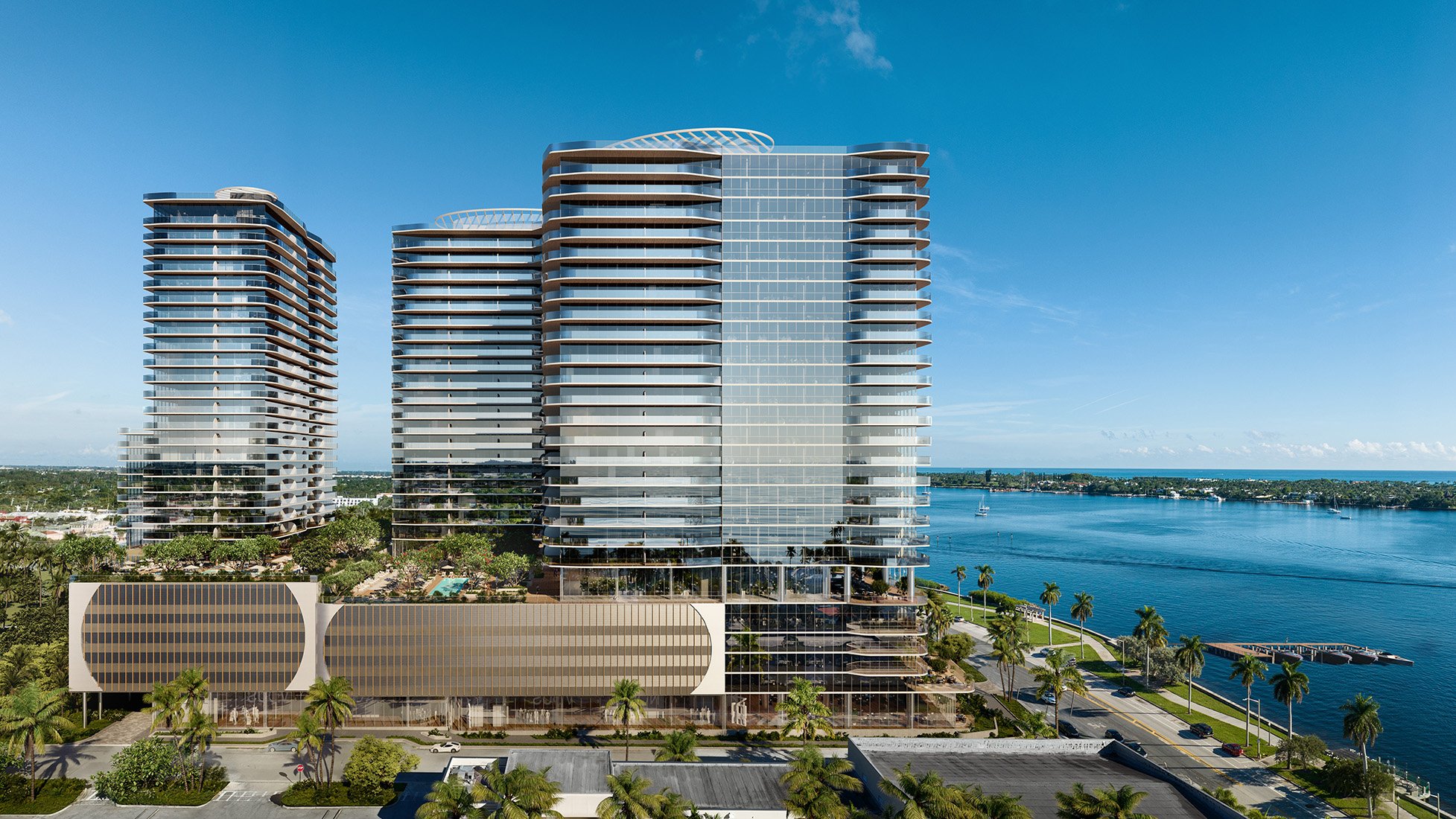
While Palm Beach remains an icon, West Palm Beach increasingly reads as the practical complement: a waterfront city with dining, culture, and a growing collection of design-forward residences that suit seasonal living.
For buyers who want to arrive and immediately participate in the season, newer inventory can be compelling. Residences along the Intracoastal and downtown corridors can offer a lock-and-leave profile, staff-friendly logistics, and the ability to host without the overhead of a large estate. In winter, that frictionless usability is not a luxury add-on. It is often the point.
Within that context, new-construction options are frequently evaluated through three lenses: service culture, waterfront orientation, and the quality of everyday spaces. Lobbies, fitness areas, and owner amenities matter because they determine how the property feels on a typical morning, not just on a show-stopping evening.
Buyers exploring this lane often cross-shop residences such as Shorecrest Flagler Drive West Palm Beach for its Flagler Drive positioning, or look to branded living concepts like Mr. C Residences West Palm Beach when hospitality DNA and an elevated service model are part of the brief.
For those who want the familiarity of a global flag, The Ritz-Carlton Residences® West Palm Beach speaks to a service-forward expectation that many seasonal owners prioritize. Others prefer a more boutique sensibility and explore options such as Alba West Palm Beach as part of a broader search for a waterfront, design-led winter home.
Winter compresses timelines. The best outcomes come from pre-commitment and clear priorities.
Start with lifestyle geometry. Map your season around the non-negotiables: equestrian days in Wellington, polo afternoons, boating weekends, Worth Avenue dinners, and airport access. The right home is the one that makes those routines feel effortless. If a location adds friction, winter will expose it quickly.
Next, align your use profile with the asset. A condo can be the right answer if you travel frequently, value security, and want a property that functions while you are away. A single-family home can be the right answer if privacy, land, and tailored entertaining matter most. The decision is not philosophical. It is operational, and winter makes operational realities impossible to ignore.
Then, treat cash advantage as a strategy, not a flex. In a market where cash can represent about half of transactions in certain periods, and where it can be especially dominant in condos, the ability to remove financing friction can change negotiating leverage. Even when you finance by choice, seller perception matters. Certainty, speed, and clean terms often win the best properties when inventory is thin.
Finally, buy with future optionality. Many winter purchases begin as seasonal and evolve over time. If you might pursue residency, evaluate the home through that lens today: day-to-day livability, community fit, and the administrative clarity that supports a primary residence. A disciplined purchase is one that works for this season and still makes sense if your definition of “seasonal” changes.
Is Palm Beach County really that seasonal?
Yes. Winter population flows are well documented in Florida, and Palm Beach’s event calendar amplifies the effect.
What drives the winter buyer surge most: lifestyle or economics?
Both. Major equestrian, polo, and boating events concentrate high-net-worth visitors, and Florida’s tax environment can support longer-term relocation planning.
Why does cash matter so much in Palm Beach County?
Cash can shorten timelines and reduce deal risk. Market reporting has shown unusually high cash shares locally versus national norms.
Should buyers avoid coastal property because of hurricanes and insurance?
Not necessarily. The key is disciplined due diligence on resilience features, association operations, and an insurance strategy appropriate for high-value coastal ownership.
To explore South Florida’s most compelling luxury opportunities with discretion, start at MILLION Luxury.
If branded residences are on your mind — as a home or as an allocation — we would be glad to share what we are seeing, privately.
Begin a quiet conversation