A buyer-oriented look at how luxury condo fees in Palm Beach and West Palm Beach should be read through service, security, building care, and reserve discipline.

In Palm Beach and West Palm Beach, the monthly condominium fee is not a footnote to the purchase price. For sophisticated buyers, it is the recurring expression of how a building intends to live, staff, protect, maintain, and renew itself. A low fee may look elegant on a spreadsheet; a higher fee may support a quieter, better-run private environment. The point is not to favor either number. The point is to understand what the number is doing.
Luxury condominium ownership along the Intracoastal and near the island is often evaluated through architecture, light, terrace depth, and arrival sequence. Yet the building’s financial culture is just as consequential. A residence feels effortless only when the unseen systems are disciplined: staffing plans, vendor oversight, security protocols, common-area care, and reserves for future needs. In saved searches, Palm Beach and West Palm Beach may serve as convenient shorthand; in a serious acquisition brief, the analysis must go deeper.
That is why buyers comparing buildings such as Alba West Palm Beach, Forté on Flagler West Palm Beach, or established addresses nearby should treat fees as part of the asset’s identity, not merely a carrying cost.
Service is the most visible reason a luxury condo fee exists. It may include front-desk personnel, management support, valet coordination, porter service, amenity care, package handling, and the people who keep public spaces composed. Even when a building’s service model is intentionally discreet, the payroll behind that restraint can be meaningful.
The question is not simply, “What do I get?” It is, “How consistently is it delivered?” A well-run building does not depend on improvisation. It has standards for arrival, guest handling, contractor access, deliveries, maintenance requests, and resident communication. In the best buildings, staff seem to appear exactly when needed and recede when privacy is preferred.
Buyers should ask how the association or building management structures service coverage, what is handled in-house, and what is outsourced. A lean staffing model may suit a boutique building with fewer residences and a quieter rhythm. A more comprehensive model may be appropriate for a larger property with extensive amenities, frequent guest movement, and a more resort-like experience. Neither is inherently superior; the service promise must match the fee.
Security in ultra-prime condominium life is not limited to a guard station or a camera system. It is a layered culture of access, discretion, and response. Buyers should understand how residents, guests, vendors, house staff, deliveries, rideshare vehicles, and service providers move through the property. The experience should feel gracious, but never casual.
This is especially relevant for seasonal owners, public figures, families with staff, and buyers who expect the residence to operate smoothly while they are away. A strong security posture often depends on training, redundancy, clear protocols, and technology that supports people rather than replacing them entirely.
At addresses such as Mr. C Residences West Palm Beach, buyers naturally focus on lifestyle and hospitality language. The more revealing question is how the day-to-day operating model translates that language into controlled access, privacy, and consistent resident support.
Reserves are rarely glamorous in conversation, but they are central to long-term confidence. In practical terms, reserves indicate whether a building is preparing for future capital needs rather than relying solely on reactive funding. For luxury buyers, this is not only a financial question. It is a question of continuity: whether the building can preserve its finish level, mechanical reliability, and overall standard without unnecessary drama.
A reserve discussion should be calm, detailed, and unemotional. Buyers should review what major components the building anticipates maintaining or replacing over time, how funding is approached, and whether the property’s visual condition aligns with its financial planning. Elegant lobbies and polished amenity decks are pleasing, but disciplined stewardship is often found in meeting minutes, budgets, engineering commentary, and capital planning conversations.
The most valuable buildings understand that luxury is not a one-time delivery. It is maintained through repetition: inspection, cleaning, repair, renewal, and governance. A fee that supports this rhythm may be more defensible than one that simply flatters a marketing sheet.
Palm Beach and West Palm Beach do not present identical ownership experiences. Palm Beach is often associated with a quieter island sensibility, privacy, and a more residential cadence. West Palm Beach has grown into a more vertical, urban, waterfront-adjacent market with walkability, new hospitality energy, and a changing skyline. The fee conversation in each place may feel different, but the due diligence principles are the same.
For a buyer looking at The Ritz-Carlton Residences® West Palm Beach, brand language may frame expectations around service and polish. For a buyer studying an island-oriented residence or a more private building, the emphasis may be on discretion, low density, and calm. In both cases, the monthly fee should be examined against the lifestyle actually being delivered.
The most refined buyers do not ask whether a fee is high or low in isolation. They ask whether it is coherent. Does the budget support the staffing? Do the amenities justify the operating complexity? Does the property have the discipline to preserve itself? Are future costs being anticipated with seriousness? These questions are especially important when comparing a new development with a resale building, because early impressions can be shaped by different stages of the building’s operating life.
A simple dollars-per-month comparison can be deceptive. Buildings differ in scale, staffing philosophy, amenity depth, insurance exposure, utilities included, reserve approach, and the division between association responsibility and owner responsibility. A higher monthly figure may include meaningful services or shared expenses. A lower figure may exclude items that still appear elsewhere in the owner’s total cost of living.
Buyers should request the current budget, recent financial statements, reserve information, meeting minutes when available, insurance summaries, rules and regulations, and any documentation related to upcoming capital projects or special assessments. The point is not to turn a lifestyle purchase into an accounting exercise. The point is to understand whether the building’s promise is financially aligned.
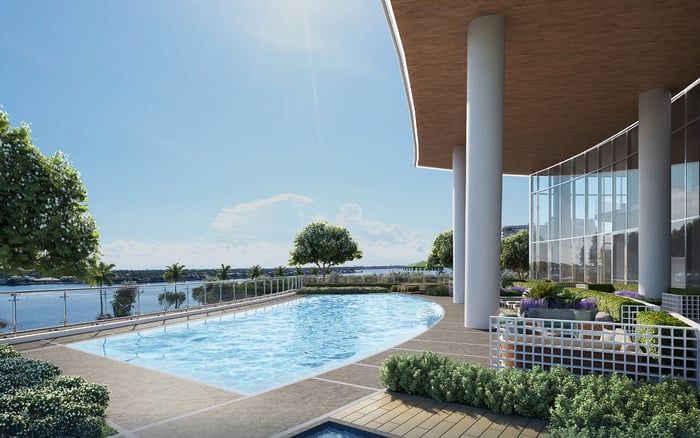
It is also useful to compare the fee with the building’s physical reality. A property with extensive pools, wellness spaces, lounges, valet operations, staffed entries, elevators, landscaping, waterfront exposure, and high-design common areas requires a different operating structure than a simpler boutique building. Beauty has maintenance requirements. Privacy has staffing requirements. Security has procedural requirements.
The best question is not, “Why is the fee this amount?” It is, “What would have to be true for this fee to make sense?” If the answer is visible in staffing, service quality, reserve planning, building condition, and resident experience, the number may be rational. If the explanation is vague, the buyer should pause.
In the Palm Beach and West Palm Beach luxury market, carrying costs are part of the architecture of ownership. They shape how the building ages, how residents are received, how privacy is protected, and how confidently the property can navigate future obligations. The most desirable buildings make their fees feel less like a burden and more like a system of stewardship.
Why do Palm Beach and West Palm Beach condo fees vary so much? Fees can reflect different service levels, staffing models, amenities, building systems, insurance costs, and reserve approaches.
Is a lower condo fee always better for buyers? Not necessarily. A lower fee may be attractive, but buyers should confirm that service, maintenance, and reserves are not being underfunded.
What should I review before buying a luxury condo? Review budgets, financial statements, reserve information, rules, meeting materials when available, and any known capital planning documents.
How important are reserves in a luxury building? Very important. Reserve discipline helps a building plan for future needs and protect its physical standard over time.
Do branded residences usually have higher fees? They may, depending on service expectations, staffing, amenities, and operating standards. The fee should be compared with what is actually provided.
Should seasonal owners pay special attention to security? Yes. Owners who are away for long periods should understand access control, guest procedures, package handling, and emergency communication.
Can amenity-rich buildings be more expensive to operate? They can be. Pools, wellness spaces, lounges, valet areas, and extensive common spaces usually require maintenance and staffing.
What is the best way to compare two condo fees? Compare inclusions, staffing, reserves, insurance, amenities, building condition, and any owner-paid costs outside the association fee.
Should buyers worry about future assessments? Buyers should ask about capital planning and pending projects. A thoughtful reserve strategy can help reduce surprises, though no building is risk-free.
What is the best way to shortlist comparable options for touring? Start with location fit, delivery status, and daily lifestyle priorities, then compare stacks and elevations to validate views and privacy.
For a discreet conversation and a curated building-by-building shortlist, connect with MILLION.
If branded residences are on your mind — as a home or as an allocation — we would be glad to share what we are seeing, privately.
Begin a quiet conversation