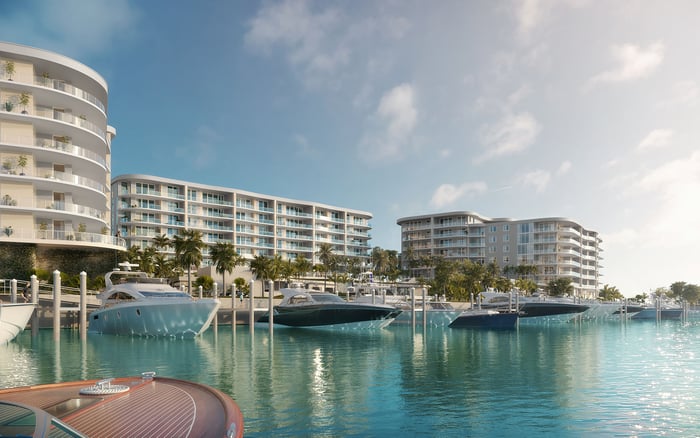
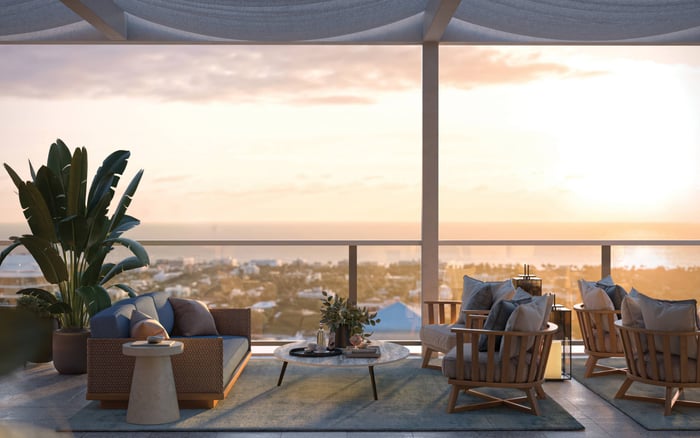
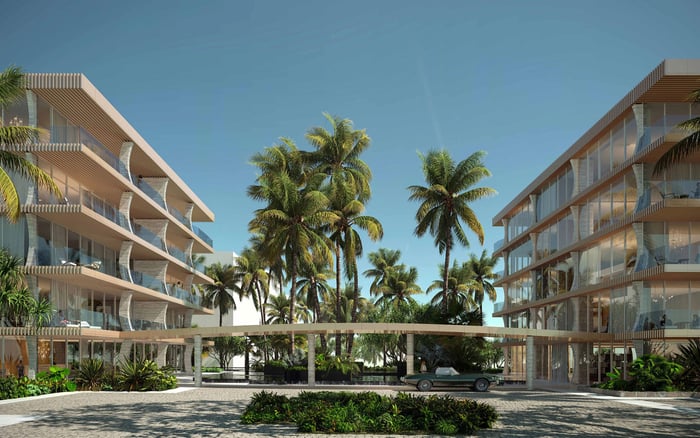
A buyer-oriented look at how ownership differs across a boutique West Palm Beach condominium, a branded Brickell residence, and a wellness-led Bay Harbor Islands project.
In South Florida’s upper tier, sophisticated buyers are no longer comparing residences solely by view, finish, or neighborhood cachet. They are comparing ownership models. A boutique condominium in West Palm Beach, a hospitality-branded residence in Brickell, and a wellness-led project in Bay Harbor Islands may all present as luxury, but each asks the buyer to underwrite a different version of control, access, cost, and continuity.
That distinction is especially clear with Maison D'Or South Flagler, St. Regis® Residences Brickell, and The Well Bay Harbor Islands. Each sits within the condominium universe, yet the value proposition differs. One emphasizes discretion and boutique residential character. One layers condominium ownership with a recognized service identity. One places wellness infrastructure and programming closer to the center of daily life.
For a family office, principal-residence buyer, or second-home owner, the practical exercise is simple but consequential: separate what is owned privately, what is owned collectively, and what is delivered through service, licensing, or operating arrangements.
Maison D'Or South Flagler is best understood as a West Palm Beach case study in boutique ultra-luxury ownership rather than as a hotel-branded product. That framing matters. In a boutique building, the premium is often tied to privacy, reduced social friction, architectural execution, and the sense that the property functions first as a private residential address.
For buyers focused on West Palm Beach, the ownership angle begins with control. Privacy is not only a design promise. It is also a governance question. Buyers should review the condominium declaration, association budget, reserve obligations, common-area maintenance structure, and use restrictions with the same care they would bring to an operating agreement for a private asset.
In low-density luxury living, shared costs can feel more personal because fewer owners may support the common environment. That does not make the model less attractive. It simply means the buyer should understand how expenses are allocated, how decisions are made, and how future capital needs will be handled. Developer reputation, architectural execution, and association documents become especially important diligence points because the boutique experience depends on precision, not scale.
Maison D'Or is likely to appeal to buyers who prefer discretion over broad hospitality programming. The ownership mindset is closer to a private club of residences than a service-heavy branded ecosystem, even though the asset remains a condominium interest.
St. Regis® Residences Brickell introduces a different layer of analysis. The Brickell buyer is still evaluating a condominium interest, not direct ownership of a hotel asset. Yet the perceived value of ownership may depend partly on the continued strength of the St. Regis name, its service expectations, and the durability of the management and brand relationship.
That is the central question for branded residences: what survives over time, and at what cost? A buyer should look beyond the emotional power of the name and examine how brand standards, service obligations, licensing arrangements, and management agreements connect to the condominium association and owner expenses.
In Brickell, where the residential market often appeals to globally mobile owners, a branded-service model can offer familiarity and operational polish. But polish has structure. Buyers should understand which services are part of the condominium’s baseline operations, which may be optional or separately charged, and how the association’s long-term budget supports the level of service the brand implies.
The St. Regis® Residences Brickell ownership lens is therefore not simply about prestige. It is about continuity. If the brand relationship, management framework, or service standards are central to the buyer’s reason for purchasing, those elements deserve legal and financial review alongside the residence itself.
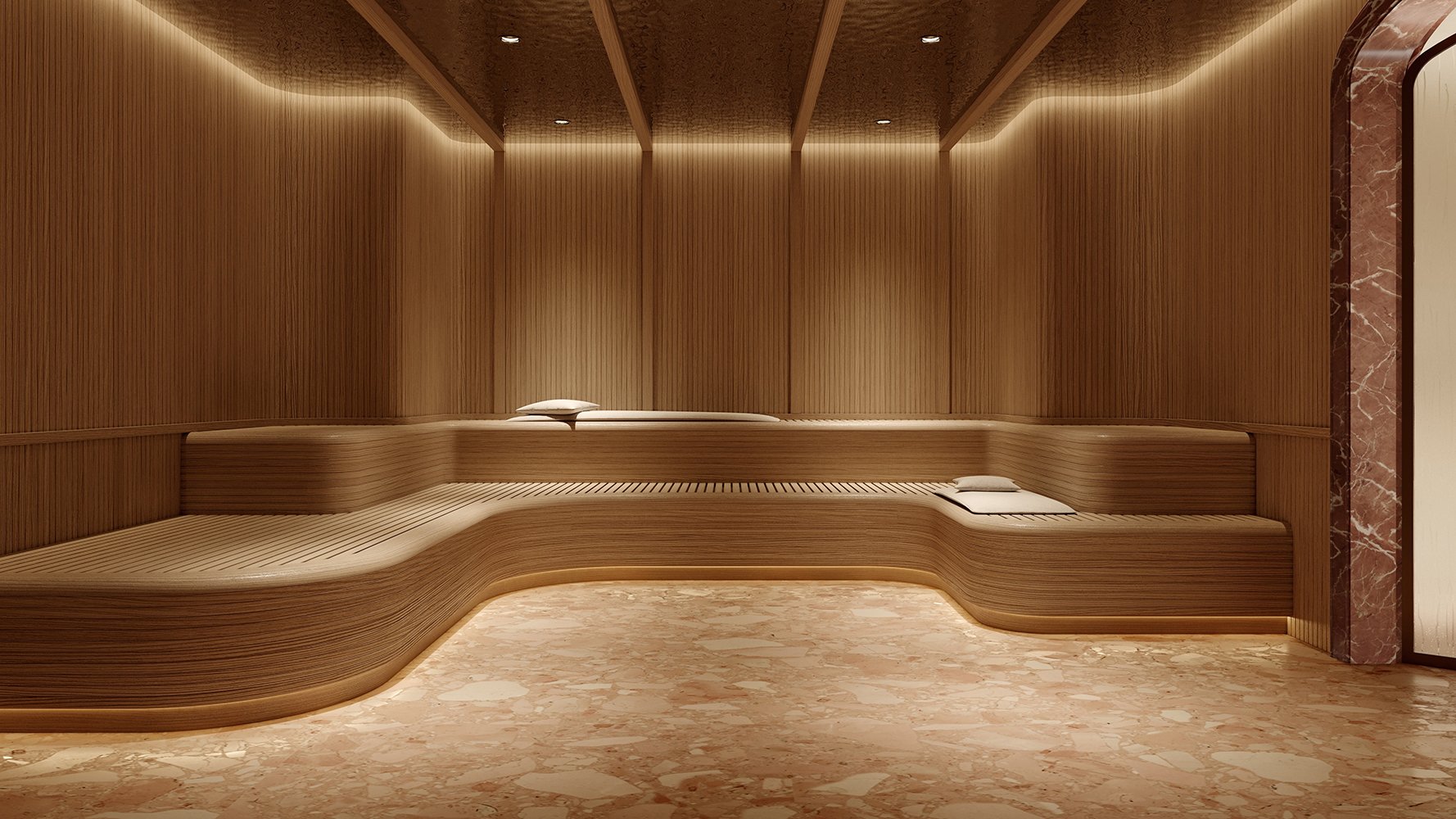
The Well Bay Harbor Islands represents a third ownership model, where wellness is not treated as a decorative amenity category. The key diligence point is whether health, spa, fitness, nutrition, and environmental features are physically embedded in the property, operationally delivered through programming, or both.
For a Bay Harbor buyer, that distinction is meaningful. A treatment room, fitness facility, pool, or built-environment feature may be part of the common property. A class schedule, nutrition offering, practitioner access, or wellness protocol may depend on continuing management, staffing, budgeting, and rules. Both can be valuable, but they are not the same ownership right.
The Well Bay Harbor Islands is likely to attract buyers who view daily wellness access as part of the core ownership proposition rather than a secondary lifestyle perk. That makes the governing documents essential. Buyers should examine how wellness spaces are defined, how access is reserved or shared, how operating costs are funded, and whether the programming that supports the project’s identity is protected by budgetary commitments or management agreements.
Wellness-led ownership can be powerful when the infrastructure and operations align. It can also require more careful interpretation because some of the value may live in an experience that must be continuously delivered.
Across all three projects, the first distinction is the private residence itself. This is the owner’s unit, subject to the condominium documents, applicable restrictions, and the obligations of the association. The second layer is the common property, including shared spaces, amenities, and building systems. The third layer is access to services, branded standards, or programming that may be governed by separate agreements.
This is where buyers sometimes conflate luxury with ownership. A beautifully operated amenity does not always mean the owner has an unlimited, unchanging right to every associated service. A brand name does not automatically mean the owner controls the brand relationship. A boutique atmosphere does not eliminate collective governance.
The sharper question is not “What does the brochure promise?” It is “Where does the right live?” If the right lives in the declaration, budget, or association structure, it has one kind of durability. If it lives in a service contract, license, or management relationship, it has another.
For entity buyers and family offices, ownership diligence should also account for privacy, transferability, control, and long-term carrying costs. These buyers often think beyond personal enjoyment. They may be considering estate planning, entity structuring, multigenerational use, guest access, or future resale.
In a boutique West Palm Beach residence, the priority may be discretion and governance discipline. In Brickell, the focus may be service consistency, brand durability, and the cost of hospitality-style operations. In Bay Harbor Islands, the buyer may be underwriting wellness access as a daily asset, which means scrutinizing the operating framework behind the experience.
Use restrictions also matter. Before contract, a buyer should understand occupancy rules, guest policies, leasing limitations if applicable, amenity access, and any requirements that affect how the residence can be used or transferred. The luxury buyer is not merely purchasing square footage. The buyer is purchasing a rules-based environment.
A useful comparison begins with three columns. First, what do I own privately? Second, what do I own collectively through the association? Third, what do I access through a service, license, brand, or operating arrangement?
Maison D'Or South Flagler is most compelling when the buyer wants boutique control, residential privacy, and a quieter form of prestige. St. Regis® Residences Brickell is most compelling when the buyer values the discipline and identity of a branded-service environment and is prepared to evaluate the agreements that support it. The Well Bay Harbor Islands is most compelling when wellness is part of the buyer’s daily use case, not simply an amenity-tour highlight.
None of these models is inherently superior. Each can be excellent for the right owner. The difference is fit. South Florida’s luxury market now rewards buyers who understand not only the beauty of the residence, but the legal and operational architecture beneath it.
Is Maison D'Or South Flagler a branded residence? It is positioned in this analysis as a boutique ultra-luxury condominium rather than a hotel-branded product.
What is the main ownership issue at Maison D'Or South Flagler? Buyers should focus on privacy, low-density living, association governance, and how common-area costs are shared.
Is St. Regis® Residences Brickell ownership the same as owning a hotel asset? No. It should be evaluated as condominium ownership with hospitality-style services, not direct hotel ownership.
Why does brand licensing matter in Brickell? The perceived value may depend partly on continued affiliation with the St. Regis name and service model.
What makes The Well Bay Harbor Islands different? Its ownership proposition is tied closely to wellness amenities, programming, and operating structures.
What should buyers review across all three projects? Condominium declarations, association budgets, reserve obligations, service agreements, amenity rights, and use restrictions are central.
Are wellness services always the same as owned amenities? No. Some features may be physical common property, while services can depend on programming, staffing, and management.
Why are carrying costs important in luxury condominiums? Service levels, amenities, reserves, and shared spaces can influence long-term ownership costs.
Which buyer may prefer a boutique model? A buyer prioritizing discretion, residential character, and governance clarity may prefer the boutique approach.
How should a buyer compare these projects? Separate private ownership, collective ownership, and access rights before weighing lifestyle appeal.
When you're ready to tour or underwrite the options, connect with MILLION.
If branded residences are on your mind — as a home or as an allocation — we would be glad to share what we are seeing, privately.
Begin a quiet conversation