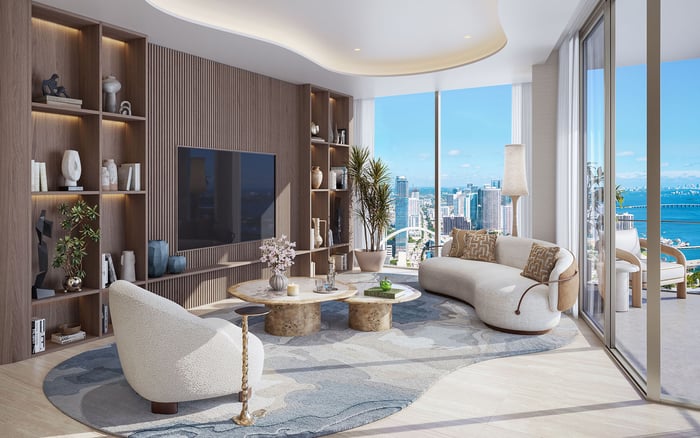
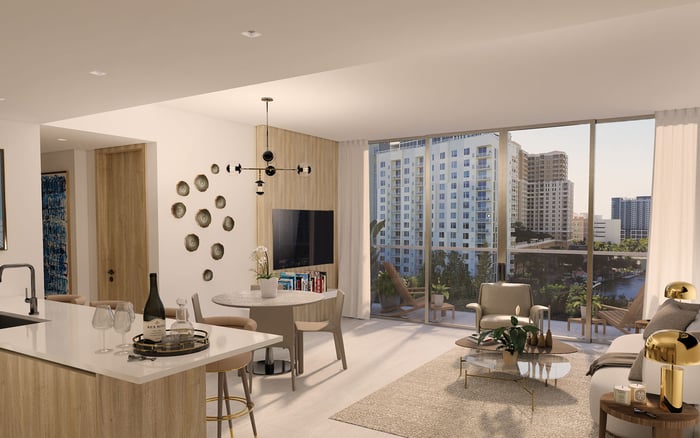
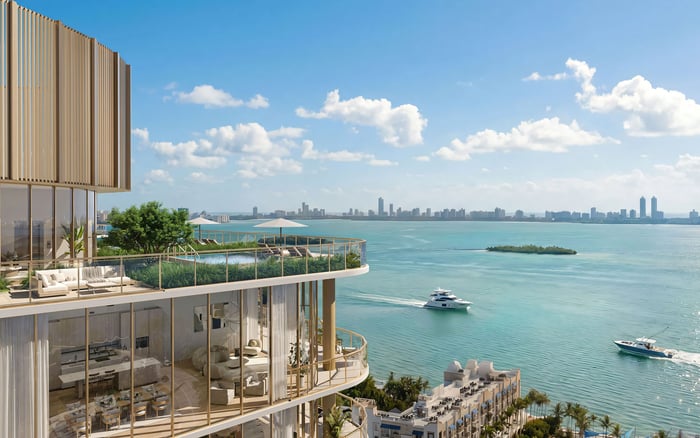
A strategic look at how three branded South Florida residences can frame a second-home decision, from hotel-style service to privacy, lifestyle rhythm, and long-term ownership discipline.
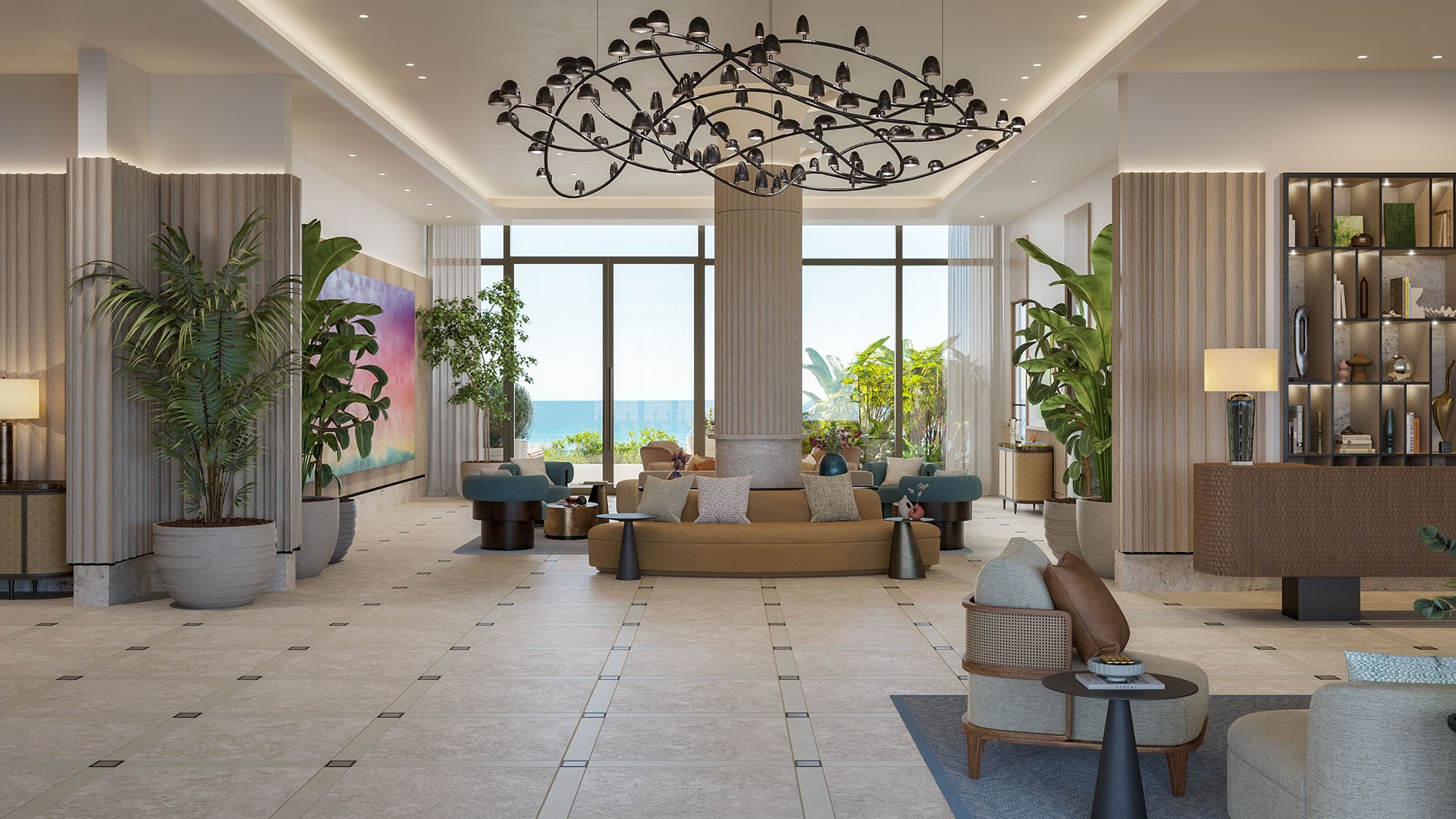
For South Florida’s high-net-worth buyer, the second-home conversation has become more nuanced than a search for sun, water, and a recognizable brand. The more consequential question is how a residence performs when the owner is away, how seamlessly it receives the owner on arrival, and how well the surrounding market supports a specific lifestyle rhythm.
That is why Four Seasons Hotel & Private Residences Fort Lauderdale, Rosewood Residences Hillsboro Beach, and The Residences at Mandarin Oriental, Miami belong in the same strategic discussion, even though they speak to different versions of South Florida ownership. Each sits within the branded residences category, where hospitality names are not merely decorative. They shape expectations around service, consistency, discretion, and the ease of seasonal use.
A second home should not feel like a management project. It should feel prepared, legible, and aligned with the way its owner actually lives. For many buyers, that means weighing hotel-style energy against privacy, urban access against coastal quiet, and brand confidence against personal preference.
In Fort Lauderdale, the appeal of Four Seasons Hotel & Private Residences Fort Lauderdale begins with its hybrid identity. The title itself places hotel and private residences side by side, which matters for buyers who want a South Florida home that feels highly serviced, easy to use, and connected to a mature hospitality framework.
This ownership model can be especially compelling for clients who divide time among several residences. Arrival experience matters. So does predictability. A buyer who comes for long weekends, seasonal stays, family visits, or business-adjacent leisure may value a setting where the residential component is supported by a broader hospitality culture.
Fort Lauderdale also occupies a useful position on the regional map. It is coastal, established, and distinct from Miami’s denser global profile. For some buyers, that translates into a calmer base without giving up dining, boating culture, airport access, and a familiar resort sensibility. The strategy here is not withdrawal. It is convenience with polish.
Rosewood Residences Hillsboro Beach enters the conversation from a different angle. If Fort Lauderdale speaks to service with energy, Rosewood Residences Hillsboro Beach suggests a quieter second-home posture, one defined by privacy, pace, and a more residential coastal mood.
For many ultra-premium buyers, privacy is not a bonus feature. It is the thesis. A second home may be where family routines are protected, where guests are carefully chosen, and where the owner wants beauty without constant social exposure. Hillsboro Beach, by name and association, carries a more retreat-oriented tone than Miami’s urban waterfront or Fort Lauderdale’s hotel-resort cadence.
This is where lifestyle fit becomes decisive. A buyer who wants frequent restaurant nights, gallery openings, and a kinetic social calendar may look elsewhere first. A buyer who wants a polished coastal refuge, supported by a recognized hospitality brand but removed from the center of the crowd, may find the logic more persuasive. In that sense, Rosewood Residences Hillsboro Beach is less about spectacle and more about composure.
Miami plays another role altogether. The Residences at Mandarin Oriental, Miami fits into second-home strategy as the cosmopolitan anchor, suited to buyers who want their South Florida residence to connect with the city’s international lifestyle network.
For some owners, Miami is not simply a vacation address. It is a meeting point, a cultural base, a dining circuit, a family gathering place, and a symbolically important city in a broader personal portfolio. A Miami residence can be useful even when the owner’s primary life is elsewhere because the city functions as a natural point of convergence for travel, social plans, business relationships, and extended stays.
The Mandarin Oriental name also carries a particular signal. It suggests refined hospitality rather than overt flash, which may appeal to buyers who want service without excessive display. Within a second-home strategy, that distinction matters. The brand should reinforce how the owner wants to live, not simply announce what the owner can buy.
Brand recognition can create confidence, but it should not replace judgment. A second-home acquisition should begin with use pattern. How often will the owner come? Will visits be spontaneous or scheduled? Is the home primarily for a couple, a multigenerational family, or a rotating calendar of guests? Will the property be a private sanctuary, a social platform, or a hybrid of both?
From there, the three residences separate naturally. Four Seasons Hotel & Private Residences Fort Lauderdale is positioned for buyers who prize service, resort familiarity, and a coastal city that is polished but not Miami. Rosewood Residences Hillsboro Beach is best considered through the lens of privacy and retreat. The Residences at Mandarin Oriental, Miami suits the buyer who wants international city energy paired with a refined hospitality identity.
The correct answer may also depend on what the buyer already owns. Someone with a quiet primary estate may prefer Miami’s stimulation. Someone with a demanding urban life may want Hillsboro Beach’s restraint. Someone seeking ease, service, and practical access may gravitate toward Fort Lauderdale.
Second homes are emotional assets, but investment discipline still matters. The best buyers separate desire from durability. They ask whether the location has a clear identity, whether the brand supports the experience they want, and whether the residence can remain appealing through different life stages.
Waterfront ownership, branded service, and scarcity of high-quality coastal settings are all part of the South Florida luxury conversation. Yet the more refined buyer avoids buying the loudest story. The stronger strategy is to choose the residence whose daily experience will still feel right after the novelty has passed.
This is where lifestyle analysis becomes practical rather than abstract. If the owner wants to arrive with no friction, entertain gracefully, and leave without worrying about the residence, branded hospitality can be meaningful. If the owner wants maximum privacy, a quieter location may be more important than proximity to nightlife. If the owner wants a global gathering point, Miami’s urban pull may justify a different calculus.
The three properties are not interchangeable. They are different answers to the same ownership question.
Four Seasons Hotel & Private Residences Fort Lauderdale belongs in the conversation for buyers who value service and coastal convenience. Rosewood Residences Hillsboro Beach belongs there for buyers who see privacy and retreat as central to luxury. The Residences at Mandarin Oriental, Miami belongs there for buyers who want a refined global city base with hospitality depth.
In a sophisticated second-home strategy, the smartest choice is rarely the most obvious one. It is the one that reduces friction, protects time, and supports the owner’s preferred version of South Florida life.
Why consider branded residences for a second home? Branded residences can offer clearer expectations around service, care, and arrival experience, which can be valuable for seasonal owners.
Is Fort Lauderdale a practical second-home market? Fort Lauderdale can suit buyers who want coastal living, hospitality access, and a setting that feels polished without the intensity of Miami.
Who is Rosewood Residences Hillsboro Beach best suited for? It may appeal to buyers who prioritize privacy, a quieter coastal rhythm, and a more retreat-oriented ownership experience.
How does Miami differ in a second-home strategy? Miami often functions as a global lifestyle anchor, offering cultural energy, social access, and international recognition.
Should brand name be the main deciding factor? No. Brand should support the intended lifestyle, but location, use pattern, privacy, and ownership rhythm should guide the decision.
Can a second home be both emotional and strategic? Yes. The strongest purchases usually satisfy personal lifestyle goals while still reflecting disciplined thinking about location and usability.
What should buyers evaluate before choosing among these residences? Buyers should consider visit frequency, family needs, entertaining style, privacy expectations, and how much service they want.
Is waterfront positioning important in South Florida? Waterfront settings remain central to many luxury decisions, but the quality of the daily experience matters just as much.
Do these properties appeal to the same buyer? Not necessarily. They may overlap in budget and brand awareness, but each speaks to a different lifestyle priority.
What is the key second-home takeaway? Choose the residence that protects time, reduces friction, and reflects how you want to live when you are in South Florida.
For a discreet conversation and a curated building-by-building shortlist, connect with MILLION.
If branded residences are on your mind — as a home or as an allocation — we would be glad to share what we are seeing, privately.
Begin a quiet conversation