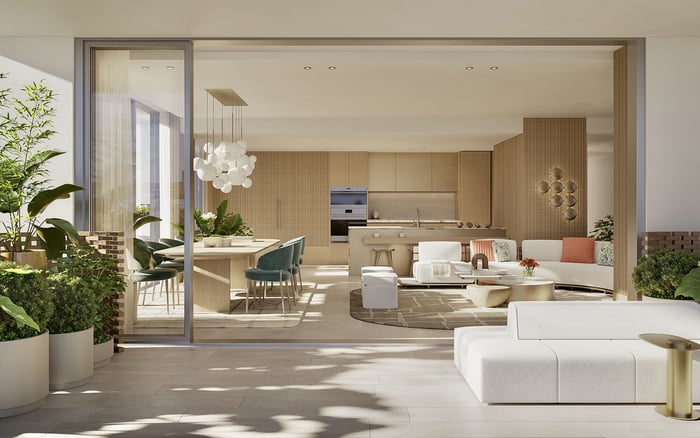
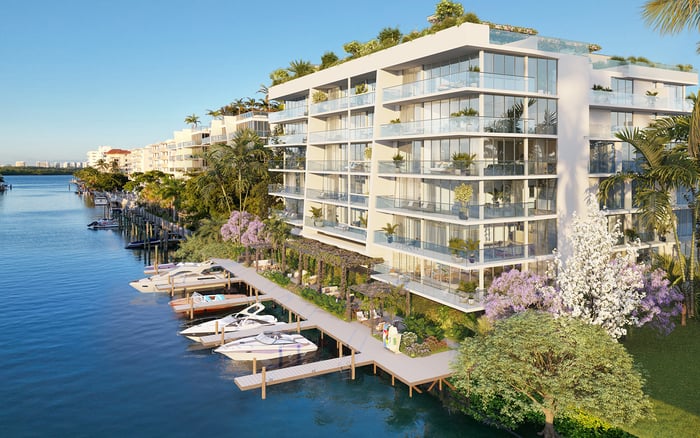
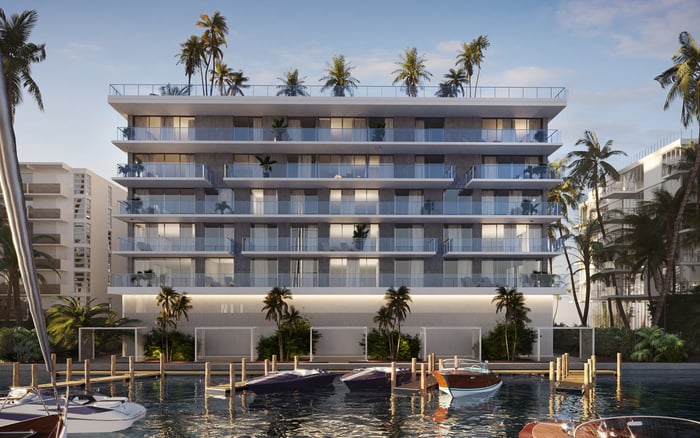
A practical privacy due-diligence guide for buyers evaluating glass-wall residences at Origin Bay Harbor Islands before contract, with emphasis on sightlines, layout, nighttime exposure, glazing questions, and condo document review.
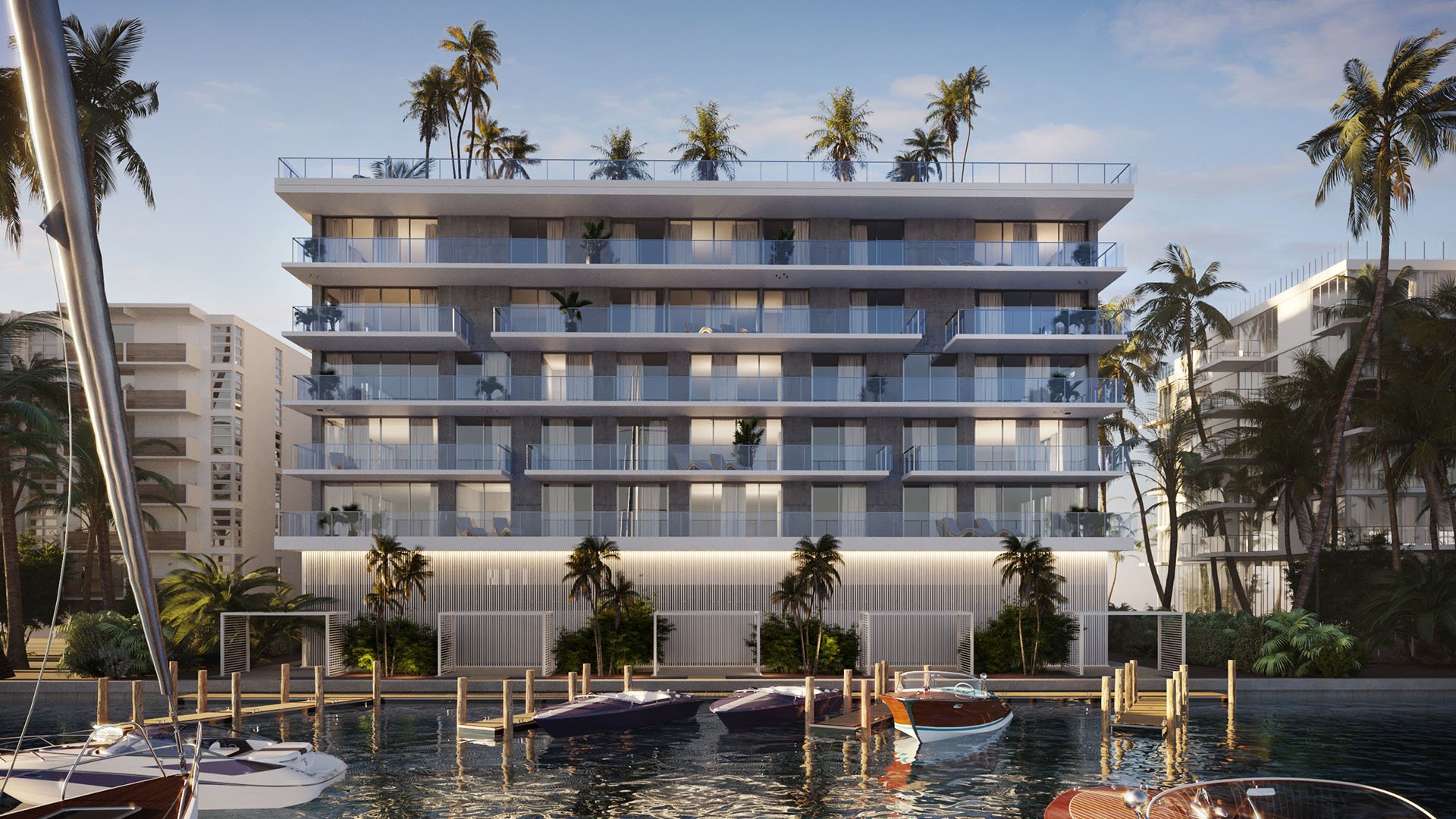
At Origin Bay Harbor Islands, the appeal of glass is immediate: light, water, sky, and the cinematic feeling of living at the edge of the view. Yet for the most discerning buyer, privacy is not a soft lifestyle preference. It is a measurable pre-contract attribute tied to a specific residence stack, floor, exposure, and interior plan.
The essential mistake is treating glass-wall living as a uniform condition. A water-facing residence, a corner residence, a marina-facing residence, and a home oriented toward neighboring buildings can each perform differently. One may feel open yet discreet. Another may deliver the desired water view while placing a primary suite, office, or evening seating area in a more exposed position than expected.
For a Bay Harbor buyer, the right question is not whether the building is luxurious. The question is how the glass facade performs in real sightline conditions before the contract is signed.
Privacy analysis should begin with the exact unit under consideration. Ask for architectural plans, orientation diagrams, and elevation drawings, then study how the selected residence sits within the building and against its surroundings. Floor level matters. Stack matters. Exposure matters. A small shift in position can alter the line of sight from an adjacent balcony, pool deck, marina edge, bridge approach, or public-facing waterfront area.
Balcony geometry also deserves close attention. Balcony depth, railing design, and neighboring outdoor space can affect whether the interior feels shielded or visually connected to another residence. Buyers often focus on the grand view from the living room, but the more revealing angle may be oblique: a neighboring terrace looking toward a glass corner, or a pool deck aligned with a bedroom wall.
This is where pre-construction diligence becomes especially important. Renderings may communicate mood, proportion, and finish, but they should not be treated as a substitute for sightline mapping. Ask whether surrounding buildings, window treatments, interior lighting, and neighboring vantage points are shown realistically enough to support a privacy decision.
Glass can feel private during the day and become far more transparent after dark, once the interior is illuminated. That shift is central to any serious review of Origin Bay Harbor Islands. A residence that appears discreet under bright exterior light may reveal furniture placement, circulation paths, or silhouettes when the home is lit from within.
Evaluate the living room, dining area, primary bedroom, baths, workspaces, and media seating separately. The question is not only whether someone can see into the home. It is whether the most personal rooms sit directly behind exposed glass, or whether they can be softened without compromising the view that made the residence attractive in the first place.
Interior design choices matter here. Pale finishes, reflective materials, glossy surfaces, and bright lighting plans can increase visibility at night. A sophisticated privacy strategy considers lighting temperature, dimming zones, furniture placement, and window treatments as part of the architecture of discretion.
Before contract, buyers should request available glass specifications and facade information. The most relevant topics include visible light transmittance, exterior reflectance, tint, and any privacy-related glazing features. These terms do not need to turn the buyer into an engineer, but they do help establish whether the glass is being discussed precisely or merely described with marketing language.
Do not assume reflective glass solves every privacy concern. Exterior reflectance may behave differently depending on sun angle, time of day, interior lighting, and surrounding brightness. Likewise, tint may change the feeling of the view without fully resolving a direct line of sight from a neighboring building or outdoor amenity.
If technical data is provided, ask your attorney or qualified design adviser to compare those answers with the offering documents, plans, and condominium materials. The goal is not confrontation. The goal is alignment between expectation, documentation, and lived experience.
Many buyers assume privacy can be refined later through smart glass, films, exterior shades, balcony screening, or non-standard window treatments. That assumption can become expensive if condominium rules restrict exterior appearance, facade modifications, balcony additions, or visible treatments from outside the building.
Layered window treatments, such as sheers with blackout shades, can be an elegant part of the solution if permitted. They allow the owner to preserve daylight, soften visibility, and achieve full privacy when desired. But the key phrase is if permitted. Before contract, confirm what is allowed, what requires approval, and what may be prohibited.
The best privacy plan is not improvised after closing. It is built into the purchase analysis, then refined through design.
A refined buyer should compare privacy tradeoffs by exposure rather than ranking every unit by view alone. Water-facing residences may feel more open but can still carry exposure from boats, waterfront paths, or public-facing areas. Corner residences may deliver dramatic glass and stronger light, yet they can also increase visibility from multiple angles. Homes facing neighboring buildings may require more careful screening, while some set-back layouts can feel surprisingly private.
The unit plan is just as important as the view corridor. Prioritize residences where bedrooms, baths, and work areas are set back from the most exposed glass, or can be screened without blocking the most valuable view. A floor plan that allows private rooms to retreat from the facade may feel more livable than one where every intimate function is staged against glass.
Future context also belongs in the review. Nearby zoning and development patterns can change the privacy equation over time. A currently open view corridor may not remain visually static, and a future neighboring structure could alter both privacy and outlook.
Before signing, convert every material concern into written questions for the appropriate parties. Ask for the plans needed to map sightlines. Ask which vantage points were considered in privacy presentations. Ask which treatments are allowed. Ask what glass information is available. Ask whether future surrounding development could affect the exposure you are buying.
For luxury buyers, privacy is part of value preservation. It affects comfort, entertaining, work-from-home routines, evening living, and ultimately the emotional confidence of the purchase. At Origin Bay Harbor Islands, glass-wall living can be highly compelling, but the strongest decisions are made when beauty and discretion are evaluated together.
Should privacy be evaluated before contract at Origin Bay Harbor Islands? Yes. Privacy should be assessed before contract because it depends on the exact residence stack, floor, exposure, and layout.
Is a water view automatically more private? No. A water-facing residence can still have sightlines from boats, waterfront areas, bridges, balconies, or nearby amenities.
What documents should a buyer request? Ask for architectural plans, orientation diagrams, elevation drawings, and any available facade or glazing information.
Why does nighttime privacy matter so much? Glass that feels private in daylight can become more transparent when interior lights are on after dark.
Can window treatments solve every privacy issue? Not always. Window treatments may help, but condominium rules may restrict films, shades, balcony screening, or visible modifications.
Which rooms deserve the closest privacy review? Bedrooms, bathrooms, offices, seating areas, and dining spaces near exposed glass corners deserve especially careful review.
Should buyers rely on renderings to judge privacy? Renderings can be useful, but buyers should ask whether they accurately show lighting, treatments, surrounding buildings, and real sightlines.
Do glass specifications matter to a non-technical buyer? Yes. Visible light transmittance, reflectance, tint, and privacy-related features can shape how glass performs in real conditions.
Can future development affect privacy? Yes. Nearby zoning and development patterns can change view corridors and neighboring sightlines over time.
What is the most important pre-contract step? Put privacy questions in writing so the answers can be reviewed against plans, condominium documents, and contract materials.
For a discreet conversation and a curated building-by-building shortlist, connect with MILLION.
If branded residences are on your mind — as a home or as an allocation — we would be glad to share what we are seeing, privately.
Begin a quiet conversation